

scinexic logo icon
Scinexic banner logo
Scinexic.com tag line
scinexic logo icon
Scinexic banner logo
Scinexic.com tag line
scinexic logo icon
Scinexic banner logo
Scinexic.com tag line
scinexic logo icon
Scinexic banner logo
Scinexic.com tag line

The SciNexic Files

The SciNexic Files

Opinion
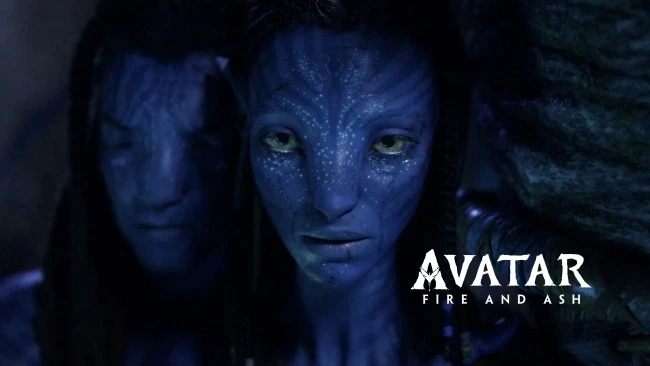
A blue-skinned alien with bioluminescent patterns stares intently, partially illuminated in a shadowy setting with another figure in the background, accompanied by the text "Avatar: Fire and Ash" on the lower right.

Avatar: Fire and Ash – A Visual Triumph, But Is Pandora’s Magic Wearing Thin?

January 26, 2026

Avatar: Fire and Ash – A Visual Triumph, But Is Pandora’s Magic Wearing Thin?

A blue-skinned alien with bioluminescent patterns stares intently, partially illuminated in a shadowy setting with another figure in the background, accompanied by the text "Avatar: Fire and Ash" on the lower right.
Jan 26, 2026
Jan 26, 2026

While Avatar: Fire and Ash dazzles with its technical wizardry and blockbuster spectacle, it treads too-familiar ground, leaving the franchise at a crossroads. For Avatar 4 to truly soar, James Cameron’s space sci-fi epic must embrace bolder, more diverse storytelling—or risk becoming a beautiful echo of its own past.

The Spectacle Remains, But the Story Feels All Too Familiar

Let’s get this out of the way: Avatar: Fire and Ash is a jaw-dropping, immersive experience. James Cameron’s third trip to Pandora is a masterclass in visual effects, world-building, and blockbuster ambition. The film’s 3D and IMAX sequences are, as ever, a feast for the senses, and the technical innovations—performance capture, underwater filming, and neural network-driven animation—are nothing short of revolutionary.
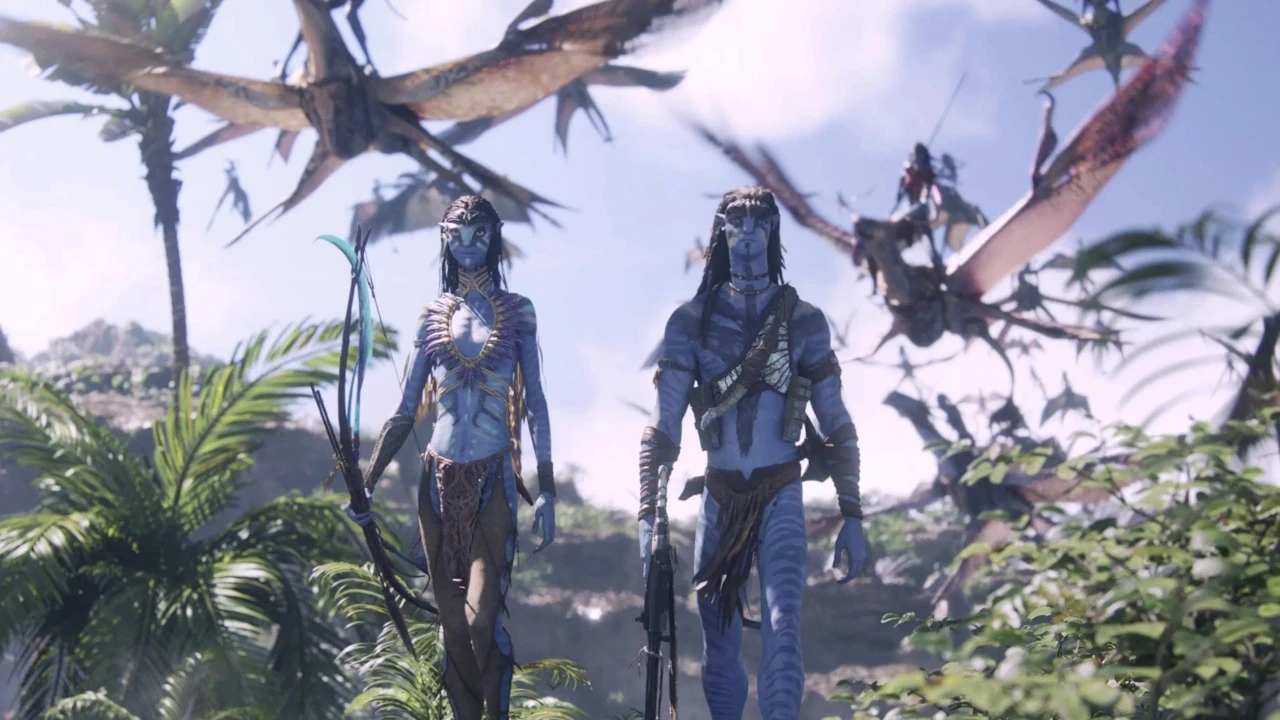
Two blue-skinned, humanoid Na'vi characters navigate a lush, tropical landscape with large, winged creatures soaring in the bright sky above.

The story of Jake (Sam Worthington) and Neytiri (Zoe Saldana) develops further as they both face their own challenges. Image credit: TMDB


But as the credits rolled on this 197-minute epic, I couldn’t shake the feeling that I’d seen much of it before. Fire and Ash is, in many ways, “Avatar: The Way of Water part 2”—a direct continuation that, for all its new clans and creatures, rarely strays from the narrative and emotional beats of its predecessor. The result? A film that’s entertaining, yes, but also a little spent, its story arc echoing rather than evolving.
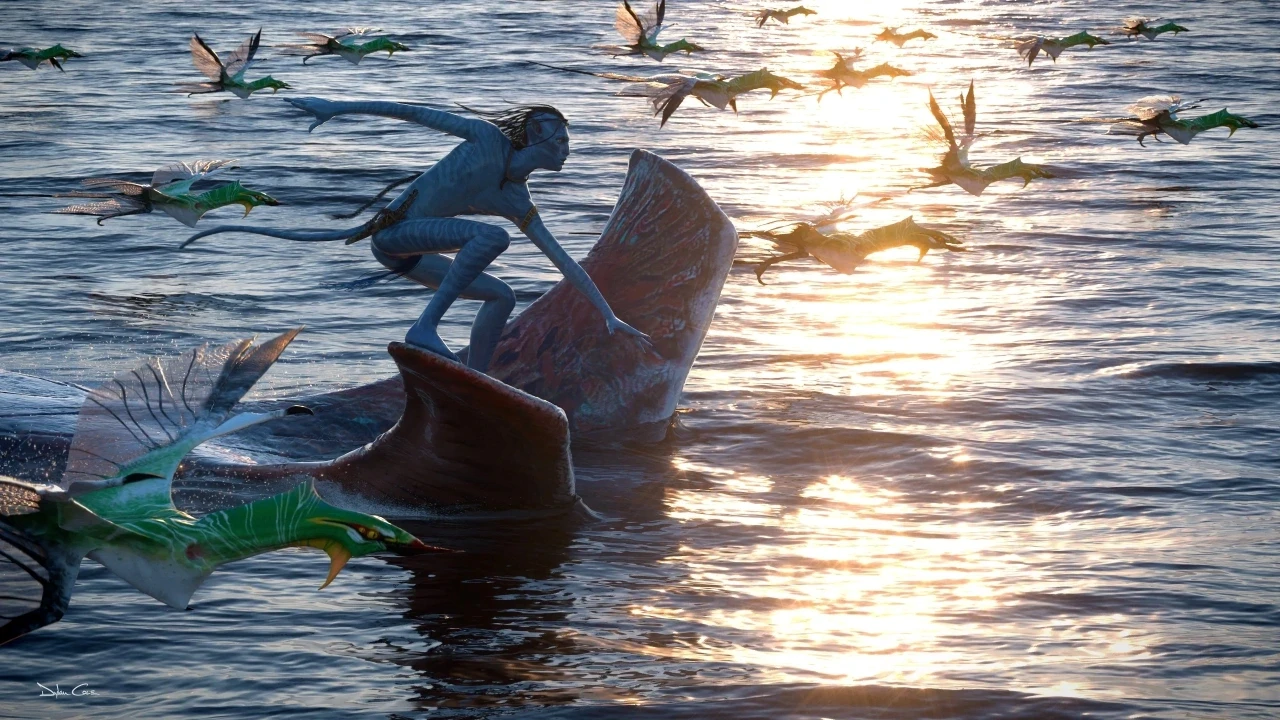
A lithe, blue-skinned being gracefully balances on a large aquatic creature amidst a shimmering ocean at sunset, while several vibrant, bird-like creatures soar nearby, creating a fantastical and dynamic scene.

The "Way of the Water Pt 2" vibes were hard to escape while watching this instalment. Image credit: TMDB


Pandora’s New Clans, Same Old Conflicts

Fire and Ash picks up a year after The Way of Water, with Jake Sully (Sam Worthington), Neytiri (Zoe Saldaña), and their family still reeling from loss and living among the Metkayina sea clan. The twist this time is the arrival of the Mangkwan, or Ash People—a fire-themed Na’vi clan led by the fierce Varang (Oona Chaplin). Their volcanic homeland and fiery culture are visually striking, expanding Pandora’s lore in ways that should feel fresh.
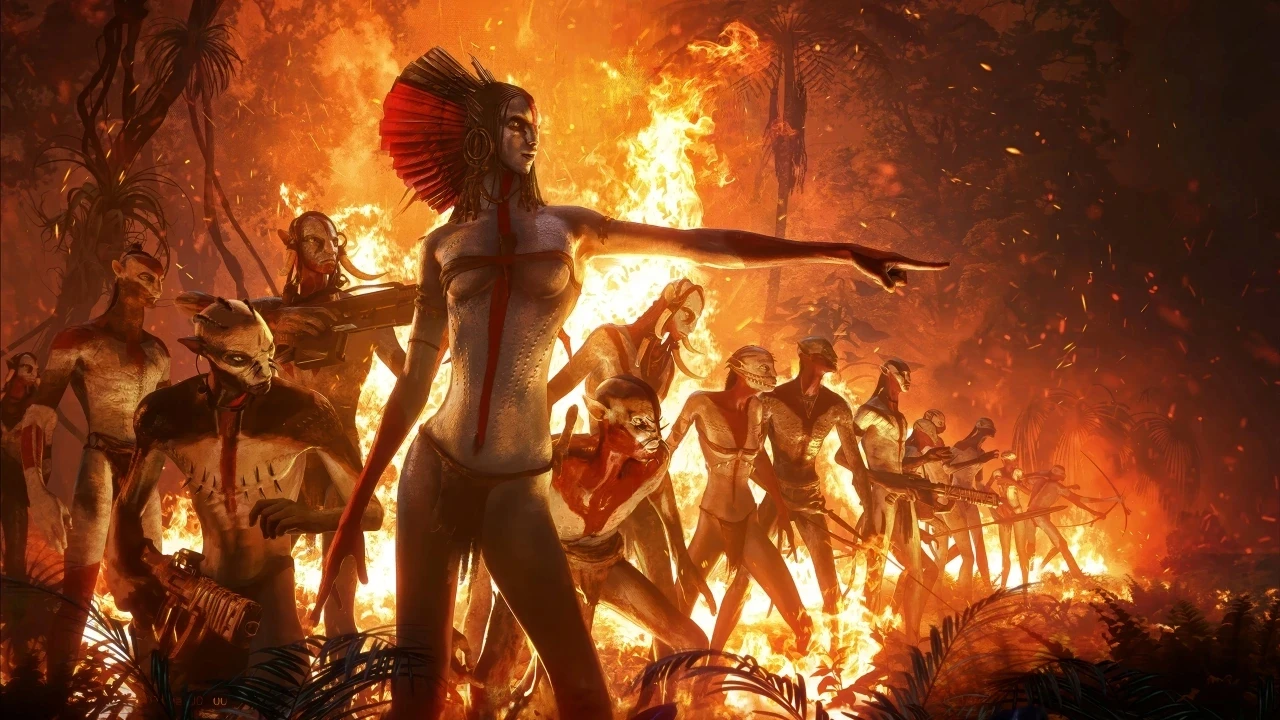
A group of warrior figures with tribal headdresses stand confidently amidst a blazing fire in a dense, mysterious jungle, exuding a sense of power and unity.

The scenes involving the Ash people were a tense spectacle that definitely enhanced the impact of Fire and Ash. Image credit: TMDB


Yet, the core conflict—Na’vi versus human “Sky People,” with Quaritch (Stephen Lang) back for more vengeance—remains largely unchanged. The introduction of the nomadic Wind Traders, led by Peylak (David Thewlis), hints at new directions, but these elements are underexplored, often side lined in favour of extended battle sequences and family melodrama.
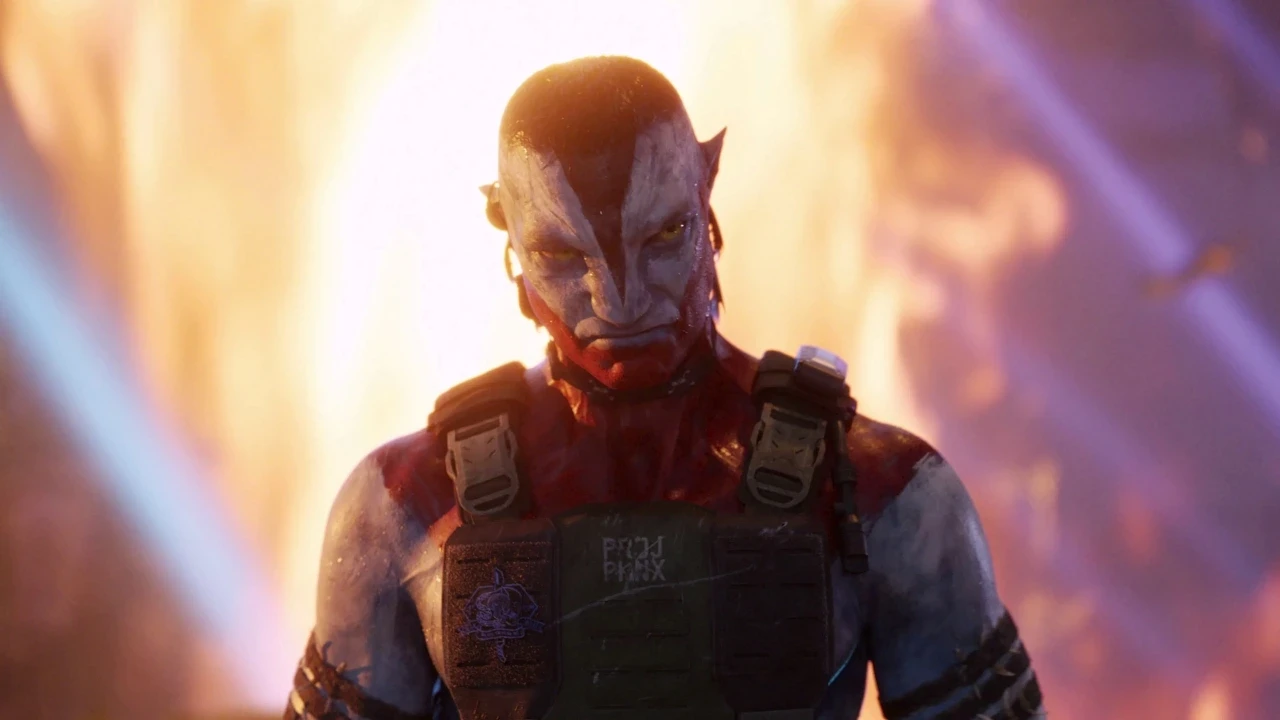
A blue-skinned, red-mouthed character wearing tactical gear stands confidently in front of a large, fiery explosion, creating a dramatic and intense scene.

Quaritch (Stephen Lang) is as menacing as ever, yet slightly muted this time round. Image credit: TMDB


The Cast: Familiar Faces, New Additions

The ensemble is as strong as ever. Worthington and Saldaña anchor the film with emotional heft, while Sigourney Weaver’s dual role as Kiri and the spirit of Grace Augustine adds a layer of legacy and mystery. Oona Chaplin’s Varang is a welcome addition, bringing a new energy to the Na’vi clans, and David Thewlis’s Peylak teases future intrigue.
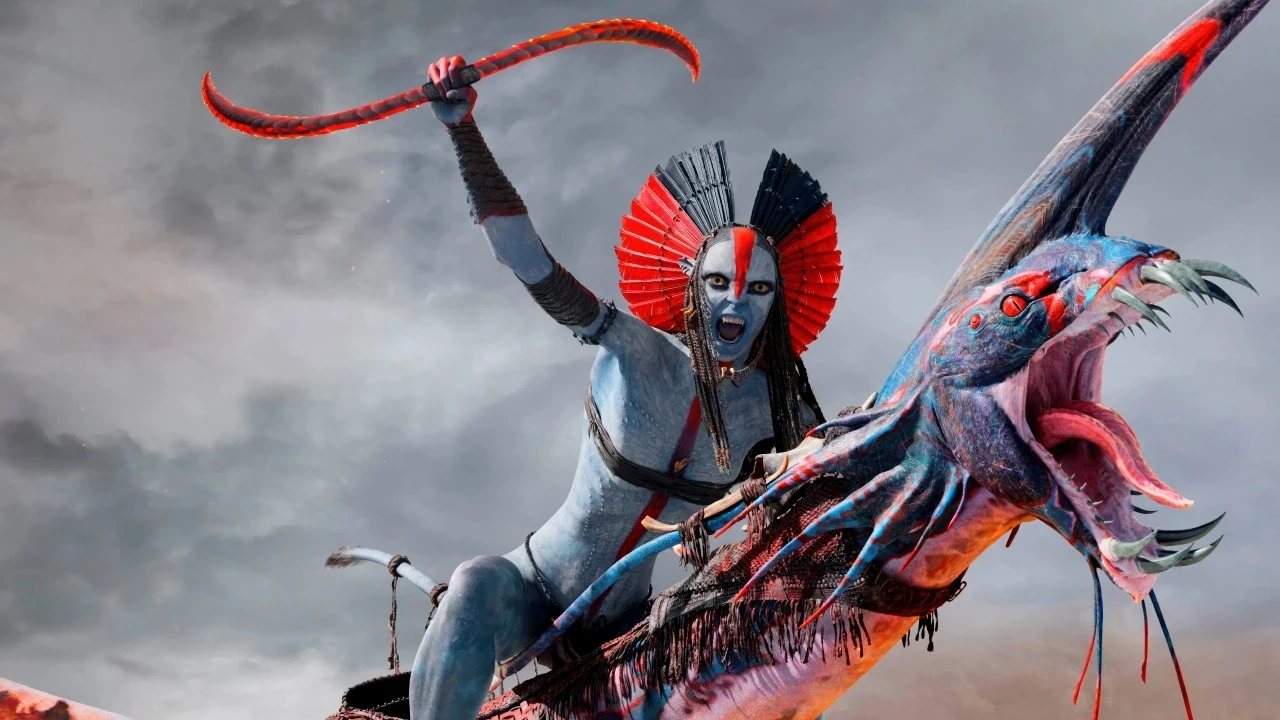
A fierce warrior with tribal face paint and an elaborate headpiece wields a red weapon while riding a fantastical creature with sharp teeth, set against a dramatic cloudy sky.

Varang (Oona Chaplin) was both arresting and compelling but not enough to change the film's dynamics. Image credit: TMDB


But even with these new faces, the film’s character arcs feel stuck in a loop. The Sully family’s struggles, Quaritch’s vendetta, and the humans’ relentless exploitation of Pandora all play out in ways that mirror the last two films. As Robbie Collin of The Daily Telegraph put it,

"The mind-numbing third film in James Cameron's mega-franchise proves he's stuck in a creative cul-de-sac."

Technical Marvels and Behind-the-Scenes Brilliance

It’s impossible not to marvel at the film’s technical achievements. Fire and Ash pushes performance capture to new heights, with actors’ every nuance—down to individual breaths—translated onto their digital counterparts. Underwater sequences were filmed in a 680,000-gallon tank, with the cast undergoing rigorous free-diving training. Machine learning and neural networks powered the animation, and the film’s rendering demands were so immense that, on a single processor, it would have taken 140,000 years to complete. Yet, for all this innovation, the story’s structure and themes feel oddly static. As Peter Travers noted,

“What was once riveting now feels rote. What once made us want more of the same now makes us eager for the shock of the new”.
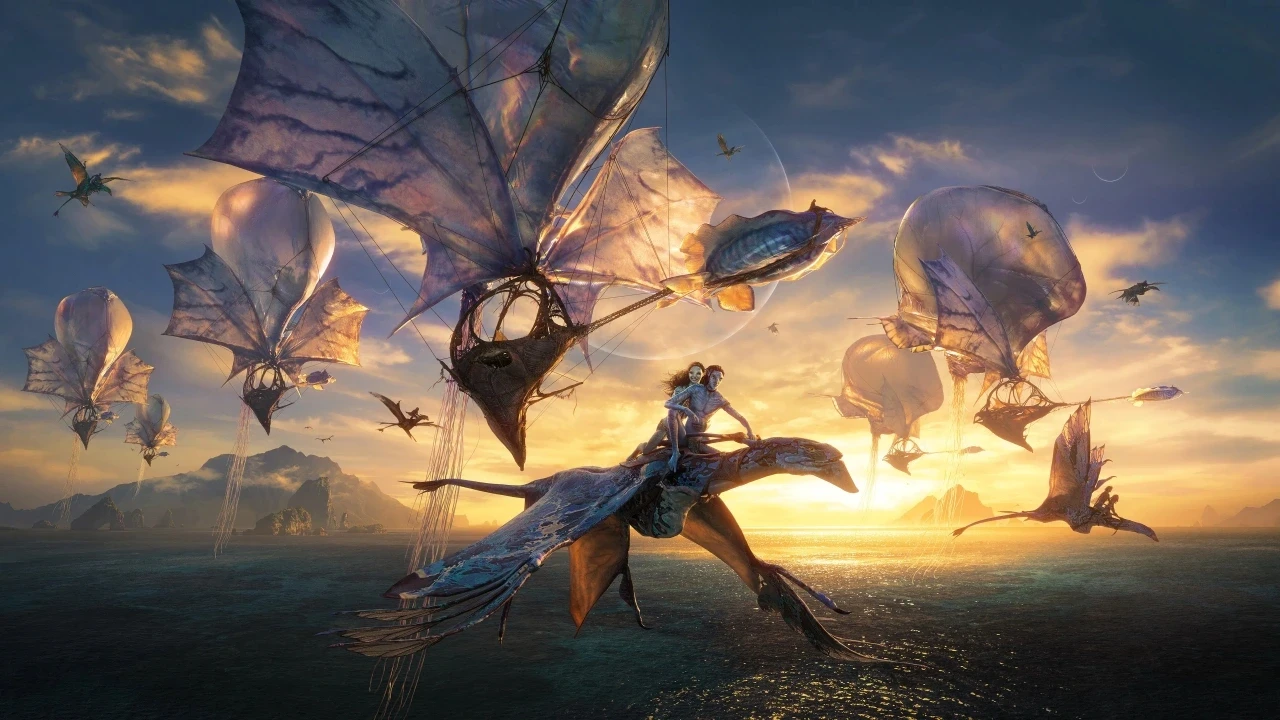
A fantastical scene at sunset showcases a series of airborne creatures resembling flying manta rays gliding over an ocean, casting dramatic shadows on the water, with majestic mountains visible in the background under a richly coloured sky.

The enormous effort that went into producing the visual delight of the movie is still impressive. Image credit: TMDB


Critical and Audience Reception: A Visual Feast, But Calls for Change

Critics and audiences alike have praised Fire and Ash for its spectacle, but many echo the sentiment that the narrative is treading water. Rotten Tomatoes’ consensus sums it up:

“Fire and Ash repeats the narrative beats of its predecessors to frustrating effect, but its grand spectacle continues to stoke one-of-a-kind thrills”.

The film holds a 66% critic score and a robust 90% audience rating, reflecting both admiration and fatigue.

James Cameron himself has acknowledged the challenge:

“Avatar 2 and Avatar 3 flow together as two parts of a single narrative… Do I want it to be a wild success—which almost compels me to continue and make two more Avatar movies? Or do I want it to fail just enough that I can justify doing something else?”

The Future: Will Avatar 4 Break the Cycle?

Here’s the good news: change is coming. Avatar 4 (rumoured title: The Tulkun Rider) is set for release in December 2029, with new actors, a major time jump and a promise of a new story arc. Cameron has teased that the script “goes nuts in a good way,”. While Avatar 5 will partially take place on Earth, with Neytiri visiting our planet—a bold move that could finally shake up the franchise’s formula.

The next instalments are set to explore new Na’vi cultures, moral complexity, and the environmental crisis on Earth, with Michelle Yeoh joining the cast as Dr. Karina Mogue. Cameron has also hinted at stepping back from hands-on directing, opening the door for fresh creative voices.

Final Thoughts: Time for Pandora to Evolve

Avatar: Fire and Ash is a technical marvel and a crowd-pleasing blockbuster, but it’s also a sign that even the most dazzling space sci-fi universes need to evolve. The franchise’s future depends not just on bigger battles or more stunning visuals, but on stories that surprise, challenge, and reflect the diversity of the worlds—and audiences—it seeks to inspire.

If Avatar 4 and 5 can deliver on their promise of dynamism and diversity, Pandora’s magic may yet endure. But if not, even the most beautiful world can start to feel a little too familiar.


Further Reading and Sources:


Stay tuned to Scinexic.com for more space sci-fi movie news, reviews, and exclusive insights from the final frontier.

While Avatar: Fire and Ash dazzles with its technical wizardry and blockbuster spectacle, it treads too-familiar ground, leaving the franchise at a crossroads. For Avatar 4 to truly soar, James Cameron’s space sci-fi epic must embrace bolder, more diverse storytelling—or risk becoming a beautiful echo of its own past.

The Spectacle Remains, But the Story Feels All Too Familiar

Let’s get this out of the way: Avatar: Fire and Ash is a jaw-dropping, immersive experience. James Cameron’s third trip to Pandora is a masterclass in visual effects, world-building, and blockbuster ambition. The film’s 3D and IMAX sequences are, as ever, a feast for the senses, and the technical innovations—performance capture, underwater filming, and neural network-driven animation—are nothing short of revolutionary.

Two blue-skinned, humanoid Na'vi characters navigate a lush, tropical landscape with large, winged creatures soaring in the bright sky above.

The story of Jake (Sam Worthington) and Neytiri (Zoe Saldana) develops further as they both face their own challenges. Image credit: TMDB


But as the credits rolled on this 197-minute epic, I couldn’t shake the feeling that I’d seen much of it before. Fire and Ash is, in many ways, “Avatar: The Way of Water part 2”—a direct continuation that, for all its new clans and creatures, rarely strays from the narrative and emotional beats of its predecessor. The result? A film that’s entertaining, yes, but also a little spent, its story arc echoing rather than evolving.

A lithe, blue-skinned being gracefully balances on a large aquatic creature amidst a shimmering ocean at sunset, while several vibrant, bird-like creatures soar nearby, creating a fantastical and dynamic scene.

The "Way of the Water Pt 2" vibes were hard to escape while watching this instalment. Image credit: TMDB


Pandora’s New Clans, Same Old Conflicts

Fire and Ash picks up a year after The Way of Water, with Jake Sully (Sam Worthington), Neytiri (Zoe Saldaña), and their family still reeling from loss and living among the Metkayina sea clan. The twist this time is the arrival of the Mangkwan, or Ash People—a fire-themed Na’vi clan led by the fierce Varang (Oona Chaplin). Their volcanic homeland and fiery culture are visually striking, expanding Pandora’s lore in ways that should feel fresh.

A group of warrior figures with tribal headdresses stand confidently amidst a blazing fire in a dense, mysterious jungle, exuding a sense of power and unity.

The scenes involving the Ash people were a tense spectacle that definitely enhanced the impact of Fire and Ash. Image credit: TMDB


Yet, the core conflict—Na’vi versus human “Sky People,” with Quaritch (Stephen Lang) back for more vengeance—remains largely unchanged. The introduction of the nomadic Wind Traders, led by Peylak (David Thewlis), hints at new directions, but these elements are underexplored, often side lined in favour of extended battle sequences and family melodrama.

A blue-skinned, red-mouthed character wearing tactical gear stands confidently in front of a large, fiery explosion, creating a dramatic and intense scene.

Quaritch (Stephen Lang) is as menacing as ever, yet slightly muted this time round. Image credit: TMDB


The Cast: Familiar Faces, New Additions

The ensemble is as strong as ever. Worthington and Saldaña anchor the film with emotional heft, while Sigourney Weaver’s dual role as Kiri and the spirit of Grace Augustine adds a layer of legacy and mystery. Oona Chaplin’s Varang is a welcome addition, bringing a new energy to the Na’vi clans, and David Thewlis’s Peylak teases future intrigue.

A fierce warrior with tribal face paint and an elaborate headpiece wields a red weapon while riding a fantastical creature with sharp teeth, set against a dramatic cloudy sky.

Varang (Oona Chaplin) was both arresting and compelling but not enough to change the film's dynamics. Image credit: TMDB


But even with these new faces, the film’s character arcs feel stuck in a loop. The Sully family’s struggles, Quaritch’s vendetta, and the humans’ relentless exploitation of Pandora all play out in ways that mirror the last two films. As Robbie Collin of The Daily Telegraph put it,

"The mind-numbing third film in James Cameron's mega-franchise proves he's stuck in a creative cul-de-sac."

Technical Marvels and Behind-the-Scenes Brilliance

It’s impossible not to marvel at the film’s technical achievements. Fire and Ash pushes performance capture to new heights, with actors’ every nuance—down to individual breaths—translated onto their digital counterparts. Underwater sequences were filmed in a 680,000-gallon tank, with the cast undergoing rigorous free-diving training. Machine learning and neural networks powered the animation, and the film’s rendering demands were so immense that, on a single processor, it would have taken 140,000 years to complete. Yet, for all this innovation, the story’s structure and themes feel oddly static. As Peter Travers noted,

“What was once riveting now feels rote. What once made us want more of the same now makes us eager for the shock of the new”.

A fantastical scene at sunset showcases a series of airborne creatures resembling flying manta rays gliding over an ocean, casting dramatic shadows on the water, with majestic mountains visible in the background under a richly coloured sky.

The enormous effort that went into producing the visual delight of the movie is still impressive. Image credit: TMDB


Critical and Audience Reception: A Visual Feast, But Calls for Change

Critics and audiences alike have praised Fire and Ash for its spectacle, but many echo the sentiment that the narrative is treading water. Rotten Tomatoes’ consensus sums it up:

“Fire and Ash repeats the narrative beats of its predecessors to frustrating effect, but its grand spectacle continues to stoke one-of-a-kind thrills”.

The film holds a 66% critic score and a robust 90% audience rating, reflecting both admiration and fatigue.

James Cameron himself has acknowledged the challenge:

“Avatar 2 and Avatar 3 flow together as two parts of a single narrative… Do I want it to be a wild success—which almost compels me to continue and make two more Avatar movies? Or do I want it to fail just enough that I can justify doing something else?”

The Future: Will Avatar 4 Break the Cycle?

Here’s the good news: change is coming. Avatar 4 (rumoured title: The Tulkun Rider) is set for release in December 2029, with new actors, a major time jump and a promise of a new story arc. Cameron has teased that the script “goes nuts in a good way,”. While Avatar 5 will partially take place on Earth, with Neytiri visiting our planet—a bold move that could finally shake up the franchise’s formula.

The next instalments are set to explore new Na’vi cultures, moral complexity, and the environmental crisis on Earth, with Michelle Yeoh joining the cast as Dr. Karina Mogue. Cameron has also hinted at stepping back from hands-on directing, opening the door for fresh creative voices.

Final Thoughts: Time for Pandora to Evolve

Avatar: Fire and Ash is a technical marvel and a crowd-pleasing blockbuster, but it’s also a sign that even the most dazzling space sci-fi universes need to evolve. The franchise’s future depends not just on bigger battles or more stunning visuals, but on stories that surprise, challenge, and reflect the diversity of the worlds—and audiences—it seeks to inspire.

If Avatar 4 and 5 can deliver on their promise of dynamism and diversity, Pandora’s magic may yet endure. But if not, even the most beautiful world can start to feel a little too familiar.


Further Reading and Sources:


Stay tuned to Scinexic.com for more space sci-fi movie news, reviews, and exclusive insights from the final frontier.

Image Gallery

Join the Crew

If you make a purchase through links on this site, we may earn a small commission. This helps keep the blog running and allows us to continue creating cosmic content. Thank you for your support.

Comments

Please be kind and considerate. Any abusive or offensive comments will be sent out the airlock! Thank You.

Please be kind and considerate. Any abusive or offensive comments will be sent out the airlock! Thank You.

Please be kind and considerate. Any abusive or offensive comments will be sent out the airlock! Thank You.

Share on Twitter

Share on Instagram

Share on Twitter

Share on Instagram

Banner Image - Avatar: Fire and Ash scene still and logo - TMDB.org - Copyright: 20th Century Studios

Main Article - All images and media are the property of their respective owners.

img + p:has(em) { text-align:center !important; } img + p > em { color: #CCC; font-size: 12px; }