


The SciNexic Files
The SciNexic Files
The SciNexic Files
Feature
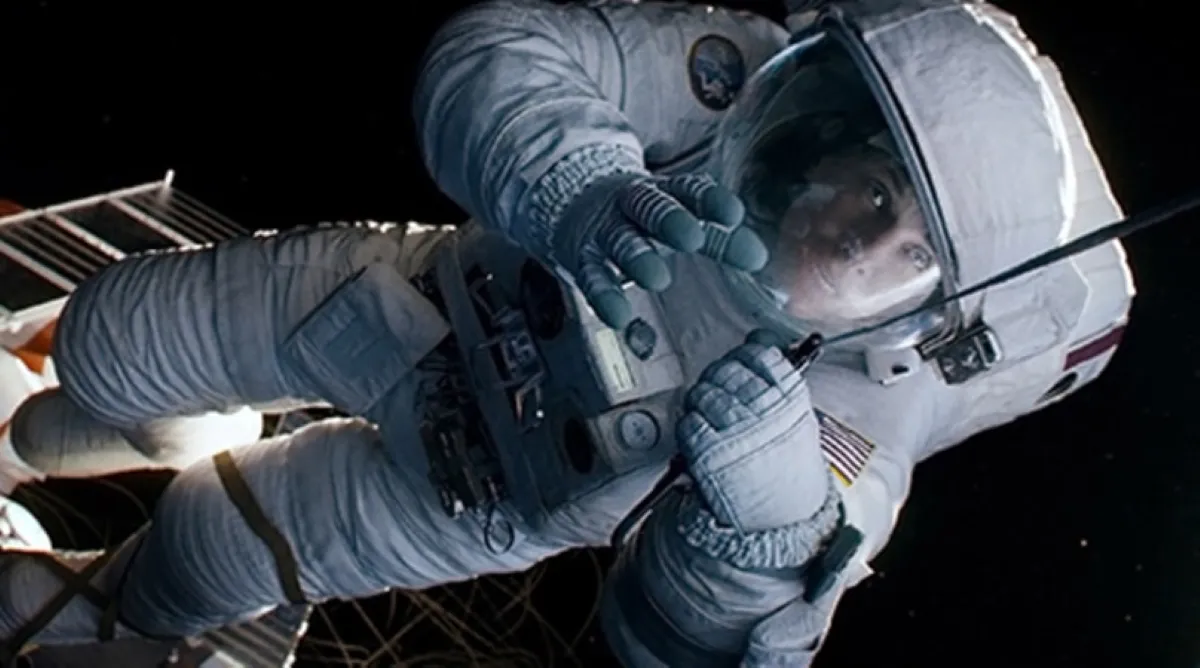
Suit Up: Why EVA Suits Are the Unsung Heroes of Space Sci-Fi
Spacewalks are the ultimate high-wire act—one wrong move and it’s oblivion. In both reality and space sci-fi, the EVA (Extravehicular Activity) suit is the only thing standing between an astronaut and the void. But these suits are more than just survival gear; they’re symbols of human ingenuity, resilience, and our relentless drive to explore. Today, we’re diving into the coolest EVA suits from space sci-fi, comparing them to real-world tech, and exploring how fiction and engineering push each other to new frontiers.
What Is an EVA Suit—And Why Does It Matter?
“Space suits are unique, meticulously engineered, miniature, customized spacecraft.”
— NASA EVA Systems Overview
EVA suits are, quite literally, wearable spacecraft. NASA’s current EMU (Extravehicular Mobility Unit) features up to 16 layers, including gold-coated visors for radiation protection and a PLSS (Portable Life Support System) backpack that supplies oxygen, removes CO₂, regulates temperature, and powers communications. These suits enable up to 7 hours of EVA operation, with modular parts to fit different astronauts.
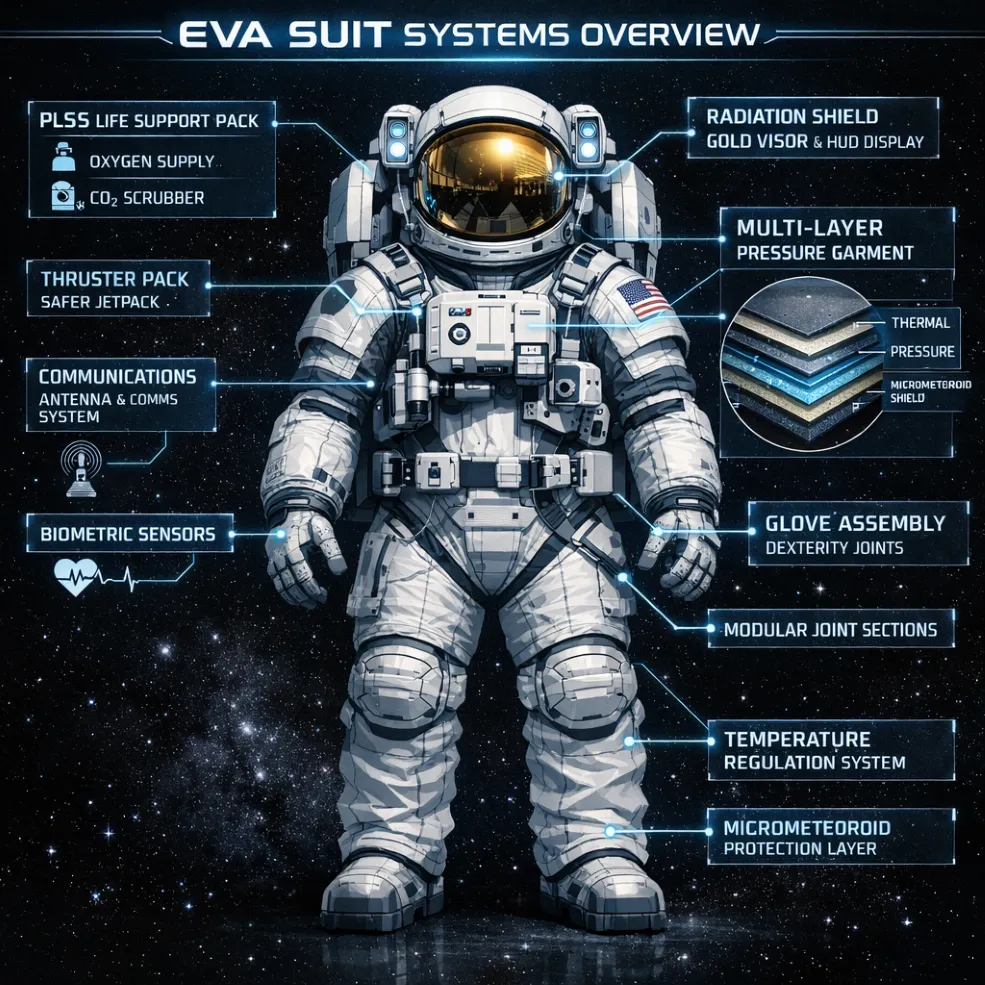
Detailed graphic of EVA systems technology.
Russia’s Orlan suit, in use since 1977, is bulkier and features a rear-entry hatch. It operates at a higher pressure (5.9 psi vs. EMU’s 4.3 psi), reducing pre-breathing time but making the suit stiffer.
EVA Suits in Space Sci-Fi: A Comparative Tour
2001: A Space Odyssey (1968)
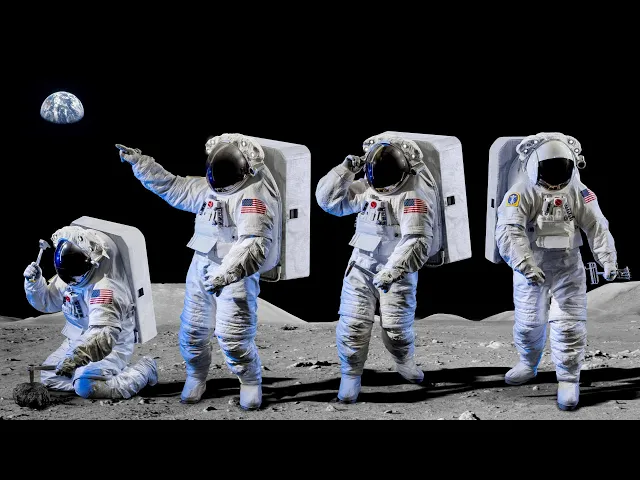
Designed by Harry Lange, a former NASA artist, the suits in 2001 were based on real NASA concepts, featuring horizontal stitching to maintain air volume. Kubrick demanded “strange but plausible, futuristic but not fantastic” designs, assembling aerospace engineers to ensure scientific credibility. The result? Suits so convincing that conspiracy theorists claimed Kubrick faked the Moon landings.

The iconic space suit design from 2001 had a profound effect on EVA scenes in future Space Sci-Fi. Image credit: TMDB
Gravity (2013)
Gravity’s suits are near-perfect NASA EMU replicas. Sandra Bullock received advice from astronaut Cady Coleman, who communicated from the ISS about movement and the psychological toll of isolation. Director Alfonso Cuarón said,
“We were trying to honour reality and scientific accuracy as much as we could.”
Astronauts praised the film as the most realistic portrayal of spacewalking on screen.
The Martian (2015)

The modular lightweight suit design from The Martian depicted the futuristic technology of the film's setting. Image credit: TMDB
Costume designer Janty Yates drew inspiration from NASA’s Z-series Mars suit prototypes, aiming for a look “one decade ahead.” She remarked, “The Z1 is a Buzz Lightyear lookalike, and the Z2 looks far too futuristic for us”. The design also nodded to MIT’s BioSuit, with actors wearing cooling systems and working comms, and neck rings 3D printed for authenticity.
Interstellar (2014)
Interstellar’s suits are practical, retro, and intentionally vulnerable, with visible life-support backpacks. Production designer Nathan Crowley explained, “The advantage of not faking is that you feel it”.

Interstellar's EVA suits drew from NASA tech to create designs that were plausible. Image credit: TMDB
Ad Astra (2019)
Apollo-inspired with modern tweaks, Ad Astra’s suits benefited from NASA engineer Robert Yowell’s technical advice and deep VFX research. The result is a grounded, psychologically realistic portrayal of spacewalking.
Alien/Aliens Franchise
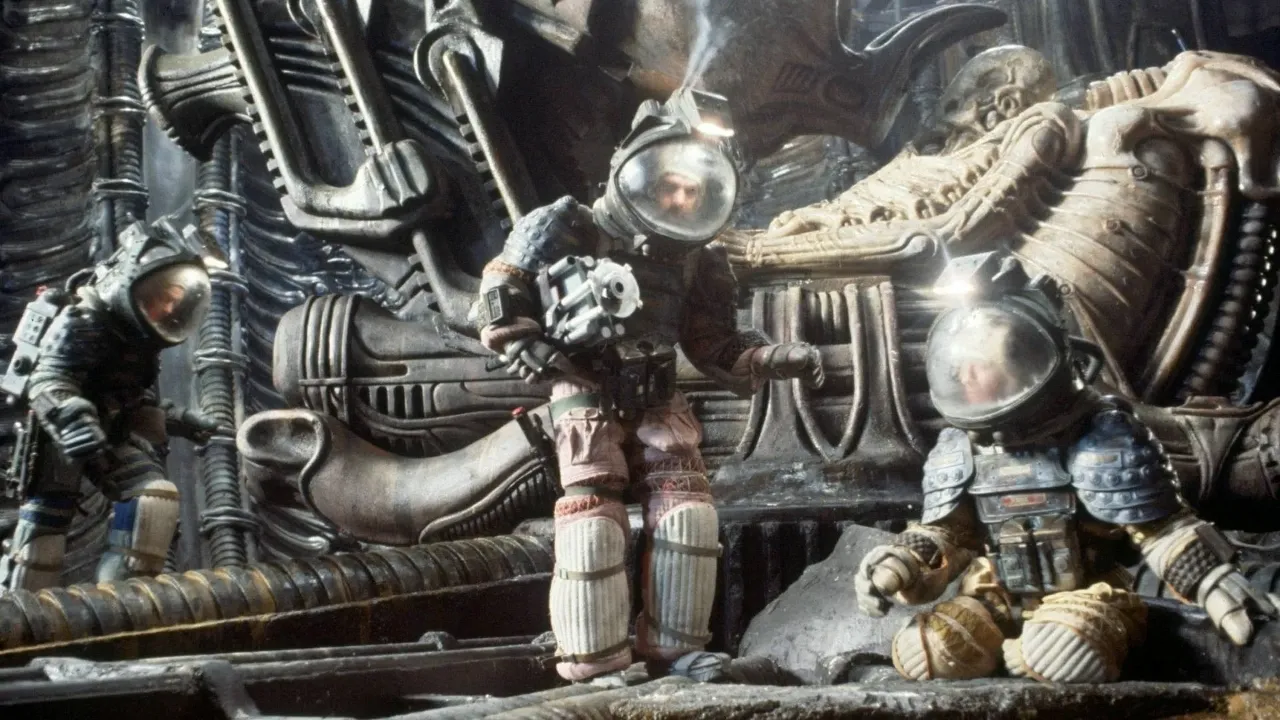
The Technopunk style of the EVA suits in Alien elevated the gritty industrial atmosphere of the movie. Image credit: TMDB
Ridley Scott’s Alien introduced the “used future” aesthetic: bulky, industrial suits lined with nylon (and no ventilation), causing actors to nearly faint. H.R. Giger’s biomechanical vision influenced both the suits and the environment, making space feel truly hostile.
The Expanse (TV Series)
The Expanse features a spectrum of suits, from basic Belter models to advanced Martian military armour with magnetic boots and modular life-support. Showrunner Naren Shankar, who holds a PhD in applied physics, ensured the suits’ functionality matched the show’s hard-science ethos. Suits are often shown damaged or jury-rigged, reflecting the dangers and resourcefulness of life in space.

In The Expanse, EVA suits are more expressive with different types appearing in the show. Image credit: TMDB
Star Trek: Discovery (TV Series)
Discovery reimagines Starfleet’s EVA suits with sleek 23rd‑century design and real‑world engineering cues. Standard on the USS Discovery, they feature full EVA support, radiation and debris protection, a pearl‑white shell, copper honeycomb undersuit, HUD helmet, and auto‑nav thrusters—drawing inspiration from NASA’s EMU and MMU systems and MIT’s BioSuit.
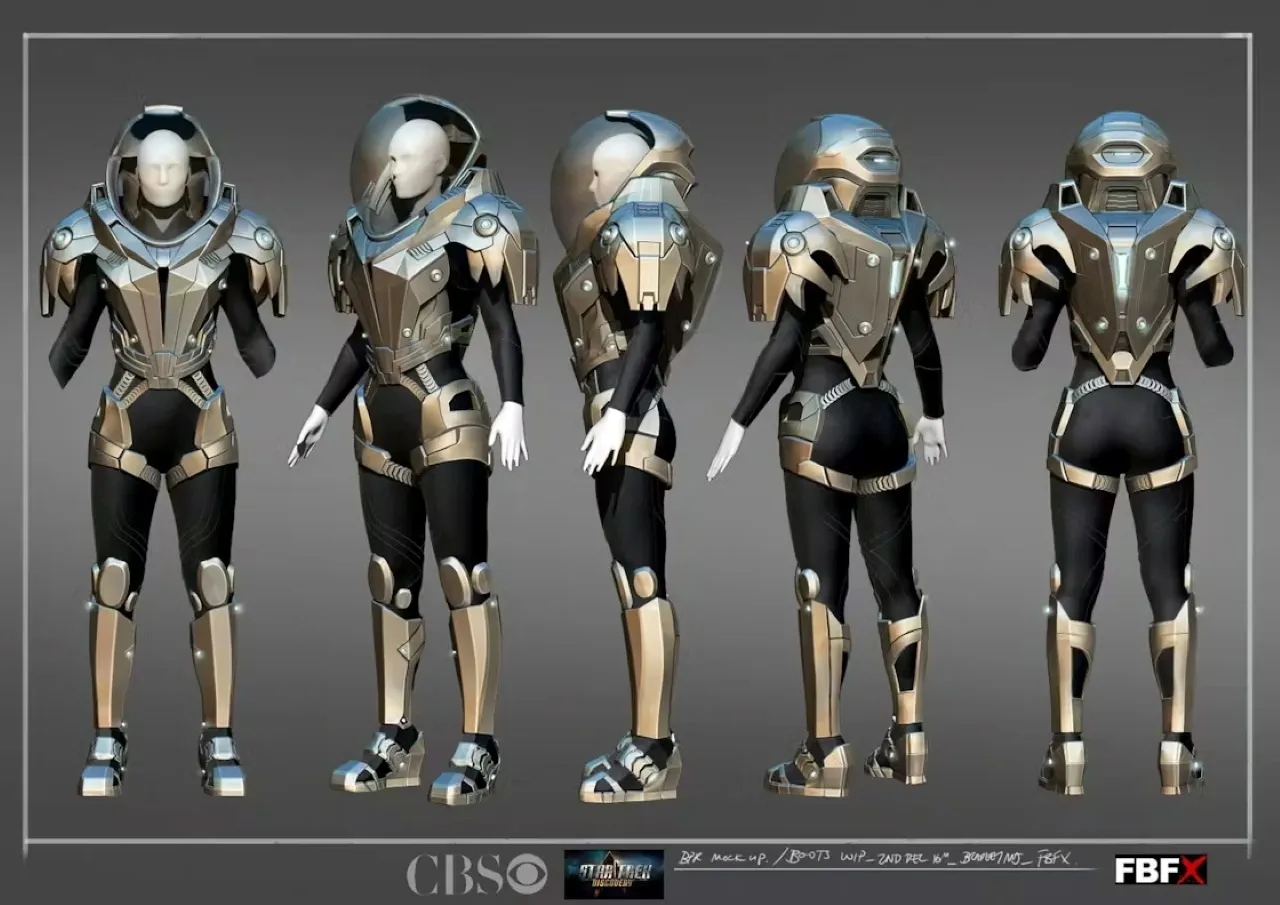
Futuristic and distinct, Discovery's space suits were lightweight and adaptive. Image credit: StarTrek.com
Mass Effect (Video Game Series)
In Mass Effect, EVA suits are more than protection—they’re identity. Shepard’s N7 armour pairs ceramic plating with kinetic padding and elite markings, while all hardsuits offer vacuum protection, shields, biotic integration, and omni‑tool support. Andromeda introduces sleeker white‑and‑blue suits inspired by MIT’s BioSuit and NASA’s Z‑series designs.
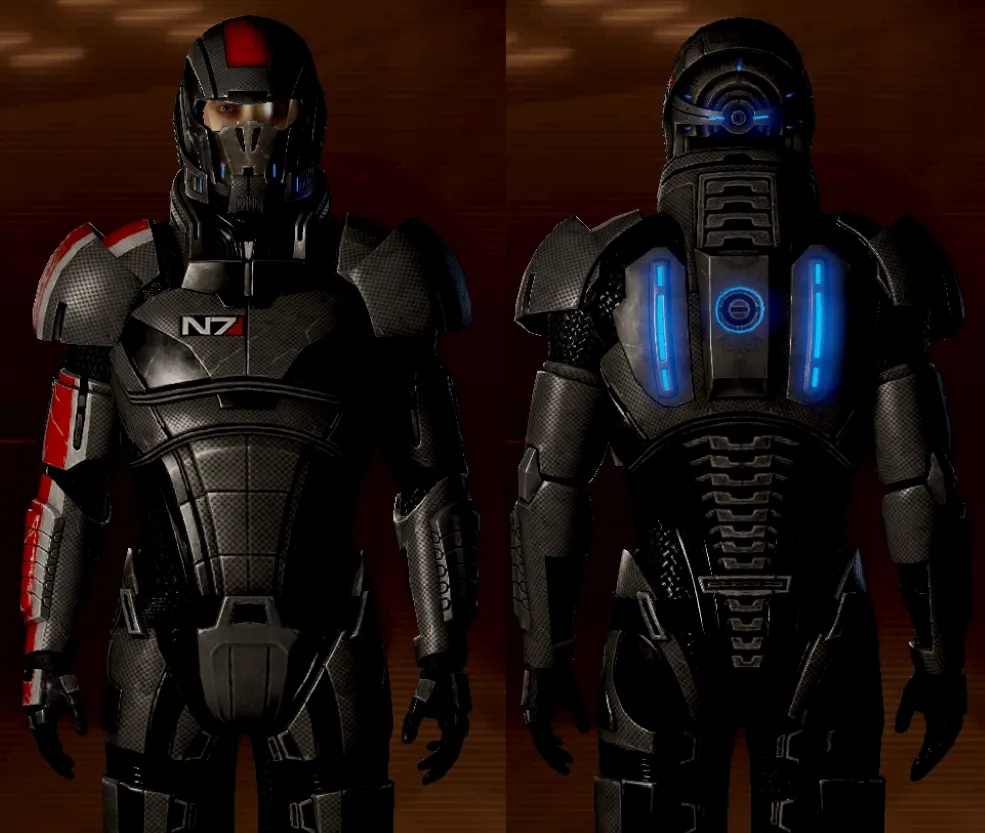
The N7 armour typifies the advanced multi-purpose EVA suits that could exist in the far future. Image credit: Mass Effect Wiki
The Evolution of EVA Tech
The next generation of EVA suits is blurring the line between fiction and reality. Axiom Space’s AxEMU, set for Artemis III in late 2026, features 4G/LTE comms, biometric monitoring, HD cameras, regenerable CO₂ scrubbing, and is designed to fit 90% of the US population. Over 850 hours of pressurised testing have been completed.
Spacesuits for Artemis: Moon Dust and Mobility. By NASA Johnson. From @ReelNASA
“Axiom’s next generation spacesuits will not only enable the first woman to walk on the Moon, but they will also open opportunities for more people to explore and conduct science on the Moon than ever before.”
— NASA Administrator Bill Nelson
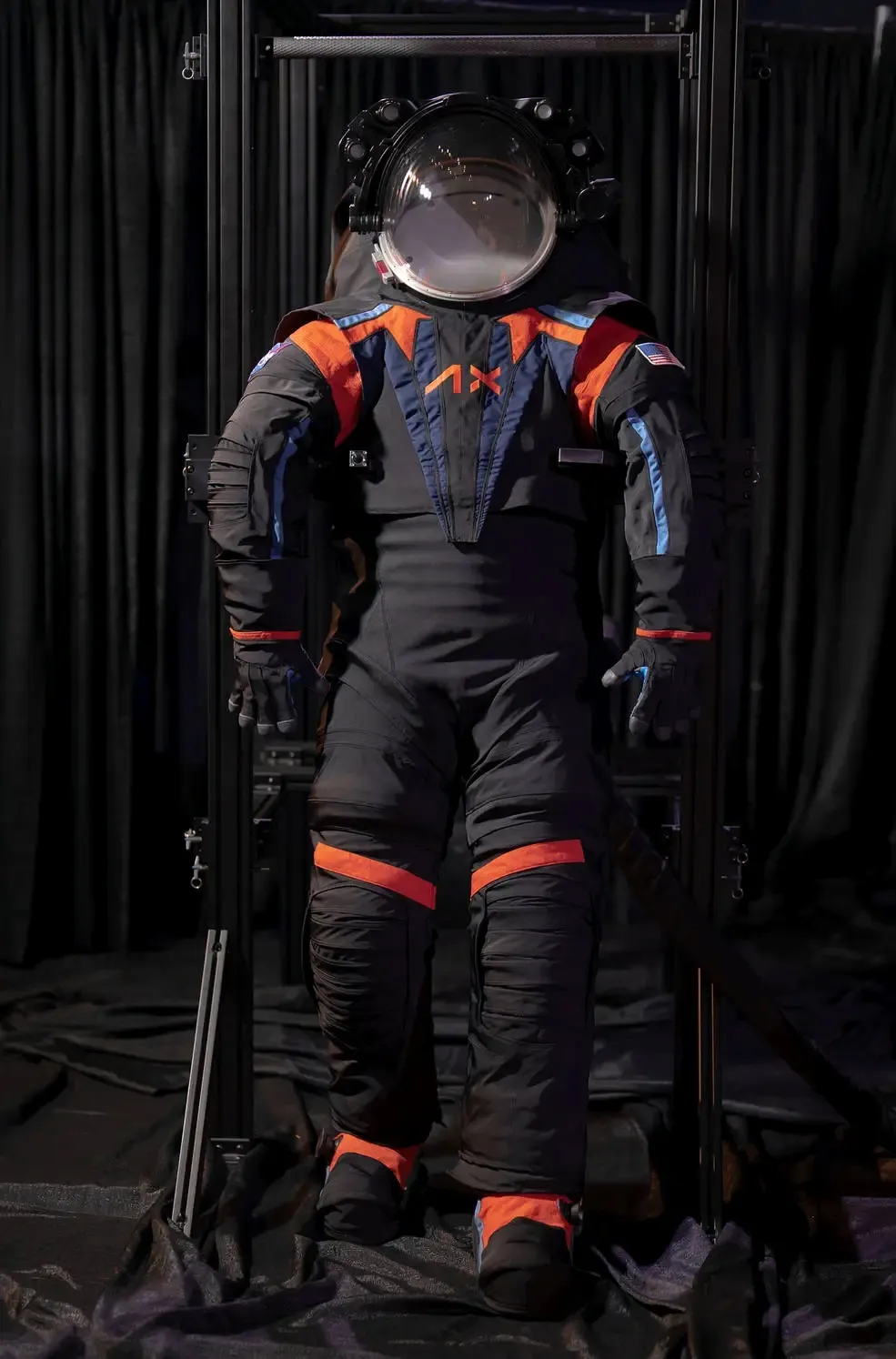
The latest generation NASA EVA suit by Axiom. Image credit: NASA
SpaceX’s EVA suit, which debuted on the Polaris Dawn mission in 2024, is “kind of like a suit of armor made of fabric,” according to engineer Erik Kraus. Chris Trigg adds, “The ultimate goal is that you can put on the spacesuit and go out and get work done anywhere in the solar system and not feel like you’re wearing anything more than you normally wear everyday”. The first commercial EVA lasted 1 hour 46 minutes, marking a new era for private spacewalks.
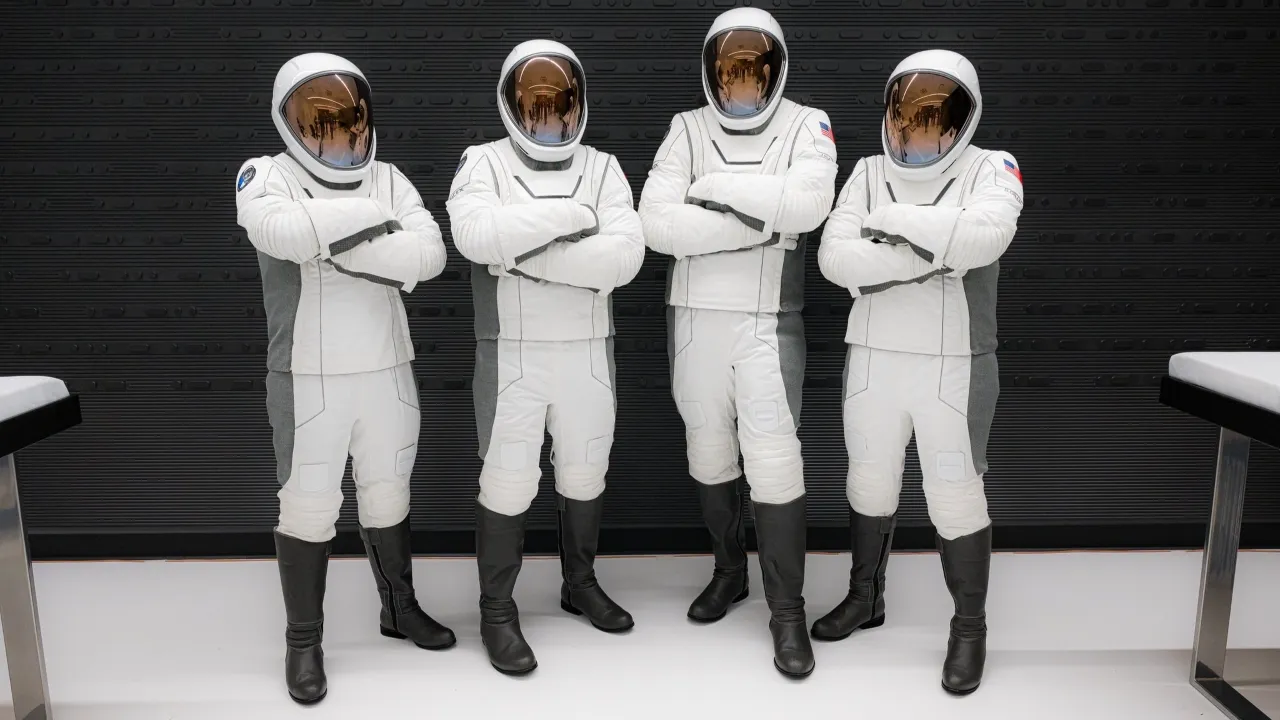
SpaceX space suits employ a more minimalist design. Image credit: Polarisprogram.com
The Future of Spacewalks: What Sci-Fi Still Dreams Of
MIT’s BioSuit is pioneering the skin-tight, mechanical counter-pressure suit long imagined in sci-fi. Professor Dava Newman explains,
“Ultimately, the big advantage is mobility, and a very lightweight suit for planetary exploration” (MIT News).
The suit uses 3D knit tech and a wireless GUI for monitoring—straight out of a sci-fi playbook.
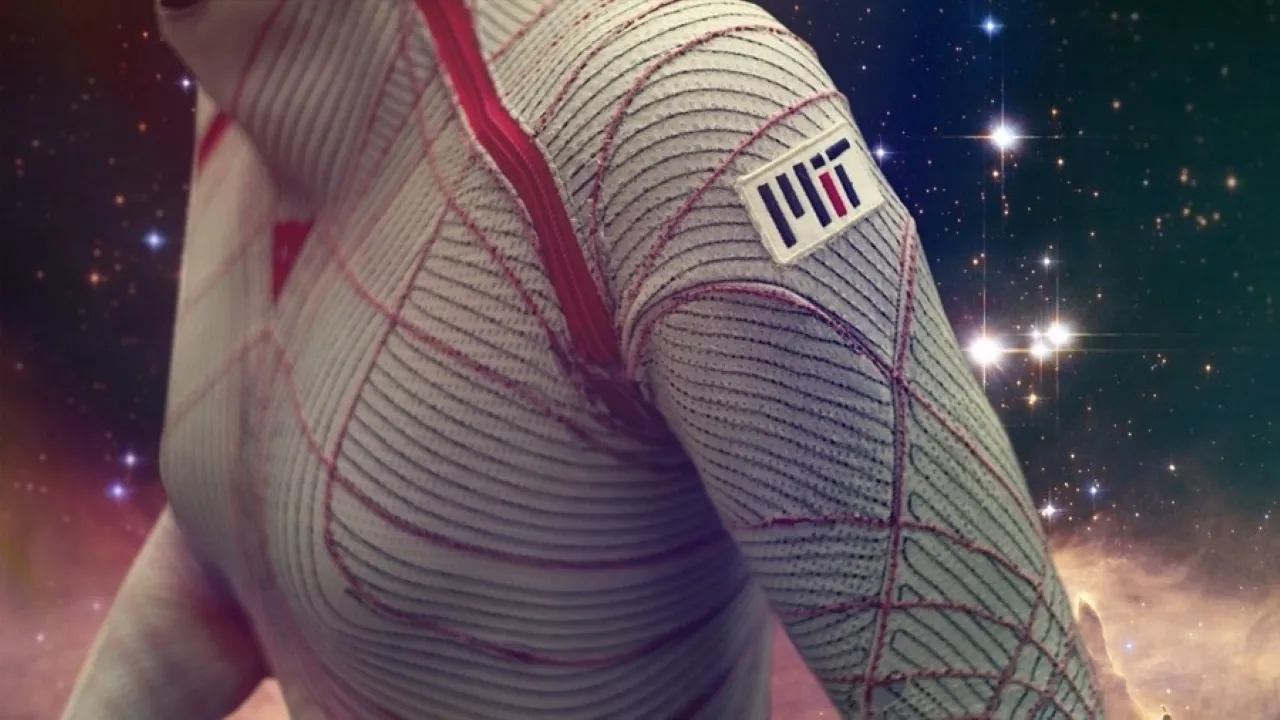
Space suits could one day feature smart lightweight exotic biomaterials that are inspired by MIT's BioSuit design. Image credit: MIT News
NASA and ESA are integrating AI into suits, with NASA engineer Paromita Mitra noting,
“If you’ve ever seen Iron Man or any sci-fi movie, he’s got the assistant in his helmet constantly talking to him and got the overlay of the digital information. That’s exactly what it is” (NASA Podcast).
Self-healing materials are also on the horizon: NASA’s multi-layered polymers can reseal punctures within microseconds, and ESA’s Project Pextex is developing self-healing, dust-repelling textiles for lunar suits.
For mobility, NASA’s SAFER jetpack is the current standard for EVA rescue, but future concepts include hands-free control and advanced gyroscopes.
“We don’t make spacesuits look cool, or spacey, or futuristic, any of those things. Job number one with a spacesuit is keep the astronaut alive.”
— Amy Ross, NASA spacesuit engineer (NASA Podcast)
More Than Just Costumes
EVA suits in space sci-fi are more than props—they’re storytelling engines, reflecting our hopes, fears, and the ever-shifting boundary between imagination and reality. As engineers and filmmakers continue to inspire each other, the suits of tomorrow will be as extraordinary as the stories that first imagined them. In the end, every suit—real or fictional—is a testament to humanity’s courage to step into the unknown.
Which space sci-fi EVA suit is your favourite? Share your pick and why in the comments below!
Key Sources & Further Reading
For more deep dives into the science and spectacle of space sci-fi, keep exploring Scinexic.com—where the future is always just a page away.
Spacewalks are the ultimate high-wire act—one wrong move and it’s oblivion. In both reality and space sci-fi, the EVA (Extravehicular Activity) suit is the only thing standing between an astronaut and the void. But these suits are more than just survival gear; they’re symbols of human ingenuity, resilience, and our relentless drive to explore. Today, we’re diving into the coolest EVA suits from space sci-fi, comparing them to real-world tech, and exploring how fiction and engineering push each other to new frontiers.
What Is an EVA Suit—And Why Does It Matter?
“Space suits are unique, meticulously engineered, miniature, customized spacecraft.”
— NASA EVA Systems Overview
EVA suits are, quite literally, wearable spacecraft. NASA’s current EMU (Extravehicular Mobility Unit) features up to 16 layers, including gold-coated visors for radiation protection and a PLSS (Portable Life Support System) backpack that supplies oxygen, removes CO₂, regulates temperature, and powers communications. These suits enable up to 7 hours of EVA operation, with modular parts to fit different astronauts.
Detailed graphic of EVA systems technology.
Russia’s Orlan suit, in use since 1977, is bulkier and features a rear-entry hatch. It operates at a higher pressure (5.9 psi vs. EMU’s 4.3 psi), reducing pre-breathing time but making the suit stiffer.
EVA Suits in Space Sci-Fi: A Comparative Tour
2001: A Space Odyssey (1968)
Designed by Harry Lange, a former NASA artist, the suits in 2001 were based on real NASA concepts, featuring horizontal stitching to maintain air volume. Kubrick demanded “strange but plausible, futuristic but not fantastic” designs, assembling aerospace engineers to ensure scientific credibility. The result? Suits so convincing that conspiracy theorists claimed Kubrick faked the Moon landings.
The iconic space suit design from 2001 had a profound effect on EVA scenes in future Space Sci-Fi. Image credit: TMDB
Gravity (2013)
Gravity’s suits are near-perfect NASA EMU replicas. Sandra Bullock received advice from astronaut Cady Coleman, who communicated from the ISS about movement and the psychological toll of isolation. Director Alfonso Cuarón said,
“We were trying to honour reality and scientific accuracy as much as we could.”
Astronauts praised the film as the most realistic portrayal of spacewalking on screen.
The Martian (2015)
The modular lightweight suit design from The Martian depicted the futuristic technology of the film's setting. Image credit: TMDB
Costume designer Janty Yates drew inspiration from NASA’s Z-series Mars suit prototypes, aiming for a look “one decade ahead.” She remarked, “The Z1 is a Buzz Lightyear lookalike, and the Z2 looks far too futuristic for us”. The design also nodded to MIT’s BioSuit, with actors wearing cooling systems and working comms, and neck rings 3D printed for authenticity.
Interstellar (2014)
Interstellar’s suits are practical, retro, and intentionally vulnerable, with visible life-support backpacks. Production designer Nathan Crowley explained, “The advantage of not faking is that you feel it”.
Interstellar's EVA suits drew from NASA tech to create designs that were plausible. Image credit: TMDB
Ad Astra (2019)
Apollo-inspired with modern tweaks, Ad Astra’s suits benefited from NASA engineer Robert Yowell’s technical advice and deep VFX research. The result is a grounded, psychologically realistic portrayal of spacewalking.
Alien/Aliens Franchise
The Technopunk style of the EVA suits in Alien elevated the gritty industrial atmosphere of the movie. Image credit: TMDB
Ridley Scott’s Alien introduced the “used future” aesthetic: bulky, industrial suits lined with nylon (and no ventilation), causing actors to nearly faint. H.R. Giger’s biomechanical vision influenced both the suits and the environment, making space feel truly hostile.
The Expanse (TV Series)
The Expanse features a spectrum of suits, from basic Belter models to advanced Martian military armour with magnetic boots and modular life-support. Showrunner Naren Shankar, who holds a PhD in applied physics, ensured the suits’ functionality matched the show’s hard-science ethos. Suits are often shown damaged or jury-rigged, reflecting the dangers and resourcefulness of life in space.
In The Expanse, EVA suits are more expressive with different types appearing in the show. Image credit: TMDB
Star Trek: Discovery (TV Series)
Discovery reimagines Starfleet’s EVA suits with sleek 23rd‑century design and real‑world engineering cues. Standard on the USS Discovery, they feature full EVA support, radiation and debris protection, a pearl‑white shell, copper honeycomb undersuit, HUD helmet, and auto‑nav thrusters—drawing inspiration from NASA’s EMU and MMU systems and MIT’s BioSuit.
Futuristic and distinct, Discovery's space suits were lightweight and adaptive. Image credit: StarTrek.com
Mass Effect (Video Game Series)
In Mass Effect, EVA suits are more than protection—they’re identity. Shepard’s N7 armour pairs ceramic plating with kinetic padding and elite markings, while all hardsuits offer vacuum protection, shields, biotic integration, and omni‑tool support. Andromeda introduces sleeker white‑and‑blue suits inspired by MIT’s BioSuit and NASA’s Z‑series designs.
The N7 armour typifies the advanced multi-purpose EVA suits that could exist in the far future. Image credit: Mass Effect Wiki
The Evolution of EVA Tech
The next generation of EVA suits is blurring the line between fiction and reality. Axiom Space’s AxEMU, set for Artemis III in late 2026, features 4G/LTE comms, biometric monitoring, HD cameras, regenerable CO₂ scrubbing, and is designed to fit 90% of the US population. Over 850 hours of pressurised testing have been completed.
Spacesuits for Artemis: Moon Dust and Mobility. By NASA Johnson. From @ReelNASA
“Axiom’s next generation spacesuits will not only enable the first woman to walk on the Moon, but they will also open opportunities for more people to explore and conduct science on the Moon than ever before.”
— NASA Administrator Bill Nelson
The latest generation NASA EVA suit by Axiom. Image credit: NASA
SpaceX’s EVA suit, which debuted on the Polaris Dawn mission in 2024, is “kind of like a suit of armor made of fabric,” according to engineer Erik Kraus. Chris Trigg adds, “The ultimate goal is that you can put on the spacesuit and go out and get work done anywhere in the solar system and not feel like you’re wearing anything more than you normally wear everyday”. The first commercial EVA lasted 1 hour 46 minutes, marking a new era for private spacewalks.
SpaceX space suits employ a more minimalist design. Image credit: Polarisprogram.com
The Future of Spacewalks: What Sci-Fi Still Dreams Of
MIT’s BioSuit is pioneering the skin-tight, mechanical counter-pressure suit long imagined in sci-fi. Professor Dava Newman explains,
“Ultimately, the big advantage is mobility, and a very lightweight suit for planetary exploration” (MIT News).
The suit uses 3D knit tech and a wireless GUI for monitoring—straight out of a sci-fi playbook.
Space suits could one day feature smart lightweight exotic biomaterials that are inspired by MIT's BioSuit design. Image credit: MIT News
NASA and ESA are integrating AI into suits, with NASA engineer Paromita Mitra noting,
“If you’ve ever seen Iron Man or any sci-fi movie, he’s got the assistant in his helmet constantly talking to him and got the overlay of the digital information. That’s exactly what it is” (NASA Podcast).
Self-healing materials are also on the horizon: NASA’s multi-layered polymers can reseal punctures within microseconds, and ESA’s Project Pextex is developing self-healing, dust-repelling textiles for lunar suits.
For mobility, NASA’s SAFER jetpack is the current standard for EVA rescue, but future concepts include hands-free control and advanced gyroscopes.
“We don’t make spacesuits look cool, or spacey, or futuristic, any of those things. Job number one with a spacesuit is keep the astronaut alive.”
— Amy Ross, NASA spacesuit engineer (NASA Podcast)
More Than Just Costumes
EVA suits in space sci-fi are more than props—they’re storytelling engines, reflecting our hopes, fears, and the ever-shifting boundary between imagination and reality. As engineers and filmmakers continue to inspire each other, the suits of tomorrow will be as extraordinary as the stories that first imagined them. In the end, every suit—real or fictional—is a testament to humanity’s courage to step into the unknown.
Which space sci-fi EVA suit is your favourite? Share your pick and why in the comments below!
Key Sources & Further Reading
For more deep dives into the science and spectacle of space sci-fi, keep exploring Scinexic.com—where the future is always just a page away.
Spacewalks are the ultimate high-wire act—one wrong move and it’s oblivion. In both reality and space sci-fi, the EVA (Extravehicular Activity) suit is the only thing standing between an astronaut and the void. But these suits are more than just survival gear; they’re symbols of human ingenuity, resilience, and our relentless drive to explore. Today, we’re diving into the coolest EVA suits from space sci-fi, comparing them to real-world tech, and exploring how fiction and engineering push each other to new frontiers.
What Is an EVA Suit—And Why Does It Matter?
“Space suits are unique, meticulously engineered, miniature, customized spacecraft.”
— NASA EVA Systems Overview
EVA suits are, quite literally, wearable spacecraft. NASA’s current EMU (Extravehicular Mobility Unit) features up to 16 layers, including gold-coated visors for radiation protection and a PLSS (Portable Life Support System) backpack that supplies oxygen, removes CO₂, regulates temperature, and powers communications. These suits enable up to 7 hours of EVA operation, with modular parts to fit different astronauts.
Detailed graphic of EVA systems technology.
Russia’s Orlan suit, in use since 1977, is bulkier and features a rear-entry hatch. It operates at a higher pressure (5.9 psi vs. EMU’s 4.3 psi), reducing pre-breathing time but making the suit stiffer.
EVA Suits in Space Sci-Fi: A Comparative Tour
2001: A Space Odyssey (1968)
Designed by Harry Lange, a former NASA artist, the suits in 2001 were based on real NASA concepts, featuring horizontal stitching to maintain air volume. Kubrick demanded “strange but plausible, futuristic but not fantastic” designs, assembling aerospace engineers to ensure scientific credibility. The result? Suits so convincing that conspiracy theorists claimed Kubrick faked the Moon landings.
The iconic space suit design from 2001 had a profound effect on EVA scenes in future Space Sci-Fi. Image credit: TMDB
Gravity (2013)
Gravity’s suits are near-perfect NASA EMU replicas. Sandra Bullock received advice from astronaut Cady Coleman, who communicated from the ISS about movement and the psychological toll of isolation. Director Alfonso Cuarón said,
“We were trying to honour reality and scientific accuracy as much as we could.”
Astronauts praised the film as the most realistic portrayal of spacewalking on screen.
The Martian (2015)
The modular lightweight suit design from The Martian depicted the futuristic technology of the film's setting. Image credit: TMDB
Costume designer Janty Yates drew inspiration from NASA’s Z-series Mars suit prototypes, aiming for a look “one decade ahead.” She remarked, “The Z1 is a Buzz Lightyear lookalike, and the Z2 looks far too futuristic for us”. The design also nodded to MIT’s BioSuit, with actors wearing cooling systems and working comms, and neck rings 3D printed for authenticity.
Interstellar (2014)
Interstellar’s suits are practical, retro, and intentionally vulnerable, with visible life-support backpacks. Production designer Nathan Crowley explained, “The advantage of not faking is that you feel it”.
Interstellar's EVA suits drew from NASA tech to create designs that were plausible. Image credit: TMDB
Ad Astra (2019)
Apollo-inspired with modern tweaks, Ad Astra’s suits benefited from NASA engineer Robert Yowell’s technical advice and deep VFX research. The result is a grounded, psychologically realistic portrayal of spacewalking.
Alien/Aliens Franchise
The Technopunk style of the EVA suits in Alien elevated the gritty industrial atmosphere of the movie. Image credit: TMDB
Ridley Scott’s Alien introduced the “used future” aesthetic: bulky, industrial suits lined with nylon (and no ventilation), causing actors to nearly faint. H.R. Giger’s biomechanical vision influenced both the suits and the environment, making space feel truly hostile.
The Expanse (TV Series)
The Expanse features a spectrum of suits, from basic Belter models to advanced Martian military armour with magnetic boots and modular life-support. Showrunner Naren Shankar, who holds a PhD in applied physics, ensured the suits’ functionality matched the show’s hard-science ethos. Suits are often shown damaged or jury-rigged, reflecting the dangers and resourcefulness of life in space.
In The Expanse, EVA suits are more expressive with different types appearing in the show. Image credit: TMDB
Star Trek: Discovery (TV Series)
Discovery reimagines Starfleet’s EVA suits with sleek 23rd‑century design and real‑world engineering cues. Standard on the USS Discovery, they feature full EVA support, radiation and debris protection, a pearl‑white shell, copper honeycomb undersuit, HUD helmet, and auto‑nav thrusters—drawing inspiration from NASA’s EMU and MMU systems and MIT’s BioSuit.
Futuristic and distinct, Discovery's space suits were lightweight and adaptive. Image credit: StarTrek.com
Mass Effect (Video Game Series)
In Mass Effect, EVA suits are more than protection—they’re identity. Shepard’s N7 armour pairs ceramic plating with kinetic padding and elite markings, while all hardsuits offer vacuum protection, shields, biotic integration, and omni‑tool support. Andromeda introduces sleeker white‑and‑blue suits inspired by MIT’s BioSuit and NASA’s Z‑series designs.
The N7 armour typifies the advanced multi-purpose EVA suits that could exist in the far future. Image credit: Mass Effect Wiki
The Evolution of EVA Tech
The next generation of EVA suits is blurring the line between fiction and reality. Axiom Space’s AxEMU, set for Artemis III in late 2026, features 4G/LTE comms, biometric monitoring, HD cameras, regenerable CO₂ scrubbing, and is designed to fit 90% of the US population. Over 850 hours of pressurised testing have been completed.
Spacesuits for Artemis: Moon Dust and Mobility. By NASA Johnson. From @ReelNASA
“Axiom’s next generation spacesuits will not only enable the first woman to walk on the Moon, but they will also open opportunities for more people to explore and conduct science on the Moon than ever before.”
— NASA Administrator Bill Nelson
The latest generation NASA EVA suit by Axiom. Image credit: NASA
SpaceX’s EVA suit, which debuted on the Polaris Dawn mission in 2024, is “kind of like a suit of armor made of fabric,” according to engineer Erik Kraus. Chris Trigg adds, “The ultimate goal is that you can put on the spacesuit and go out and get work done anywhere in the solar system and not feel like you’re wearing anything more than you normally wear everyday”. The first commercial EVA lasted 1 hour 46 minutes, marking a new era for private spacewalks.
SpaceX space suits employ a more minimalist design. Image credit: Polarisprogram.com
The Future of Spacewalks: What Sci-Fi Still Dreams Of
MIT’s BioSuit is pioneering the skin-tight, mechanical counter-pressure suit long imagined in sci-fi. Professor Dava Newman explains,
“Ultimately, the big advantage is mobility, and a very lightweight suit for planetary exploration” (MIT News).
The suit uses 3D knit tech and a wireless GUI for monitoring—straight out of a sci-fi playbook.
Space suits could one day feature smart lightweight exotic biomaterials that are inspired by MIT's BioSuit design. Image credit: MIT News
NASA and ESA are integrating AI into suits, with NASA engineer Paromita Mitra noting,
“If you’ve ever seen Iron Man or any sci-fi movie, he’s got the assistant in his helmet constantly talking to him and got the overlay of the digital information. That’s exactly what it is” (NASA Podcast).
Self-healing materials are also on the horizon: NASA’s multi-layered polymers can reseal punctures within microseconds, and ESA’s Project Pextex is developing self-healing, dust-repelling textiles for lunar suits.
For mobility, NASA’s SAFER jetpack is the current standard for EVA rescue, but future concepts include hands-free control and advanced gyroscopes.
“We don’t make spacesuits look cool, or spacey, or futuristic, any of those things. Job number one with a spacesuit is keep the astronaut alive.”
— Amy Ross, NASA spacesuit engineer (NASA Podcast)
More Than Just Costumes
EVA suits in space sci-fi are more than props—they’re storytelling engines, reflecting our hopes, fears, and the ever-shifting boundary between imagination and reality. As engineers and filmmakers continue to inspire each other, the suits of tomorrow will be as extraordinary as the stories that first imagined them. In the end, every suit—real or fictional—is a testament to humanity’s courage to step into the unknown.
Which space sci-fi EVA suit is your favourite? Share your pick and why in the comments below!
Key Sources & Further Reading
For more deep dives into the science and spectacle of space sci-fi, keep exploring Scinexic.com—where the future is always just a page away.
Image Gallery
Comments
Please be kind and considerate. Any abusive or offensive comments will be sent out the airlock! Thank You.
Please be kind and considerate. Any abusive or offensive comments will be sent out the airlock! Thank You.
Join the SciNexic Crew
Related Posts


Share on Twitter
Share on Instagram
Share on Twitter
Share on Instagram
Banner Image - Gravity scene image - WarnerBros.com - Copyright: Warner Bros
Main Article - All images and media are the property of their respective owners.