



The SciNexic Files
Feature
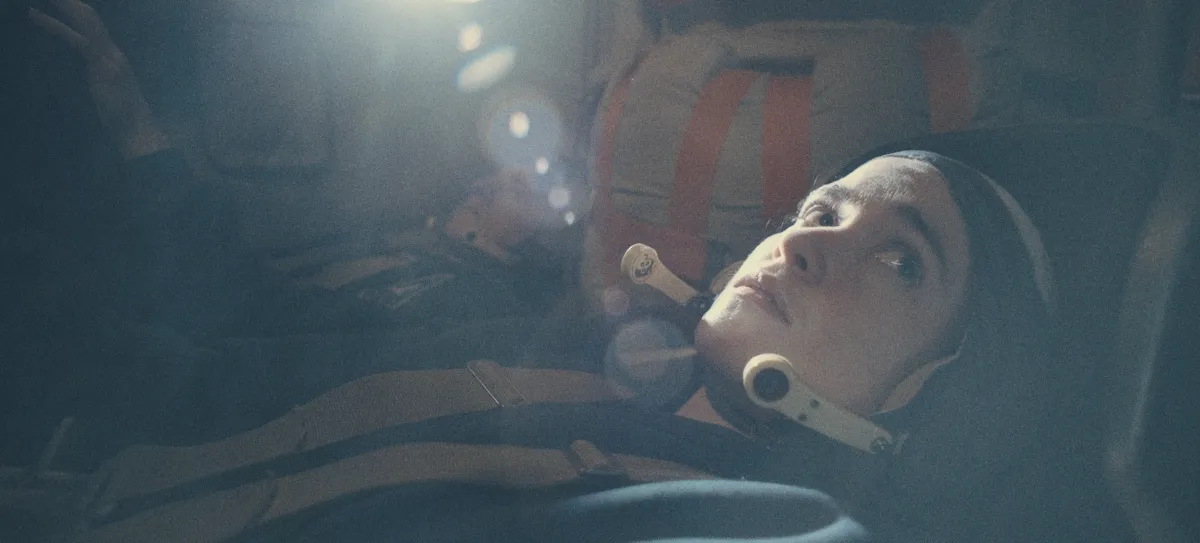
Apple TV Star City Explained: The Dark Side of Space Exploration
Welcome to the New Wave of Space Sci-Fi: Where Progress Comes at a Price
What if the greatest leaps in space exploration were born not from freedom, but from fear? Apple TV’s Star City dares to answer this question, launching viewers into a world where scientific brilliance is forged in the crucible of surveillance, secrecy, and state control. Premiering May 29, 2026, this Soviet-focused thriller isn’t just another space sci-fi series—it’s a chilling, timely meditation on the paradox of progress under authoritarianism.
The Paradox of Oppressive Innovation
Set in an alternate 1970s where the USSR beats America to the Moon, Star City unfolds inside the real Soviet cosmonaut training centre outside Moscow. But this isn’t a celebration of technological triumph. Instead, it’s a paranoid thriller that explores how surveillance and fear became the invisible fuel of scientific advancement.
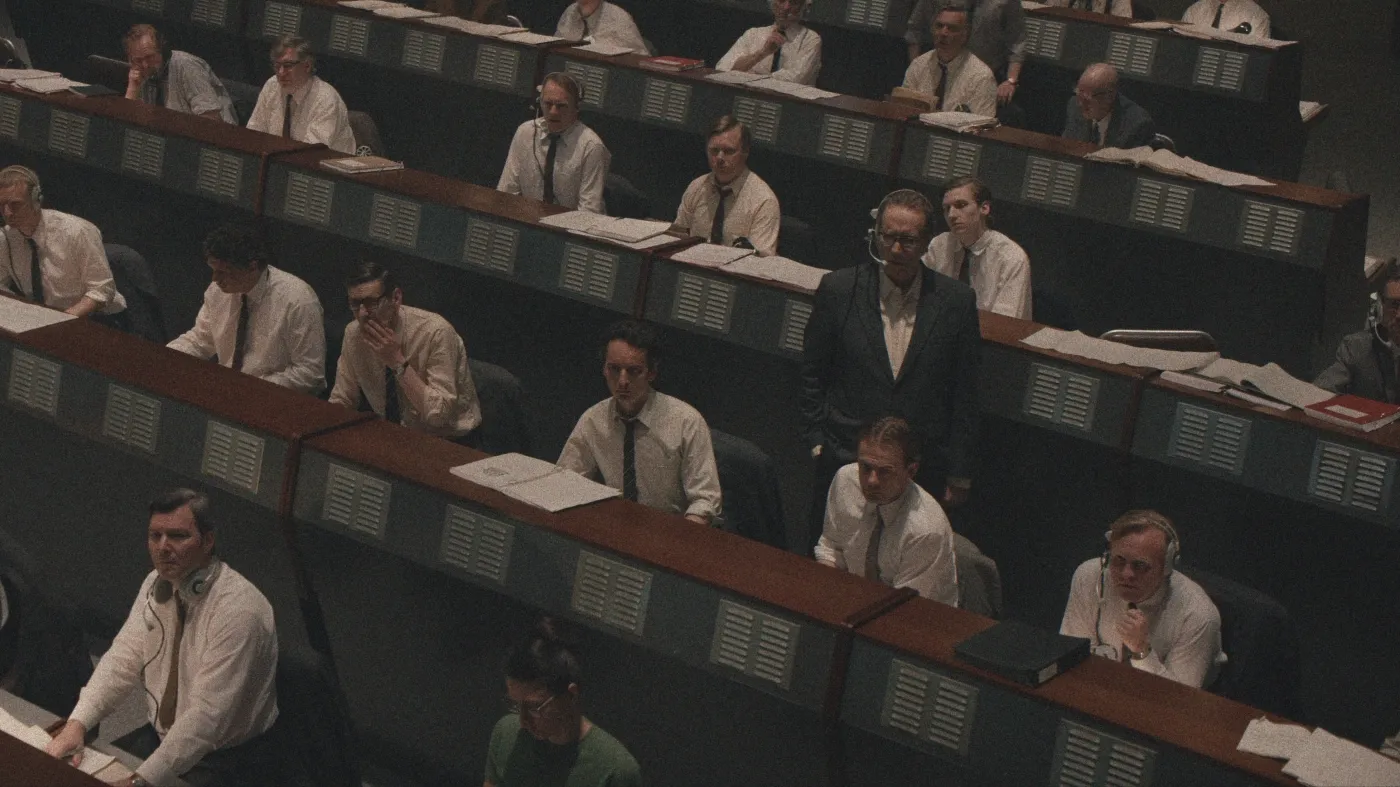
In Star City’s mission control, every console and headset reflects the high‑stakes intensity of the Soviet push for the stars. Image Credit: Apple TV
The real Star City (Yuri Gagarin Cosmonaut Training Centre) was a closed, secretive enclave, surrounded by fences and KGB guards, where cosmonauts and engineers lived under constant observation.
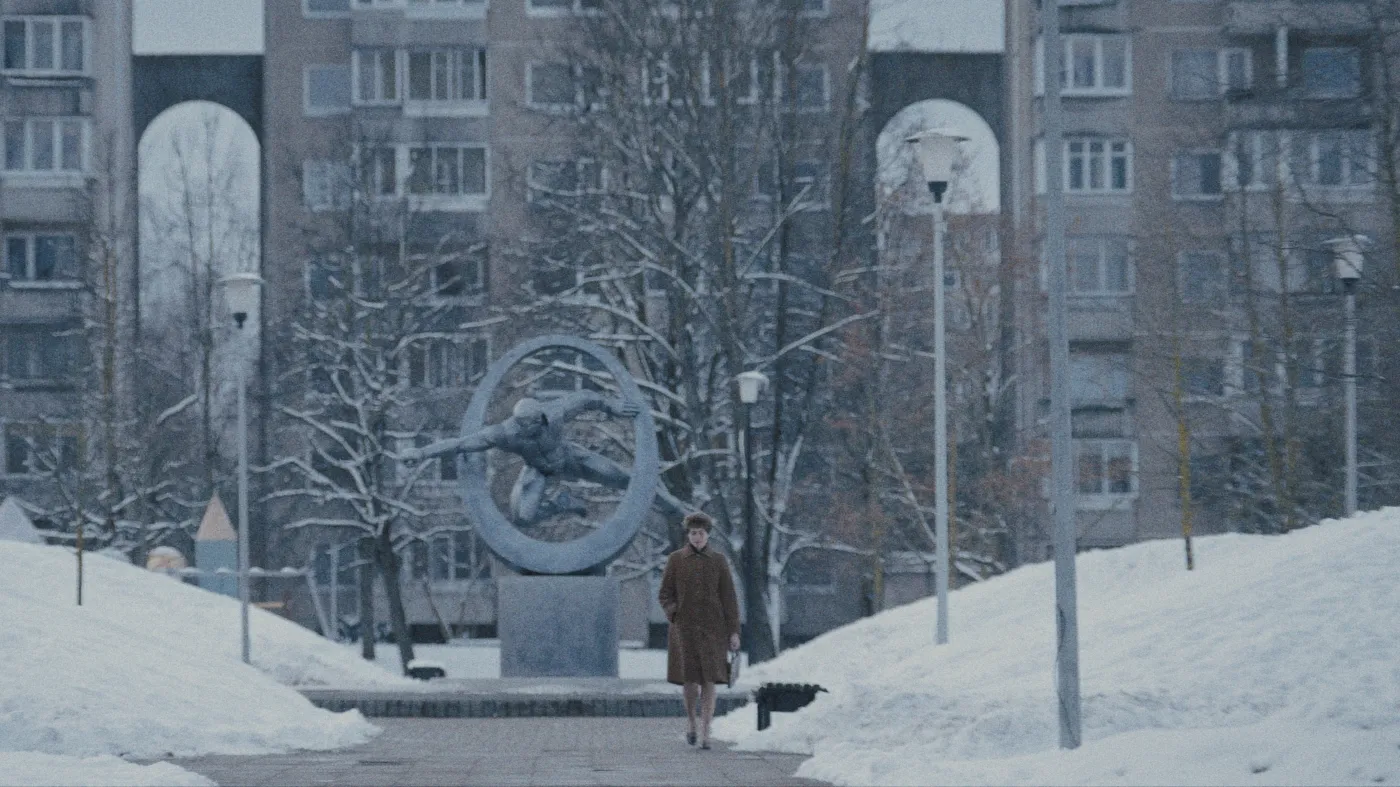
The series draws on the stark, unforgiving aesthetic of Cold War Russia to reveal the steep human cost of progress. Image Credit: Apple TV
The “Chief Designer”—a role inspired by the real Sergei Korolev—was so vital that his identity was kept secret even from many within the program.
The KGB’s presence was not just for show: they monitored every aspect of life, ensuring loyalty and suppressing dissent, but also stifling creativity and open scientific exchange.
The Mystery Of The Lost Cosmonauts | Russia's Secret Space Program. By Mystery Archives. From @MysteryArchives
What we learn from the story is that some of history’s greatest scientific leaps occurred under the most oppressive conditions. The Soviet space program achieved remarkable feats partly because of its authoritarian structure—centralized resources, absolute secrecy, and personnel who knew that failure meant more than professional disappointment.
Characters Under the Microscope
The show’s ensemble cast embodies this tension with chilling authenticity:
Rhys Ifans plays the Chief Designer, a visionary whose genius is inseparable from the regime that both enables and constrains him.
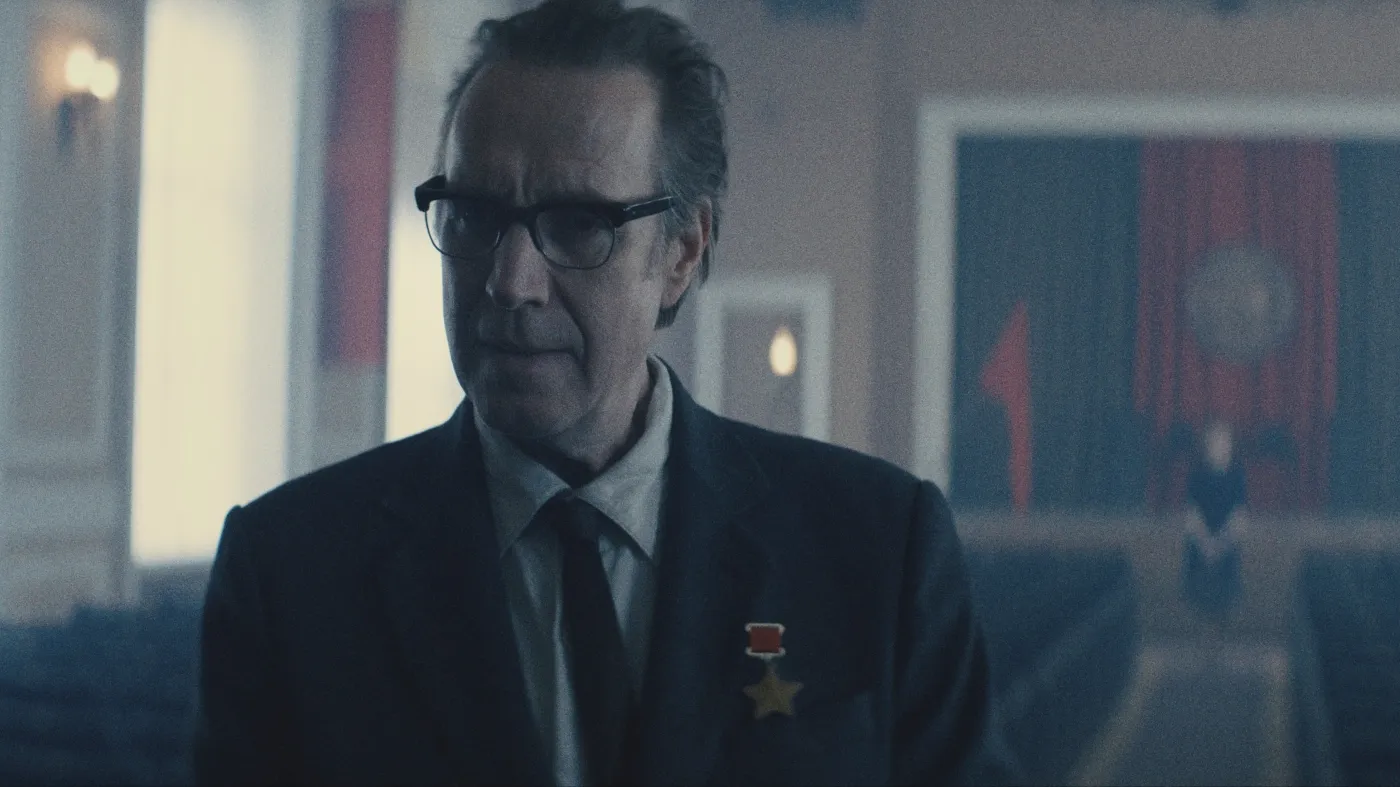
In Star City, Rhys Ifans portrays the Chief Designer balancing scientific progress with the relentless pressure of KGB supervision. Image Credit: Apple TV
Anna Maxwell Martin’s Lyudmilla Raskova, head of KGB surveillance, represents the watchers who ensure loyalty while potentially stifling the very creativity they’re meant to protect.
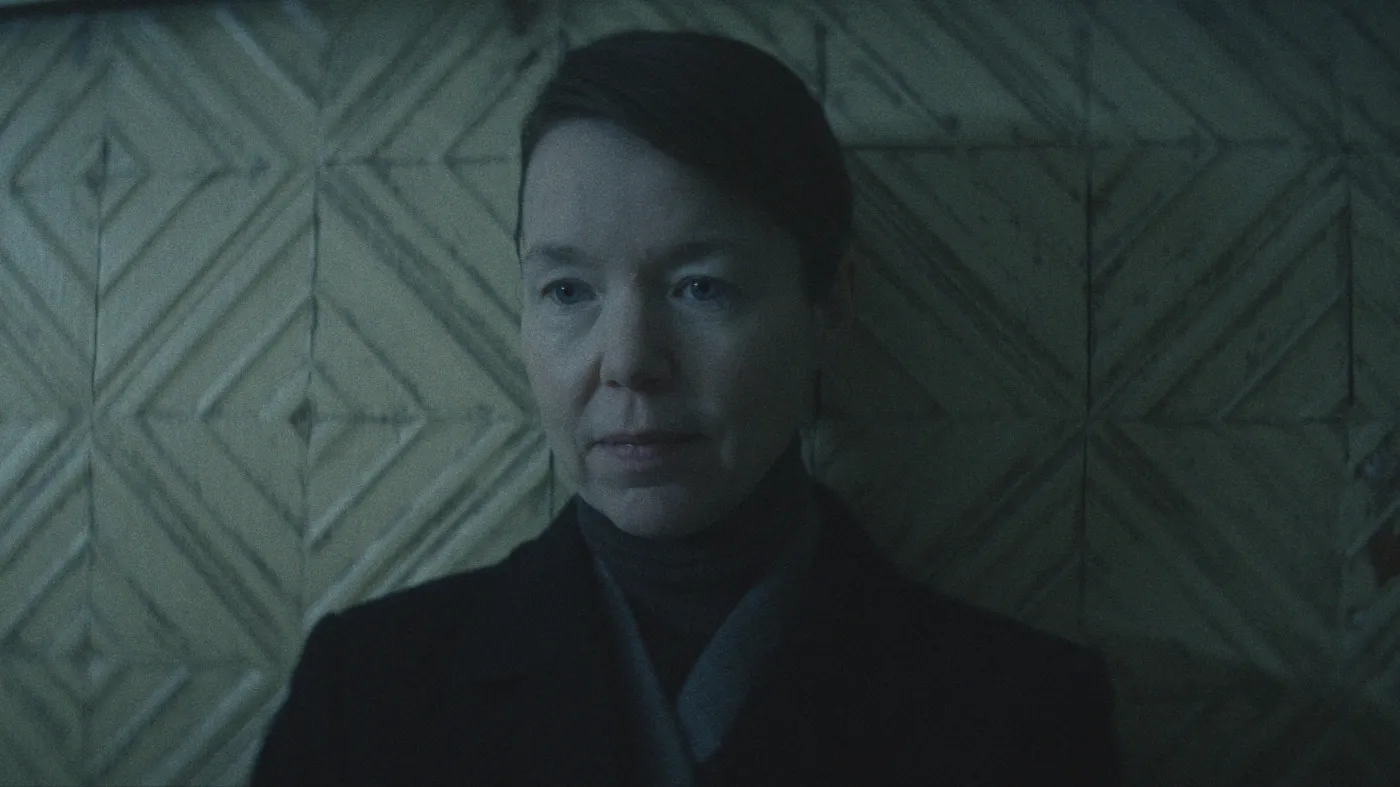
As Lyudmilla Raskova, Anna Maxwell Martin embodies the cold precision and institutional power of the KGB in Star City. Image Credit: Apple TV
Alice Englert’s Anastasia Belikova, an untested female cosmonaut, navigates not just the technical challenges of space travel, but the additional scrutiny that comes with being a woman in a male-dominated, highly monitored environment.
Their stories reveal the psychological toll of living and working under constant observation—a theme rarely explored so deeply in space sci-fi.
The New Space Sci-Fi: Progress Without Heroes
What makes Star City so relevant is how it reflects contemporary anxieties about surveillance society and state control over innovation. In our current era of tech monopolies, government data collection, and authoritarian regimes leveraging technology for control, the series feels less like alternate history and more like a warning.
Filmed in Lithuania to authentically recreate Soviet environments, Star City’s visual style is stark and moody, grounding its speculative elements in a reality that feels both distant and disturbingly familiar. The show’s commitment to historical accuracy—down to the smallest details—makes its speculative leaps all the more believable.
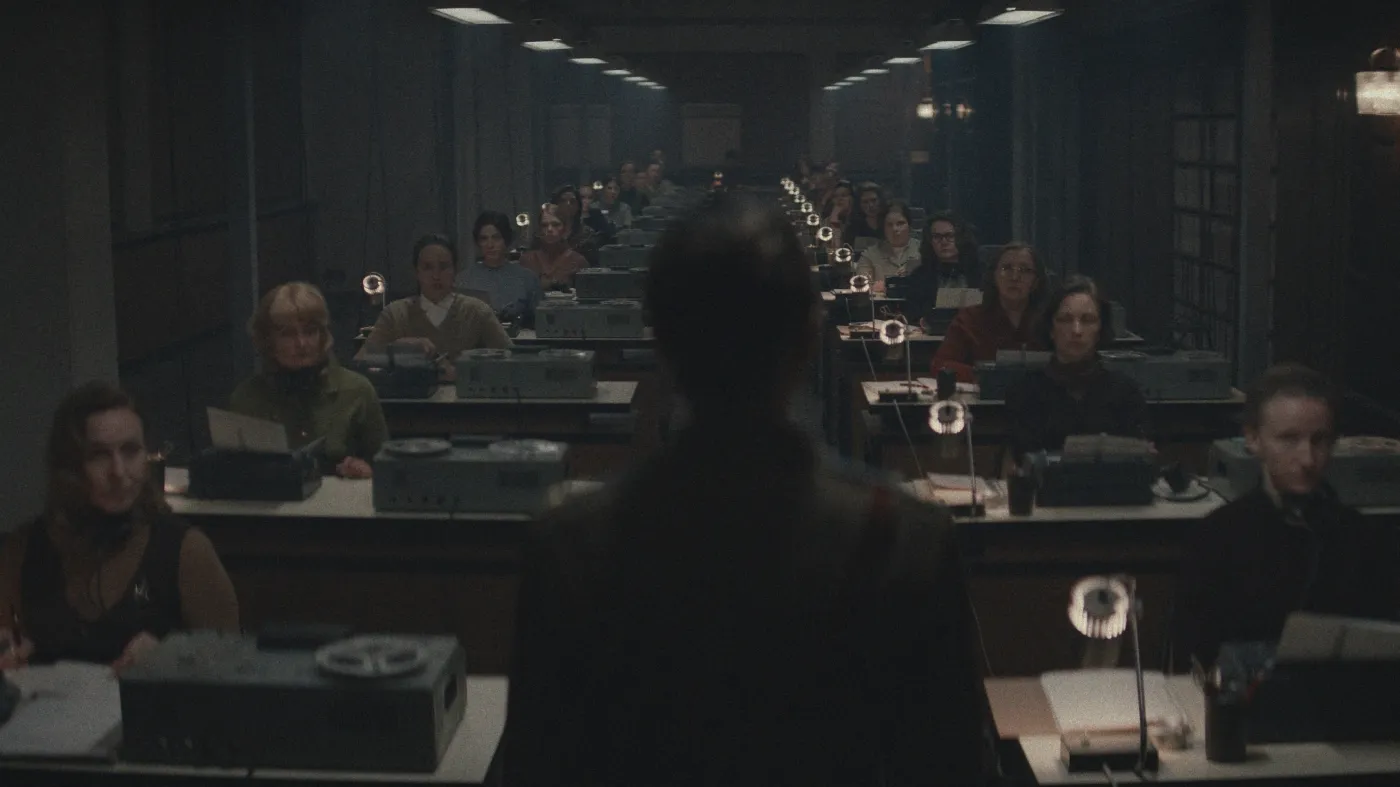
Star City’s meticulous recreation of Cold War‑era design grounds the series in a striking sense of authenticity. Image Credit: Apple TV
Hard Reality Space Sci-Fi:
Star City joins a new wave of series that refuse easy answers, showing that every breakthrough carries potential for both liberation and oppression.
Why This Matters Now
As private companies and nations race toward Mars, lunar bases, and asteroid mining, Star City asks essential questions:
What are we willing to sacrifice for progress?
How much surveillance and control can innovation absorb before it becomes corrupted?
The series arrives at a perfect moment when audiences are hungry for space sci-fi that grapples with moral complexity. Today’s viewers understand that every technological breakthrough is a double-edged sword.
SciNexic Verdict: Essential Viewing for Space Sci-Fi Fans
Star City succeeds because it understands that the most compelling space stories aren’t really about space—they’re about us. By examining how surveillance, secrecy, and state power shaped Soviet scientific achievement, the series illuminates uncomfortable truths about innovation under pressure.
For fans of space race drama seeking something more complex than simple heroism, Star City offers eight episodes of morally sophisticated storytelling that respects both the genuine achievements and terrible costs of authoritarian scientific progress.
Ready to see the dark side of the space race?
Watch Star City on Apple TV starting May 29, 2026—and discover why the future of space sci-fi is more complicated, and more compelling, than ever.
Stay tuned to Scinexic.com for all the latest space sci-fi news, and exclusive insights from the final frontier.
Welcome to the New Wave of Space Sci-Fi: Where Progress Comes at a Price
What if the greatest leaps in space exploration were born not from freedom, but from fear? Apple TV’s Star City dares to answer this question, launching viewers into a world where scientific brilliance is forged in the crucible of surveillance, secrecy, and state control. Premiering May 29, 2026, this Soviet-focused thriller isn’t just another space sci-fi series—it’s a chilling, timely meditation on the paradox of progress under authoritarianism.
The Paradox of Oppressive Innovation
Set in an alternate 1970s where the USSR beats America to the Moon, Star City unfolds inside the real Soviet cosmonaut training centre outside Moscow. But this isn’t a celebration of technological triumph. Instead, it’s a paranoid thriller that explores how surveillance and fear became the invisible fuel of scientific advancement.
In Star City’s mission control, every console and headset reflects the high‑stakes intensity of the Soviet push for the stars. Image Credit: Apple TV
The real Star City (Yuri Gagarin Cosmonaut Training Centre) was a closed, secretive enclave, surrounded by fences and KGB guards, where cosmonauts and engineers lived under constant observation.
The series draws on the stark, unforgiving aesthetic of Cold War Russia to reveal the steep human cost of progress. Image Credit: Apple TV
The “Chief Designer”—a role inspired by the real Sergei Korolev—was so vital that his identity was kept secret even from many within the program.
The KGB’s presence was not just for show: they monitored every aspect of life, ensuring loyalty and suppressing dissent, but also stifling creativity and open scientific exchange.
The Mystery Of The Lost Cosmonauts | Russia's Secret Space Program. By Mystery Archives. From @MysteryArchives
What we learn from the story is that some of history’s greatest scientific leaps occurred under the most oppressive conditions. The Soviet space program achieved remarkable feats partly because of its authoritarian structure—centralized resources, absolute secrecy, and personnel who knew that failure meant more than professional disappointment.
Characters Under the Microscope
The show’s ensemble cast embodies this tension with chilling authenticity:
Rhys Ifans plays the Chief Designer, a visionary whose genius is inseparable from the regime that both enables and constrains him.
In Star City, Rhys Ifans portrays the Chief Designer balancing scientific progress with the relentless pressure of KGB supervision. Image Credit: Apple TV
Anna Maxwell Martin’s Lyudmilla Raskova, head of KGB surveillance, represents the watchers who ensure loyalty while potentially stifling the very creativity they’re meant to protect.
As Lyudmilla Raskova, Anna Maxwell Martin embodies the cold precision and institutional power of the KGB in Star City. Image Credit: Apple TV
Alice Englert’s Anastasia Belikova, an untested female cosmonaut, navigates not just the technical challenges of space travel, but the additional scrutiny that comes with being a woman in a male-dominated, highly monitored environment.
Their stories reveal the psychological toll of living and working under constant observation—a theme rarely explored so deeply in space sci-fi.
The New Space Sci-Fi: Progress Without Heroes
What makes Star City so relevant is how it reflects contemporary anxieties about surveillance society and state control over innovation. In our current era of tech monopolies, government data collection, and authoritarian regimes leveraging technology for control, the series feels less like alternate history and more like a warning.
Filmed in Lithuania to authentically recreate Soviet environments, Star City’s visual style is stark and moody, grounding its speculative elements in a reality that feels both distant and disturbingly familiar. The show’s commitment to historical accuracy—down to the smallest details—makes its speculative leaps all the more believable.
Star City’s meticulous recreation of Cold War‑era design grounds the series in a striking sense of authenticity. Image Credit: Apple TV
Hard Reality Space Sci-Fi:
Star City joins a new wave of series that refuse easy answers, showing that every breakthrough carries potential for both liberation and oppression.
Why This Matters Now
As private companies and nations race toward Mars, lunar bases, and asteroid mining, Star City asks essential questions:
What are we willing to sacrifice for progress?
How much surveillance and control can innovation absorb before it becomes corrupted?
The series arrives at a perfect moment when audiences are hungry for space sci-fi that grapples with moral complexity. Today’s viewers understand that every technological breakthrough is a double-edged sword.
SciNexic Verdict: Essential Viewing for Space Sci-Fi Fans
Star City succeeds because it understands that the most compelling space stories aren’t really about space—they’re about us. By examining how surveillance, secrecy, and state power shaped Soviet scientific achievement, the series illuminates uncomfortable truths about innovation under pressure.
For fans of space race drama seeking something more complex than simple heroism, Star City offers eight episodes of morally sophisticated storytelling that respects both the genuine achievements and terrible costs of authoritarian scientific progress.
Ready to see the dark side of the space race?
Watch Star City on Apple TV starting May 29, 2026—and discover why the future of space sci-fi is more complicated, and more compelling, than ever.
Stay tuned to Scinexic.com for all the latest space sci-fi news, and exclusive insights from the final frontier.
Welcome to the New Wave of Space Sci-Fi: Where Progress Comes at a Price
What if the greatest leaps in space exploration were born not from freedom, but from fear? Apple TV’s Star City dares to answer this question, launching viewers into a world where scientific brilliance is forged in the crucible of surveillance, secrecy, and state control. Premiering May 29, 2026, this Soviet-focused thriller isn’t just another space sci-fi series—it’s a chilling, timely meditation on the paradox of progress under authoritarianism.
The Paradox of Oppressive Innovation
Set in an alternate 1970s where the USSR beats America to the Moon, Star City unfolds inside the real Soviet cosmonaut training centre outside Moscow. But this isn’t a celebration of technological triumph. Instead, it’s a paranoid thriller that explores how surveillance and fear became the invisible fuel of scientific advancement.
In Star City’s mission control, every console and headset reflects the high‑stakes intensity of the Soviet push for the stars. Image Credit: Apple TV
The real Star City (Yuri Gagarin Cosmonaut Training Centre) was a closed, secretive enclave, surrounded by fences and KGB guards, where cosmonauts and engineers lived under constant observation.
The series draws on the stark, unforgiving aesthetic of Cold War Russia to reveal the steep human cost of progress. Image Credit: Apple TV
The “Chief Designer”—a role inspired by the real Sergei Korolev—was so vital that his identity was kept secret even from many within the program.
The KGB’s presence was not just for show: they monitored every aspect of life, ensuring loyalty and suppressing dissent, but also stifling creativity and open scientific exchange.
The Mystery Of The Lost Cosmonauts | Russia's Secret Space Program. By Mystery Archives. From @MysteryArchives
What we learn from the story is that some of history’s greatest scientific leaps occurred under the most oppressive conditions. The Soviet space program achieved remarkable feats partly because of its authoritarian structure—centralized resources, absolute secrecy, and personnel who knew that failure meant more than professional disappointment.
Characters Under the Microscope
The show’s ensemble cast embodies this tension with chilling authenticity:
Rhys Ifans plays the Chief Designer, a visionary whose genius is inseparable from the regime that both enables and constrains him.
In Star City, Rhys Ifans portrays the Chief Designer balancing scientific progress with the relentless pressure of KGB supervision. Image Credit: Apple TV
Anna Maxwell Martin’s Lyudmilla Raskova, head of KGB surveillance, represents the watchers who ensure loyalty while potentially stifling the very creativity they’re meant to protect.
As Lyudmilla Raskova, Anna Maxwell Martin embodies the cold precision and institutional power of the KGB in Star City. Image Credit: Apple TV
Alice Englert’s Anastasia Belikova, an untested female cosmonaut, navigates not just the technical challenges of space travel, but the additional scrutiny that comes with being a woman in a male-dominated, highly monitored environment.
Their stories reveal the psychological toll of living and working under constant observation—a theme rarely explored so deeply in space sci-fi.
The New Space Sci-Fi: Progress Without Heroes
What makes Star City so relevant is how it reflects contemporary anxieties about surveillance society and state control over innovation. In our current era of tech monopolies, government data collection, and authoritarian regimes leveraging technology for control, the series feels less like alternate history and more like a warning.
Filmed in Lithuania to authentically recreate Soviet environments, Star City’s visual style is stark and moody, grounding its speculative elements in a reality that feels both distant and disturbingly familiar. The show’s commitment to historical accuracy—down to the smallest details—makes its speculative leaps all the more believable.
Star City’s meticulous recreation of Cold War‑era design grounds the series in a striking sense of authenticity. Image Credit: Apple TV
Hard Reality Space Sci-Fi:
Star City joins a new wave of series that refuse easy answers, showing that every breakthrough carries potential for both liberation and oppression.
Why This Matters Now
As private companies and nations race toward Mars, lunar bases, and asteroid mining, Star City asks essential questions:
What are we willing to sacrifice for progress?
How much surveillance and control can innovation absorb before it becomes corrupted?
The series arrives at a perfect moment when audiences are hungry for space sci-fi that grapples with moral complexity. Today’s viewers understand that every technological breakthrough is a double-edged sword.
SciNexic Verdict: Essential Viewing for Space Sci-Fi Fans
Star City succeeds because it understands that the most compelling space stories aren’t really about space—they’re about us. By examining how surveillance, secrecy, and state power shaped Soviet scientific achievement, the series illuminates uncomfortable truths about innovation under pressure.
For fans of space race drama seeking something more complex than simple heroism, Star City offers eight episodes of morally sophisticated storytelling that respects both the genuine achievements and terrible costs of authoritarian scientific progress.
Ready to see the dark side of the space race?
Watch Star City on Apple TV starting May 29, 2026—and discover why the future of space sci-fi is more complicated, and more compelling, than ever.
Stay tuned to Scinexic.com for all the latest space sci-fi news, and exclusive insights from the final frontier.
Get the SciNexic Dispatch
Space sci-fi news, reviews, trailers, and release picks—straight to your inbox.
Get the dispatch
Image Gallery
Comments
Please be kind and considerate. Any abusive or offensive comments will be sent out the airlock! Thank You.
Please be kind and considerate. Any abusive or offensive comments will be sent out the airlock! Thank You.
Get the Dispatch
Related Posts
Share on Twitter
Share on Instagram
Banner Image - Star City scene image - Apple.com - Copyright Apple Inc.
Main Article - Courtesy of Apple.com - All images and media are the property of their respective owners.