


The SciNexic Space Sci-Fi Spotlight
Entry 25: K-PAX (2001) – Light, Mind, and the Mystery of Alien Identity. SciNexic Rating: ★★★★☆
What if the most alien world is the human mind? K-PAX (2001) is a rare space sci-fi film that dares to ask: is the visitor among us truly from the stars, or from the depths of trauma? Directed by Iain Softley and starring Kevin Spacey and Jeff Bridges, this cerebral ★★★★☆ drama blends speculative science with psychological intrigue, inviting viewers to question the very nature of reality.
A Visitor from Lyra
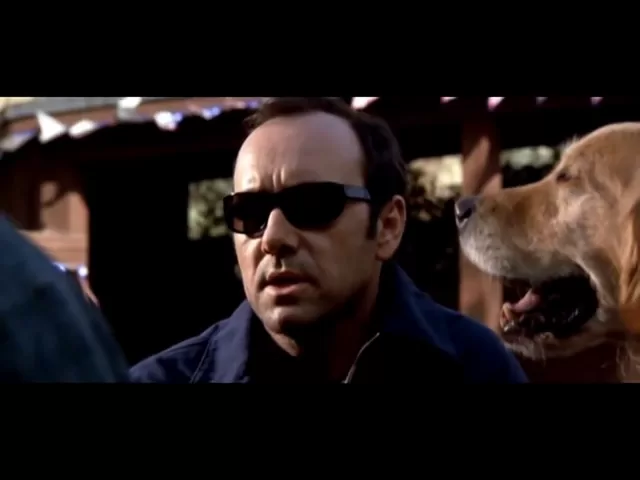
A mysterious man appears at New York’s Grand Central Station, claiming to be “Prot” (Kevin Spacey), an alien from the planet K-PAX, 1,000 light years away in the Lyra constellation. After a public disturbance, Prot is committed to the Psychiatric Institute of Manhattan, where Dr. Mark Powell (Jeff Bridges) is tasked with unravelling his story. Prot’s encyclopaedic knowledge of astrophysics, his claim to see ultraviolet light, and his immunity to medication baffle both doctors and scientists.
As Prot’s presence inspires hope and transformation among the hospital’s patients, Powell’s investigation uncovers a tragic human backstory: Robert Porter, a man shattered by loss, may be the real identity behind Prot. The film’s climax leaves the truth tantalizingly ambiguous—on the date Prot claims he will return to K-PAX, the hospital’s cameras cut to static, and Porter is found in a catatonic state, while another patient vanishes.
Light, Speed, and Alien Ambiguity
K-PAX stands out for its grounded, cerebral approach to space sci-fi. Prot claims to have travelled at six times the speed of light, challenging Einstein’s theories and referencing speculative physics—a nod to the genre’s tradition of pushing scientific boundaries. The film references real-world concepts like ultraviolet vision (Prot claims to see in UV), binary star systems, and the Lyra constellation, grounding its cosmic claims in plausible speculation. Yet, the heart of K-PAX’s sci-fi is its ambiguity: is Prot an alien, or a psychological construct born from trauma? The film never answers, instead inviting viewers to ponder the limits of perception and belief.
“You don’t care to believe in me, and that’s okay. The universe doesn’t require your approval.” — Prot
Subtlety and Humanity
Kevin Spacey delivers a mesmerizing, enigmatic performance as Prot, balancing otherworldly detachment with flashes of warmth and wit. Jeff Bridges grounds the film as Dr. Powell, whose scepticism gives way to empathy and wonder.
Director Iain Softley crafts a tone that is both intimate and cosmic, using sunlight, lens flares, and reflective surfaces to evoke the film’s themes of light and perception. The supporting cast—including Mary McCormack and Alfre Woodard—add depth to the hospital’s microcosm of hope and despair.
Legacy and Relevance: A Cult Sci-Fi Classic
Released just weeks after 9/11, K-PAX struggled at the box office, grossing $65 million against a $68 million budget. Critics were divided: Roger Ebert awarded it 3 out of 4 stars, praising its “tantalizing possibilities,” while others found it “a draggy, earnest exercise in pseudo-spiritual uplift.”
On Rotten Tomatoes, it holds a 41% approval, but audiences have been kinder. On IMDB K-PAX receives a healthy 7.4/10 score. The film’s ambiguous ending, real-world science references, and exploration of mental illness have kept it alive in sci-fi and psychology circles.
Trivia buffs will note Will Smith was originally offered the lead, and the film weathered a plagiarism controversy with the Argentinian film Man Facing Southeast.
Why K-PAX Is Worth Your Space Sci-Fi Time
K-PAX is a space sci-fi film that finds wonder not in spectacle, but in the mysteries of consciousness and the cosmos. Its legacy endures as a thoughtful meditation on belief, trauma, and the possibility that the most alien worlds may lie within ourselves. For fans of cerebral sci-fi, it deserves a second look—and a well deserved SciNexic Rating of: ★★★★☆
For more space sci-fi reviews, recommendations, and the latest in interstellar storytelling, keep exploring Scinexic.com!