


The SciNexic Files
The SciNexic Files
The SciNexic Files
Feature
First Contact on the Page
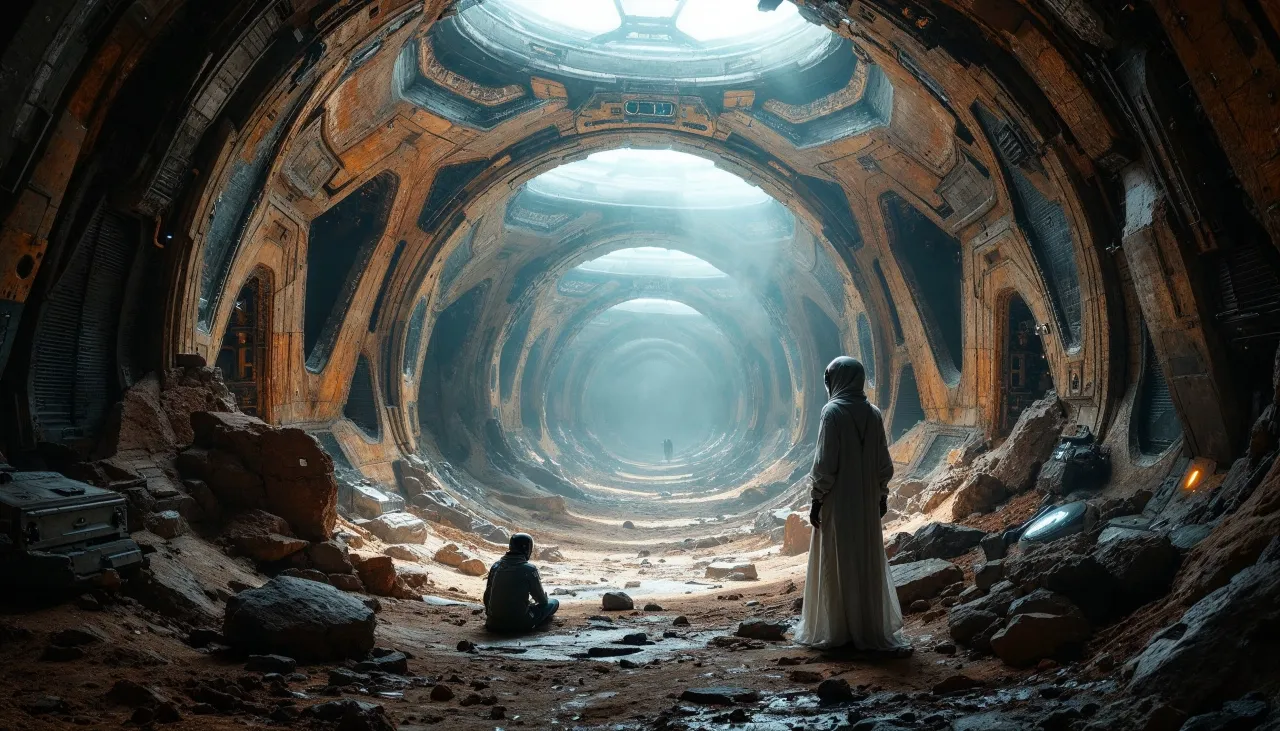
Imagine: a hush falls over the control room as the static resolves into a pattern—an unmistakable signal from the stars. Or perhaps, you peer through a viewport into an alien landscape, uncertain whether the figures emerging from the mist are friend or foe. For generations, science fiction has offered readers their own moment of first contact, not with flesh and blood, but with ink and imagination. The allure of the alien—of encountering intelligence fundamentally unlike our own—runs deep in both our literature and our culture, reflecting our hopes, fears, and the perennial question: are we alone?
Explore more: Gallery
This enduring fascination is nowhere more evident than in the curated selections of Scientific American, a journal long respected for its rigorous approach to science and its nuanced appreciation for speculative fiction. Their recent feature, “24 Great Sci-Fi Books About Alien Life”, distils decades of literary imagination into a guide for readers seeking stories that challenge, provoke, and inspire. Here, we explore the contours of that list—how it was chosen, what it reveals about our evolving relationship with the unknown, and why these tales of first contact remain so vital.
Explore more: Store
Curating the Cosmos: How the List Was Chosen
Scientific American approached the task with the same blend of scepticism and wonder that characterises its journalism. The editors sought works that marry scientific plausibility with narrative innovation—stories grounded in real questions about biology, physics, and consciousness, yet unafraid to speculate beyond the boundaries of current understanding. The list balances canonical classics with bold contemporary voices, reflecting the genre’s evolution and its ongoing dialogue with real-world science.
Diversity was key: the selections span cultures, continents, and centuries, foregrounding authors who reimagine the alien encounter through lenses of gender, race, and geopolitics. In doing so, the list challenges the default narratives of invasion or conquest, inviting readers to consider the multiplicity of possible “others.” In a world shaped by science journalism—where each new exoplanet discovery or ambiguous signal from space makes headlines—fiction plays a crucial role in shaping how we imagine the unknown, and how we might respond when it arrives.
Pioneers of Alien Imagination: The Canonical Classics
Any survey of alien fiction must begin with H.G. Wells’ The War of the Worlds (1898), the archetypal invasion narrative that set the template for a century of paranoia and wonder. Wells’ Martians, with their inscrutable motives and devastating technology, embodied Victorian anxieties about empire and the fragility of civilisation. Yet the novel’s enduring power lies in its refusal to offer easy answers: the aliens are neither wholly evil nor easily understood, their defeat a consequence not of human ingenuity but of biological happenstance.
Arthur C. Clarke’s Childhood’s End (1953) took the genre in a more philosophical direction, imagining a benevolent alien intervention that accelerates humanity’s evolution—and forces it to confront its own limitations.
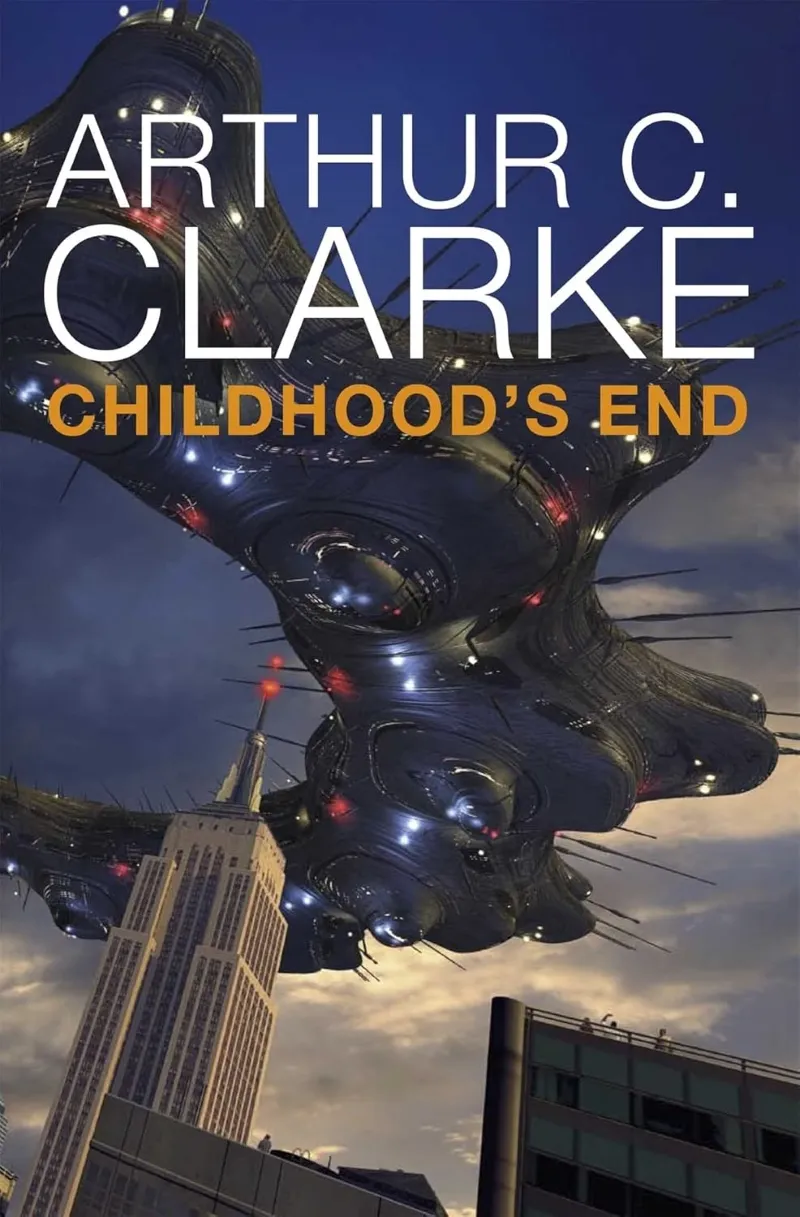
In "Childhood's End," Arthur C. Clarke explores the profound implications of alien encounters. Image credit: Amazon.com
Clarke’s Overlords, enigmatic and almost godlike, pose questions about destiny, free will, and the price of transcendence. The novel’s quiet grandeur and cosmic perspective remain touchstones for writers grappling with the implications of contact.
Stanisław Lem’s Solaris (1961) offers a different kind of encounter: not with humanoid visitors, but with a sentient ocean whose thoughts are as unfathomable as its depths. Lem’s masterpiece interrogates the limits of human understanding, suggesting that true alienness may be forever beyond our grasp. If Wells and Clarke imagined the alien as a mirror or mentor, Lem’s Solaris is a reminder of the universe’s deep strangeness.
Ursula K. Le Guin’s The Left Hand of Darkness (1969) expands the metaphor, weaving questions of gender and identity into the fabric of its world.
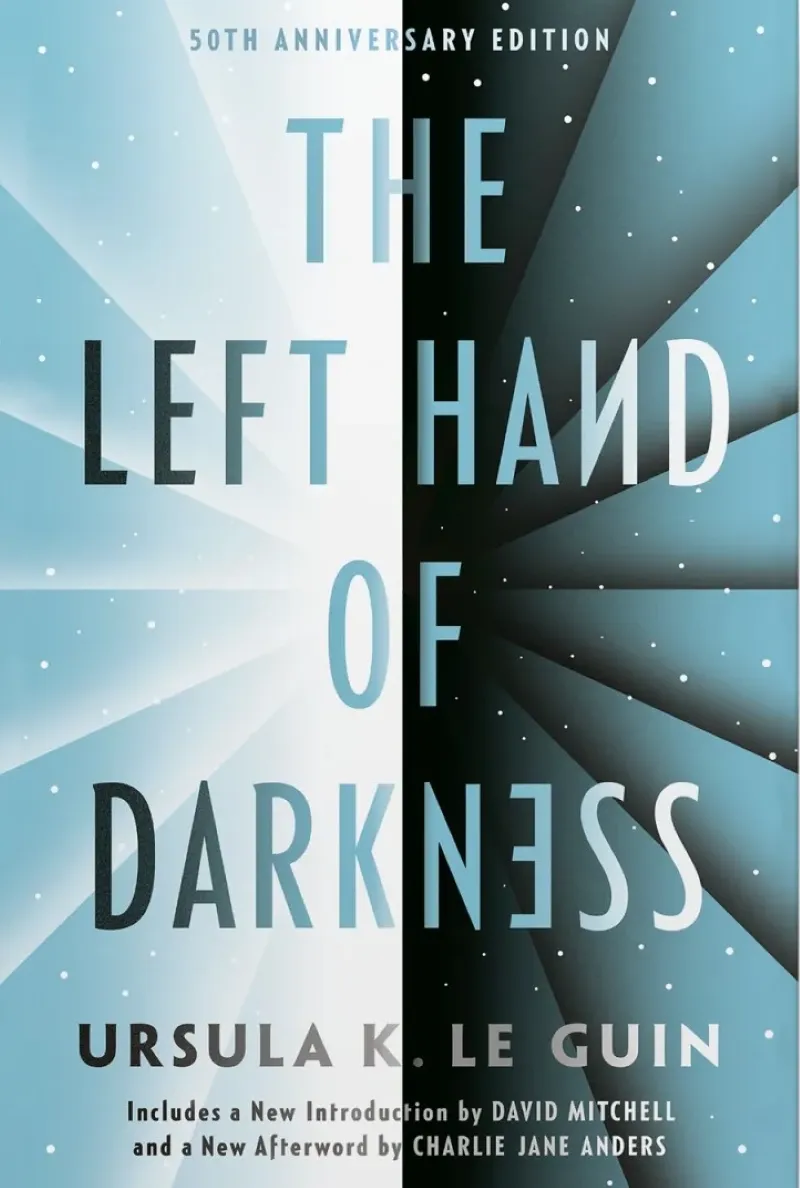
Ursula K. Le Guin's "The Left Hand of Darkness" invites readers to ponder themes of identity and gender through a richly imagined alien world. Image credit: Ursulakleguin.com
On the planet Gethen, where inhabitants shift between sexes, the protagonist’s attempt to bridge the gap between human and alien becomes a meditation on empathy, difference, and the possibility of understanding across divides both biological and cultural.
New Frontiers: Contemporary Voices and Visions
The contemporary selections on Scientific American’s list demonstrate the genre’s restless innovation.
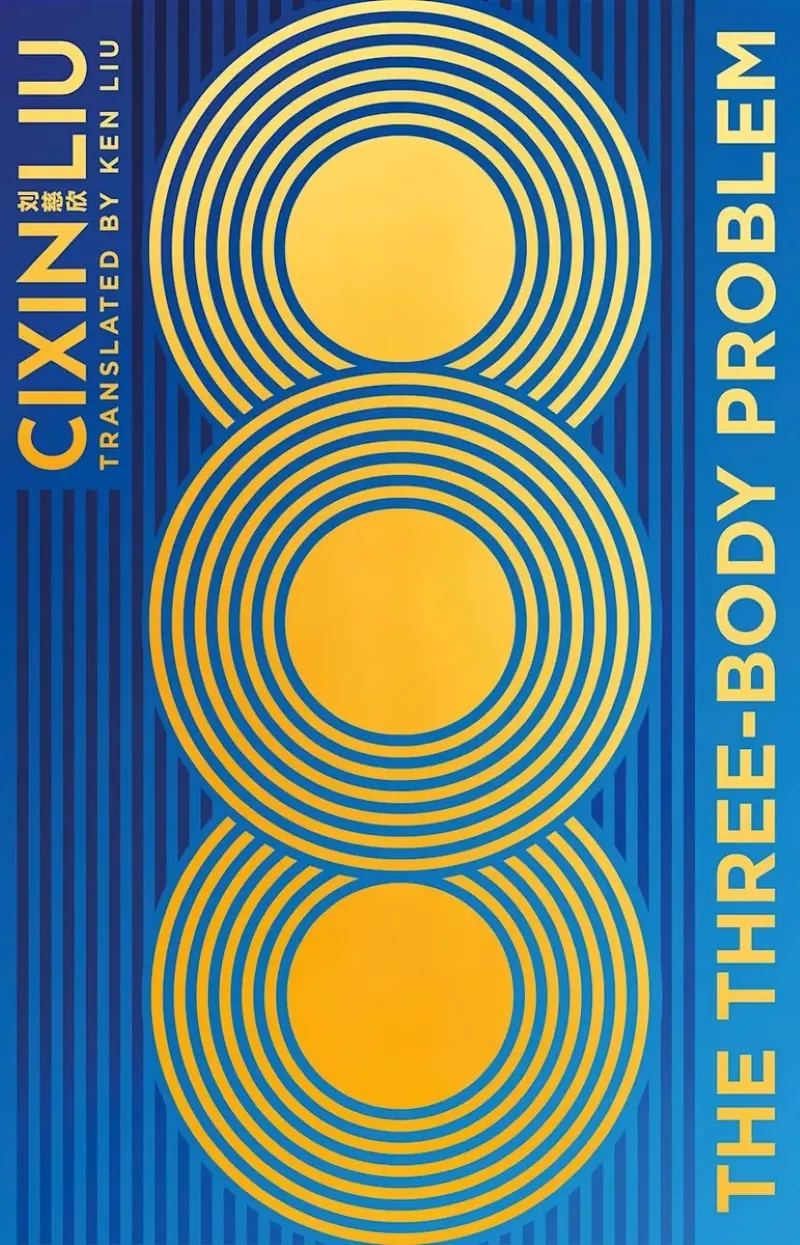
The cover of Cixin Liu’s "The Three-Body Problem" introduces readers complex scientific concepts through a narrative that intertwines physics and existential questions. Image credit: Bloomsbury.com
Liu Cixin’s The Three-Body Problem (2008, English translation 2014) brings the hard edges of physics and mathematics to bear on the question of interstellar communication. Its depiction of a civilisation shaped by the chaos of its home star system is both scientifically plausible and dazzlingly imaginative, raising profound questions about trust, survival, and the perils of contact.
Octavia E. Butler’s Lilith’s Brood trilogy (1987–1989) offers a radically different vision: here, humanity’s future depends on symbiosis with the Oankali, an alien species whose genetic engineering blurs the boundaries between self and other.
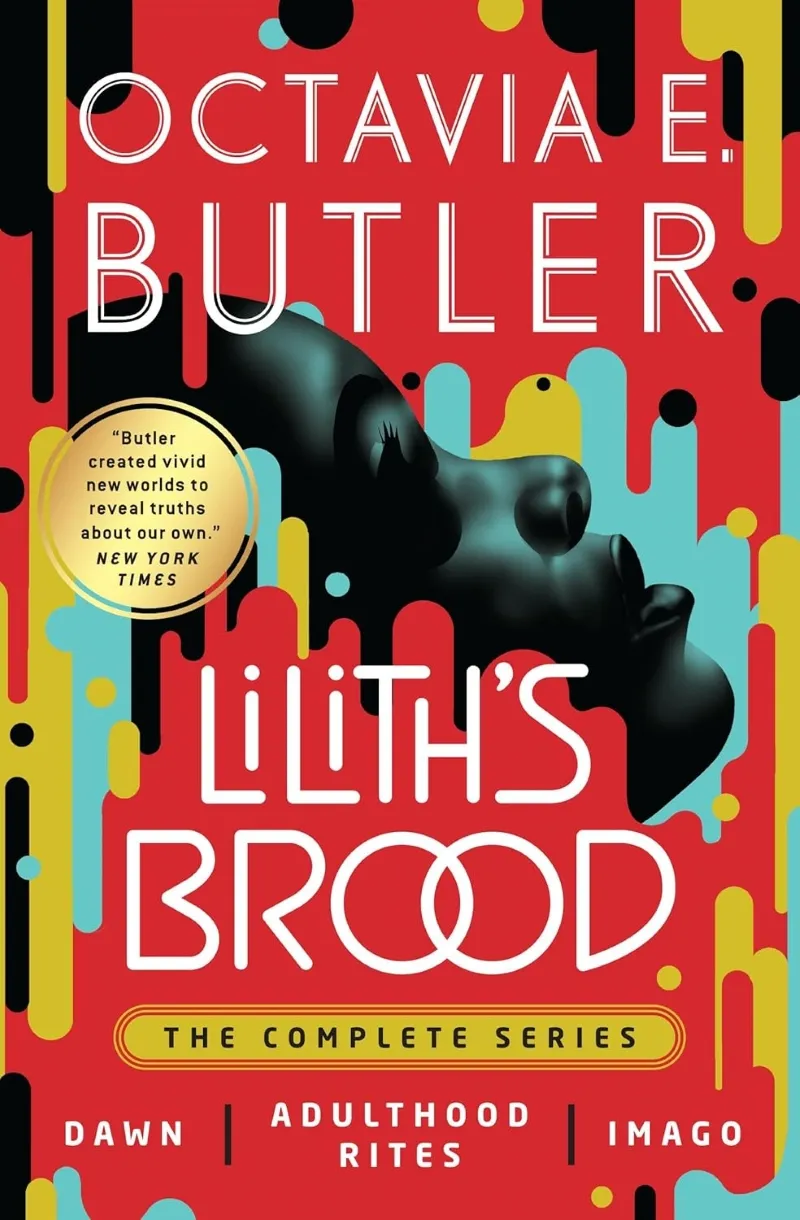
Exploring themes of identity and coexistence, Octavia E. Butler’s Lilith's Brood invites readers to interrogate the complexities of humanity. Image credit: Amazon.com
Butler’s work is as much about the ethics of coexistence as it is about the mechanics of biology, foregrounding issues of consent, power, and transformation.
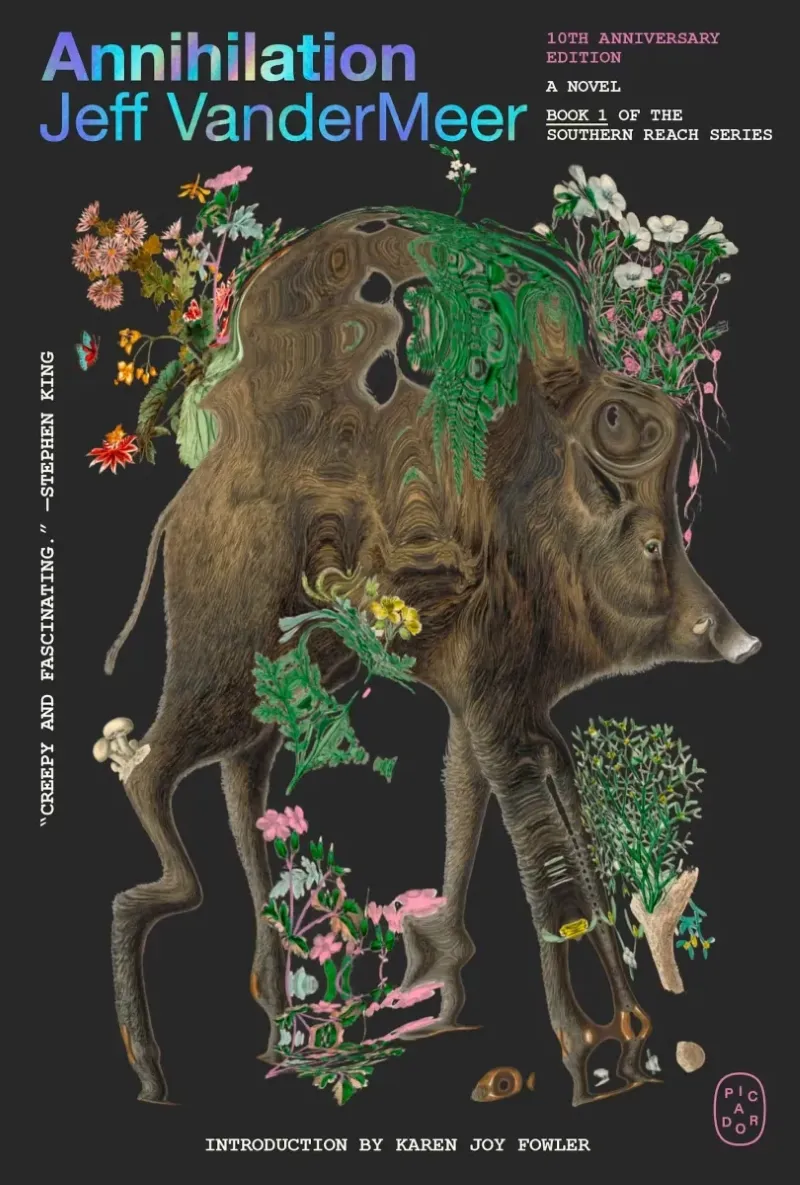
Jeff VanderMeer’s Annihilation (2014) recasts the alien as ecological mystery—a zone of transformation where the rules of biology and physics are rewritten. The Southern Reach Trilogy, of which Annihilation is the opening act, explores the psychological and existential fallout of encountering the truly unknowable, as much within ourselves as in the world beyond.
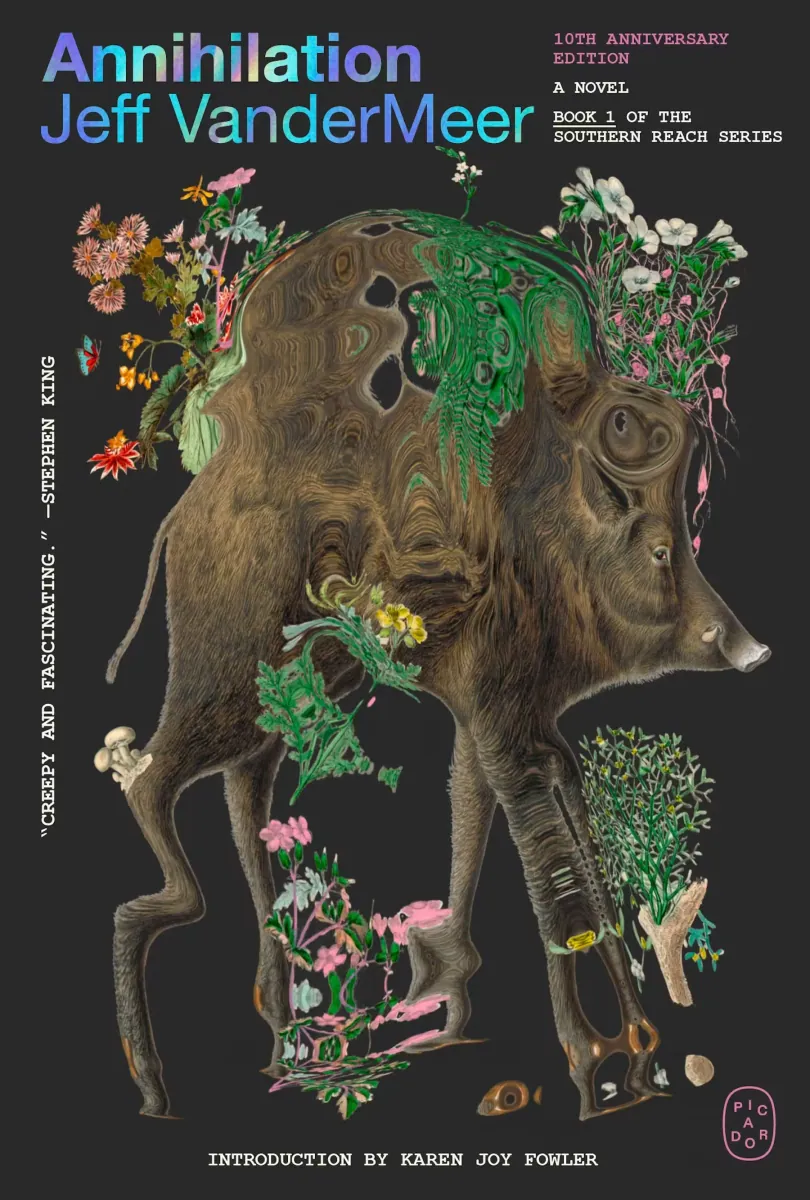
In the haunting cover of Jeff VanderMeer's "Annihilation," organic forms meld with surreal landscapes, echoing the novel's exploration of transformation and the unknown within alien ecosystems. Image credit:Jeffvandermeer.com
Nnedi Okorafor’s Lagoon (2014) relocates first contact to Lagos, Nigeria, upending the genre’s Western-centric assumptions. Here, the arrival of aliens sparks not panic or war, but a kaleidoscopic explosion of myth, politics, and possibility. Okorafor’s vision is one of transformation and renewal, drawing on African cosmologies to imagine futures as plural as the world itself.
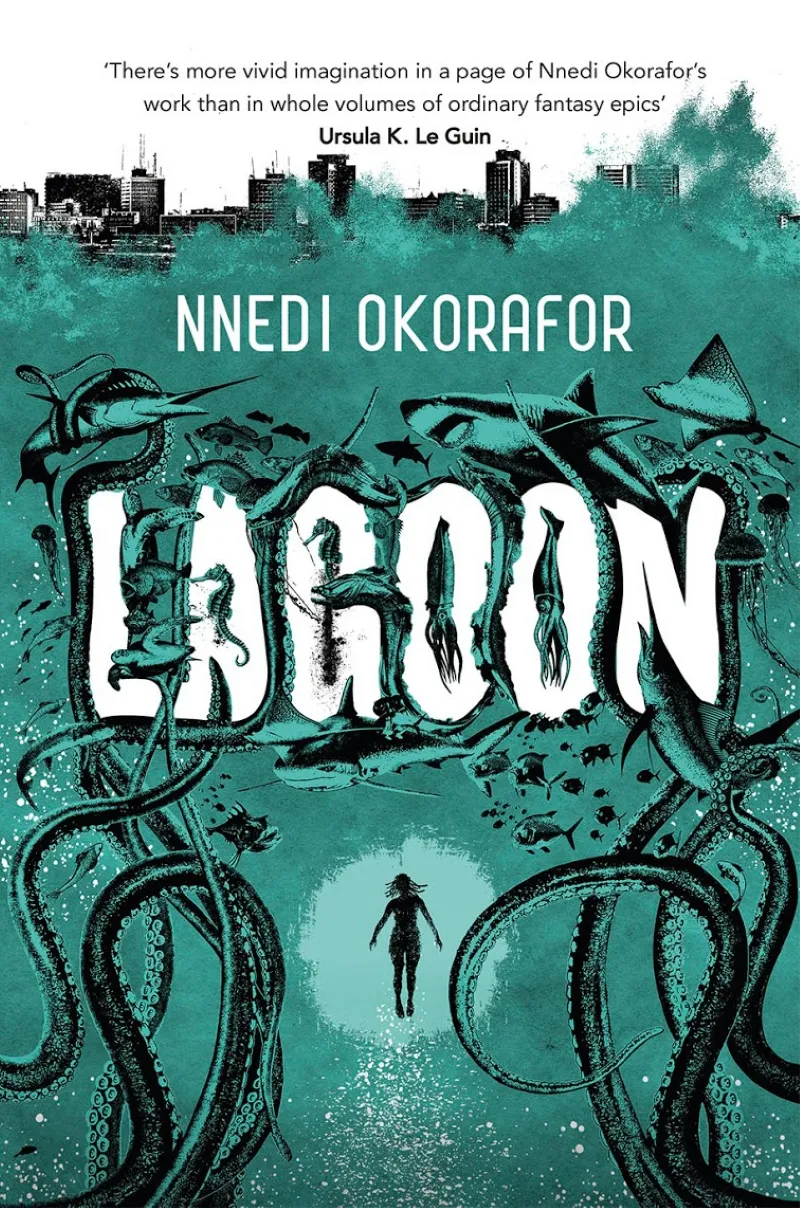
Drawing readers into a vibrant narrative that intertwines science and imagination, Nnedi Okorafor's "Lagoon" portrays the complexities of alien encounters against the backdrop of contemporary Nigeria. Image credit: Nnedi.com
Alien Minds and Human Mirrors: Themes Across the List
Across these works, a constellation of themes emerges—each story a different approach to the central challenge of the alien encounter. Communication is often the first and greatest hurdle: how do you speak with a mind that evolved under different stars, with senses and values alien to our own? From Lem’s inscrutable Solaris to Ted Chiang’s linguistically intricate “Story of Your Life” (adapted as the film Arrival), language becomes both bridge and barrier, a metaphor for all the ways we misunderstand the other—and ourselves.
Aliens are also metaphors for the unknown, embodying both our deepest fears and our highest aspirations. They force us to confront the limits of empathy, the ethics of colonisation, and the meaning of humanity itself. In Butler’s and Le Guin’s hands, the alien encounter is as much about internal transformation as external threat, a journey into the uncharted territories of identity and possibility.
These books do not merely reflect scientific debates about the likelihood of life elsewhere; they interrogate the assumptions behind those debates. What counts as intelligence? What forms might life take? And what responsibilities do we bear, as explorers of the cosmos and of our own imaginations?
From Page to Culture: The Impact of Alien Narratives
The influence of these stories reaches far beyond the printed page. Science fiction has shaped the language and ambitions of the search for extraterrestrial intelligence (SETI), inspiring generations of scientists to scan the skies for signals and signatures. Carl Sagan, himself both astronomer and novelist (Contact), often cited the formative power of speculative fiction in nurturing scientific curiosity and humility.
Many of these works have found new life in film and television, from Steven Spielberg’s adaptation of War of the Worlds to Andrei Tarkovsky’s haunting Solaris. The visual language of the alien—tentacled, luminous, or eerily familiar—owes much to the literary visions that came before. There is a feedback loop at play: fiction inspires science, which in turn expands the horizons of fiction.
In times of uncertainty, readers return to these stories for comfort and provocation alike. They offer a way to rehearse the unknown, to imagine futures in which the boundaries of the possible are redrawn. In an era of accelerating discovery—of exoplanets, biosignatures, and the tantalising possibility of microbial life on Mars—the alien remains both a scientific puzzle and a cultural touchstone.
Reading the Unknown: Recommendations and Next Steps
For those drawn to the unknown, Scientific American’s list offers multiple points of entry. Some may prefer to begin with the classics—Wells, Clarke, Le Guin—before venturing into the more experimental terrain of Butler, VanderMeer, or Okorafor. Others might cluster their reading by theme: stories of invasion and resistance, tales of symbiosis and transformation, meditations on language and consciousness.
Most of these titles are widely available through libraries, independent bookshops, and digital platforms. For readers seeking further exploration, resources such as the SETI Institute (seti.org) and the British Science Fiction Association (bsfa.co.uk) offer gateways into both the science and the fiction of alien life. SciNexic’s own features on first contact and SETI provide further context for readers eager to trace the interplay between narrative and discovery.
The Infinite Conversation
The conversation between science and fiction is, by its nature, infinite. Each new discovery—a radio anomaly, a habitable exoplanet—sparks fresh speculation, which in turn shapes the questions scientists ask and the stories writers tell. In this ongoing dialogue, literature is not merely entertainment, but preparation: a rehearsal for the unexpected, a way of cultivating wonder and scepticism in equal measure.
As we peer into the darkness beyond our planet, seeking signs of intelligence and meaning, these books remind us that the greatest unknowns are often within ourselves. To read stories of alien encounter is to engage in an act of radical empathy, to imagine what it means to be both observer and observed. In the age of discovery, with its promises and perils, we need fiction as much as fact—imagination as much as instrumentation—to chart the possibilities of encounter and coexistence.
Explore more: SciNexic Files
You Might Also Like:
Books & Publications
For more space sci-fi book reviews, recommendations, and the latest in interstellar storytelling, keep exploring Scinexic.com
First Contact on the Page
Imagine: a hush falls over the control room as the static resolves into a pattern—an unmistakable signal from the stars. Or perhaps, you peer through a viewport into an alien landscape, uncertain whether the figures emerging from the mist are friend or foe. For generations, science fiction has offered readers their own moment of first contact, not with flesh and blood, but with ink and imagination. The allure of the alien—of encountering intelligence fundamentally unlike our own—runs deep in both our literature and our culture, reflecting our hopes, fears, and the perennial question: are we alone?
Explore more: Gallery
This enduring fascination is nowhere more evident than in the curated selections of Scientific American, a journal long respected for its rigorous approach to science and its nuanced appreciation for speculative fiction. Their recent feature, “24 Great Sci-Fi Books About Alien Life”, distils decades of literary imagination into a guide for readers seeking stories that challenge, provoke, and inspire. Here, we explore the contours of that list—how it was chosen, what it reveals about our evolving relationship with the unknown, and why these tales of first contact remain so vital.
Explore more: Store
Curating the Cosmos: How the List Was Chosen
Scientific American approached the task with the same blend of scepticism and wonder that characterises its journalism. The editors sought works that marry scientific plausibility with narrative innovation—stories grounded in real questions about biology, physics, and consciousness, yet unafraid to speculate beyond the boundaries of current understanding. The list balances canonical classics with bold contemporary voices, reflecting the genre’s evolution and its ongoing dialogue with real-world science.
Diversity was key: the selections span cultures, continents, and centuries, foregrounding authors who reimagine the alien encounter through lenses of gender, race, and geopolitics. In doing so, the list challenges the default narratives of invasion or conquest, inviting readers to consider the multiplicity of possible “others.” In a world shaped by science journalism—where each new exoplanet discovery or ambiguous signal from space makes headlines—fiction plays a crucial role in shaping how we imagine the unknown, and how we might respond when it arrives.
Pioneers of Alien Imagination: The Canonical Classics
Any survey of alien fiction must begin with H.G. Wells’ The War of the Worlds (1898), the archetypal invasion narrative that set the template for a century of paranoia and wonder. Wells’ Martians, with their inscrutable motives and devastating technology, embodied Victorian anxieties about empire and the fragility of civilisation. Yet the novel’s enduring power lies in its refusal to offer easy answers: the aliens are neither wholly evil nor easily understood, their defeat a consequence not of human ingenuity but of biological happenstance.
Arthur C. Clarke’s Childhood’s End (1953) took the genre in a more philosophical direction, imagining a benevolent alien intervention that accelerates humanity’s evolution—and forces it to confront its own limitations.
In "Childhood's End," Arthur C. Clarke explores the profound implications of alien encounters. Image credit: Amazon.com
Clarke’s Overlords, enigmatic and almost godlike, pose questions about destiny, free will, and the price of transcendence. The novel’s quiet grandeur and cosmic perspective remain touchstones for writers grappling with the implications of contact.
Stanisław Lem’s Solaris (1961) offers a different kind of encounter: not with humanoid visitors, but with a sentient ocean whose thoughts are as unfathomable as its depths. Lem’s masterpiece interrogates the limits of human understanding, suggesting that true alienness may be forever beyond our grasp. If Wells and Clarke imagined the alien as a mirror or mentor, Lem’s Solaris is a reminder of the universe’s deep strangeness.
Ursula K. Le Guin’s The Left Hand of Darkness (1969) expands the metaphor, weaving questions of gender and identity into the fabric of its world.
Ursula K. Le Guin's "The Left Hand of Darkness" invites readers to ponder themes of identity and gender through a richly imagined alien world. Image credit: Ursulakleguin.com
On the planet Gethen, where inhabitants shift between sexes, the protagonist’s attempt to bridge the gap between human and alien becomes a meditation on empathy, difference, and the possibility of understanding across divides both biological and cultural.
New Frontiers: Contemporary Voices and Visions
The contemporary selections on Scientific American’s list demonstrate the genre’s restless innovation.
The cover of Cixin Liu’s "The Three-Body Problem" introduces readers complex scientific concepts through a narrative that intertwines physics and existential questions. Image credit: Bloomsbury.com
Liu Cixin’s The Three-Body Problem (2008, English translation 2014) brings the hard edges of physics and mathematics to bear on the question of interstellar communication. Its depiction of a civilisation shaped by the chaos of its home star system is both scientifically plausible and dazzlingly imaginative, raising profound questions about trust, survival, and the perils of contact.
Octavia E. Butler’s Lilith’s Brood trilogy (1987–1989) offers a radically different vision: here, humanity’s future depends on symbiosis with the Oankali, an alien species whose genetic engineering blurs the boundaries between self and other.
Exploring themes of identity and coexistence, Octavia E. Butler’s Lilith's Brood invites readers to interrogate the complexities of humanity. Image credit: Amazon.com
Butler’s work is as much about the ethics of coexistence as it is about the mechanics of biology, foregrounding issues of consent, power, and transformation.
Jeff VanderMeer’s Annihilation (2014) recasts the alien as ecological mystery—a zone of transformation where the rules of biology and physics are rewritten. The Southern Reach Trilogy, of which Annihilation is the opening act, explores the psychological and existential fallout of encountering the truly unknowable, as much within ourselves as in the world beyond.
In the haunting cover of Jeff VanderMeer's "Annihilation," organic forms meld with surreal landscapes, echoing the novel's exploration of transformation and the unknown within alien ecosystems. Image credit:Jeffvandermeer.com
Nnedi Okorafor’s Lagoon (2014) relocates first contact to Lagos, Nigeria, upending the genre’s Western-centric assumptions. Here, the arrival of aliens sparks not panic or war, but a kaleidoscopic explosion of myth, politics, and possibility. Okorafor’s vision is one of transformation and renewal, drawing on African cosmologies to imagine futures as plural as the world itself.
Drawing readers into a vibrant narrative that intertwines science and imagination, Nnedi Okorafor's "Lagoon" portrays the complexities of alien encounters against the backdrop of contemporary Nigeria. Image credit: Nnedi.com
Alien Minds and Human Mirrors: Themes Across the List
Across these works, a constellation of themes emerges—each story a different approach to the central challenge of the alien encounter. Communication is often the first and greatest hurdle: how do you speak with a mind that evolved under different stars, with senses and values alien to our own? From Lem’s inscrutable Solaris to Ted Chiang’s linguistically intricate “Story of Your Life” (adapted as the film Arrival), language becomes both bridge and barrier, a metaphor for all the ways we misunderstand the other—and ourselves.
Aliens are also metaphors for the unknown, embodying both our deepest fears and our highest aspirations. They force us to confront the limits of empathy, the ethics of colonisation, and the meaning of humanity itself. In Butler’s and Le Guin’s hands, the alien encounter is as much about internal transformation as external threat, a journey into the uncharted territories of identity and possibility.
These books do not merely reflect scientific debates about the likelihood of life elsewhere; they interrogate the assumptions behind those debates. What counts as intelligence? What forms might life take? And what responsibilities do we bear, as explorers of the cosmos and of our own imaginations?
From Page to Culture: The Impact of Alien Narratives
The influence of these stories reaches far beyond the printed page. Science fiction has shaped the language and ambitions of the search for extraterrestrial intelligence (SETI), inspiring generations of scientists to scan the skies for signals and signatures. Carl Sagan, himself both astronomer and novelist (Contact), often cited the formative power of speculative fiction in nurturing scientific curiosity and humility.
Many of these works have found new life in film and television, from Steven Spielberg’s adaptation of War of the Worlds to Andrei Tarkovsky’s haunting Solaris. The visual language of the alien—tentacled, luminous, or eerily familiar—owes much to the literary visions that came before. There is a feedback loop at play: fiction inspires science, which in turn expands the horizons of fiction.
In times of uncertainty, readers return to these stories for comfort and provocation alike. They offer a way to rehearse the unknown, to imagine futures in which the boundaries of the possible are redrawn. In an era of accelerating discovery—of exoplanets, biosignatures, and the tantalising possibility of microbial life on Mars—the alien remains both a scientific puzzle and a cultural touchstone.
Reading the Unknown: Recommendations and Next Steps
For those drawn to the unknown, Scientific American’s list offers multiple points of entry. Some may prefer to begin with the classics—Wells, Clarke, Le Guin—before venturing into the more experimental terrain of Butler, VanderMeer, or Okorafor. Others might cluster their reading by theme: stories of invasion and resistance, tales of symbiosis and transformation, meditations on language and consciousness.
Most of these titles are widely available through libraries, independent bookshops, and digital platforms. For readers seeking further exploration, resources such as the SETI Institute (seti.org) and the British Science Fiction Association (bsfa.co.uk) offer gateways into both the science and the fiction of alien life. SciNexic’s own features on first contact and SETI provide further context for readers eager to trace the interplay between narrative and discovery.
The Infinite Conversation
The conversation between science and fiction is, by its nature, infinite. Each new discovery—a radio anomaly, a habitable exoplanet—sparks fresh speculation, which in turn shapes the questions scientists ask and the stories writers tell. In this ongoing dialogue, literature is not merely entertainment, but preparation: a rehearsal for the unexpected, a way of cultivating wonder and scepticism in equal measure.
As we peer into the darkness beyond our planet, seeking signs of intelligence and meaning, these books remind us that the greatest unknowns are often within ourselves. To read stories of alien encounter is to engage in an act of radical empathy, to imagine what it means to be both observer and observed. In the age of discovery, with its promises and perils, we need fiction as much as fact—imagination as much as instrumentation—to chart the possibilities of encounter and coexistence.
Explore more: SciNexic Files
You Might Also Like:
Books & Publications
For more space sci-fi book reviews, recommendations, and the latest in interstellar storytelling, keep exploring Scinexic.com
First Contact on the Page
Imagine: a hush falls over the control room as the static resolves into a pattern—an unmistakable signal from the stars. Or perhaps, you peer through a viewport into an alien landscape, uncertain whether the figures emerging from the mist are friend or foe. For generations, science fiction has offered readers their own moment of first contact, not with flesh and blood, but with ink and imagination. The allure of the alien—of encountering intelligence fundamentally unlike our own—runs deep in both our literature and our culture, reflecting our hopes, fears, and the perennial question: are we alone?
Explore more: Gallery
This enduring fascination is nowhere more evident than in the curated selections of Scientific American, a journal long respected for its rigorous approach to science and its nuanced appreciation for speculative fiction. Their recent feature, “24 Great Sci-Fi Books About Alien Life”, distils decades of literary imagination into a guide for readers seeking stories that challenge, provoke, and inspire. Here, we explore the contours of that list—how it was chosen, what it reveals about our evolving relationship with the unknown, and why these tales of first contact remain so vital.
Explore more: Store
Curating the Cosmos: How the List Was Chosen
Scientific American approached the task with the same blend of scepticism and wonder that characterises its journalism. The editors sought works that marry scientific plausibility with narrative innovation—stories grounded in real questions about biology, physics, and consciousness, yet unafraid to speculate beyond the boundaries of current understanding. The list balances canonical classics with bold contemporary voices, reflecting the genre’s evolution and its ongoing dialogue with real-world science.
Diversity was key: the selections span cultures, continents, and centuries, foregrounding authors who reimagine the alien encounter through lenses of gender, race, and geopolitics. In doing so, the list challenges the default narratives of invasion or conquest, inviting readers to consider the multiplicity of possible “others.” In a world shaped by science journalism—where each new exoplanet discovery or ambiguous signal from space makes headlines—fiction plays a crucial role in shaping how we imagine the unknown, and how we might respond when it arrives.
Pioneers of Alien Imagination: The Canonical Classics
Any survey of alien fiction must begin with H.G. Wells’ The War of the Worlds (1898), the archetypal invasion narrative that set the template for a century of paranoia and wonder. Wells’ Martians, with their inscrutable motives and devastating technology, embodied Victorian anxieties about empire and the fragility of civilisation. Yet the novel’s enduring power lies in its refusal to offer easy answers: the aliens are neither wholly evil nor easily understood, their defeat a consequence not of human ingenuity but of biological happenstance.
Arthur C. Clarke’s Childhood’s End (1953) took the genre in a more philosophical direction, imagining a benevolent alien intervention that accelerates humanity’s evolution—and forces it to confront its own limitations.
In "Childhood's End," Arthur C. Clarke explores the profound implications of alien encounters. Image credit: Amazon.com
Clarke’s Overlords, enigmatic and almost godlike, pose questions about destiny, free will, and the price of transcendence. The novel’s quiet grandeur and cosmic perspective remain touchstones for writers grappling with the implications of contact.
Stanisław Lem’s Solaris (1961) offers a different kind of encounter: not with humanoid visitors, but with a sentient ocean whose thoughts are as unfathomable as its depths. Lem’s masterpiece interrogates the limits of human understanding, suggesting that true alienness may be forever beyond our grasp. If Wells and Clarke imagined the alien as a mirror or mentor, Lem’s Solaris is a reminder of the universe’s deep strangeness.
Ursula K. Le Guin’s The Left Hand of Darkness (1969) expands the metaphor, weaving questions of gender and identity into the fabric of its world.
Ursula K. Le Guin's "The Left Hand of Darkness" invites readers to ponder themes of identity and gender through a richly imagined alien world. Image credit: Ursulakleguin.com
On the planet Gethen, where inhabitants shift between sexes, the protagonist’s attempt to bridge the gap between human and alien becomes a meditation on empathy, difference, and the possibility of understanding across divides both biological and cultural.
New Frontiers: Contemporary Voices and Visions
The contemporary selections on Scientific American’s list demonstrate the genre’s restless innovation.
The cover of Cixin Liu’s "The Three-Body Problem" introduces readers complex scientific concepts through a narrative that intertwines physics and existential questions. Image credit: Bloomsbury.com
Liu Cixin’s The Three-Body Problem (2008, English translation 2014) brings the hard edges of physics and mathematics to bear on the question of interstellar communication. Its depiction of a civilisation shaped by the chaos of its home star system is both scientifically plausible and dazzlingly imaginative, raising profound questions about trust, survival, and the perils of contact.
Octavia E. Butler’s Lilith’s Brood trilogy (1987–1989) offers a radically different vision: here, humanity’s future depends on symbiosis with the Oankali, an alien species whose genetic engineering blurs the boundaries between self and other.
Exploring themes of identity and coexistence, Octavia E. Butler’s Lilith's Brood invites readers to interrogate the complexities of humanity. Image credit: Amazon.com
Butler’s work is as much about the ethics of coexistence as it is about the mechanics of biology, foregrounding issues of consent, power, and transformation.
Jeff VanderMeer’s Annihilation (2014) recasts the alien as ecological mystery—a zone of transformation where the rules of biology and physics are rewritten. The Southern Reach Trilogy, of which Annihilation is the opening act, explores the psychological and existential fallout of encountering the truly unknowable, as much within ourselves as in the world beyond.
In the haunting cover of Jeff VanderMeer's "Annihilation," organic forms meld with surreal landscapes, echoing the novel's exploration of transformation and the unknown within alien ecosystems. Image credit:Jeffvandermeer.com
Nnedi Okorafor’s Lagoon (2014) relocates first contact to Lagos, Nigeria, upending the genre’s Western-centric assumptions. Here, the arrival of aliens sparks not panic or war, but a kaleidoscopic explosion of myth, politics, and possibility. Okorafor’s vision is one of transformation and renewal, drawing on African cosmologies to imagine futures as plural as the world itself.
Drawing readers into a vibrant narrative that intertwines science and imagination, Nnedi Okorafor's "Lagoon" portrays the complexities of alien encounters against the backdrop of contemporary Nigeria. Image credit: Nnedi.com
Alien Minds and Human Mirrors: Themes Across the List
Across these works, a constellation of themes emerges—each story a different approach to the central challenge of the alien encounter. Communication is often the first and greatest hurdle: how do you speak with a mind that evolved under different stars, with senses and values alien to our own? From Lem’s inscrutable Solaris to Ted Chiang’s linguistically intricate “Story of Your Life” (adapted as the film Arrival), language becomes both bridge and barrier, a metaphor for all the ways we misunderstand the other—and ourselves.
Aliens are also metaphors for the unknown, embodying both our deepest fears and our highest aspirations. They force us to confront the limits of empathy, the ethics of colonisation, and the meaning of humanity itself. In Butler’s and Le Guin’s hands, the alien encounter is as much about internal transformation as external threat, a journey into the uncharted territories of identity and possibility.
These books do not merely reflect scientific debates about the likelihood of life elsewhere; they interrogate the assumptions behind those debates. What counts as intelligence? What forms might life take? And what responsibilities do we bear, as explorers of the cosmos and of our own imaginations?
From Page to Culture: The Impact of Alien Narratives
The influence of these stories reaches far beyond the printed page. Science fiction has shaped the language and ambitions of the search for extraterrestrial intelligence (SETI), inspiring generations of scientists to scan the skies for signals and signatures. Carl Sagan, himself both astronomer and novelist (Contact), often cited the formative power of speculative fiction in nurturing scientific curiosity and humility.
Many of these works have found new life in film and television, from Steven Spielberg’s adaptation of War of the Worlds to Andrei Tarkovsky’s haunting Solaris. The visual language of the alien—tentacled, luminous, or eerily familiar—owes much to the literary visions that came before. There is a feedback loop at play: fiction inspires science, which in turn expands the horizons of fiction.
In times of uncertainty, readers return to these stories for comfort and provocation alike. They offer a way to rehearse the unknown, to imagine futures in which the boundaries of the possible are redrawn. In an era of accelerating discovery—of exoplanets, biosignatures, and the tantalising possibility of microbial life on Mars—the alien remains both a scientific puzzle and a cultural touchstone.
Reading the Unknown: Recommendations and Next Steps
For those drawn to the unknown, Scientific American’s list offers multiple points of entry. Some may prefer to begin with the classics—Wells, Clarke, Le Guin—before venturing into the more experimental terrain of Butler, VanderMeer, or Okorafor. Others might cluster their reading by theme: stories of invasion and resistance, tales of symbiosis and transformation, meditations on language and consciousness.
Most of these titles are widely available through libraries, independent bookshops, and digital platforms. For readers seeking further exploration, resources such as the SETI Institute (seti.org) and the British Science Fiction Association (bsfa.co.uk) offer gateways into both the science and the fiction of alien life. SciNexic’s own features on first contact and SETI provide further context for readers eager to trace the interplay between narrative and discovery.
The Infinite Conversation
The conversation between science and fiction is, by its nature, infinite. Each new discovery—a radio anomaly, a habitable exoplanet—sparks fresh speculation, which in turn shapes the questions scientists ask and the stories writers tell. In this ongoing dialogue, literature is not merely entertainment, but preparation: a rehearsal for the unexpected, a way of cultivating wonder and scepticism in equal measure.
As we peer into the darkness beyond our planet, seeking signs of intelligence and meaning, these books remind us that the greatest unknowns are often within ourselves. To read stories of alien encounter is to engage in an act of radical empathy, to imagine what it means to be both observer and observed. In the age of discovery, with its promises and perils, we need fiction as much as fact—imagination as much as instrumentation—to chart the possibilities of encounter and coexistence.
Explore more: SciNexic Files
You Might Also Like:
Books & Publications
For more space sci-fi book reviews, recommendations, and the latest in interstellar storytelling, keep exploring Scinexic.com
Image Gallery
Comments
Please be kind and considerate. Any abusive or offensive comments will be sent out the airlock! Thank You.
Please be kind and considerate. Any abusive or offensive comments will be sent out the airlock! Thank You.
Join the SciNexic Crew
Related Posts
Share on Instagram
Share on Instagram
Main Article - All images and media are the property of their respective owners.