


The SciNexic Files
The SciNexic Files
The SciNexic Files
Space Sci-Fi Guides
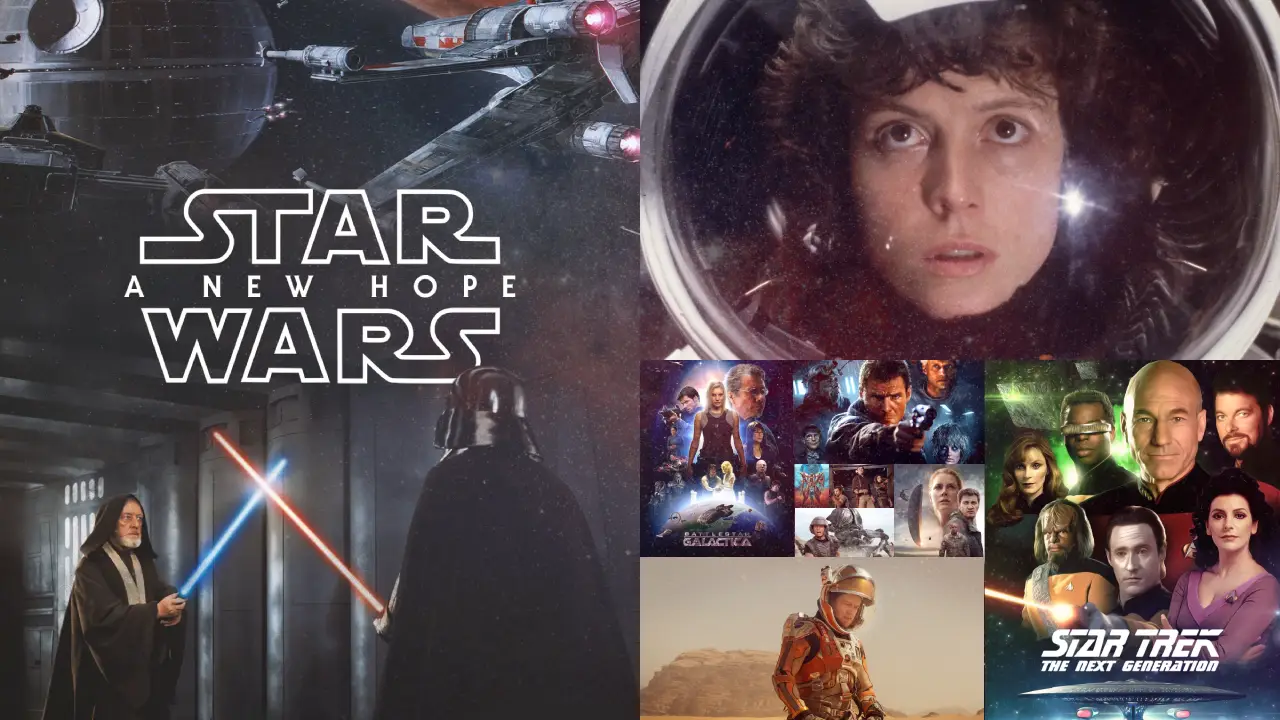
Space Sci‑Fi Genres Explained: From Space Opera to Hard Sci‑Fi, Cyberpunk and Cosmic Horror
Space science fiction is not one genre. It is a starfield of genres.
Sometimes it arrives as mythic space opera, full of empires, rebels and destiny. Sometimes it is hard science fiction, where orbital mechanics, biology and physics are as important as character drama. Sometimes it is neon-lit cyberpunk, frontier western, military epic, first-contact mystery, survival thriller or outright cosmic horror.
That is the enduring magic of space sci‑fi: it can make us feel tiny before the universe, then hand us a spacesuit and ask what kind of future we want to build.
So, fellow travellers, set your coordinates. Here is SciNexic’s comprehensive guide to the major space sci‑fi genres — what defines them, why they matter, and where to start.
Space Opera: Grand Drama Among the Stars
If space sci‑fi has a royal house, it is space opera.
Space opera is the genre of galactic empires, dynastic politics, ancient prophecies, starship battles and impossible scale. Britannica describes it as science fiction “at its most romantic”, often built around action-adventure on a galactic scale. The Encyclopedia of Science Fiction traces the term back to Wilson Tucker in 1941, when it was originally used as a jab at “hacky” spaceship yarns before evolving into one of Sci-Fi's most beloved labels.

The epic scope of Paul Atreides’ story showcases the core hallmarks of Space Opera—political intrigue, destiny, and galaxy‑shaping stakes. Image: TMDB
Think Star Wars, Dune, Foundation, the Gundam collection, Babylon 5, The Expanse and Iain M. Banks’ Culture novels. These stories are not merely about travelling through space. They are about civilisation itself: who rules, who rebels, who survives, and what happens when human ambition expands faster than wisdom.
At its best, space opera gives us the mythic thrill of ancient epics with the hardware of tomorrow.
Explore more: Gallery
Hard Science Fiction: Where the Equations Bite Back
Hard sci‑fi is the genre for readers and viewers who like their wonder with working parts.
Here, the drama often grows from plausible science: orbital trajectories, radiation, propulsion, terraforming, artificial intelligence, biology and survival engineering. It is not that every detail must be perfect, but the story wants the science to matter.
Essential examples include Arthur C. Clarke’s 2001: A Space Odyssey, Andy Weir’s The Martian and Project Hail Mary, Kim Stanley Robinson’s Mars Trilogy, and films such as Interstellar.
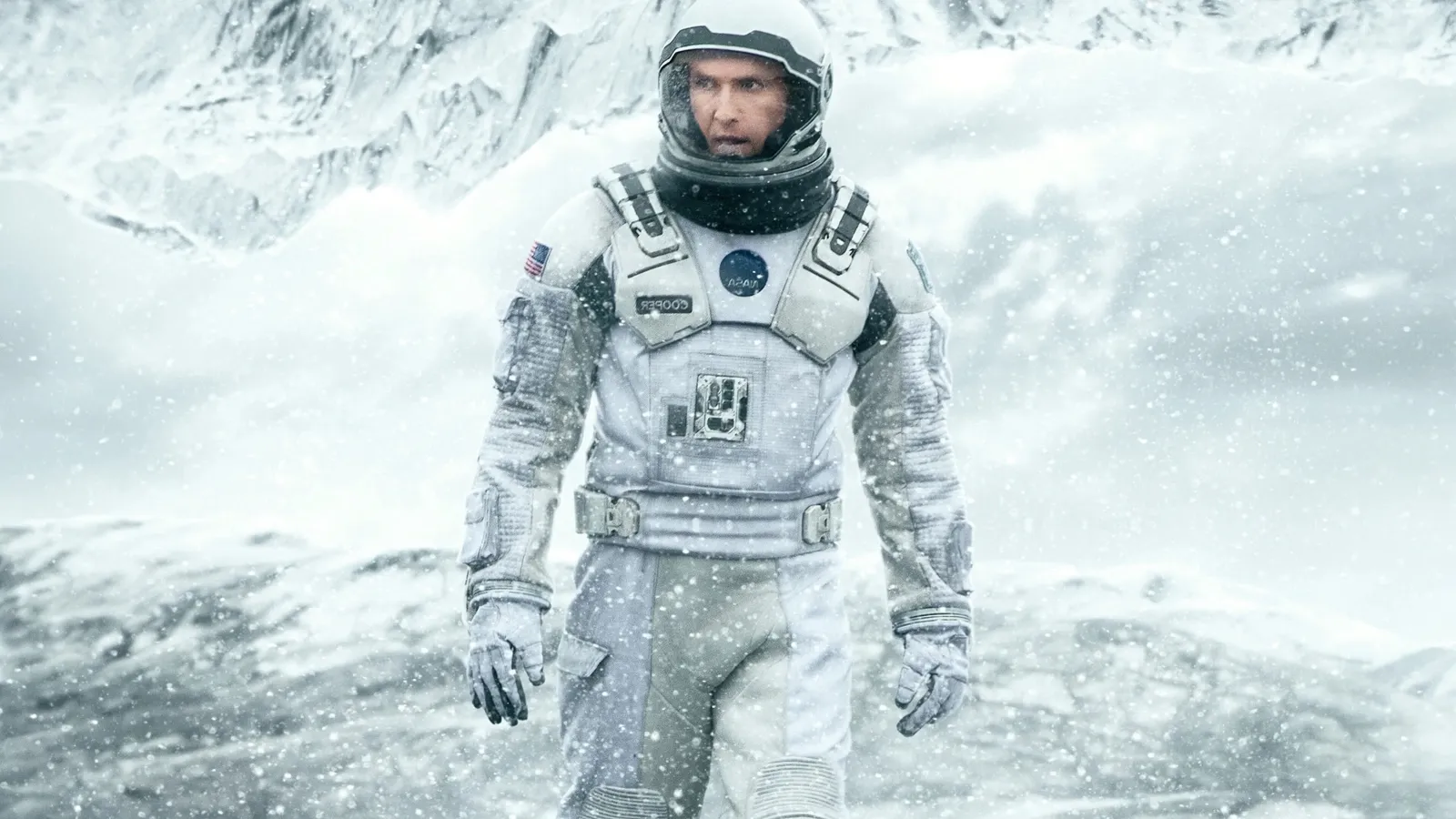
In Interstellar, the Hard Sci‑Fi approach lays bare the true hazards of space exploration, grounding its epic narrative in scientific precision and existential risk. Image: TMDB
NASA even explored some of the science behind The Martian in its educational material, noting how the story connects with real questions around Mars exploration and survival technologies (NASA JPL).
Hard sci‑fi scratches a very particular itch: the thrill of asking, “Could this actually happen?” Then, if the writer is brave, “What would it cost?”
Space Exploration: The Final Frontier, Reimagined
Space exploration stories are built around curiosity. Their heroes are scientists, pilots, engineers, survey crews, colonists or wanderers who step beyond the known map and find something that changes them.
This is the territory of Star Trek, Rendezvous with Rama, Interstellar, For All Mankind, No Man’s Sky, and countless first-contact tales.
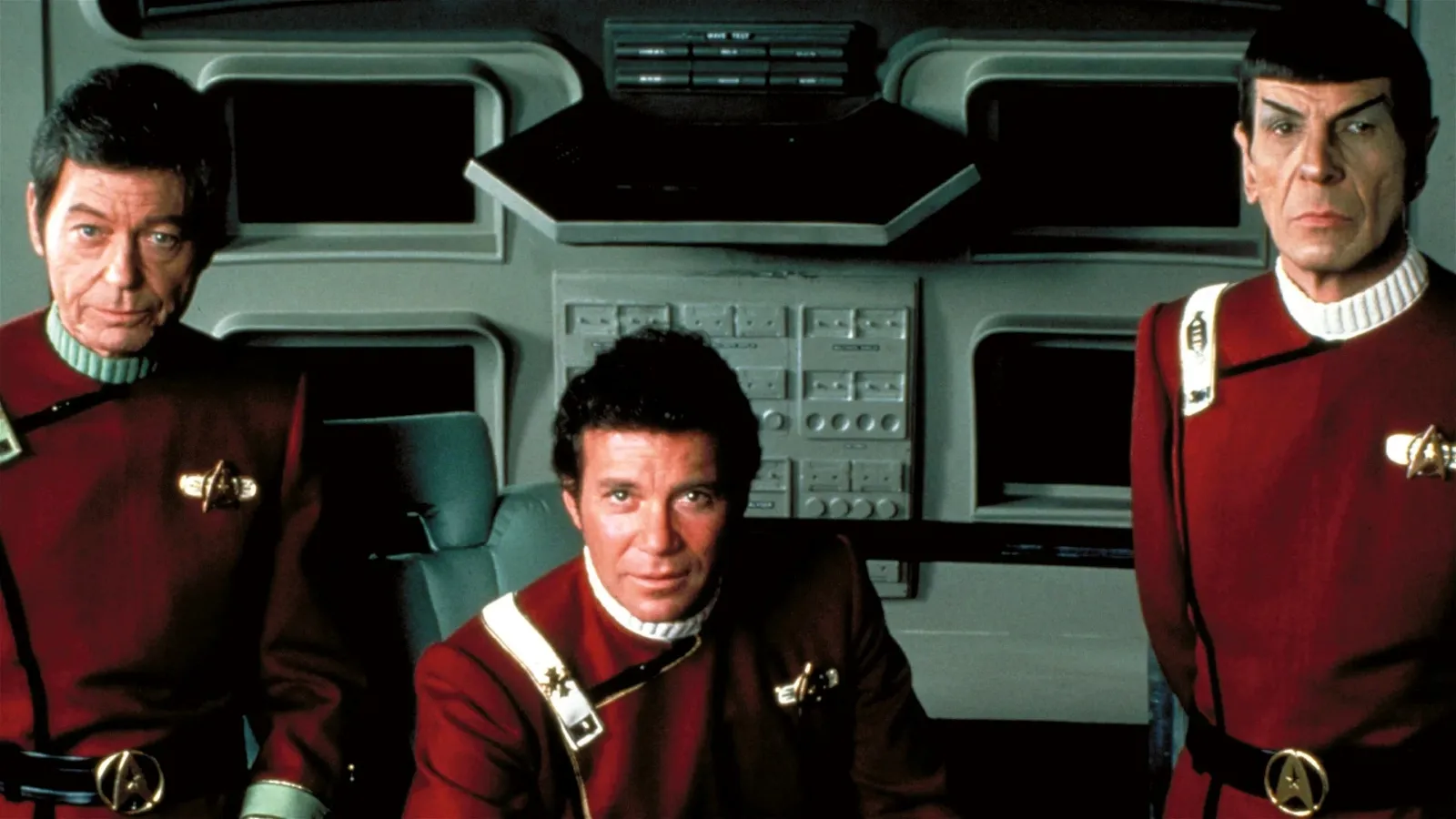
The original Star Trek opened the frontier to everyone, turning space exploration into a mainstream adventure of discovery and imagination. Image: TMDB
The stakes may be cosmic, but the emotional engine is often simple: there is something out there, and humanity cannot resist looking.
The best exploration sci‑fi gives us awe without forgetting danger. Every new world is a promise. Every signal from deep space could be a greeting, a warning, or a trap.
Cyberpunk in Space: Neon, Networks and Corporate Futures
Cyberpunk traditionally belongs to rain-slick cities, surveillance systems, mega corporations and body modification. But its DNA often fuses brilliantly with space sci‑fi.
The Encyclopedia of Science Fiction identifies cyberpunk with high technology, urban breakdown, computer networks, corporate power and alienated protagonists. Add off-world colonies, artificial humans or orbital industry and you get a darker future: not a clean interstellar utopia, but capitalism with a starship engine.
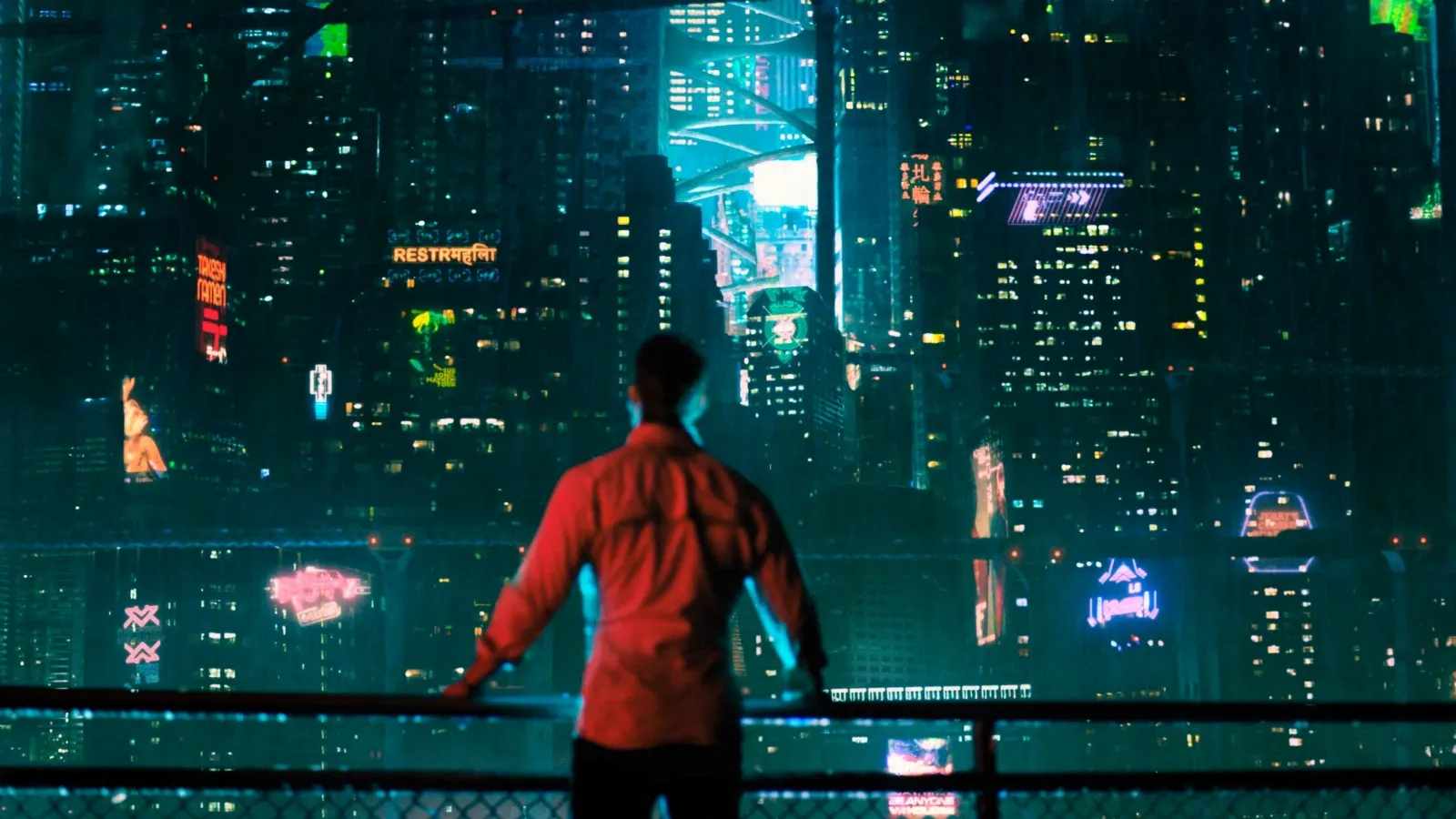
By embracing a dense cyberpunk aesthetic, Altered Carbon explores the ethical fault lines of genetic engineering and what it means for consciousness to be transferable. Image: TMDB
Blade Runner, adapted from Philip K. Dick’s Do Androids Dream of Electric Sheep?, remains a defining touchstone. Blade Runner 2049, Cyberpunk Edgerunners, Altered Carbon, Cowboy Bebop, The Fifth Element, The Peripheral and parts of The Expanse all show how space can become another layer of inequality. The stars may be open, but someone still owns the airlock.
Explore more: Spotlight
Space Western: Frontier Justice in Zero Gravity
Space westerns take the frontier myth — lawless settlements, smugglers, sheriffs, railways, outlaws, cattle towns — and fire it into orbit.
Firefly is the most obvious modern example, blending frontier towns, smugglers, horses, six-shooter energy and starships into one cult classic. The Mandalorian also leans heavily into western grammar: lone gunslinger, dusty settlements, bounty work, sudden duels and moral codes forged far from central authority.
In the gaming universe, major franchises like Star Citizen and Starfield channel the core DNA of Space Westerns—lone‑traveller frontiers, scrappy factions, bounty hunting, piracy, and the constant chase for loot. Their enduring appeal lies in the sense of open‑ended freedom: players shape their own journeys, forge their own allegiances, and carve out destinies in worlds where every choice can tilt the story.
XenoThreat is Back!. By Star Citizen. From @RobertsSpaceInd
Even Star Trek has roots in the frontier idea. Gene Roddenberry famously pitched the original series as a kind of “Wagon Train to the stars”, a phrase widely cited in discussions of the show’s development and frontier structure (StarTrek.com).
Space westerns work because space is the ultimate frontier: beautiful, dangerous, under-policed and full of people trying to build lives at the edge of power.
Alien Invasion: When the Universe Knocks Back
Alien invasion stories flip exploration on its head. Instead of humanity venturing outward, something comes here.
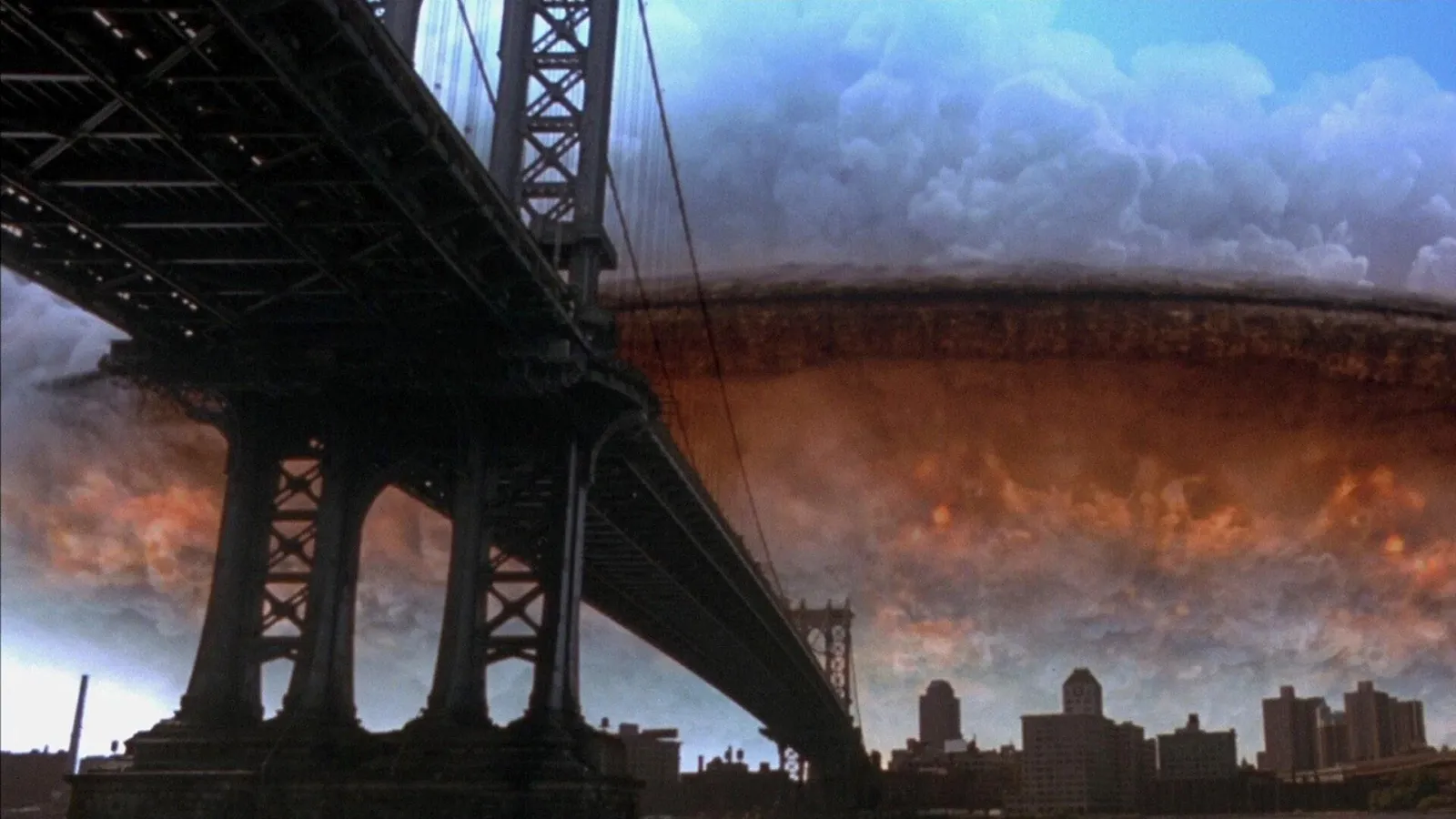
Independence Day’s city‑spanning invasion ships exemplify how sheer scale intensifies the drama of alien‑arrival narratives, making the impending attack feel truly monumental. Image: TMDB
The template stretches back to H. G. Wells’ The War of the Worlds, first serialised in 1897 and published as a novel in 1898, a landmark in invasion literature and science fiction (Encyclopaedia Britannica). Later examples include Independence Day, The Day the Earth Stood Still, Edge of Tomorrow, V, Falling Skies and Invasion of the Body Snatchers.
Not every alien arrival is warlike. Some invasion or contact stories are really about communication, paranoia, colonialism or humility. The genre asks a sharp question: if we are not alone, are we ready to stop acting like the universe belongs to us?
Military Science Fiction: War Beyond Earth
Military sci‑fi imagines conflict on an interplanetary or interstellar scale. It examines command structures, soldiers, tactics, weapons, propaganda, sacrifice and the brutal machinery of war.
Robert A. Heinlein’s Starship Troopers, Joe Haldeman’s The Forever War, Halo, Battlestar Galactica, Star Gate, Mass Effect, Ender’s Game and parts of The Expanse all sit somewhere in this orbit. Some are gung-ho. Others are deeply sceptical. The best of them understand that future war is still war: terrifying, political and human.

Engaging with the complexities of time and warfare, Joe Haldeman's "The Forever War" exemplifies the profound themes often explored across the varied landscapes of space science fiction. Image: JoeHaldeman.com
Military space sci‑fi is not just about lasers and dropships. It is about what institutions demand from individuals when survival is used as the ultimate justification.
Post-Apocalyptic Space: Survival After the Fall
What happens after Earth fails?
Post-apocalyptic space sci‑fi imagines humanity surviving beyond catastrophe: aboard generation ships, in sealed colonies, on damaged planets or among the ruins of lost civilisations. These stories blend dread with resilience. The world has ended, but the species has not.
Examples include The Ark, Wall‑E, Battlestar Galactica, Silo, Raised by Wolves, The 100, Knights of Sidonia, and A Canticle for Leibowitz.
Knights of Sidonia - Season 2 | Official Trailer. By Netflix. From @Netflix
In broader post-apocalyptic sci‑fi terms, and video games such as Fallout, which often mix retrofuturism, survival and the rebuilding of society after nuclear collapse.
This subgenre hits hard because it turns space into both refuge and judgement. If we ruin one world, do we deserve another?
Space Horror: Terrors From the Void
Space horror is where the wonder curdles.
A ship becomes a haunted house. A planet becomes a tomb. A signal becomes an infection. The void stops being beautiful and starts feeling hungry.
Alien is the gold standard, with Ridley Scott’s 1979 classic turning industrial space travel into a nightmare of biology, corporate exploitation and claustrophobia.

As one of film’s most recognisable alien designs, the Xenomorph embodies the enduring appeal of stories built around fear, survival, and hostile contact in space. Image: TMDB
The BFI has frequently discussed Alien as a landmark of science fiction and horror cinema. Other examples include Event Horizon, Pandorum, Life, Dead Space, Nemesis, The Callisto Protocol and Sunshine.
Space horror works because the environment is already hostile. The monster does not need to do much. Vacuum, darkness and distance are terrifying enough.
Space Disaster: Catastrophe on a Cosmic Scale
Space disaster stories are thrillers built around imminent catastrophe: asteroids, solar storms, failing spacecraft, orbital debris, moonfall scenarios or planetary extinction.

A meteor tears through New York in Armageddon, capturing the raw, unavoidable force that defines the spectacle of Space Disaster cinema. Image: TMDB
Armageddon, Deep Impact, Gravity, Apollo 13, Moonfall and The Wandering Earth all use space as a pressure cooker. Some lean into spectacle; others, such as Apollo 13, draw power from real engineering crisis and historical survival. NASA’s account of the Apollo 13 mission calls it a “successful failure” because the crew survived despite the aborted Moon landing (NASA).
The appeal is primal: the clock is ticking, Earth is fragile, and human ingenuity is the last line of defence.
First Contact: The Most Important Conversation in the Universe
First-contact sci‑fi asks what happens when humanity meets another intelligence.
Sometimes the answer is war. Sometimes it is wonder. Sometimes it is a failure of language. Arrival, Contact, Close Encounters of the Third Kind, The Three-Body Problem, Project Hail Mary and Star Trek: First Contact all explore the terror and beauty of discovering that consciousness is not a human monopoly.
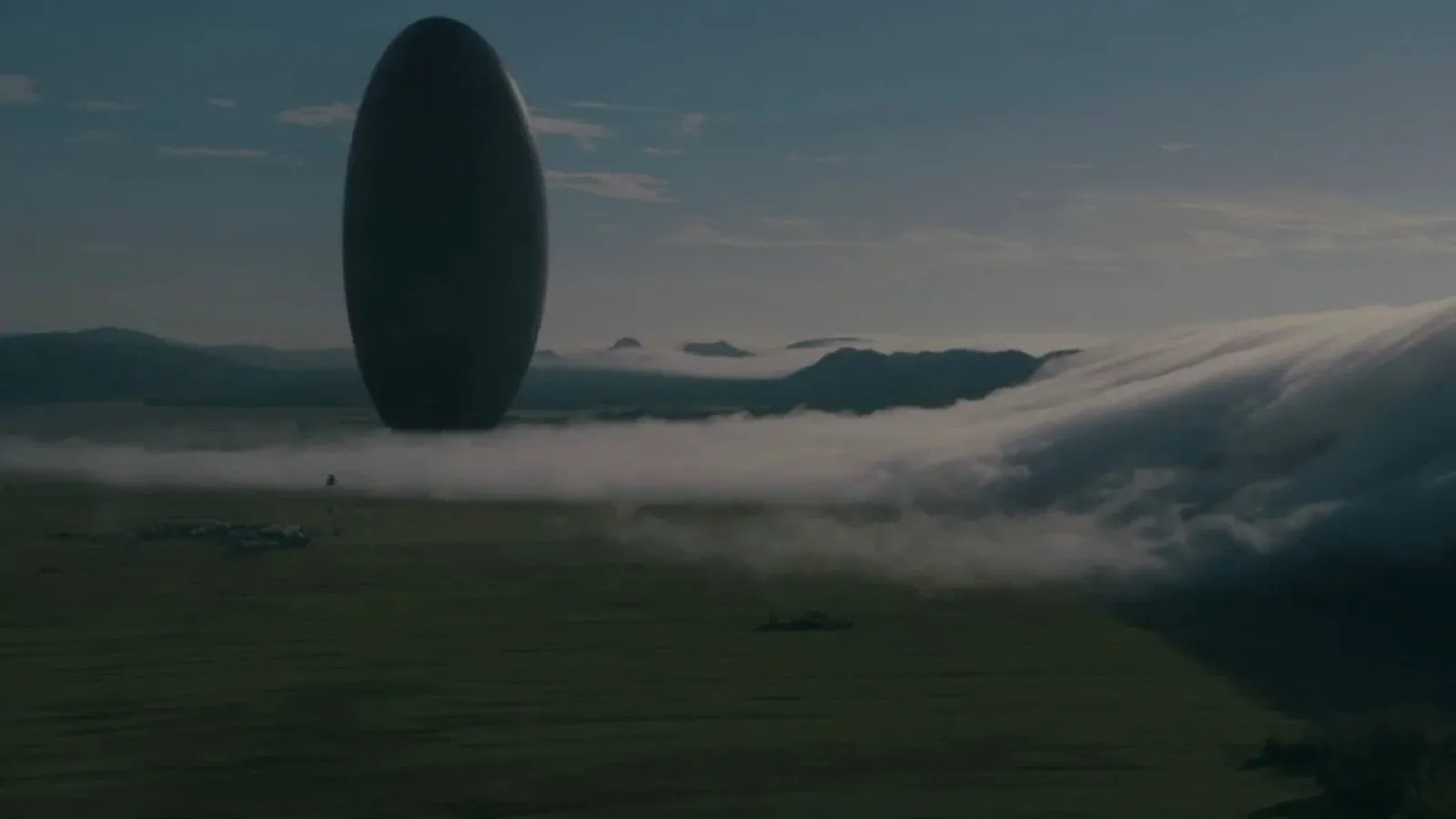
Arrival turns first contact into an emotional crucible, where every moment pushes deeper into the psychological weight of communicating with the unknown. Image: TMDB
The best first-contact stories are not really about aliens. They are about us: our assumptions, our fears, our need to translate the unknown into something we can survive.
Explore more: Store
Why Space Sci‑Fi Keeps Expanding
Space sci‑fi endures because it is endlessly elastic. It can be epic or intimate, scientific or spiritual, terrifying or hopeful. It can contain war, romance, horror, politics, philosophy, comedy, survival drama and pure cosmic awe.
That is why the genre keeps reinventing itself. The spaceship is never just a spaceship. It is a mirror, a laboratory, a battlefield, a cathedral, a coffin, a home.
From space opera to hard sci‑fi, from alien invasion to cosmic horror, these genres remind us that the final frontier is not simply “out there”. It is inside every question we ask about humanity’s future.
So keep your visor polished, your engines warm and your curiosity dangerously overcharged.
The cosmos is not one story. It is a kaleidoscope.
Explore more: SciNexic Files
You Might Also Like:
TV Shows and Series
Keep your scanners locked on Scinexic.com for more deep dives into the world of interstellar storytelling.
Space science fiction is not one genre. It is a starfield of genres.
Sometimes it arrives as mythic space opera, full of empires, rebels and destiny. Sometimes it is hard science fiction, where orbital mechanics, biology and physics are as important as character drama. Sometimes it is neon-lit cyberpunk, frontier western, military epic, first-contact mystery, survival thriller or outright cosmic horror.
That is the enduring magic of space sci‑fi: it can make us feel tiny before the universe, then hand us a spacesuit and ask what kind of future we want to build.
So, fellow travellers, set your coordinates. Here is SciNexic’s comprehensive guide to the major space sci‑fi genres — what defines them, why they matter, and where to start.
Space Opera: Grand Drama Among the Stars
If space sci‑fi has a royal house, it is space opera.
Space opera is the genre of galactic empires, dynastic politics, ancient prophecies, starship battles and impossible scale. Britannica describes it as science fiction “at its most romantic”, often built around action-adventure on a galactic scale. The Encyclopedia of Science Fiction traces the term back to Wilson Tucker in 1941, when it was originally used as a jab at “hacky” spaceship yarns before evolving into one of Sci-Fi's most beloved labels.
The epic scope of Paul Atreides’ story showcases the core hallmarks of Space Opera—political intrigue, destiny, and galaxy‑shaping stakes. Image: TMDB
Think Star Wars, Dune, Foundation, the Gundam collection, Babylon 5, The Expanse and Iain M. Banks’ Culture novels. These stories are not merely about travelling through space. They are about civilisation itself: who rules, who rebels, who survives, and what happens when human ambition expands faster than wisdom.
At its best, space opera gives us the mythic thrill of ancient epics with the hardware of tomorrow.
Explore more: Gallery
Hard Science Fiction: Where the Equations Bite Back
Hard sci‑fi is the genre for readers and viewers who like their wonder with working parts.
Here, the drama often grows from plausible science: orbital trajectories, radiation, propulsion, terraforming, artificial intelligence, biology and survival engineering. It is not that every detail must be perfect, but the story wants the science to matter.
Essential examples include Arthur C. Clarke’s 2001: A Space Odyssey, Andy Weir’s The Martian and Project Hail Mary, Kim Stanley Robinson’s Mars Trilogy, and films such as Interstellar.
In Interstellar, the Hard Sci‑Fi approach lays bare the true hazards of space exploration, grounding its epic narrative in scientific precision and existential risk. Image: TMDB
NASA even explored some of the science behind The Martian in its educational material, noting how the story connects with real questions around Mars exploration and survival technologies (NASA JPL).
Hard sci‑fi scratches a very particular itch: the thrill of asking, “Could this actually happen?” Then, if the writer is brave, “What would it cost?”
Space Exploration: The Final Frontier, Reimagined
Space exploration stories are built around curiosity. Their heroes are scientists, pilots, engineers, survey crews, colonists or wanderers who step beyond the known map and find something that changes them.
This is the territory of Star Trek, Rendezvous with Rama, Interstellar, For All Mankind, No Man’s Sky, and countless first-contact tales.
The original Star Trek opened the frontier to everyone, turning space exploration into a mainstream adventure of discovery and imagination. Image: TMDB
The stakes may be cosmic, but the emotional engine is often simple: there is something out there, and humanity cannot resist looking.
The best exploration sci‑fi gives us awe without forgetting danger. Every new world is a promise. Every signal from deep space could be a greeting, a warning, or a trap.
Cyberpunk in Space: Neon, Networks and Corporate Futures
Cyberpunk traditionally belongs to rain-slick cities, surveillance systems, mega corporations and body modification. But its DNA often fuses brilliantly with space sci‑fi.
The Encyclopedia of Science Fiction identifies cyberpunk with high technology, urban breakdown, computer networks, corporate power and alienated protagonists. Add off-world colonies, artificial humans or orbital industry and you get a darker future: not a clean interstellar utopia, but capitalism with a starship engine.
By embracing a dense cyberpunk aesthetic, Altered Carbon explores the ethical fault lines of genetic engineering and what it means for consciousness to be transferable. Image: TMDB
Blade Runner, adapted from Philip K. Dick’s Do Androids Dream of Electric Sheep?, remains a defining touchstone. Blade Runner 2049, Cyberpunk Edgerunners, Altered Carbon, Cowboy Bebop, The Fifth Element, The Peripheral and parts of The Expanse all show how space can become another layer of inequality. The stars may be open, but someone still owns the airlock.
Explore more: Spotlight
Space Western: Frontier Justice in Zero Gravity
Space westerns take the frontier myth — lawless settlements, smugglers, sheriffs, railways, outlaws, cattle towns — and fire it into orbit.
Firefly is the most obvious modern example, blending frontier towns, smugglers, horses, six-shooter energy and starships into one cult classic. The Mandalorian also leans heavily into western grammar: lone gunslinger, dusty settlements, bounty work, sudden duels and moral codes forged far from central authority.
In the gaming universe, major franchises like Star Citizen and Starfield channel the core DNA of Space Westerns—lone‑traveller frontiers, scrappy factions, bounty hunting, piracy, and the constant chase for loot. Their enduring appeal lies in the sense of open‑ended freedom: players shape their own journeys, forge their own allegiances, and carve out destinies in worlds where every choice can tilt the story.
XenoThreat is Back!. By Star Citizen. From @RobertsSpaceInd
Even Star Trek has roots in the frontier idea. Gene Roddenberry famously pitched the original series as a kind of “Wagon Train to the stars”, a phrase widely cited in discussions of the show’s development and frontier structure (StarTrek.com).
Space westerns work because space is the ultimate frontier: beautiful, dangerous, under-policed and full of people trying to build lives at the edge of power.
Alien Invasion: When the Universe Knocks Back
Alien invasion stories flip exploration on its head. Instead of humanity venturing outward, something comes here.
Independence Day’s city‑spanning invasion ships exemplify how sheer scale intensifies the drama of alien‑arrival narratives, making the impending attack feel truly monumental. Image: TMDB
The template stretches back to H. G. Wells’ The War of the Worlds, first serialised in 1897 and published as a novel in 1898, a landmark in invasion literature and science fiction (Encyclopaedia Britannica). Later examples include Independence Day, The Day the Earth Stood Still, Edge of Tomorrow, V, Falling Skies and Invasion of the Body Snatchers.
Not every alien arrival is warlike. Some invasion or contact stories are really about communication, paranoia, colonialism or humility. The genre asks a sharp question: if we are not alone, are we ready to stop acting like the universe belongs to us?
Military Science Fiction: War Beyond Earth
Military sci‑fi imagines conflict on an interplanetary or interstellar scale. It examines command structures, soldiers, tactics, weapons, propaganda, sacrifice and the brutal machinery of war.
Robert A. Heinlein’s Starship Troopers, Joe Haldeman’s The Forever War, Halo, Battlestar Galactica, Star Gate, Mass Effect, Ender’s Game and parts of The Expanse all sit somewhere in this orbit. Some are gung-ho. Others are deeply sceptical. The best of them understand that future war is still war: terrifying, political and human.
Engaging with the complexities of time and warfare, Joe Haldeman's "The Forever War" exemplifies the profound themes often explored across the varied landscapes of space science fiction. Image: JoeHaldeman.com
Military space sci‑fi is not just about lasers and dropships. It is about what institutions demand from individuals when survival is used as the ultimate justification.
Post-Apocalyptic Space: Survival After the Fall
What happens after Earth fails?
Post-apocalyptic space sci‑fi imagines humanity surviving beyond catastrophe: aboard generation ships, in sealed colonies, on damaged planets or among the ruins of lost civilisations. These stories blend dread with resilience. The world has ended, but the species has not.
Examples include The Ark, Wall‑E, Battlestar Galactica, Silo, Raised by Wolves, The 100, Knights of Sidonia, and A Canticle for Leibowitz.
Knights of Sidonia - Season 2 | Official Trailer. By Netflix. From @Netflix
In broader post-apocalyptic sci‑fi terms, and video games such as Fallout, which often mix retrofuturism, survival and the rebuilding of society after nuclear collapse.
This subgenre hits hard because it turns space into both refuge and judgement. If we ruin one world, do we deserve another?
Space Horror: Terrors From the Void
Space horror is where the wonder curdles.
A ship becomes a haunted house. A planet becomes a tomb. A signal becomes an infection. The void stops being beautiful and starts feeling hungry.
Alien is the gold standard, with Ridley Scott’s 1979 classic turning industrial space travel into a nightmare of biology, corporate exploitation and claustrophobia.
As one of film’s most recognisable alien designs, the Xenomorph embodies the enduring appeal of stories built around fear, survival, and hostile contact in space. Image: TMDB
The BFI has frequently discussed Alien as a landmark of science fiction and horror cinema. Other examples include Event Horizon, Pandorum, Life, Dead Space, Nemesis, The Callisto Protocol and Sunshine.
Space horror works because the environment is already hostile. The monster does not need to do much. Vacuum, darkness and distance are terrifying enough.
Space Disaster: Catastrophe on a Cosmic Scale
Space disaster stories are thrillers built around imminent catastrophe: asteroids, solar storms, failing spacecraft, orbital debris, moonfall scenarios or planetary extinction.
A meteor tears through New York in Armageddon, capturing the raw, unavoidable force that defines the spectacle of Space Disaster cinema. Image: TMDB
Armageddon, Deep Impact, Gravity, Apollo 13, Moonfall and The Wandering Earth all use space as a pressure cooker. Some lean into spectacle; others, such as Apollo 13, draw power from real engineering crisis and historical survival. NASA’s account of the Apollo 13 mission calls it a “successful failure” because the crew survived despite the aborted Moon landing (NASA).
The appeal is primal: the clock is ticking, Earth is fragile, and human ingenuity is the last line of defence.
First Contact: The Most Important Conversation in the Universe
First-contact sci‑fi asks what happens when humanity meets another intelligence.
Sometimes the answer is war. Sometimes it is wonder. Sometimes it is a failure of language. Arrival, Contact, Close Encounters of the Third Kind, The Three-Body Problem, Project Hail Mary and Star Trek: First Contact all explore the terror and beauty of discovering that consciousness is not a human monopoly.
Arrival turns first contact into an emotional crucible, where every moment pushes deeper into the psychological weight of communicating with the unknown. Image: TMDB
The best first-contact stories are not really about aliens. They are about us: our assumptions, our fears, our need to translate the unknown into something we can survive.
Explore more: Store
Why Space Sci‑Fi Keeps Expanding
Space sci‑fi endures because it is endlessly elastic. It can be epic or intimate, scientific or spiritual, terrifying or hopeful. It can contain war, romance, horror, politics, philosophy, comedy, survival drama and pure cosmic awe.
That is why the genre keeps reinventing itself. The spaceship is never just a spaceship. It is a mirror, a laboratory, a battlefield, a cathedral, a coffin, a home.
From space opera to hard sci‑fi, from alien invasion to cosmic horror, these genres remind us that the final frontier is not simply “out there”. It is inside every question we ask about humanity’s future.
So keep your visor polished, your engines warm and your curiosity dangerously overcharged.
The cosmos is not one story. It is a kaleidoscope.
Explore more: SciNexic Files
You Might Also Like:
TV Shows and Series
Keep your scanners locked on Scinexic.com for more deep dives into the world of interstellar storytelling.
Space science fiction is not one genre. It is a starfield of genres.
Sometimes it arrives as mythic space opera, full of empires, rebels and destiny. Sometimes it is hard science fiction, where orbital mechanics, biology and physics are as important as character drama. Sometimes it is neon-lit cyberpunk, frontier western, military epic, first-contact mystery, survival thriller or outright cosmic horror.
That is the enduring magic of space sci‑fi: it can make us feel tiny before the universe, then hand us a spacesuit and ask what kind of future we want to build.
So, fellow travellers, set your coordinates. Here is SciNexic’s comprehensive guide to the major space sci‑fi genres — what defines them, why they matter, and where to start.
Space Opera: Grand Drama Among the Stars
If space sci‑fi has a royal house, it is space opera.
Space opera is the genre of galactic empires, dynastic politics, ancient prophecies, starship battles and impossible scale. Britannica describes it as science fiction “at its most romantic”, often built around action-adventure on a galactic scale. The Encyclopedia of Science Fiction traces the term back to Wilson Tucker in 1941, when it was originally used as a jab at “hacky” spaceship yarns before evolving into one of Sci-Fi's most beloved labels.
The epic scope of Paul Atreides’ story showcases the core hallmarks of Space Opera—political intrigue, destiny, and galaxy‑shaping stakes. Image: TMDB
Think Star Wars, Dune, Foundation, the Gundam collection, Babylon 5, The Expanse and Iain M. Banks’ Culture novels. These stories are not merely about travelling through space. They are about civilisation itself: who rules, who rebels, who survives, and what happens when human ambition expands faster than wisdom.
At its best, space opera gives us the mythic thrill of ancient epics with the hardware of tomorrow.
Explore more: Gallery
Hard Science Fiction: Where the Equations Bite Back
Hard sci‑fi is the genre for readers and viewers who like their wonder with working parts.
Here, the drama often grows from plausible science: orbital trajectories, radiation, propulsion, terraforming, artificial intelligence, biology and survival engineering. It is not that every detail must be perfect, but the story wants the science to matter.
Essential examples include Arthur C. Clarke’s 2001: A Space Odyssey, Andy Weir’s The Martian and Project Hail Mary, Kim Stanley Robinson’s Mars Trilogy, and films such as Interstellar.
In Interstellar, the Hard Sci‑Fi approach lays bare the true hazards of space exploration, grounding its epic narrative in scientific precision and existential risk. Image: TMDB
NASA even explored some of the science behind The Martian in its educational material, noting how the story connects with real questions around Mars exploration and survival technologies (NASA JPL).
Hard sci‑fi scratches a very particular itch: the thrill of asking, “Could this actually happen?” Then, if the writer is brave, “What would it cost?”
Space Exploration: The Final Frontier, Reimagined
Space exploration stories are built around curiosity. Their heroes are scientists, pilots, engineers, survey crews, colonists or wanderers who step beyond the known map and find something that changes them.
This is the territory of Star Trek, Rendezvous with Rama, Interstellar, For All Mankind, No Man’s Sky, and countless first-contact tales.
The original Star Trek opened the frontier to everyone, turning space exploration into a mainstream adventure of discovery and imagination. Image: TMDB
The stakes may be cosmic, but the emotional engine is often simple: there is something out there, and humanity cannot resist looking.
The best exploration sci‑fi gives us awe without forgetting danger. Every new world is a promise. Every signal from deep space could be a greeting, a warning, or a trap.
Cyberpunk in Space: Neon, Networks and Corporate Futures
Cyberpunk traditionally belongs to rain-slick cities, surveillance systems, mega corporations and body modification. But its DNA often fuses brilliantly with space sci‑fi.
The Encyclopedia of Science Fiction identifies cyberpunk with high technology, urban breakdown, computer networks, corporate power and alienated protagonists. Add off-world colonies, artificial humans or orbital industry and you get a darker future: not a clean interstellar utopia, but capitalism with a starship engine.
By embracing a dense cyberpunk aesthetic, Altered Carbon explores the ethical fault lines of genetic engineering and what it means for consciousness to be transferable. Image: TMDB
Blade Runner, adapted from Philip K. Dick’s Do Androids Dream of Electric Sheep?, remains a defining touchstone. Blade Runner 2049, Cyberpunk Edgerunners, Altered Carbon, Cowboy Bebop, The Fifth Element, The Peripheral and parts of The Expanse all show how space can become another layer of inequality. The stars may be open, but someone still owns the airlock.
Explore more: Spotlight
Space Western: Frontier Justice in Zero Gravity
Space westerns take the frontier myth — lawless settlements, smugglers, sheriffs, railways, outlaws, cattle towns — and fire it into orbit.
Firefly is the most obvious modern example, blending frontier towns, smugglers, horses, six-shooter energy and starships into one cult classic. The Mandalorian also leans heavily into western grammar: lone gunslinger, dusty settlements, bounty work, sudden duels and moral codes forged far from central authority.
In the gaming universe, major franchises like Star Citizen and Starfield channel the core DNA of Space Westerns—lone‑traveller frontiers, scrappy factions, bounty hunting, piracy, and the constant chase for loot. Their enduring appeal lies in the sense of open‑ended freedom: players shape their own journeys, forge their own allegiances, and carve out destinies in worlds where every choice can tilt the story.
XenoThreat is Back!. By Star Citizen. From @RobertsSpaceInd
Even Star Trek has roots in the frontier idea. Gene Roddenberry famously pitched the original series as a kind of “Wagon Train to the stars”, a phrase widely cited in discussions of the show’s development and frontier structure (StarTrek.com).
Space westerns work because space is the ultimate frontier: beautiful, dangerous, under-policed and full of people trying to build lives at the edge of power.
Alien Invasion: When the Universe Knocks Back
Alien invasion stories flip exploration on its head. Instead of humanity venturing outward, something comes here.
Independence Day’s city‑spanning invasion ships exemplify how sheer scale intensifies the drama of alien‑arrival narratives, making the impending attack feel truly monumental. Image: TMDB
The template stretches back to H. G. Wells’ The War of the Worlds, first serialised in 1897 and published as a novel in 1898, a landmark in invasion literature and science fiction (Encyclopaedia Britannica). Later examples include Independence Day, The Day the Earth Stood Still, Edge of Tomorrow, V, Falling Skies and Invasion of the Body Snatchers.
Not every alien arrival is warlike. Some invasion or contact stories are really about communication, paranoia, colonialism or humility. The genre asks a sharp question: if we are not alone, are we ready to stop acting like the universe belongs to us?
Military Science Fiction: War Beyond Earth
Military sci‑fi imagines conflict on an interplanetary or interstellar scale. It examines command structures, soldiers, tactics, weapons, propaganda, sacrifice and the brutal machinery of war.
Robert A. Heinlein’s Starship Troopers, Joe Haldeman’s The Forever War, Halo, Battlestar Galactica, Star Gate, Mass Effect, Ender’s Game and parts of The Expanse all sit somewhere in this orbit. Some are gung-ho. Others are deeply sceptical. The best of them understand that future war is still war: terrifying, political and human.
Engaging with the complexities of time and warfare, Joe Haldeman's "The Forever War" exemplifies the profound themes often explored across the varied landscapes of space science fiction. Image: JoeHaldeman.com
Military space sci‑fi is not just about lasers and dropships. It is about what institutions demand from individuals when survival is used as the ultimate justification.
Post-Apocalyptic Space: Survival After the Fall
What happens after Earth fails?
Post-apocalyptic space sci‑fi imagines humanity surviving beyond catastrophe: aboard generation ships, in sealed colonies, on damaged planets or among the ruins of lost civilisations. These stories blend dread with resilience. The world has ended, but the species has not.
Examples include The Ark, Wall‑E, Battlestar Galactica, Silo, Raised by Wolves, The 100, Knights of Sidonia, and A Canticle for Leibowitz.
Knights of Sidonia - Season 2 | Official Trailer. By Netflix. From @Netflix
In broader post-apocalyptic sci‑fi terms, and video games such as Fallout, which often mix retrofuturism, survival and the rebuilding of society after nuclear collapse.
This subgenre hits hard because it turns space into both refuge and judgement. If we ruin one world, do we deserve another?
Space Horror: Terrors From the Void
Space horror is where the wonder curdles.
A ship becomes a haunted house. A planet becomes a tomb. A signal becomes an infection. The void stops being beautiful and starts feeling hungry.
Alien is the gold standard, with Ridley Scott’s 1979 classic turning industrial space travel into a nightmare of biology, corporate exploitation and claustrophobia.
As one of film’s most recognisable alien designs, the Xenomorph embodies the enduring appeal of stories built around fear, survival, and hostile contact in space. Image: TMDB
The BFI has frequently discussed Alien as a landmark of science fiction and horror cinema. Other examples include Event Horizon, Pandorum, Life, Dead Space, Nemesis, The Callisto Protocol and Sunshine.
Space horror works because the environment is already hostile. The monster does not need to do much. Vacuum, darkness and distance are terrifying enough.
Space Disaster: Catastrophe on a Cosmic Scale
Space disaster stories are thrillers built around imminent catastrophe: asteroids, solar storms, failing spacecraft, orbital debris, moonfall scenarios or planetary extinction.
A meteor tears through New York in Armageddon, capturing the raw, unavoidable force that defines the spectacle of Space Disaster cinema. Image: TMDB
Armageddon, Deep Impact, Gravity, Apollo 13, Moonfall and The Wandering Earth all use space as a pressure cooker. Some lean into spectacle; others, such as Apollo 13, draw power from real engineering crisis and historical survival. NASA’s account of the Apollo 13 mission calls it a “successful failure” because the crew survived despite the aborted Moon landing (NASA).
The appeal is primal: the clock is ticking, Earth is fragile, and human ingenuity is the last line of defence.
First Contact: The Most Important Conversation in the Universe
First-contact sci‑fi asks what happens when humanity meets another intelligence.
Sometimes the answer is war. Sometimes it is wonder. Sometimes it is a failure of language. Arrival, Contact, Close Encounters of the Third Kind, The Three-Body Problem, Project Hail Mary and Star Trek: First Contact all explore the terror and beauty of discovering that consciousness is not a human monopoly.
Arrival turns first contact into an emotional crucible, where every moment pushes deeper into the psychological weight of communicating with the unknown. Image: TMDB
The best first-contact stories are not really about aliens. They are about us: our assumptions, our fears, our need to translate the unknown into something we can survive.
Explore more: Store
Why Space Sci‑Fi Keeps Expanding
Space sci‑fi endures because it is endlessly elastic. It can be epic or intimate, scientific or spiritual, terrifying or hopeful. It can contain war, romance, horror, politics, philosophy, comedy, survival drama and pure cosmic awe.
That is why the genre keeps reinventing itself. The spaceship is never just a spaceship. It is a mirror, a laboratory, a battlefield, a cathedral, a coffin, a home.
From space opera to hard sci‑fi, from alien invasion to cosmic horror, these genres remind us that the final frontier is not simply “out there”. It is inside every question we ask about humanity’s future.
So keep your visor polished, your engines warm and your curiosity dangerously overcharged.
The cosmos is not one story. It is a kaleidoscope.
Explore more: SciNexic Files
You Might Also Like:
TV Shows and Series
Keep your scanners locked on Scinexic.com for more deep dives into the world of interstellar storytelling.
Get the SciNexic Dispatch
Space sci-fi news, reviews, trailers, and release picks—straight to your inbox.
Get the dispatch
Image Gallery
Comments
Please be kind and considerate. Any abusive or offensive comments will be sent out the airlock! Thank You.
Please be kind and considerate. Any abusive or offensive comments will be sent out the airlock! Thank You.
Get the Dispatch
Related Posts
Share on Twitter
Share on Instagram
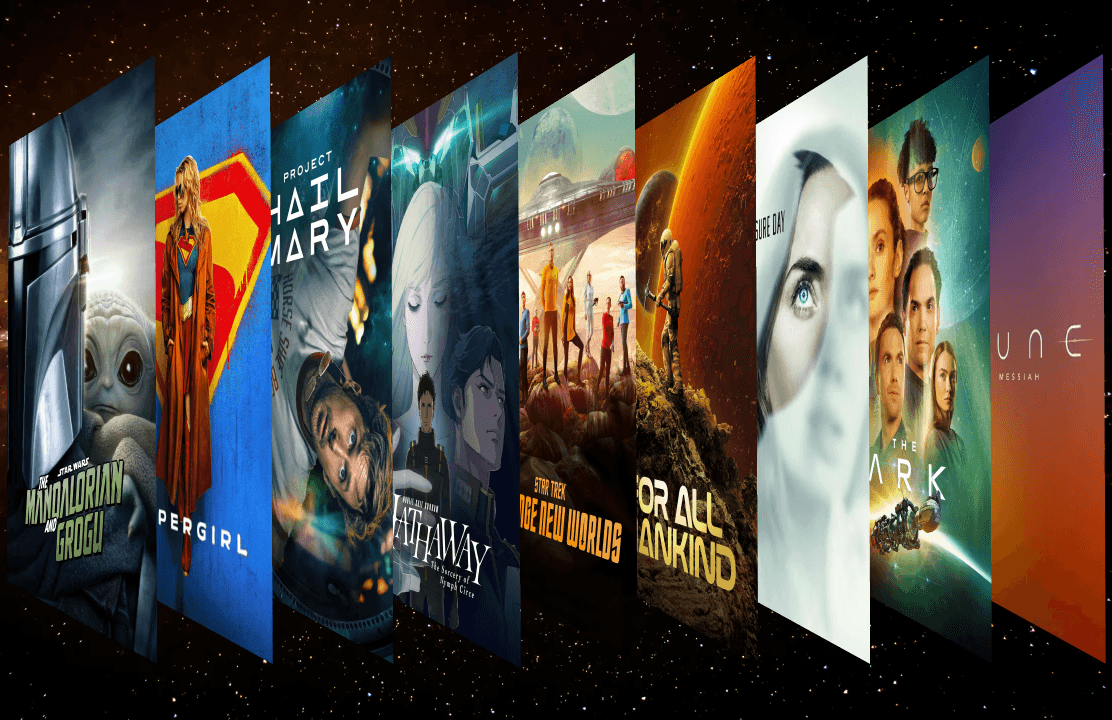
Banner Image - Space Sci-Fi Genres images and posters - TMDB.org - All images and media are the property of their respective owners.
Main Article - All images and media are the property of their respective owners.