


The SciNexic Files
The SciNexic Files
The SciNexic Files
Review
RetroSpace Is Not BioShock in Space — and That Is Exactly Why It Matters for Sci-Fi Horror Gaming
In the 18 years since BioShock redefined what a derelict space station could feel like, exactly zero major releases have dared to ask whether the station itself might be the protagonist. RetroSpace, releasing on 1 October 2026 across PlayStation 5, Xbox Series X|S, Nintendo Switch 2, and PC via Steam, is not content with the comparison its genre invites. The Wild Gentlemen, the Budapest-based studio best known for Chicken Police, have constructed a game that asks a question the space sci-fi horror genre has largely stopped asking: what if the station itself were not merely hostile, but alive in ways that undermine your every assumption about time, identity, and progress?
Aurora 5 and the Sentient Black Hole
The premise is classically spare. The year is 2177. You are a janitor aboard the Aurora 5, a space station consumed by a sentient black hole that has warped time, space, and the station's architecture into something unpredictable. According to Rock Paper Shotgun's announcement coverage, the black hole does not merely provide a cosmic backdrop. It is an active system — "time jumps" shift the environment between states without warning, turning corridors that were safe into death traps and vice versa. The station is not a level. It is an antagonist.
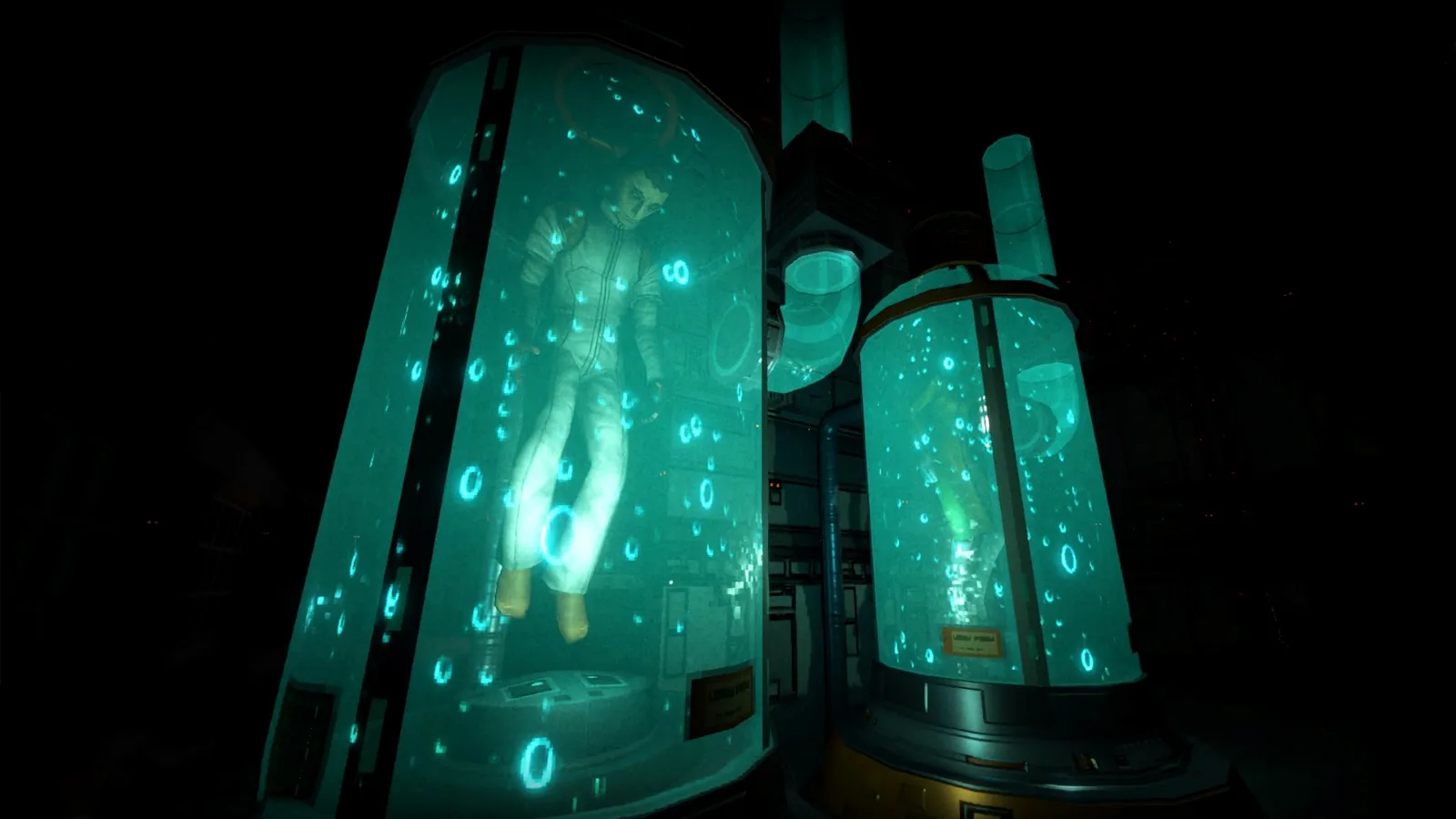
Aurora 5 isn’t just a setting — it’s a sentient black‑hole‑warped labyrinth where reality bends, timelines collide, and every janitor‑level decision becomes a survival puzzle. Credit: Retrospace.wiki
This distinguishes RetroSpace from the genre's dominant mode. Dead Space (2008) and its 2023 remake treated the USG Ishimura as a necropolis — beautiful, terrifying, but fundamentally static. Alien: Isolation (2014) made Sevastopol dynamic through the xenomorph's AI, but the station itself was architecture, not agency. RetroSpace collapses that boundary. The Aurora 5 remembers. It reshapes itself. And because the player is a janitor rather than a soldier, an engineer, or a chosen-one protagonist, every encounter carries the weight of someone who was never meant to be here in the first place.
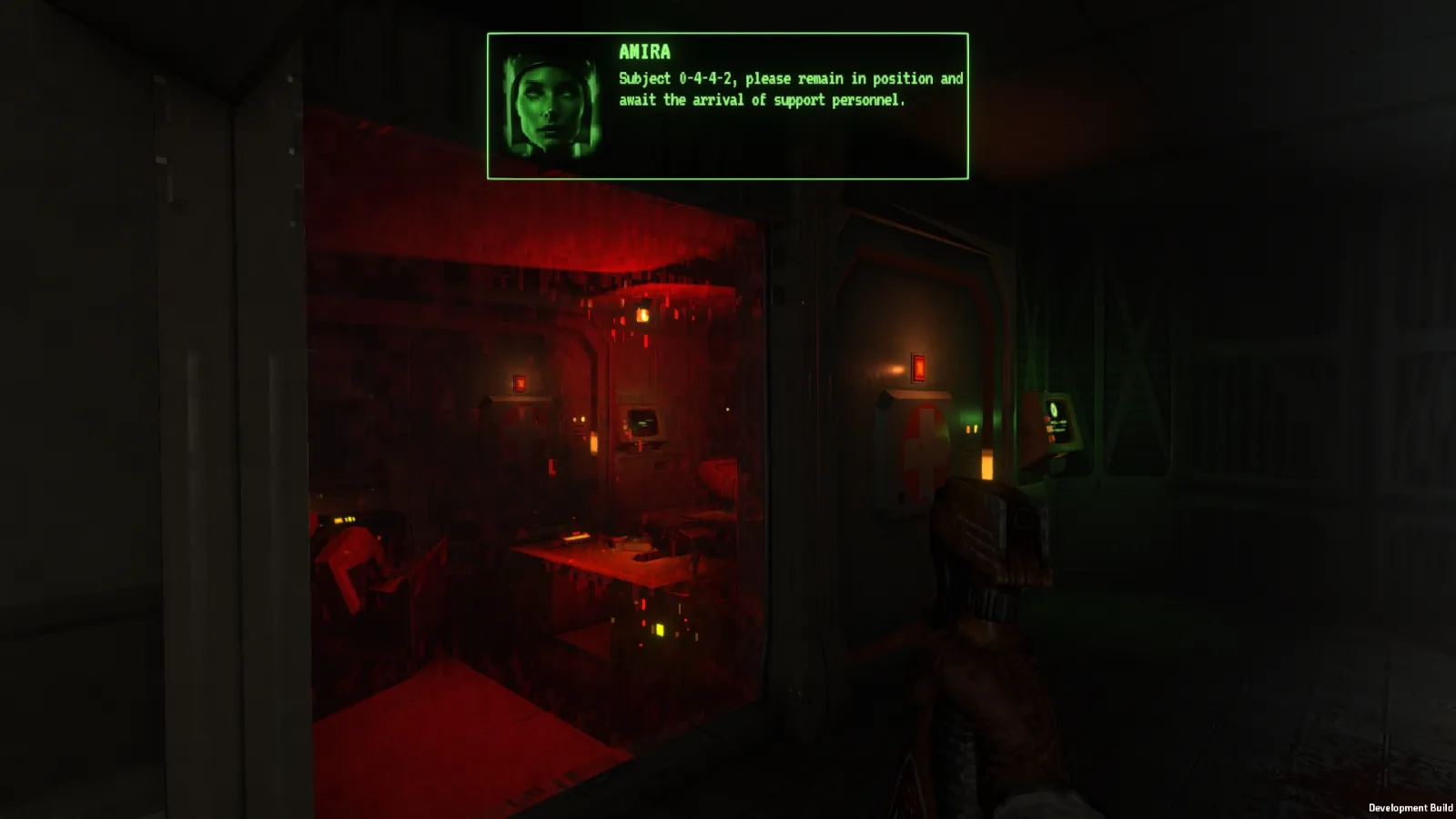
Its UI and UX aren’t retro for nostalgia — they’re retro for clarity, letting you read danger, manipulate systems, and improvise solutions in a station that’s always one glitch away from killing you. Credit: Discopunk.space
The narrative economy is deliberate. Player One's essential guide notes that the game's "disco-punk" aesthetic — all burnt oranges, chrome, and analogue interfaces — is not merely visual flavour. It is world-building. The Aurora 5 was built in an era of optimism, its design language borrowed from 1970s futurism, before space stations became military installations or corporate research facilities. The horror emerges not from what the station has become, but from what it was supposed to be.
Mutamods, Cloning, and the Death Loop
The Wild Gentlemen have embedded the game's thematic preoccupations into its mechanical core. The "Mutamod" system allows players to unlock mutations that enhance stealth, combat, or exploration — but each upgrade carries "unpredictable and irreversible side effects," as the Steam store page details. This is not a skill tree. It is a negotiation with your own body, one in which every advantage compounds a vulnerability you cannot foresee.
More radical is the cloning system. Death in RetroSpace is not failure. It is recursion. The Aurora 5 generates a new clone of the janitor upon each death, and the player must recover equipment from their previous corpse. A4AT's preview explains that repeated cloning produces "cloning degeneration" — cumulative side effects that alter gameplay in ways the demo community has already begun documenting. This transforms the roguelike loop from a punishment into a narrative device. Every death is canon. Every clone is a different person who inherits the same job, the same station, and the same deteriorating body.

The mutants of Aurora 5 aren’t cannon fodder — they’re unpredictable hybrids shaped by the black hole’s madness, each demanding a different tactic, trap, or mutation to survive. Credit: Retrospace.wiki
The design philosophy is unmistakably old-school. Reddit hands-on impressions from the June 2026 demo describe the game as "intentionally difficult, requiring patience, strategy, and careful resource management." Ammunition is scarce. Stealth is viable but not guaranteed. Hacking and environmental manipulation offer alternatives to combat, but the station's shifting architecture can render a carefully planned route obsolete mid-execution. The result is a game that respects the immersive sim tradition without worshipping it.
The 70s System Shock Nobody Expected
The critical reception to the demo suggests RetroSpace may be arriving at an opportune moment. The immersive sim has spent the last decade in commercial decline. Prey (2017) underperformed despite critical acclaim. Deathloop (2021) pivoted toward action. System Shock (2023) was a faithful remake that served a nostalgic audience rather than expanding it. Against this backdrop, RetroSpace represents something genuinely risky: an original property, from a mid-sized European studio, predicated on the assumption that players still want to think rather than merely react.
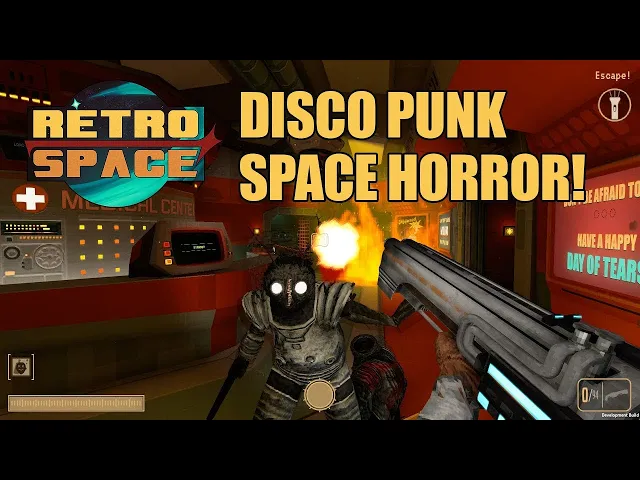
RetroSpace - Disco-Punk Space-Horror / Realms Deep Trailer. By the Wild Gentlemen. From @twgdevstudio
The technical specifications reinforce this ambition. The PC version requires a 64-bit system with minimum specs of an Intel Core i5-8400 or AMD Ryzen 5 2600, 16 GB RAM, and a GTX 1050 Ti — modest by 2026 standards, but the recommended tier (Intel Core i5-11600K, GTX 1650) suggests the game is not optimising for spectacle but for systemic complexity. The developers explicitly recommend an SSD, not for loading times alone but for the procedural environmental state changes that drive the time-jump mechanic.
No pricing has been announced as of 29 September 2026, though industry speculation based on Kwalee's recent releases suggests a standard edition in the £25–£35 range. There are no confirmed pre-order bonuses, no deluxe tier, and no live-service roadmap. In an era where even single-player games announce season passes before launch, RetroSpace's restraint is either confidence or indifference — and either reading makes it more interesting.
Why This Matters for Space Sci-Fi Gaming
The space station is one of science fiction's most durable settings because it compresses civilisation into corridors. It forces proximity. It eliminates escape. Every great space sci-fi horror work — from Alien to Event Horizon to The Expanse's slow-zone sequences — understands that the station is not merely a location but a pressure vessel for human psychology. RetroSpace returns to this tradition with a mechanical vocabulary that its contemporaries have largely abandoned.
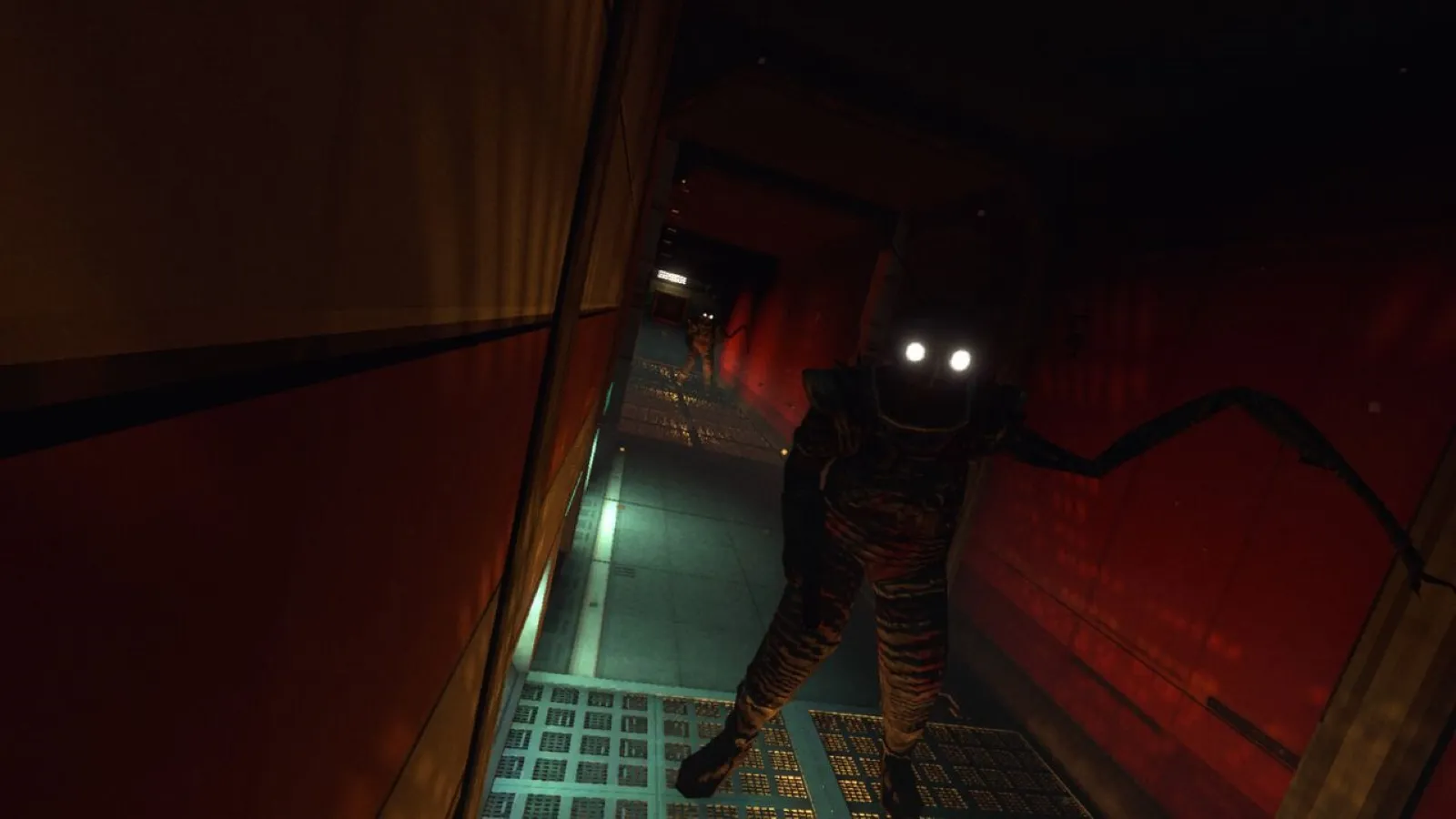
The disco‑punk nightmare on Aurora 5 turns every corridor, mutant, and time‑warped glitch into a playground for true immersive‑sim chaos. Credit: Retrospace.wiki
What the genre needs from RetroSpace is not a blockbuster. It is a proof of concept. If a mid-tier disco-punk immersive sim about a janitor and a sentient black hole can find an audience in October 2026, the commercial logic that has been strangling systemic design for a decade may finally begin to reverse. The alternative — another year of extraction shooters and cinematic corridor campaigns — is not unthinkable. It is merely unbearable.
The Aurora 5 launches in 24 hours. Whether it finds the audience it deserves is not a question of quality. It is a question of whether space sci-fi horror players still recognise themselves in a mirror held up by a game that asks more of them than their trigger finger.
For more deep dives into the spectacle of space sci-fi gaming and more, keep exploring SciNexic.com
Further Reading:
SciNexic.com may earn a commission through affiliate links, ensuring continued cosmic content.
In the 18 years since BioShock redefined what a derelict space station could feel like, exactly zero major releases have dared to ask whether the station itself might be the protagonist. RetroSpace, releasing on 1 October 2026 across PlayStation 5, Xbox Series X|S, Nintendo Switch 2, and PC via Steam, is not content with the comparison its genre invites. The Wild Gentlemen, the Budapest-based studio best known for Chicken Police, have constructed a game that asks a question the space sci-fi horror genre has largely stopped asking: what if the station itself were not merely hostile, but alive in ways that undermine your every assumption about time, identity, and progress?
Aurora 5 and the Sentient Black Hole
The premise is classically spare. The year is 2177. You are a janitor aboard the Aurora 5, a space station consumed by a sentient black hole that has warped time, space, and the station's architecture into something unpredictable. According to Rock Paper Shotgun's announcement coverage, the black hole does not merely provide a cosmic backdrop. It is an active system — "time jumps" shift the environment between states without warning, turning corridors that were safe into death traps and vice versa. The station is not a level. It is an antagonist.
Aurora 5 isn’t just a setting — it’s a sentient black‑hole‑warped labyrinth where reality bends, timelines collide, and every janitor‑level decision becomes a survival puzzle. Credit: Retrospace.wiki
This distinguishes RetroSpace from the genre's dominant mode. Dead Space (2008) and its 2023 remake treated the USG Ishimura as a necropolis — beautiful, terrifying, but fundamentally static. Alien: Isolation (2014) made Sevastopol dynamic through the xenomorph's AI, but the station itself was architecture, not agency. RetroSpace collapses that boundary. The Aurora 5 remembers. It reshapes itself. And because the player is a janitor rather than a soldier, an engineer, or a chosen-one protagonist, every encounter carries the weight of someone who was never meant to be here in the first place.
Its UI and UX aren’t retro for nostalgia — they’re retro for clarity, letting you read danger, manipulate systems, and improvise solutions in a station that’s always one glitch away from killing you. Credit: Discopunk.space
The narrative economy is deliberate. Player One's essential guide notes that the game's "disco-punk" aesthetic — all burnt oranges, chrome, and analogue interfaces — is not merely visual flavour. It is world-building. The Aurora 5 was built in an era of optimism, its design language borrowed from 1970s futurism, before space stations became military installations or corporate research facilities. The horror emerges not from what the station has become, but from what it was supposed to be.
Mutamods, Cloning, and the Death Loop
The Wild Gentlemen have embedded the game's thematic preoccupations into its mechanical core. The "Mutamod" system allows players to unlock mutations that enhance stealth, combat, or exploration — but each upgrade carries "unpredictable and irreversible side effects," as the Steam store page details. This is not a skill tree. It is a negotiation with your own body, one in which every advantage compounds a vulnerability you cannot foresee.
More radical is the cloning system. Death in RetroSpace is not failure. It is recursion. The Aurora 5 generates a new clone of the janitor upon each death, and the player must recover equipment from their previous corpse. A4AT's preview explains that repeated cloning produces "cloning degeneration" — cumulative side effects that alter gameplay in ways the demo community has already begun documenting. This transforms the roguelike loop from a punishment into a narrative device. Every death is canon. Every clone is a different person who inherits the same job, the same station, and the same deteriorating body.
The mutants of Aurora 5 aren’t cannon fodder — they’re unpredictable hybrids shaped by the black hole’s madness, each demanding a different tactic, trap, or mutation to survive. Credit: Retrospace.wiki
The design philosophy is unmistakably old-school. Reddit hands-on impressions from the June 2026 demo describe the game as "intentionally difficult, requiring patience, strategy, and careful resource management." Ammunition is scarce. Stealth is viable but not guaranteed. Hacking and environmental manipulation offer alternatives to combat, but the station's shifting architecture can render a carefully planned route obsolete mid-execution. The result is a game that respects the immersive sim tradition without worshipping it.
The 70s System Shock Nobody Expected
The critical reception to the demo suggests RetroSpace may be arriving at an opportune moment. The immersive sim has spent the last decade in commercial decline. Prey (2017) underperformed despite critical acclaim. Deathloop (2021) pivoted toward action. System Shock (2023) was a faithful remake that served a nostalgic audience rather than expanding it. Against this backdrop, RetroSpace represents something genuinely risky: an original property, from a mid-sized European studio, predicated on the assumption that players still want to think rather than merely react.
RetroSpace - Disco-Punk Space-Horror / Realms Deep Trailer. By the Wild Gentlemen. From @twgdevstudio
The technical specifications reinforce this ambition. The PC version requires a 64-bit system with minimum specs of an Intel Core i5-8400 or AMD Ryzen 5 2600, 16 GB RAM, and a GTX 1050 Ti — modest by 2026 standards, but the recommended tier (Intel Core i5-11600K, GTX 1650) suggests the game is not optimising for spectacle but for systemic complexity. The developers explicitly recommend an SSD, not for loading times alone but for the procedural environmental state changes that drive the time-jump mechanic.
No pricing has been announced as of 29 September 2026, though industry speculation based on Kwalee's recent releases suggests a standard edition in the £25–£35 range. There are no confirmed pre-order bonuses, no deluxe tier, and no live-service roadmap. In an era where even single-player games announce season passes before launch, RetroSpace's restraint is either confidence or indifference — and either reading makes it more interesting.
Why This Matters for Space Sci-Fi Gaming
The space station is one of science fiction's most durable settings because it compresses civilisation into corridors. It forces proximity. It eliminates escape. Every great space sci-fi horror work — from Alien to Event Horizon to The Expanse's slow-zone sequences — understands that the station is not merely a location but a pressure vessel for human psychology. RetroSpace returns to this tradition with a mechanical vocabulary that its contemporaries have largely abandoned.
The disco‑punk nightmare on Aurora 5 turns every corridor, mutant, and time‑warped glitch into a playground for true immersive‑sim chaos. Credit: Retrospace.wiki
What the genre needs from RetroSpace is not a blockbuster. It is a proof of concept. If a mid-tier disco-punk immersive sim about a janitor and a sentient black hole can find an audience in October 2026, the commercial logic that has been strangling systemic design for a decade may finally begin to reverse. The alternative — another year of extraction shooters and cinematic corridor campaigns — is not unthinkable. It is merely unbearable.
The Aurora 5 launches in 24 hours. Whether it finds the audience it deserves is not a question of quality. It is a question of whether space sci-fi horror players still recognise themselves in a mirror held up by a game that asks more of them than their trigger finger.
For more deep dives into the spectacle of space sci-fi gaming and more, keep exploring SciNexic.com
Further Reading:
SciNexic.com may earn a commission through affiliate links, ensuring continued cosmic content.
In the 18 years since BioShock redefined what a derelict space station could feel like, exactly zero major releases have dared to ask whether the station itself might be the protagonist. RetroSpace, releasing on 1 October 2026 across PlayStation 5, Xbox Series X|S, Nintendo Switch 2, and PC via Steam, is not content with the comparison its genre invites. The Wild Gentlemen, the Budapest-based studio best known for Chicken Police, have constructed a game that asks a question the space sci-fi horror genre has largely stopped asking: what if the station itself were not merely hostile, but alive in ways that undermine your every assumption about time, identity, and progress?
Aurora 5 and the Sentient Black Hole
The premise is classically spare. The year is 2177. You are a janitor aboard the Aurora 5, a space station consumed by a sentient black hole that has warped time, space, and the station's architecture into something unpredictable. According to Rock Paper Shotgun's announcement coverage, the black hole does not merely provide a cosmic backdrop. It is an active system — "time jumps" shift the environment between states without warning, turning corridors that were safe into death traps and vice versa. The station is not a level. It is an antagonist.
Aurora 5 isn’t just a setting — it’s a sentient black‑hole‑warped labyrinth where reality bends, timelines collide, and every janitor‑level decision becomes a survival puzzle. Credit: Retrospace.wiki
This distinguishes RetroSpace from the genre's dominant mode. Dead Space (2008) and its 2023 remake treated the USG Ishimura as a necropolis — beautiful, terrifying, but fundamentally static. Alien: Isolation (2014) made Sevastopol dynamic through the xenomorph's AI, but the station itself was architecture, not agency. RetroSpace collapses that boundary. The Aurora 5 remembers. It reshapes itself. And because the player is a janitor rather than a soldier, an engineer, or a chosen-one protagonist, every encounter carries the weight of someone who was never meant to be here in the first place.
Its UI and UX aren’t retro for nostalgia — they’re retro for clarity, letting you read danger, manipulate systems, and improvise solutions in a station that’s always one glitch away from killing you. Credit: Discopunk.space
The narrative economy is deliberate. Player One's essential guide notes that the game's "disco-punk" aesthetic — all burnt oranges, chrome, and analogue interfaces — is not merely visual flavour. It is world-building. The Aurora 5 was built in an era of optimism, its design language borrowed from 1970s futurism, before space stations became military installations or corporate research facilities. The horror emerges not from what the station has become, but from what it was supposed to be.
Mutamods, Cloning, and the Death Loop
The Wild Gentlemen have embedded the game's thematic preoccupations into its mechanical core. The "Mutamod" system allows players to unlock mutations that enhance stealth, combat, or exploration — but each upgrade carries "unpredictable and irreversible side effects," as the Steam store page details. This is not a skill tree. It is a negotiation with your own body, one in which every advantage compounds a vulnerability you cannot foresee.
More radical is the cloning system. Death in RetroSpace is not failure. It is recursion. The Aurora 5 generates a new clone of the janitor upon each death, and the player must recover equipment from their previous corpse. A4AT's preview explains that repeated cloning produces "cloning degeneration" — cumulative side effects that alter gameplay in ways the demo community has already begun documenting. This transforms the roguelike loop from a punishment into a narrative device. Every death is canon. Every clone is a different person who inherits the same job, the same station, and the same deteriorating body.
The mutants of Aurora 5 aren’t cannon fodder — they’re unpredictable hybrids shaped by the black hole’s madness, each demanding a different tactic, trap, or mutation to survive. Credit: Retrospace.wiki
The design philosophy is unmistakably old-school. Reddit hands-on impressions from the June 2026 demo describe the game as "intentionally difficult, requiring patience, strategy, and careful resource management." Ammunition is scarce. Stealth is viable but not guaranteed. Hacking and environmental manipulation offer alternatives to combat, but the station's shifting architecture can render a carefully planned route obsolete mid-execution. The result is a game that respects the immersive sim tradition without worshipping it.
The 70s System Shock Nobody Expected
The critical reception to the demo suggests RetroSpace may be arriving at an opportune moment. The immersive sim has spent the last decade in commercial decline. Prey (2017) underperformed despite critical acclaim. Deathloop (2021) pivoted toward action. System Shock (2023) was a faithful remake that served a nostalgic audience rather than expanding it. Against this backdrop, RetroSpace represents something genuinely risky: an original property, from a mid-sized European studio, predicated on the assumption that players still want to think rather than merely react.
RetroSpace - Disco-Punk Space-Horror / Realms Deep Trailer. By the Wild Gentlemen. From @twgdevstudio
The technical specifications reinforce this ambition. The PC version requires a 64-bit system with minimum specs of an Intel Core i5-8400 or AMD Ryzen 5 2600, 16 GB RAM, and a GTX 1050 Ti — modest by 2026 standards, but the recommended tier (Intel Core i5-11600K, GTX 1650) suggests the game is not optimising for spectacle but for systemic complexity. The developers explicitly recommend an SSD, not for loading times alone but for the procedural environmental state changes that drive the time-jump mechanic.
No pricing has been announced as of 29 September 2026, though industry speculation based on Kwalee's recent releases suggests a standard edition in the £25–£35 range. There are no confirmed pre-order bonuses, no deluxe tier, and no live-service roadmap. In an era where even single-player games announce season passes before launch, RetroSpace's restraint is either confidence or indifference — and either reading makes it more interesting.
Why This Matters for Space Sci-Fi Gaming
The space station is one of science fiction's most durable settings because it compresses civilisation into corridors. It forces proximity. It eliminates escape. Every great space sci-fi horror work — from Alien to Event Horizon to The Expanse's slow-zone sequences — understands that the station is not merely a location but a pressure vessel for human psychology. RetroSpace returns to this tradition with a mechanical vocabulary that its contemporaries have largely abandoned.
The disco‑punk nightmare on Aurora 5 turns every corridor, mutant, and time‑warped glitch into a playground for true immersive‑sim chaos. Credit: Retrospace.wiki
What the genre needs from RetroSpace is not a blockbuster. It is a proof of concept. If a mid-tier disco-punk immersive sim about a janitor and a sentient black hole can find an audience in October 2026, the commercial logic that has been strangling systemic design for a decade may finally begin to reverse. The alternative — another year of extraction shooters and cinematic corridor campaigns — is not unthinkable. It is merely unbearable.
The Aurora 5 launches in 24 hours. Whether it finds the audience it deserves is not a question of quality. It is a question of whether space sci-fi horror players still recognise themselves in a mirror held up by a game that asks more of them than their trigger finger.
For more deep dives into the spectacle of space sci-fi gaming and more, keep exploring SciNexic.com
Further Reading:
SciNexic.com may earn a commission through affiliate links, ensuring continued cosmic content.
Image Gallery
Comments
Please be kind and considerate. Any abusive or offensive comments will be sent out the airlock! Thank You.
Please be kind and considerate. Any abusive or offensive comments will be sent out the airlock! Thank You.
Join the SciNexic Crew
Related Posts

Share on Twitter
Share on Instagram
Share on Twitter
Share on Instagram
Banner Image - RetroSpace Art poster & logo - https://retrospace.wiki/ - Copyright
Main Article - All images and media are the property of their respective owners.