


The SciNexic Files
The SciNexic Files
The SciNexic Files
Report
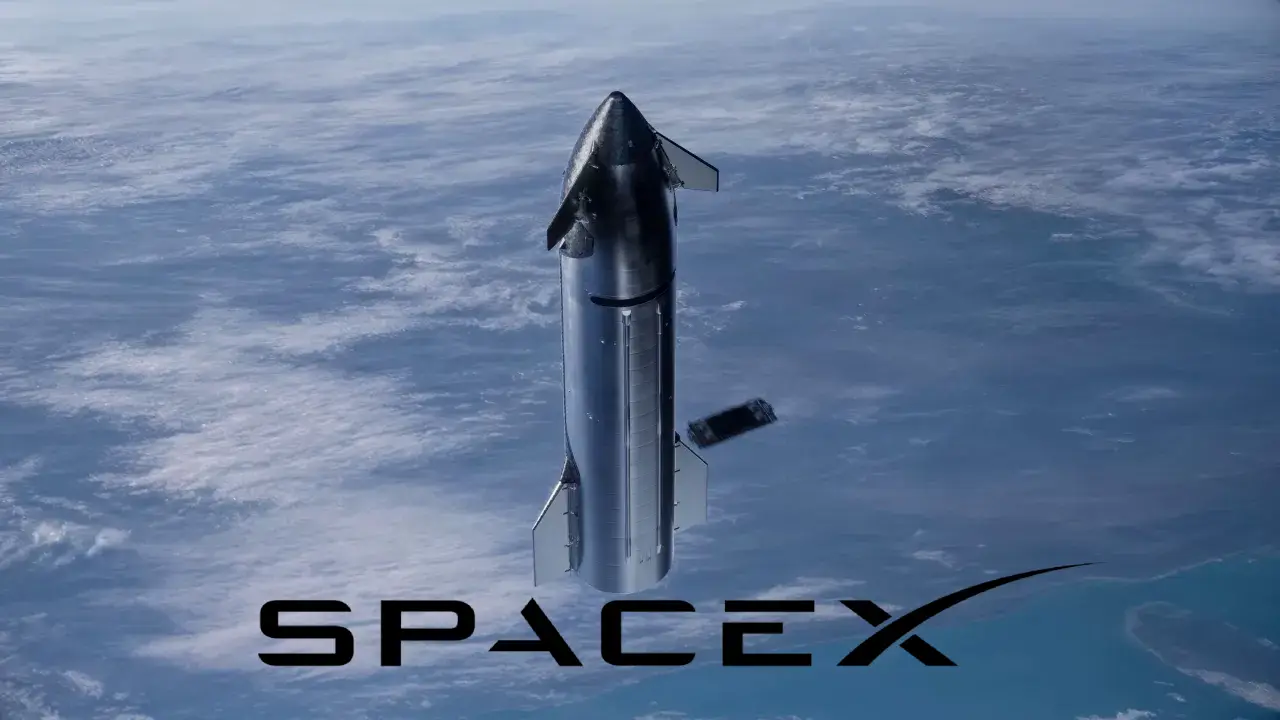
Orbital at Last: SpaceX Starship's 14th Flight Rewrites the Real-World Space Sci-Fi Timeline
Orbital at Last: SpaceX Starship's 14th Flight Rewrites the Real-World Space Sci-Fi Timeline
At 17,500 miles per hour, a vehicle constructed primarily of stainless steel plates and welded seams became the largest object ever to reach orbital velocity from a single launch — and it did so with two of its engines dead. SpaceX's Starship Flight 14, which lifted off from Starbase, Texas, on 28 September 2026 at 8:49 a.m. EDT, achieved what thirteen previous test flights had not: a stable operational orbit of roughly 275 km, a successful commercial payload deployment, and a controlled re-entry splashdown. The mission was not flawless. One of the Super Heavy booster's 33 Raptor engines cut out during ascent. A second engine on the upper stage failed before orbital insertion. Yet the vehicle's flight software compensated in real time, extending burns from the remaining engines and proving that the most powerful rocket ever built could absorb catastrophic failure and still complete its mission. For space sci-fi enthusiasts who have spent decades watching fictional spacecraft navigate crises with similar ingenuity, the reality finally caught up with the fantasy.
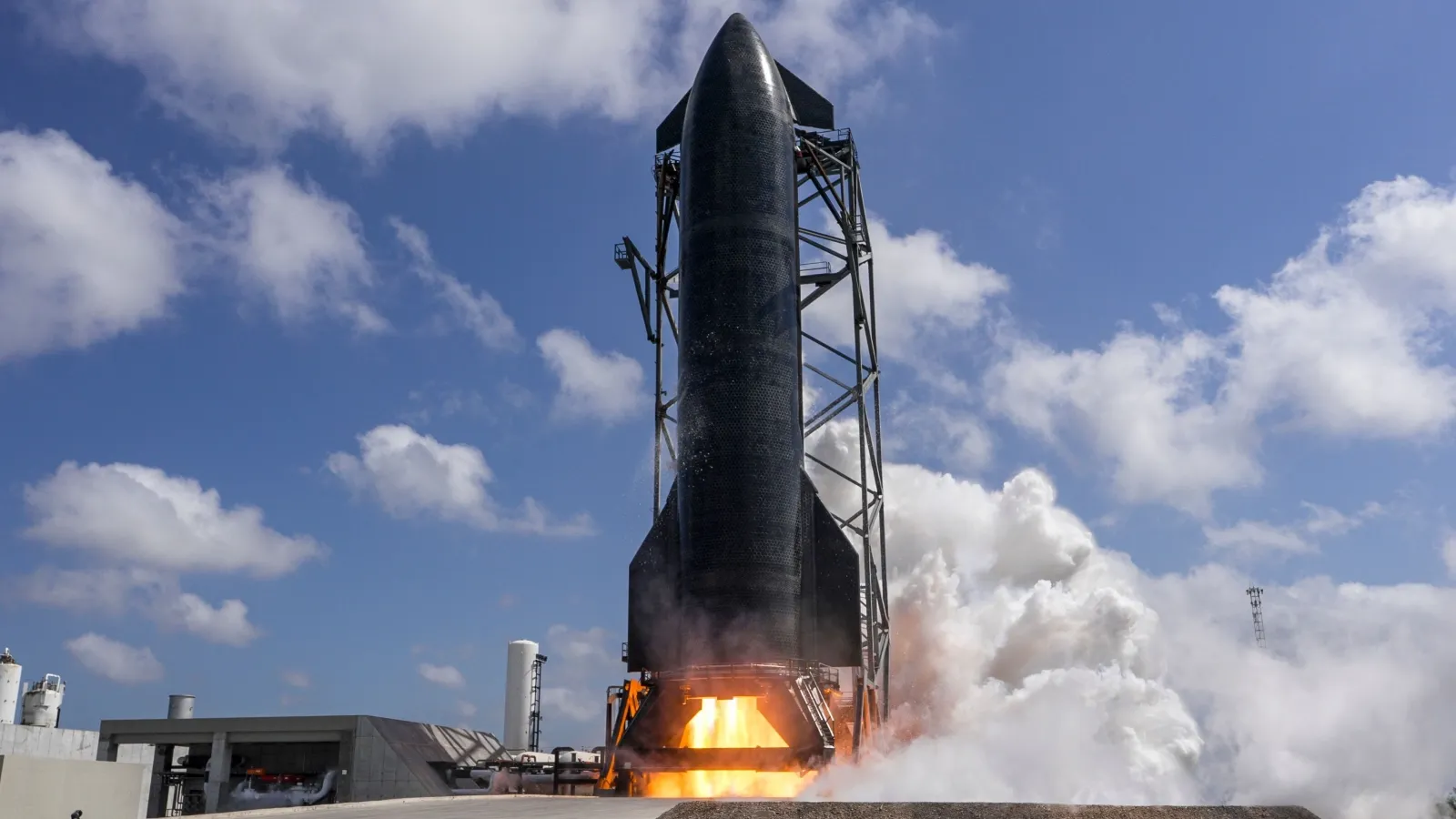
Flight 14 is more than a launch — it’s the moment Starship transitions from prototype spectacle to operational megastructure. Credit: SpaceX
Houston, We Have Orbit: How Flight 14 Turned Engine Failure into History
The engine failures during Flight 14 were not minor anomalies. During ascent, the Super Heavy booster lost one Raptor engine, and the Starship upper stage lost one of its six vacuum-optimised Raptor engines — a 16.7% reduction in upper-stage thrust at the most critical phase of the mission. According to NPR's coverage, mission controllers briefly considered aborting the orbital insertion burn before confirming that the remaining engines could compensate. The resulting trajectory was less efficient than planned, but it was sufficient. Starship achieved an orbit of approximately 275 km — low Earth orbit, technically, but orbit nonetheless.
What makes this significant is not merely the altitude. Suborbital hops, which SpaceX had executed thirteen times before, are essentially controlled belly flops with a splashdown at the end. Orbital flight requires reaching 17,500 mph, surviving the vacuum of space for hours, and executing a controlled de-orbit burn. As CNN reported, the mission was originally planned for ten hours and six complete orbits. Citing an "abundance of caution" following the engine issues, controllers shortened the flight to approximately three hours before commanding a de-orbit burn and controlled splashdown in the northern Pacific Ocean. The vehicle was not recovered, but it survived re-entry largely intact — a data point nearly as valuable as the orbital insertion itself.
Starlink Trek: The V3 Payload That Makes Starship a Revenue Machine
Flight 14 carried more than engineering pride. It deployed twenty-six operational Starlink V3 satellites — the first revenue-generating payload ever launched aboard a Starship vehicle. Each V3 satellite provides approximately 1 Tbps of downlink capacity, a tenfold increase over the V2 Mini satellites currently launched by Falcon 9. Three of the deployed satellites were equipped with cameras specifically to inspect Starship's heat shield during flight, turning the payload itself into an instrumentation package.
The commercial significance is difficult to overstate. SpaceX's broadband constellation currently relies on Falcon 9 launches of V2 Mini satellites — a proven but capacity-constrained approach. The V3 satellites are significantly larger and more capable, requiring a heavy-lift vehicle that Falcon 9 cannot provide. TechTimes noted that SpaceX is targeting $100 billion in annualised revenue by the end of 2026, a figure that depends almost entirely on the operational cadence of Starship delivering V3 satellites at scale. Flight 14 proved that cadence is technically viable, even if the vehicle is not yet reusable.
The Artemis Countdown: Why NASA's Lunar Ambitions Depend on This Rocket
For NASA, Flight 14 was not merely a SpaceX milestone — it was a prerequisite for the Artemis programme's lunar landing timeline. Starship is the chosen Human Landing System for Artemis III, the mission intended to return astronauts to the lunar surface for the first time since 1972. NASA's contract with SpaceX, valued at approximately £2.2 billion ($2.9 billion), requires Starship to demonstrate orbital refuelling, extended loiter time in orbit, and a controlled lunar descent before any crewed mission can proceed.
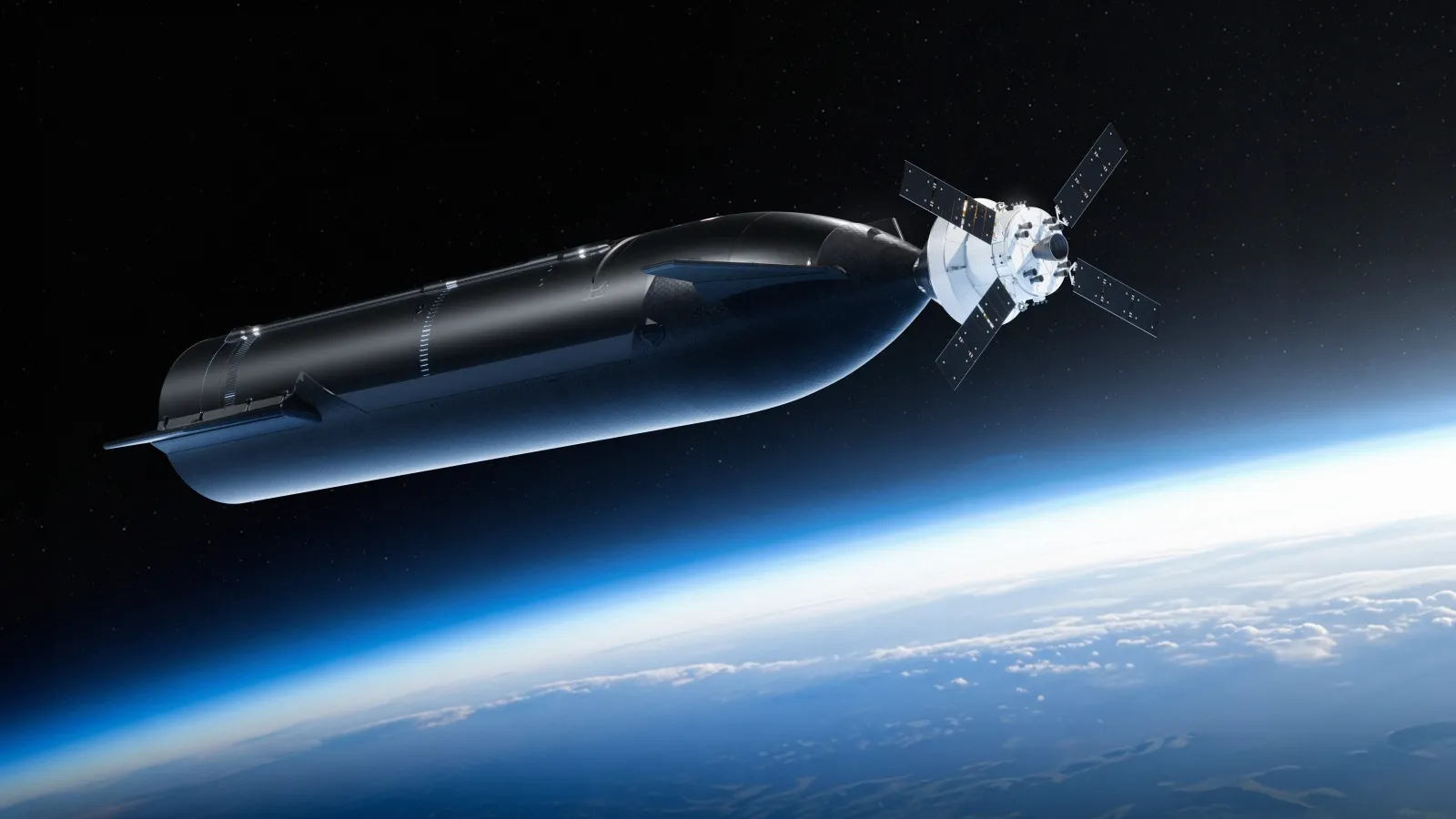
With every successful flight, Starship inches closer to its Artemis III role — the lander NASA is betting on to return humans to the lunar surface. Credit: Wikimedia
Flight 14 addressed the most fundamental of these requirements: reaching orbit with a payload. The next milestones — orbital refuelling between two Starship vehicles, a lunar trajectory demonstration, and an uncrewed lunar landing — now have a foundation to build upon. Space.com's analysis noted that NASA officials watched the launch in real time from Houston, and that the successful deployment of the Starlink payload was considered "a strong indicator" that Starship's cargo bay and release mechanisms function as designed in the orbital environment. For a programme that has already delayed Artemis III from 2025 to 2027, any evidence of progress is welcome.
From Starbase to the Stars: What Flight 14 Proves About Reusable Rockets
The controlled splashdown in the Pacific Ocean — while not as soft as previous suborbital tests — confirmed that Starship's heat shield and guidance systems can survive orbital re-entry. PCMag reported that the vehicle remained largely intact before eventually toppling and experiencing an explosion upon water impact. For a fully reusable system, this is not the final goal — SpaceX intends to catch returning vehicles with mechanical "chopsticks" at Starbase — but it is an essential validation step.
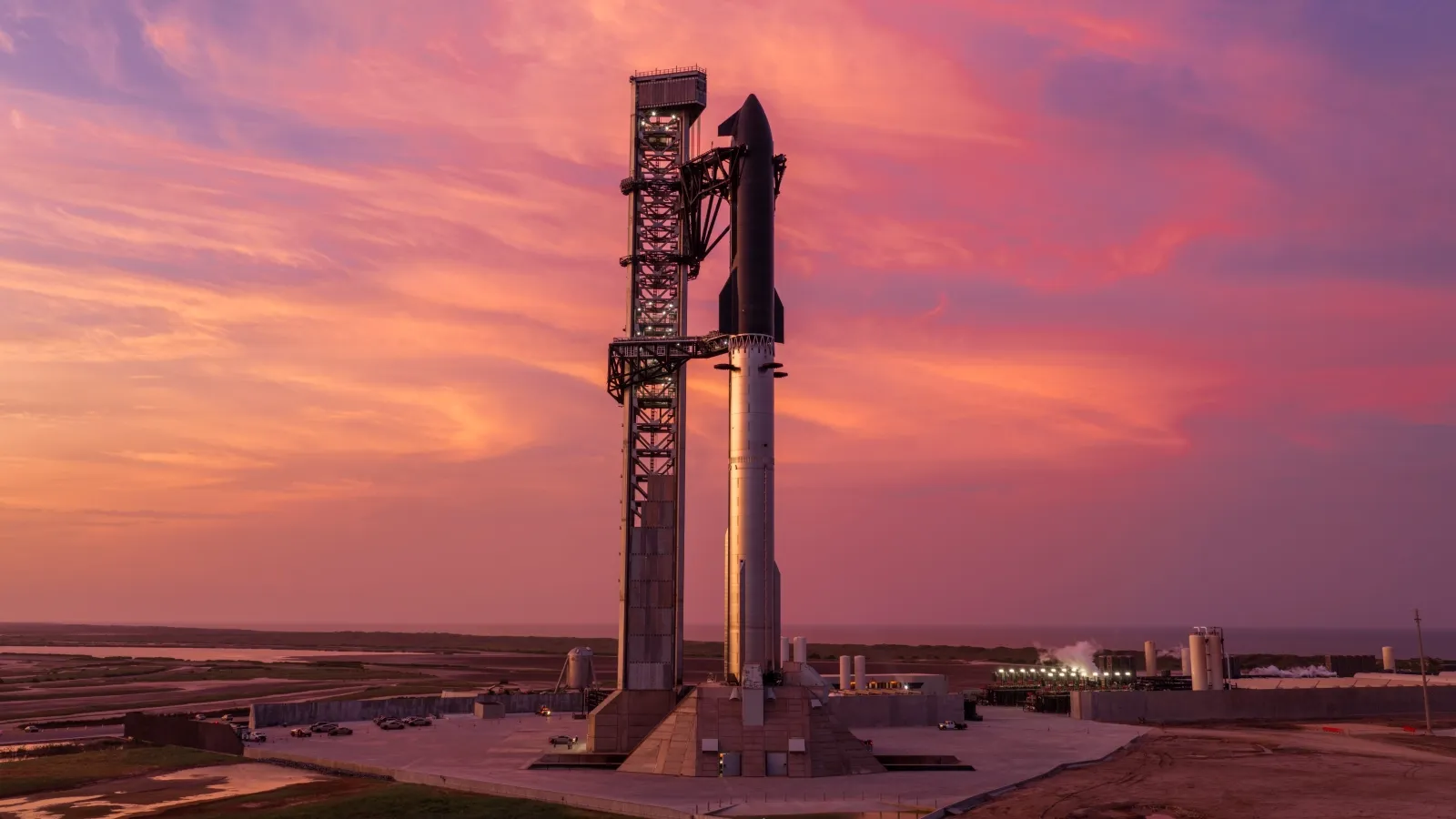
The world’s tallest, most powerful rocket finally proves its orbital intent — a stainless‑steel giant built to reshape how humanity leaves Earth. Credit: Wikimedia
The broader implications extend beyond NASA and SpaceX. The European Space Agency, Japan's JAXA, and several commercial lunar payload providers have all tied their near-future plans to Starship's availability. If Flight 14's successors demonstrate rapid reusability — Musk has publicly targeted a 24-hour turnaround between flights — the cost per kilogramme to orbit could fall by an order of magnitude, fundamentally altering the economics of everything from satellite constellations to space tourism to lunar mining. The space sci-fi premise of routine orbital access, long a staple of The Expanse and For All Mankind, took a measurable step toward reality on 28 September.
Starship's Next Frontier: From Orbit to the Moon and Beyond
SpaceX has already announced that Flight 15 will attempt the first orbital refuelling demonstration — a manoeuvre in which one Starship vehicle transfers propellant to another in orbit, a capability essential for lunar and Martian missions. If that flight succeeds in late 2026 or early 2027, the Artemis III timeline becomes genuinely plausible. If it fails, NASA will face the uncomfortable choice of further delays or pivoting to alternative landers that do not yet exist.
The question Flight 14 raises is not whether SpaceX can reach orbit. It just did, with a vehicle that lost two engines and still completed its mission. The question is whether SpaceX can do it again, reliably, and soon enough to meet the commitments it has made to NASA, to its Starlink customers, and to the investors who have valued the company at approximately £140 billion ($180 billion) based partly on the promise of Starship's economic transformation. For space sci-fi fans who have watched every launch with the same mixture of hope and scepticism, the answer is beginning to look less like speculation and more like engineering.
For more deep dives into the science and spectacle of space sci-fi, keep exploring Scinexic.com—where the future is always just a page away.
Further Reading:
SciNexic.com may earn a commission through affiliate links, ensuring continued cosmic content.
At 17,500 miles per hour, a vehicle constructed primarily of stainless steel plates and welded seams became the largest object ever to reach orbital velocity from a single launch — and it did so with two of its engines dead. SpaceX's Starship Flight 14, which lifted off from Starbase, Texas, on 28 September 2026 at 8:49 a.m. EDT, achieved what thirteen previous test flights had not: a stable operational orbit of roughly 275 km, a successful commercial payload deployment, and a controlled re-entry splashdown. The mission was not flawless. One of the Super Heavy booster's 33 Raptor engines cut out during ascent. A second engine on the upper stage failed before orbital insertion. Yet the vehicle's flight software compensated in real time, extending burns from the remaining engines and proving that the most powerful rocket ever built could absorb catastrophic failure and still complete its mission. For space sci-fi enthusiasts who have spent decades watching fictional spacecraft navigate crises with similar ingenuity, the reality finally caught up with the fantasy.
Flight 14 is more than a launch — it’s the moment Starship transitions from prototype spectacle to operational megastructure. Credit: SpaceX
Houston, We Have Orbit: How Flight 14 Turned Engine Failure into History
The engine failures during Flight 14 were not minor anomalies. During ascent, the Super Heavy booster lost one Raptor engine, and the Starship upper stage lost one of its six vacuum-optimised Raptor engines — a 16.7% reduction in upper-stage thrust at the most critical phase of the mission. According to NPR's coverage, mission controllers briefly considered aborting the orbital insertion burn before confirming that the remaining engines could compensate. The resulting trajectory was less efficient than planned, but it was sufficient. Starship achieved an orbit of approximately 275 km — low Earth orbit, technically, but orbit nonetheless.
What makes this significant is not merely the altitude. Suborbital hops, which SpaceX had executed thirteen times before, are essentially controlled belly flops with a splashdown at the end. Orbital flight requires reaching 17,500 mph, surviving the vacuum of space for hours, and executing a controlled de-orbit burn. As CNN reported, the mission was originally planned for ten hours and six complete orbits. Citing an "abundance of caution" following the engine issues, controllers shortened the flight to approximately three hours before commanding a de-orbit burn and controlled splashdown in the northern Pacific Ocean. The vehicle was not recovered, but it survived re-entry largely intact — a data point nearly as valuable as the orbital insertion itself.
Starlink Trek: The V3 Payload That Makes Starship a Revenue Machine
Flight 14 carried more than engineering pride. It deployed twenty-six operational Starlink V3 satellites — the first revenue-generating payload ever launched aboard a Starship vehicle. Each V3 satellite provides approximately 1 Tbps of downlink capacity, a tenfold increase over the V2 Mini satellites currently launched by Falcon 9. Three of the deployed satellites were equipped with cameras specifically to inspect Starship's heat shield during flight, turning the payload itself into an instrumentation package.
The commercial significance is difficult to overstate. SpaceX's broadband constellation currently relies on Falcon 9 launches of V2 Mini satellites — a proven but capacity-constrained approach. The V3 satellites are significantly larger and more capable, requiring a heavy-lift vehicle that Falcon 9 cannot provide. TechTimes noted that SpaceX is targeting $100 billion in annualised revenue by the end of 2026, a figure that depends almost entirely on the operational cadence of Starship delivering V3 satellites at scale. Flight 14 proved that cadence is technically viable, even if the vehicle is not yet reusable.
The Artemis Countdown: Why NASA's Lunar Ambitions Depend on This Rocket
For NASA, Flight 14 was not merely a SpaceX milestone — it was a prerequisite for the Artemis programme's lunar landing timeline. Starship is the chosen Human Landing System for Artemis III, the mission intended to return astronauts to the lunar surface for the first time since 1972. NASA's contract with SpaceX, valued at approximately £2.2 billion ($2.9 billion), requires Starship to demonstrate orbital refuelling, extended loiter time in orbit, and a controlled lunar descent before any crewed mission can proceed.
With every successful flight, Starship inches closer to its Artemis III role — the lander NASA is betting on to return humans to the lunar surface. Credit: Wikimedia
Flight 14 addressed the most fundamental of these requirements: reaching orbit with a payload. The next milestones — orbital refuelling between two Starship vehicles, a lunar trajectory demonstration, and an uncrewed lunar landing — now have a foundation to build upon. Space.com's analysis noted that NASA officials watched the launch in real time from Houston, and that the successful deployment of the Starlink payload was considered "a strong indicator" that Starship's cargo bay and release mechanisms function as designed in the orbital environment. For a programme that has already delayed Artemis III from 2025 to 2027, any evidence of progress is welcome.
From Starbase to the Stars: What Flight 14 Proves About Reusable Rockets
The controlled splashdown in the Pacific Ocean — while not as soft as previous suborbital tests — confirmed that Starship's heat shield and guidance systems can survive orbital re-entry. PCMag reported that the vehicle remained largely intact before eventually toppling and experiencing an explosion upon water impact. For a fully reusable system, this is not the final goal — SpaceX intends to catch returning vehicles with mechanical "chopsticks" at Starbase — but it is an essential validation step.
The world’s tallest, most powerful rocket finally proves its orbital intent — a stainless‑steel giant built to reshape how humanity leaves Earth. Credit: Wikimedia
The broader implications extend beyond NASA and SpaceX. The European Space Agency, Japan's JAXA, and several commercial lunar payload providers have all tied their near-future plans to Starship's availability. If Flight 14's successors demonstrate rapid reusability — Musk has publicly targeted a 24-hour turnaround between flights — the cost per kilogramme to orbit could fall by an order of magnitude, fundamentally altering the economics of everything from satellite constellations to space tourism to lunar mining. The space sci-fi premise of routine orbital access, long a staple of The Expanse and For All Mankind, took a measurable step toward reality on 28 September.
Starship's Next Frontier: From Orbit to the Moon and Beyond
SpaceX has already announced that Flight 15 will attempt the first orbital refuelling demonstration — a manoeuvre in which one Starship vehicle transfers propellant to another in orbit, a capability essential for lunar and Martian missions. If that flight succeeds in late 2026 or early 2027, the Artemis III timeline becomes genuinely plausible. If it fails, NASA will face the uncomfortable choice of further delays or pivoting to alternative landers that do not yet exist.
The question Flight 14 raises is not whether SpaceX can reach orbit. It just did, with a vehicle that lost two engines and still completed its mission. The question is whether SpaceX can do it again, reliably, and soon enough to meet the commitments it has made to NASA, to its Starlink customers, and to the investors who have valued the company at approximately £140 billion ($180 billion) based partly on the promise of Starship's economic transformation. For space sci-fi fans who have watched every launch with the same mixture of hope and scepticism, the answer is beginning to look less like speculation and more like engineering.
For more deep dives into the science and spectacle of space sci-fi, keep exploring Scinexic.com—where the future is always just a page away.
Further Reading:
SciNexic.com may earn a commission through affiliate links, ensuring continued cosmic content.
At 17,500 miles per hour, a vehicle constructed primarily of stainless steel plates and welded seams became the largest object ever to reach orbital velocity from a single launch — and it did so with two of its engines dead. SpaceX's Starship Flight 14, which lifted off from Starbase, Texas, on 28 September 2026 at 8:49 a.m. EDT, achieved what thirteen previous test flights had not: a stable operational orbit of roughly 275 km, a successful commercial payload deployment, and a controlled re-entry splashdown. The mission was not flawless. One of the Super Heavy booster's 33 Raptor engines cut out during ascent. A second engine on the upper stage failed before orbital insertion. Yet the vehicle's flight software compensated in real time, extending burns from the remaining engines and proving that the most powerful rocket ever built could absorb catastrophic failure and still complete its mission. For space sci-fi enthusiasts who have spent decades watching fictional spacecraft navigate crises with similar ingenuity, the reality finally caught up with the fantasy.
Flight 14 is more than a launch — it’s the moment Starship transitions from prototype spectacle to operational megastructure. Credit: SpaceX
Houston, We Have Orbit: How Flight 14 Turned Engine Failure into History
The engine failures during Flight 14 were not minor anomalies. During ascent, the Super Heavy booster lost one Raptor engine, and the Starship upper stage lost one of its six vacuum-optimised Raptor engines — a 16.7% reduction in upper-stage thrust at the most critical phase of the mission. According to NPR's coverage, mission controllers briefly considered aborting the orbital insertion burn before confirming that the remaining engines could compensate. The resulting trajectory was less efficient than planned, but it was sufficient. Starship achieved an orbit of approximately 275 km — low Earth orbit, technically, but orbit nonetheless.
What makes this significant is not merely the altitude. Suborbital hops, which SpaceX had executed thirteen times before, are essentially controlled belly flops with a splashdown at the end. Orbital flight requires reaching 17,500 mph, surviving the vacuum of space for hours, and executing a controlled de-orbit burn. As CNN reported, the mission was originally planned for ten hours and six complete orbits. Citing an "abundance of caution" following the engine issues, controllers shortened the flight to approximately three hours before commanding a de-orbit burn and controlled splashdown in the northern Pacific Ocean. The vehicle was not recovered, but it survived re-entry largely intact — a data point nearly as valuable as the orbital insertion itself.
Starlink Trek: The V3 Payload That Makes Starship a Revenue Machine
Flight 14 carried more than engineering pride. It deployed twenty-six operational Starlink V3 satellites — the first revenue-generating payload ever launched aboard a Starship vehicle. Each V3 satellite provides approximately 1 Tbps of downlink capacity, a tenfold increase over the V2 Mini satellites currently launched by Falcon 9. Three of the deployed satellites were equipped with cameras specifically to inspect Starship's heat shield during flight, turning the payload itself into an instrumentation package.
The commercial significance is difficult to overstate. SpaceX's broadband constellation currently relies on Falcon 9 launches of V2 Mini satellites — a proven but capacity-constrained approach. The V3 satellites are significantly larger and more capable, requiring a heavy-lift vehicle that Falcon 9 cannot provide. TechTimes noted that SpaceX is targeting $100 billion in annualised revenue by the end of 2026, a figure that depends almost entirely on the operational cadence of Starship delivering V3 satellites at scale. Flight 14 proved that cadence is technically viable, even if the vehicle is not yet reusable.
The Artemis Countdown: Why NASA's Lunar Ambitions Depend on This Rocket
For NASA, Flight 14 was not merely a SpaceX milestone — it was a prerequisite for the Artemis programme's lunar landing timeline. Starship is the chosen Human Landing System for Artemis III, the mission intended to return astronauts to the lunar surface for the first time since 1972. NASA's contract with SpaceX, valued at approximately £2.2 billion ($2.9 billion), requires Starship to demonstrate orbital refuelling, extended loiter time in orbit, and a controlled lunar descent before any crewed mission can proceed.
With every successful flight, Starship inches closer to its Artemis III role — the lander NASA is betting on to return humans to the lunar surface. Credit: Wikimedia
Flight 14 addressed the most fundamental of these requirements: reaching orbit with a payload. The next milestones — orbital refuelling between two Starship vehicles, a lunar trajectory demonstration, and an uncrewed lunar landing — now have a foundation to build upon. Space.com's analysis noted that NASA officials watched the launch in real time from Houston, and that the successful deployment of the Starlink payload was considered "a strong indicator" that Starship's cargo bay and release mechanisms function as designed in the orbital environment. For a programme that has already delayed Artemis III from 2025 to 2027, any evidence of progress is welcome.
From Starbase to the Stars: What Flight 14 Proves About Reusable Rockets
The controlled splashdown in the Pacific Ocean — while not as soft as previous suborbital tests — confirmed that Starship's heat shield and guidance systems can survive orbital re-entry. PCMag reported that the vehicle remained largely intact before eventually toppling and experiencing an explosion upon water impact. For a fully reusable system, this is not the final goal — SpaceX intends to catch returning vehicles with mechanical "chopsticks" at Starbase — but it is an essential validation step.
The world’s tallest, most powerful rocket finally proves its orbital intent — a stainless‑steel giant built to reshape how humanity leaves Earth. Credit: Wikimedia
The broader implications extend beyond NASA and SpaceX. The European Space Agency, Japan's JAXA, and several commercial lunar payload providers have all tied their near-future plans to Starship's availability. If Flight 14's successors demonstrate rapid reusability — Musk has publicly targeted a 24-hour turnaround between flights — the cost per kilogramme to orbit could fall by an order of magnitude, fundamentally altering the economics of everything from satellite constellations to space tourism to lunar mining. The space sci-fi premise of routine orbital access, long a staple of The Expanse and For All Mankind, took a measurable step toward reality on 28 September.
Starship's Next Frontier: From Orbit to the Moon and Beyond
SpaceX has already announced that Flight 15 will attempt the first orbital refuelling demonstration — a manoeuvre in which one Starship vehicle transfers propellant to another in orbit, a capability essential for lunar and Martian missions. If that flight succeeds in late 2026 or early 2027, the Artemis III timeline becomes genuinely plausible. If it fails, NASA will face the uncomfortable choice of further delays or pivoting to alternative landers that do not yet exist.
The question Flight 14 raises is not whether SpaceX can reach orbit. It just did, with a vehicle that lost two engines and still completed its mission. The question is whether SpaceX can do it again, reliably, and soon enough to meet the commitments it has made to NASA, to its Starlink customers, and to the investors who have valued the company at approximately £140 billion ($180 billion) based partly on the promise of Starship's economic transformation. For space sci-fi fans who have watched every launch with the same mixture of hope and scepticism, the answer is beginning to look less like speculation and more like engineering.
For more deep dives into the science and spectacle of space sci-fi, keep exploring Scinexic.com—where the future is always just a page away.
Further Reading:
SciNexic.com may earn a commission through affiliate links, ensuring continued cosmic content.
Image Gallery
Comments
Please be kind and considerate. Any abusive or offensive comments will be sent out the airlock! Thank You.
Please be kind and considerate. Any abusive or offensive comments will be sent out the airlock! Thank You.
Join the SciNexic Crew
Related Posts

Share on Instagram
Share on Instagram
Banner Image - Starship flight image - https://www.spacex.com/updates - copyright: SpaceX
Main Article - All images and media are the property of their respective owners.