


The SciNexic Files
The SciNexic Files
The SciNexic Files
Opinion
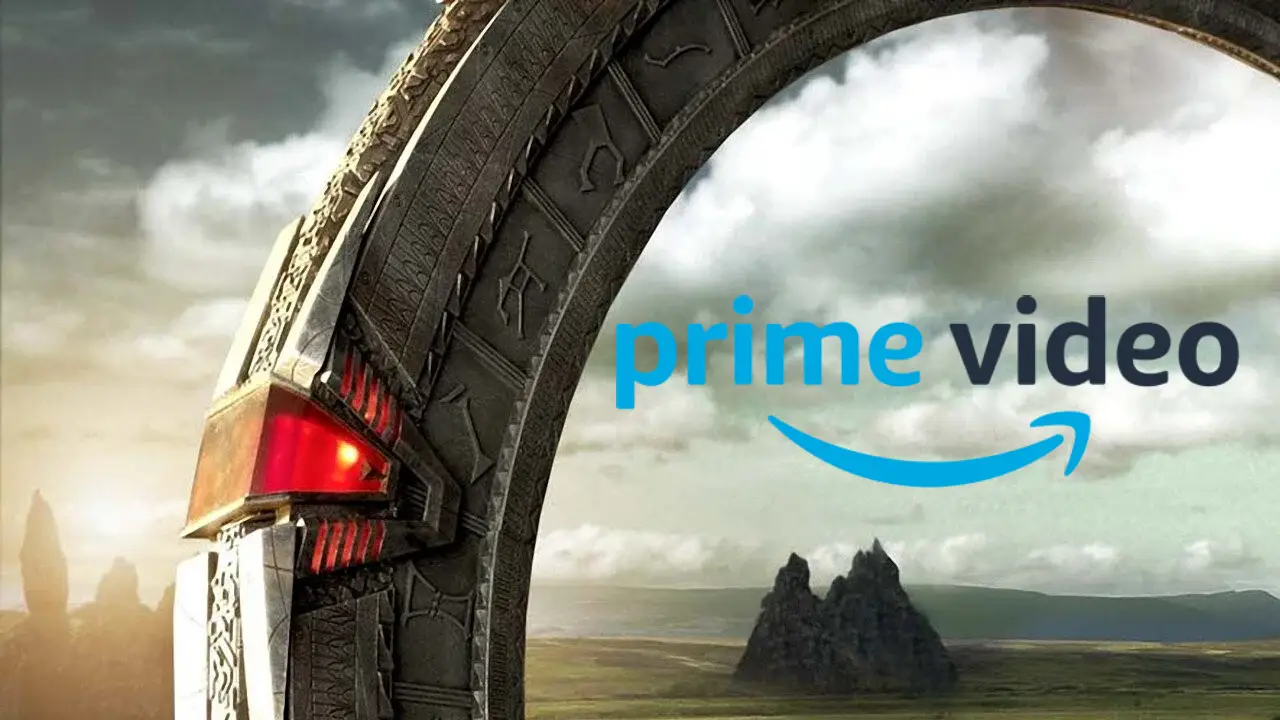
Amazon Is Dialling Stargate Again. Can It Rebuild the Trust It Lost?
The cancelled revival has given way to a new project from WandaVision creator Jac Schaeffer. There is movement at last — but this is not the rescue mission some fans were hoping for.
Stargate fans know better than most that an incoming connection is not necessarily good news.
Sometimes it brings explorers. Sometimes it brings trouble. And sometimes, apparently, it brings another development announcement.
After abandoning Martin Gero’s planned revival earlier this year, Amazon MGM Studios is taking another run at the franchise. On 9 October 2026, Variety reported that Jac Schaeffer, the creator of WandaVision and Agatha All Along, is developing a new Stargate television series. Deadline subsequently confirmed the project, reporting that a writers’ room had opened in New York.
That is a significant change from the summer’s uncertainty. It is also a development worth describing precisely: Gero’s cancelled series has not been reinstated. This is a separate attempt, with a different creative lead. No new series order, cast or premiere date has been announced.
The gate is being dialled again. Whether anyone should start packing is another question.
The Comeback that Almost Happened
The frustration surrounding Amazon’s Stargate plans makes more sense when you remember how substantial the previous project had become.
In November 2025, Amazon ordered a new series from Martin Gero, whose television career began on Stargate Atlantis. He was attached as writer, executive producer and showrunner, with Brad Wright and Joseph Mallozzi serving as consulting producers. Original film creators Roland Emmerich and Dean Devlin were executive producers, alongside Safehouse Pictures’ Joby Harold and Tory Tunnell. Variety’s original announcement presented a project with connections to both the franchise’s cinematic beginnings and its television identity.

Many fans still regard Stargate Atlantis as proof that the franchise could evolve without losing its identity. Credit: TMDB
For returning viewers, those names offered a reason to take the news seriously. This was not simply somebody discovering an old logo in the MGM cupboard.
The work had progressed, too. According to Deadline, the project completed a 20-week writers’ room and reached pre-production in the UK before Amazon stopped it. News that the series would not proceed broke on 2 June 2026.
That distinction matters. A speculative pitch being rejected is one thing. A commissioned series disappearing after months of writing and production preparation is quite another.
It also explains why the latest announcement cannot simply be treated as a happy ending. For viewers who had invested hope in Gero’s version, Amazon is offering another possibility where there had already been something more concrete.
“Broad Appeal” Became the Flashpoint
The reported explanation for the cancellation was almost engineered to irritate a loyal audience.
Citing an unnamed individual familiar with the situation, Variety reported concerns that Gero’s approach would not appeal sufficiently beyond Stargate’s established fanbase. Mallozzi publicly disputed that assessment, saying the team had been mindful of attracting a broad audience. Space.com’s cancellation coverage records both the reported concern and his response.
That is not the same as Amazon officially declaring the show “too Stargate”, however satisfying that phrase might be to an angry comment section. Nor can outsiders establish, from an unseen series, whether the executives’ concerns were justified.
What we can identify is the awkward tension at the centre of the decision.
A recognised franchise brings an audience with it. That audience has expectations. Reaching beyond it is a sensible ambition; treating familiarity and accessibility as mutually exclusive would be a much less sensible strategy.
Gero had already described his approach as one that would respect what came before rather than undo it. That did not guarantee a successful show, but it undermines the idea that continuity alone tells us whether newcomers could have enjoyed it.
The disappointment prompted a campaign to save the project, including GateWorld’s open letter to Amazon, which argued that cancelling the series before filming squandered both creative work and audience goodwill. That is an advocate’s position, not proof of the show’s commercial prospects — but it captures why another announcement now arrives with questions attached.
A development announcement is exciting. The second one has to explain what happened to the first.
Enter Jac Schaeffer — With a Different Set of Expectations
The new project falls under Schaeffer’s overall deal with Amazon MGM Studios. Harold and Tunnell are again attached as executive producers. Variety’s 9 October report said a writers’ room was expected shortly; Deadline’s later report said it had opened. Amazon declined to comment.
Schaeffer is a noteworthy choice, though her appointment tells us very little about the eventual story.
She served as head writer on WandaVision and creator/showrunner on Agatha All Along, also directing episodes of the latter. Those are substantial genre credentials, not merely a familiar name attached to a press release.

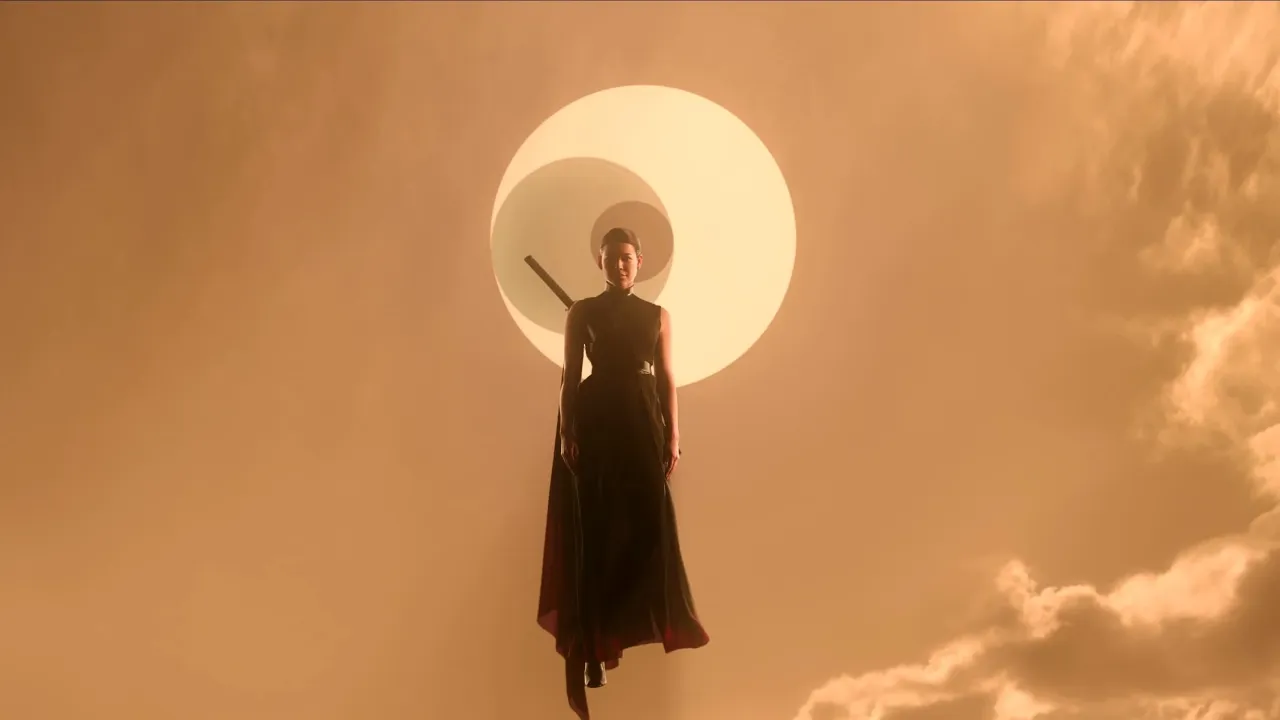
As audiences increasingly demand character-driven science fiction, storytellers like Jac Schaeffer represent the kind of creative talent capable of broadening Stargate's appeal. Credit: Wikimedia
Her work suggests an interest in character, mystery and unusual storytelling structures. Those qualities could be useful for Stargate. They could also produce something markedly different from the rhythms long-time viewers associate with it.
For now, either outcome is an interpretation, not a production detail.
The sensible response is neither to declare the franchise saved nor to condemn a series whose premise has not been disclosed. Schaeffer should not be held responsible for Amazon cancelling Gero’s project. Equally, the studio cannot reasonably expect the change of personnel to erase the disappointment surrounding that decision.
She inherits a creative opportunity. Amazon inherits the questions it has not answered.
What Kind of Stargate is Amazon Making?
This is the biggest unknown — and the place where confident headlines get ahead of the evidence.
The new project’s relationship to existing continuity has not been revealed. We do not yet know whether it will continue the television universe, restart the premise, follow familiar characters or introduce an entirely new team. Nor have returning cast members been announced.
Calling it a “reboot” may be convenient shorthand for a franchise revival, but it should not be mistaken for confirmation that previous stories are being erased.
There is certainly plenty of history to navigate. Stargate began with the 1994 film, expanded through SG-1, Atlantis and Universe, and later returned in the smaller-scale Stargate Origins project. The challenge is deciding how much of that history a new viewer needs at the door.
Our answer would be: less than some fear, but more than a studio might assume.
You should not need a working knowledge of Ancient technology to enjoy a first episode. You should, however, feel that somebody making the show understands why people spent years caring about this universe.
The attraction is wonderfully direct: a doorway to somewhere unknown, and people whose different skills and personalities determine what happens when they step through it.
That leaves room for discovery, danger, humour and disagreement. It can support a self-contained adventure or a much larger story. It does not need to become an exercise in recognising references, but neither does it need to be embarrassed by its past.
A new audience needs an invitation. The existing audience needs a reason to believe it is still welcome.
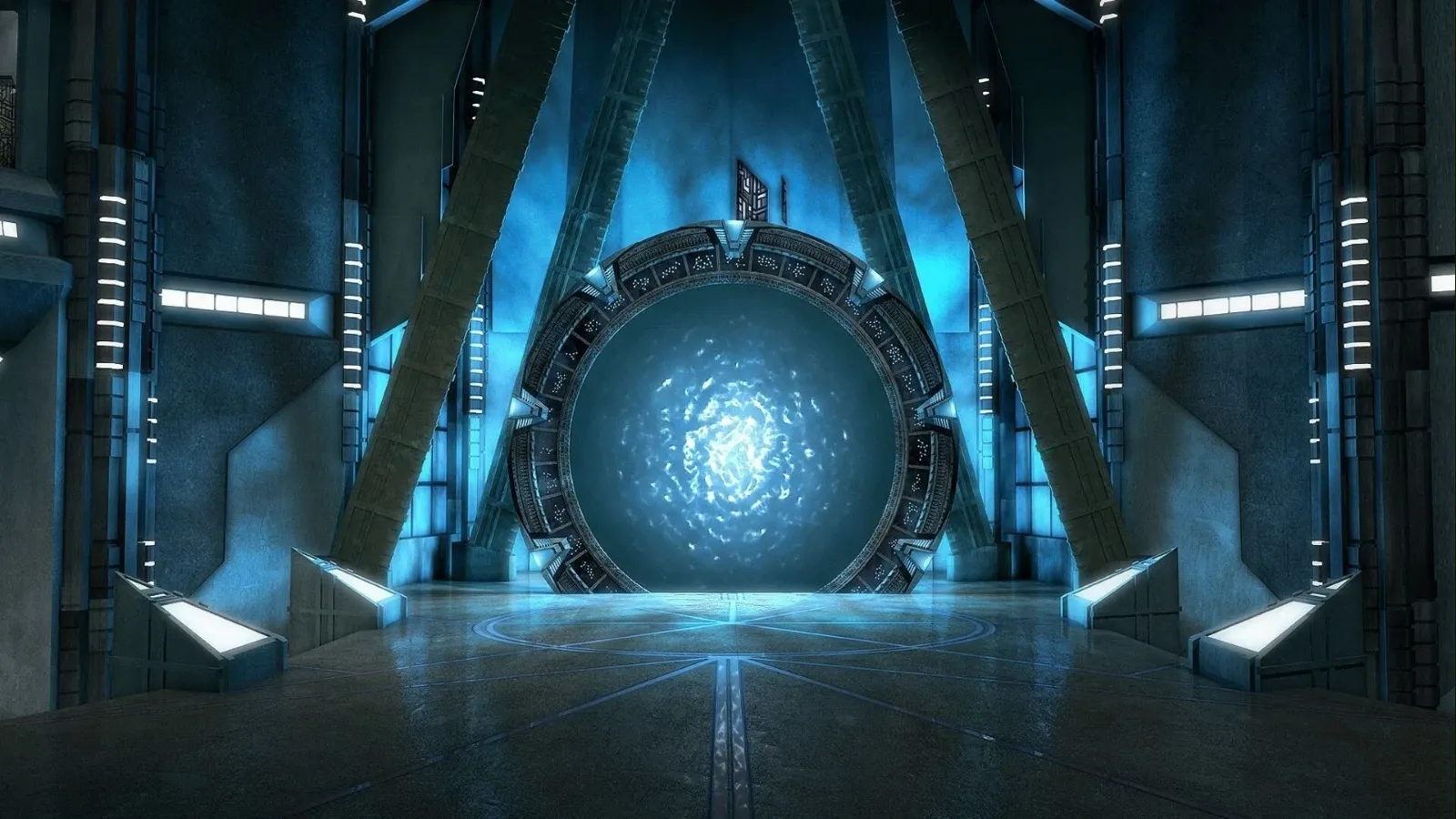
The Stargate franchise survived changing networks, evolving audiences and multiple spin-offs. Rebuilding fan trust may prove its greatest challenge yet. Credit: TMDB
SciNexic’s View: Progress, Not a Promise
The latest news is more encouraging than indefinite silence. There is a named creative lead, attached producers and, according to Deadline, a functioning writers’ room. Those are tangible development steps. They are not yet a guarantee of a finished television series.
Gero’s experience makes that distinction impossible to dismiss as excessive caution.
For Schaeffer, the task is to find a compelling story inside a franchise with considerable history. For Amazon, the task is more basic: make a decision it can sustain long enough for the audience to see the result.
That does not mean commissioning television by petition. It means recognising that viewers’ enthusiasm is valuable — and that repeatedly asking them to celebrate a return that never reaches the screen has a cost.
Stargate deserves the chance to be judged as television again, rather than as a sequence of announcements about possible television.
There is another team at the controls now.
Let’s see whether this time the connection holds.
Stay tuned to Scinexic.com for all the latest space sci-fi news, and exclusive insights from the final frontier.
The cancelled revival has given way to a new project from WandaVision creator Jac Schaeffer. There is movement at last — but this is not the rescue mission some fans were hoping for.
Stargate fans know better than most that an incoming connection is not necessarily good news.
Sometimes it brings explorers. Sometimes it brings trouble. And sometimes, apparently, it brings another development announcement.
After abandoning Martin Gero’s planned revival earlier this year, Amazon MGM Studios is taking another run at the franchise. On 9 October 2026, Variety reported that Jac Schaeffer, the creator of WandaVision and Agatha All Along, is developing a new Stargate television series. Deadline subsequently confirmed the project, reporting that a writers’ room had opened in New York.
That is a significant change from the summer’s uncertainty. It is also a development worth describing precisely: Gero’s cancelled series has not been reinstated. This is a separate attempt, with a different creative lead. No new series order, cast or premiere date has been announced.
The gate is being dialled again. Whether anyone should start packing is another question.
The Comeback that Almost Happened
The frustration surrounding Amazon’s Stargate plans makes more sense when you remember how substantial the previous project had become.
In November 2025, Amazon ordered a new series from Martin Gero, whose television career began on Stargate Atlantis. He was attached as writer, executive producer and showrunner, with Brad Wright and Joseph Mallozzi serving as consulting producers. Original film creators Roland Emmerich and Dean Devlin were executive producers, alongside Safehouse Pictures’ Joby Harold and Tory Tunnell. Variety’s original announcement presented a project with connections to both the franchise’s cinematic beginnings and its television identity.
Many fans still regard Stargate Atlantis as proof that the franchise could evolve without losing its identity. Credit: TMDB
For returning viewers, those names offered a reason to take the news seriously. This was not simply somebody discovering an old logo in the MGM cupboard.
The work had progressed, too. According to Deadline, the project completed a 20-week writers’ room and reached pre-production in the UK before Amazon stopped it. News that the series would not proceed broke on 2 June 2026.
That distinction matters. A speculative pitch being rejected is one thing. A commissioned series disappearing after months of writing and production preparation is quite another.
It also explains why the latest announcement cannot simply be treated as a happy ending. For viewers who had invested hope in Gero’s version, Amazon is offering another possibility where there had already been something more concrete.
“Broad Appeal” Became the Flashpoint
The reported explanation for the cancellation was almost engineered to irritate a loyal audience.
Citing an unnamed individual familiar with the situation, Variety reported concerns that Gero’s approach would not appeal sufficiently beyond Stargate’s established fanbase. Mallozzi publicly disputed that assessment, saying the team had been mindful of attracting a broad audience. Space.com’s cancellation coverage records both the reported concern and his response.
That is not the same as Amazon officially declaring the show “too Stargate”, however satisfying that phrase might be to an angry comment section. Nor can outsiders establish, from an unseen series, whether the executives’ concerns were justified.
What we can identify is the awkward tension at the centre of the decision.
A recognised franchise brings an audience with it. That audience has expectations. Reaching beyond it is a sensible ambition; treating familiarity and accessibility as mutually exclusive would be a much less sensible strategy.
Gero had already described his approach as one that would respect what came before rather than undo it. That did not guarantee a successful show, but it undermines the idea that continuity alone tells us whether newcomers could have enjoyed it.
The disappointment prompted a campaign to save the project, including GateWorld’s open letter to Amazon, which argued that cancelling the series before filming squandered both creative work and audience goodwill. That is an advocate’s position, not proof of the show’s commercial prospects — but it captures why another announcement now arrives with questions attached.
A development announcement is exciting. The second one has to explain what happened to the first.
Enter Jac Schaeffer — With a Different Set of Expectations
The new project falls under Schaeffer’s overall deal with Amazon MGM Studios. Harold and Tunnell are again attached as executive producers. Variety’s 9 October report said a writers’ room was expected shortly; Deadline’s later report said it had opened. Amazon declined to comment.
Schaeffer is a noteworthy choice, though her appointment tells us very little about the eventual story.
She served as head writer on WandaVision and creator/showrunner on Agatha All Along, also directing episodes of the latter. Those are substantial genre credentials, not merely a familiar name attached to a press release.
As audiences increasingly demand character-driven science fiction, storytellers like Jac Schaeffer represent the kind of creative talent capable of broadening Stargate's appeal. Credit: Wikimedia
Her work suggests an interest in character, mystery and unusual storytelling structures. Those qualities could be useful for Stargate. They could also produce something markedly different from the rhythms long-time viewers associate with it.
For now, either outcome is an interpretation, not a production detail.
The sensible response is neither to declare the franchise saved nor to condemn a series whose premise has not been disclosed. Schaeffer should not be held responsible for Amazon cancelling Gero’s project. Equally, the studio cannot reasonably expect the change of personnel to erase the disappointment surrounding that decision.
She inherits a creative opportunity. Amazon inherits the questions it has not answered.
What Kind of Stargate is Amazon Making?
This is the biggest unknown — and the place where confident headlines get ahead of the evidence.
The new project’s relationship to existing continuity has not been revealed. We do not yet know whether it will continue the television universe, restart the premise, follow familiar characters or introduce an entirely new team. Nor have returning cast members been announced.
Calling it a “reboot” may be convenient shorthand for a franchise revival, but it should not be mistaken for confirmation that previous stories are being erased.
There is certainly plenty of history to navigate. Stargate began with the 1994 film, expanded through SG-1, Atlantis and Universe, and later returned in the smaller-scale Stargate Origins project. The challenge is deciding how much of that history a new viewer needs at the door.
Our answer would be: less than some fear, but more than a studio might assume.
You should not need a working knowledge of Ancient technology to enjoy a first episode. You should, however, feel that somebody making the show understands why people spent years caring about this universe.
The attraction is wonderfully direct: a doorway to somewhere unknown, and people whose different skills and personalities determine what happens when they step through it.
That leaves room for discovery, danger, humour and disagreement. It can support a self-contained adventure or a much larger story. It does not need to become an exercise in recognising references, but neither does it need to be embarrassed by its past.
A new audience needs an invitation. The existing audience needs a reason to believe it is still welcome.
The Stargate franchise survived changing networks, evolving audiences and multiple spin-offs. Rebuilding fan trust may prove its greatest challenge yet. Credit: TMDB
SciNexic’s View: Progress, Not a Promise
The latest news is more encouraging than indefinite silence. There is a named creative lead, attached producers and, according to Deadline, a functioning writers’ room. Those are tangible development steps. They are not yet a guarantee of a finished television series.
Gero’s experience makes that distinction impossible to dismiss as excessive caution.
For Schaeffer, the task is to find a compelling story inside a franchise with considerable history. For Amazon, the task is more basic: make a decision it can sustain long enough for the audience to see the result.
That does not mean commissioning television by petition. It means recognising that viewers’ enthusiasm is valuable — and that repeatedly asking them to celebrate a return that never reaches the screen has a cost.
Stargate deserves the chance to be judged as television again, rather than as a sequence of announcements about possible television.
There is another team at the controls now.
Let’s see whether this time the connection holds.
Stay tuned to Scinexic.com for all the latest space sci-fi news, and exclusive insights from the final frontier.
The cancelled revival has given way to a new project from WandaVision creator Jac Schaeffer. There is movement at last — but this is not the rescue mission some fans were hoping for.
Stargate fans know better than most that an incoming connection is not necessarily good news.
Sometimes it brings explorers. Sometimes it brings trouble. And sometimes, apparently, it brings another development announcement.
After abandoning Martin Gero’s planned revival earlier this year, Amazon MGM Studios is taking another run at the franchise. On 9 October 2026, Variety reported that Jac Schaeffer, the creator of WandaVision and Agatha All Along, is developing a new Stargate television series. Deadline subsequently confirmed the project, reporting that a writers’ room had opened in New York.
That is a significant change from the summer’s uncertainty. It is also a development worth describing precisely: Gero’s cancelled series has not been reinstated. This is a separate attempt, with a different creative lead. No new series order, cast or premiere date has been announced.
The gate is being dialled again. Whether anyone should start packing is another question.
The Comeback that Almost Happened
The frustration surrounding Amazon’s Stargate plans makes more sense when you remember how substantial the previous project had become.
In November 2025, Amazon ordered a new series from Martin Gero, whose television career began on Stargate Atlantis. He was attached as writer, executive producer and showrunner, with Brad Wright and Joseph Mallozzi serving as consulting producers. Original film creators Roland Emmerich and Dean Devlin were executive producers, alongside Safehouse Pictures’ Joby Harold and Tory Tunnell. Variety’s original announcement presented a project with connections to both the franchise’s cinematic beginnings and its television identity.
Many fans still regard Stargate Atlantis as proof that the franchise could evolve without losing its identity. Credit: TMDB
For returning viewers, those names offered a reason to take the news seriously. This was not simply somebody discovering an old logo in the MGM cupboard.
The work had progressed, too. According to Deadline, the project completed a 20-week writers’ room and reached pre-production in the UK before Amazon stopped it. News that the series would not proceed broke on 2 June 2026.
That distinction matters. A speculative pitch being rejected is one thing. A commissioned series disappearing after months of writing and production preparation is quite another.
It also explains why the latest announcement cannot simply be treated as a happy ending. For viewers who had invested hope in Gero’s version, Amazon is offering another possibility where there had already been something more concrete.
“Broad Appeal” Became the Flashpoint
The reported explanation for the cancellation was almost engineered to irritate a loyal audience.
Citing an unnamed individual familiar with the situation, Variety reported concerns that Gero’s approach would not appeal sufficiently beyond Stargate’s established fanbase. Mallozzi publicly disputed that assessment, saying the team had been mindful of attracting a broad audience. Space.com’s cancellation coverage records both the reported concern and his response.
That is not the same as Amazon officially declaring the show “too Stargate”, however satisfying that phrase might be to an angry comment section. Nor can outsiders establish, from an unseen series, whether the executives’ concerns were justified.
What we can identify is the awkward tension at the centre of the decision.
A recognised franchise brings an audience with it. That audience has expectations. Reaching beyond it is a sensible ambition; treating familiarity and accessibility as mutually exclusive would be a much less sensible strategy.
Gero had already described his approach as one that would respect what came before rather than undo it. That did not guarantee a successful show, but it undermines the idea that continuity alone tells us whether newcomers could have enjoyed it.
The disappointment prompted a campaign to save the project, including GateWorld’s open letter to Amazon, which argued that cancelling the series before filming squandered both creative work and audience goodwill. That is an advocate’s position, not proof of the show’s commercial prospects — but it captures why another announcement now arrives with questions attached.
A development announcement is exciting. The second one has to explain what happened to the first.
Enter Jac Schaeffer — With a Different Set of Expectations
The new project falls under Schaeffer’s overall deal with Amazon MGM Studios. Harold and Tunnell are again attached as executive producers. Variety’s 9 October report said a writers’ room was expected shortly; Deadline’s later report said it had opened. Amazon declined to comment.
Schaeffer is a noteworthy choice, though her appointment tells us very little about the eventual story.
She served as head writer on WandaVision and creator/showrunner on Agatha All Along, also directing episodes of the latter. Those are substantial genre credentials, not merely a familiar name attached to a press release.
As audiences increasingly demand character-driven science fiction, storytellers like Jac Schaeffer represent the kind of creative talent capable of broadening Stargate's appeal. Credit: Wikimedia
Her work suggests an interest in character, mystery and unusual storytelling structures. Those qualities could be useful for Stargate. They could also produce something markedly different from the rhythms long-time viewers associate with it.
For now, either outcome is an interpretation, not a production detail.
The sensible response is neither to declare the franchise saved nor to condemn a series whose premise has not been disclosed. Schaeffer should not be held responsible for Amazon cancelling Gero’s project. Equally, the studio cannot reasonably expect the change of personnel to erase the disappointment surrounding that decision.
She inherits a creative opportunity. Amazon inherits the questions it has not answered.
What Kind of Stargate is Amazon Making?
This is the biggest unknown — and the place where confident headlines get ahead of the evidence.
The new project’s relationship to existing continuity has not been revealed. We do not yet know whether it will continue the television universe, restart the premise, follow familiar characters or introduce an entirely new team. Nor have returning cast members been announced.
Calling it a “reboot” may be convenient shorthand for a franchise revival, but it should not be mistaken for confirmation that previous stories are being erased.
There is certainly plenty of history to navigate. Stargate began with the 1994 film, expanded through SG-1, Atlantis and Universe, and later returned in the smaller-scale Stargate Origins project. The challenge is deciding how much of that history a new viewer needs at the door.
Our answer would be: less than some fear, but more than a studio might assume.
You should not need a working knowledge of Ancient technology to enjoy a first episode. You should, however, feel that somebody making the show understands why people spent years caring about this universe.
The attraction is wonderfully direct: a doorway to somewhere unknown, and people whose different skills and personalities determine what happens when they step through it.
That leaves room for discovery, danger, humour and disagreement. It can support a self-contained adventure or a much larger story. It does not need to become an exercise in recognising references, but neither does it need to be embarrassed by its past.
A new audience needs an invitation. The existing audience needs a reason to believe it is still welcome.
The Stargate franchise survived changing networks, evolving audiences and multiple spin-offs. Rebuilding fan trust may prove its greatest challenge yet. Credit: TMDB
SciNexic’s View: Progress, Not a Promise
The latest news is more encouraging than indefinite silence. There is a named creative lead, attached producers and, according to Deadline, a functioning writers’ room. Those are tangible development steps. They are not yet a guarantee of a finished television series.
Gero’s experience makes that distinction impossible to dismiss as excessive caution.
For Schaeffer, the task is to find a compelling story inside a franchise with considerable history. For Amazon, the task is more basic: make a decision it can sustain long enough for the audience to see the result.
That does not mean commissioning television by petition. It means recognising that viewers’ enthusiasm is valuable — and that repeatedly asking them to celebrate a return that never reaches the screen has a cost.
Stargate deserves the chance to be judged as television again, rather than as a sequence of announcements about possible television.
There is another team at the controls now.
Let’s see whether this time the connection holds.
Stay tuned to Scinexic.com for all the latest space sci-fi news, and exclusive insights from the final frontier.
Get the SciNexic Dispatch
Space sci-fi news, reviews, trailers, and release picks—straight to your inbox.
Get the dispatch
Image Gallery
Comments
Please be kind and considerate. Any abusive or offensive comments will be sent out the airlock! Thank You.
Please be kind and considerate. Any abusive or offensive comments will be sent out the airlock! Thank You.
Get the Dispatch
Related Posts

Share on Instagram
Banner Image - Stargcet SG1 scene image and Prime Video logo - themoviedb.org - seeklogo.com - Copyright: MGM/Amazon
Main Article - All images and media are the property of their respective owners.