


The SciNexic Files
Industry News

Print Is Not Dead — It Just Went to Space: Starlog Magazine Returns After 17 Years to Reclaim Its Throne as Sci-Fi's Bible
Every media executive in Silicon Valley will tell you print is finished. Every venture capitalist will insist that magazines belong to the same archaeological stratum as VHS tapes and dial-up modems. And yet on 13 November 2026, a 100-page annual magazine called Starlog will land on the shelves of Barnes & Noble, Target, and Walmart across North America — its first issue in seventeen years, priced at $19.99, and edited by the woman who built io9 into the internet's most influential space sci-fi publication before the genre even had a streaming budget.
The Bible Gets a Second Testament
Starlog launched in 1976, one year before Star Wars rewired popular culture. Across 374 issues it became the essential text for anyone who cared about space sci-fi — a monthly dispatch from the frontier that treated science fiction not as escapism but as a legitimate cultural force. When it ceased publication in 2009, the genre lost its paper conscience.
The revival is published by Fangoria Holdings, the company that also resurrected the horror bible Fangoria. The new editor-in-chief is Annalee Newitz, the science journalist and novelist who co-founded io9 in 2008 and spent a decade shaping how the internet discusses space sci-fi. Appointing Newitz sends a clear signal: this is not a nostalgia exercise. It is a statement of editorial ambition.
Warp Cores and Particle Physics: What Is Actually Inside
The premiere issue reads like a manifesto for the genre's present rather than a love letter to its past. Its centrepiece is a conversation between LeVar Burton — Geordi La Forge himself — and particle physicist Chanda Prescod-Weinstein, exploring where real science and Star Trek intersect.

The relaunch issue features LeVar Burton and physicist Chanda Prescod-Weinstein exploring the relationship between Star Trek and real-world science. Credit: Starlog
When was the last time a consumer magazine paired an actor with a working physicist and treated them as intellectual equals? That framing alone positions Starlog Vol. 2 #1 as something no YouTube channel or podcast can replicate.
Beyond the headline feature, the issue promises deep dives into the hidden politics of Dune, a retrospective on how the original magazine covered the Star Wars trilogy in real time, behind-the-scenes looks at fictional starship construction, and articles on soft robotics, orbital space farming, and what a professional laser scientist makes of Hollywood's energy weapons. It is, in other words, exactly the kind of multidisciplinary coverage that space sci-fi deserves and rarely receives.

Long before social media united fandoms worldwide, STARLOG connected readers through a shared fascination with distant worlds and impossible futures. Credit: Starlog
The Commercial Equation That Makes This Possible
The decision to launch as an annual rather than a monthly is commercially shrewd. Monthly print runs require advertising revenue that no niche publication can reliably command in 2026. An annual, however, functions like a premium product — closer to a coffee-table book than a periodical, justifying the £16-equivalent cover price and eliminating the subscription-churn problem that killed so many specialist titles in the 2010s.
Fangoria Holdings has already built the infrastructure: Fangoria itself runs a successful annual print model supplemented by digital content, a podcast network, and live events. Starlog is inheriting that playbook. The brand expansion includes The Starlog Podcast, hosted by Jordan Hoffman and produced by Dave Gonzales, and The Lodestar, a weekly newsletter. This is a multimedia strategy dressed in analogue clothing.
Why This Matters More Than a Magazine Launch Should
The timing is not coincidental. Space sci-fi is experiencing its most commercially dominant period in half a century. Netflix, Apple TV+, Amazon, and Disney+ are collectively spending over £1 billion on the genre in 2027. Dune: Part Three and Avengers: Doomsday are about to collide at the December box office. Blade Runner 2099 premieres on Prime Video in three weeks. The genre's audience has never been larger, wealthier, or more literate.
Into that market arrives a publication whose entire editorial thesis is that space sci-fi deserves the same critical infrastructure as literary fiction or fine art. In an era when algorithmic recommendation engines have flattened cultural taste, a curated, edited, physically printed magazine is — paradoxically — a radical act.
Can a Magazine Still Shape a Genre's Conversation?
The honest answer is: probably not in the way Starlog did in 1977, when it was one of the only places where fans could find serious coverage of the genre. The internet has democratised that function irreversibly. But the magazine's value in 2026 is not reach — it is authority. A feature in Starlog carries a weight that a blog post or a tweet thread cannot, precisely because it has been edited, designed, printed, and physically distributed. It costs money to hold, and that cost signals intent.
Whether Fangoria Holdings can sustain that authority beyond a single anniversary issue will depend on whether Newitz and her team can make Starlog essential rather than merely beautiful. The genre has no shortage of beautiful things. What it lacks is a publication willing to treat space sci-fi as an industry, a science, and an art form simultaneously — and to do so on paper, in defiance of every trend that says paper is dead.
The shelves await on 13 November. The genre's Bible has a new chapter.
Stay tuned to Scinexic.com for all the latest space sci-fi news, and exclusive insights from the final frontier.
Further reading:
Fangoria: Starlog Returns to Print for Its 50th Anniversary
Starlog Official Store — The Starlog Magazine 2026
Get the SciNexic Dispatch
Space sci-fi news, reviews, trailers, and release picks—straight to your inbox.
Get the dispatch

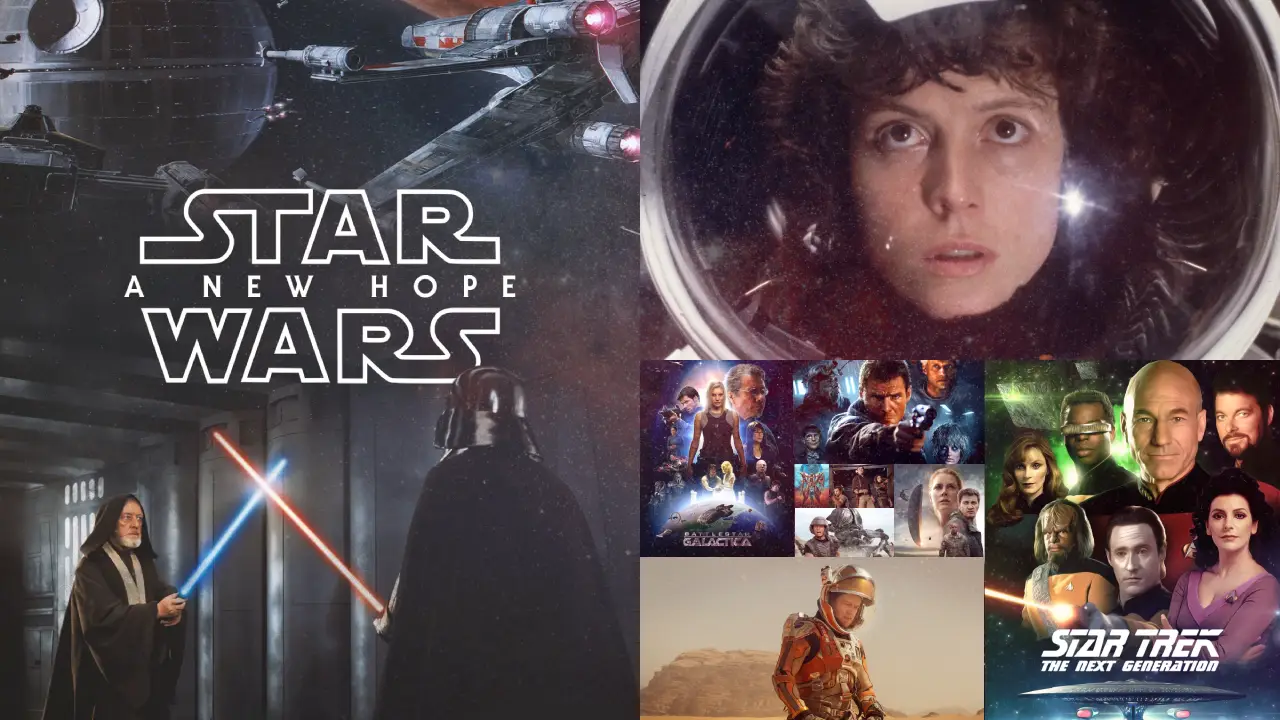
Banner Image - Starlog covers montage - https://starlog.com/ - Copyright: Starlog/Fangoria Publishing, LLC
Main Article - All images and media are the property of their respective owners.