


The SciNexic Files
SciNexic Forecast
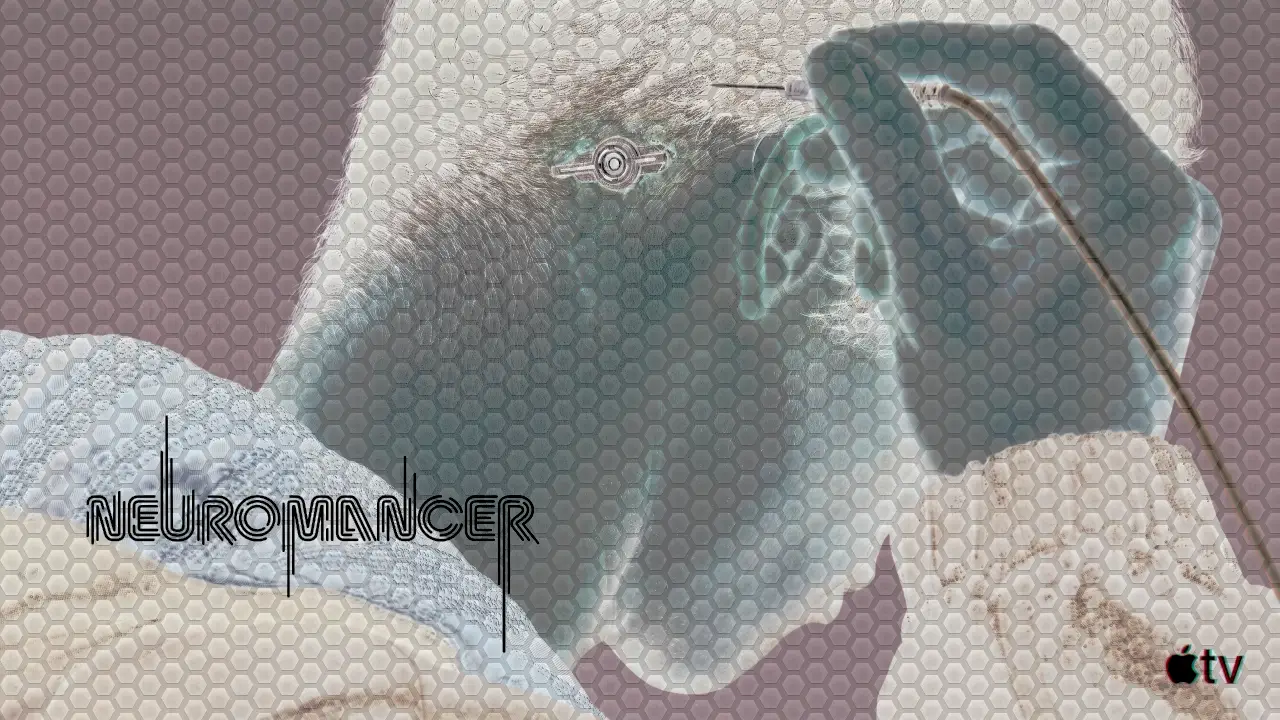
Neuromancer on Apple TV: Why William Gibson's 'Unfilmable' Novel Could Become Sci-Fi's Defining Television Event of 2027
What does it mean to adapt a novel that invented an entire genre — a book so dense with neologisms, so structurally unconventional, so fundamentally concerned with the dissolution of physical reality that four decades of Hollywood development have collectively failed to bring it to screen? On 22 January 2027, Apple TV will attempt an answer. Neuromancer, the ten-episode adaptation of William Gibson's 1984 cyberpunk cornerstone, premieres with a two-episode debut followed by weekly releases through 19 March 2027.
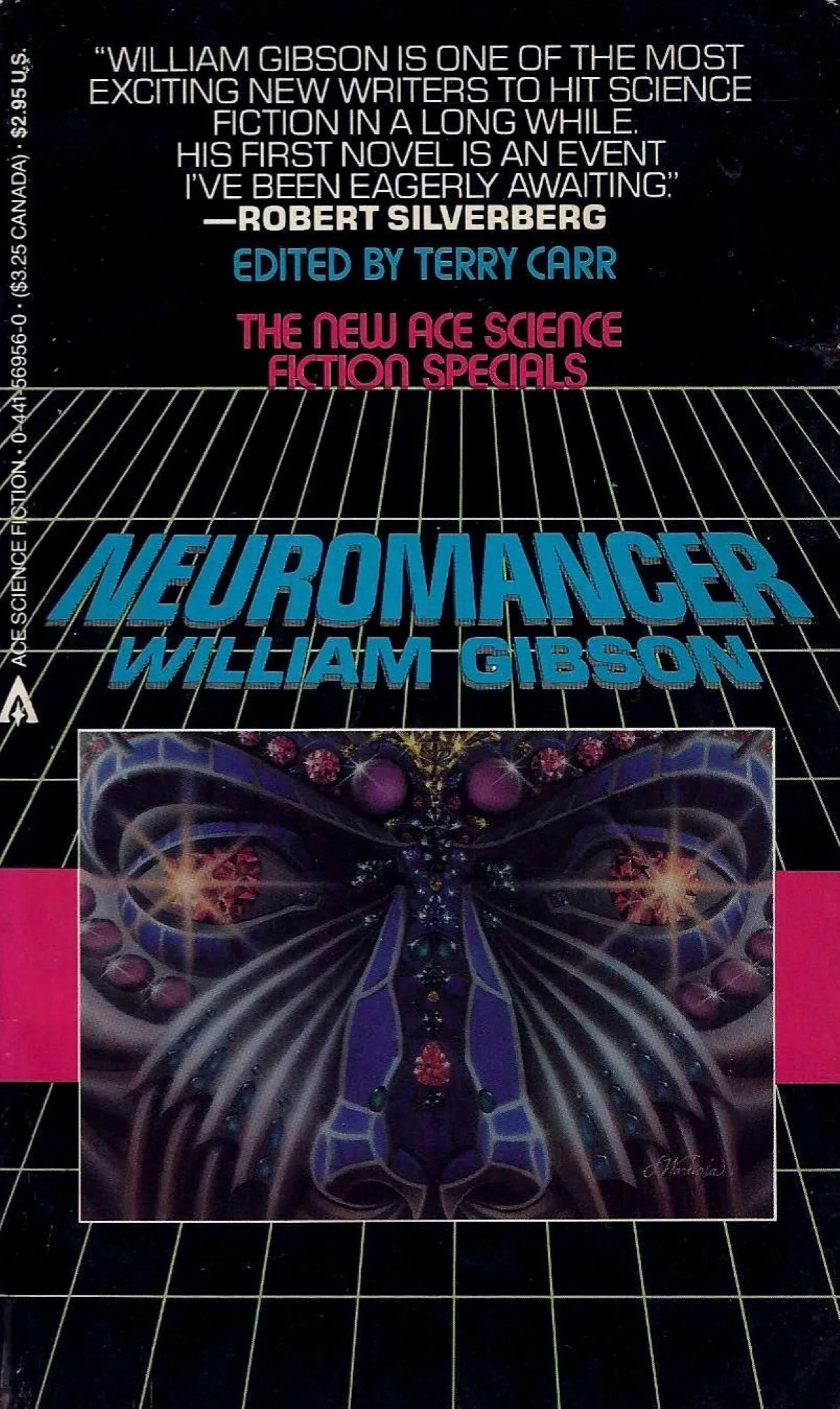
Long before audiences entered The Matrix, they explored cyberspace through the pages of William Gibson's Neuromancer. Credit: Fandom
The series stars Callum Turner as Case, the damaged super-hacker at the novel's centre, and Briana Middleton as Molly, the "razor-girl" assassin with mirrored eyes. But the more consequential casting may be the creative team itself: showrunner Graham Roland, director J.D. Dillard, and executive producer William Gibson — the novelist, now seventy-eight, who has watched his most famous work languish in development hell since the Reagan administration.
The question is not whether Neuromancer will be good. The question is whether it can be good in a way that matters — that expands what space sci-fi television is allowed to do, rather than merely translating a classic into a prestige format that flatters existing taste. For SciNexic, the early evidence suggests something more interesting than competent adaptation. It suggests a series willing to challenge the visual grammar that has defined cyberpunk on screen since Blade Runner.
Jacking In: The SDCC Teaser That Broke Cyberpunk's Colour Palette
The first teaser trailer, unveiled at San Diego Comic-Con on 25 July 2026, ran approximately one minute — long enough to establish that this Neuromancer would not look like the rain-soaked, neon-drenched noir that audiences have been conditioned to expect. Ars Technica's analysis described the aesthetic as "surprisingly bright" — a deliberate departure from the visual clichés that have made "cyberpunk" synonymous with permanent midnight and synthetic blue. The Chiba City of this adaptation appears to be lit by daylight, by fluorescence, by the unflattering glare of corporate architecture rather than the romantic haze of noir cinematography.
This is not merely a design choice. It is a philosophical one. Gibson's novel was never fundamentally about darkness; it was about the colonisation of human consciousness by corporate systems that operate in plain sight. The brightness makes the horror more banal — and therefore more plausible. When the Matrix is not a shadowy underground but a brightly lit data centre, the threat is not escaped by finding the light. It is survived by learning to see in it.
Case and Molly: Casting the Iconic Couple of Cyberpunk's First Wave
Callum Turner, best known for The Capture and Masters of the Air, plays Case as a man whose talent has been surgically removed — literally, in the novel's opening, when his nervous system is damaged by former employers as punishment for theft.

As Case, Turner inherits one of science fiction's most iconic protagonists, a character whose influence can still be seen across the genre today. Credit: Wikimedia
Turner has demonstrated in previous roles an ability to convey intelligence as a form of damage: characters who think faster than they feel, whose competence is inseparable from their trauma. Variety's first-look coverage noted that Turner's Case reads as "a man who has been punished for being too good at something that should not exist."
Briana Middleton's Molly is, in many ways, the more difficult role. The "razor-girl" archetype — a street samurai with retractable blades beneath her fingernails and mirrored lenses surgically implanted over her eyes — has been imitated so frequently across four decades of cyberpunk media that the original risks feeling like a parody of its own descendants.

Briana Middleton steps into the role of Molly, the razor-girl assassin whose mirrored eyes and formidable skills made her one of cyberpunk's most memorable characters. Credit: Wikimedia
Middleton's challenge is to make Molly feel dangerous not because of her weapons, but because of her absolute refusal to be a victim in a world designed to manufacture them. The supporting cast is formidable: Mark Strong as the enigmatic Armitage, Peter Sarsgaard as the deranged John Ashpool, Clémence Poésy as Marie-France Tessier, and Dane DeHaan in a recurring role that has not yet been disclosed.
The DreamCrew Variable: What Drake and Future Are Doing on a Gibson Production
One of the most unexpected elements of the production is the involvement of DreamCrew Entertainment — the media company co-founded by Aubrey "Drake" Graham and Adel "Future" Nur — as an executive producer. Hypebeast's coverage confirmed the partnership, which places two of contemporary music's most influential figures in a credit block alongside William Gibson and Anonymous Content. The significance extends beyond marketing: DreamCrew's involvement suggests that Apple TV is positioning Neuromancer not merely as prestige television for existing sci-fi audiences, but as a cultural event with crossover potential into music, fashion, and youth culture.
This is strategically astute. Gibson's novel, for all its literary reputation, has never penetrated mainstream culture the way Blade Runner or The Matrix have. A Drake-associated Neuromancer is a Neuromancer that arrives on social media with built-in cultural cachet — not as homework for English literature students, but as must-watch television for audiences who may never have read the book.
Why This Adaptation Matters for Space Sci-Fi's Future
The term "space sci-fi" is not typically applied to cyberpunk, and Gibson himself famously wrote Neuromancer without ever having used a personal computer. But the novel's concerns — the dissolution of physical space into data, the colonisation of consciousness by artificial systems, the replacement of human geography with corporate topology — are the logical endpoint of space exploration's original promise. If space travel was once about going somewhere, Neuromancer asks what happens when there is nowhere left to go, and the only frontier is inside the machine.
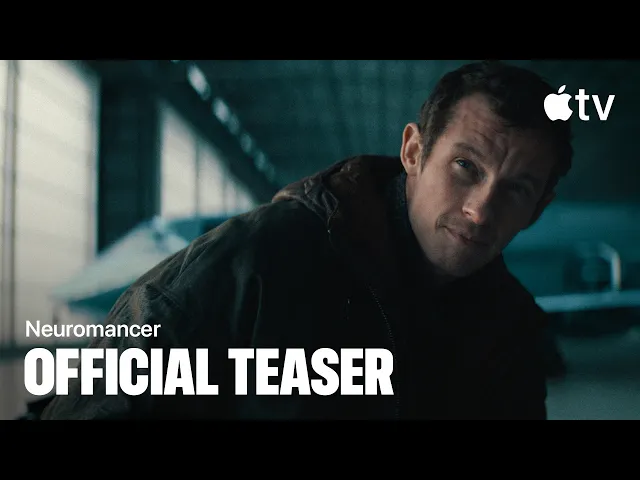
Neuromancer — Official Teaser. By Apple TV. From @AppleTV
Apple TV has built its reputation on exactly this kind of intellectually ambitious, slow-burn science fiction. Severance, For All Mankind, Silo, and Dark Matter have established the platform as the streaming home for viewers who want their genre entertainment to pose questions rather than simply resolve plots. Neuromancer fits this brand identity precisely — perhaps too precisely. The risk is that Apple TV has cultivated an audience that expects a certain tonal register, and that Gibson's more abrasive, more politically charged vision may clash with the platform's polished aesthetic.
The 22 January premiere will reveal whether Roland and Dillard have found a visual language that honours the novel's radicalism without alienating the audience that Apple has spent six years assembling. If they have, Neuromancer will not merely be a successful adaptation. It will be the moment when cyberpunk — the genre that predicted our present with uncomfortable accuracy — finally receives the televisual treatment it deserves.
The Bigger Picture: What Neuromancer's Success Would Mean for Genre Television
A successful Neuromancer would have consequences far beyond Apple TV's subscriber numbers. It would demonstrate that the most formally experimental science fiction — work that resists easy adaptation, that demands sustained attention, that offers no comforting resolution — can command a mainstream audience in the streaming era. It would validate the "difficult" adaptation as a viable commercial strategy, potentially opening doors for adaptations of Olaf Stapledon, Samuel R. Delany, and other writers whose work has been deemed "unfilmable" by conventional wisdom.
For space sci-fi specifically, it would expand the genre's boundaries in a direction that has been largely ignored: inward, toward the psychological and philosophical frontiers that exist not between planets but between synapses. The final frontier, Gibson suggested forty years ago, is not out there. It is in here. On 22 January 2027, Apple TV will find out whether audiences are ready to make the journey.
Stay tuned to Scinexic.com for all the latest space sci-fi news, and exclusive insights from the final frontier.
Further Reading:
SciNexic.com may earn a commission through affiliate links, ensuring continued cosmic content.
What does it mean to adapt a novel that invented an entire genre — a book so dense with neologisms, so structurally unconventional, so fundamentally concerned with the dissolution of physical reality that four decades of Hollywood development have collectively failed to bring it to screen? On 22 January 2027, Apple TV will attempt an answer. Neuromancer, the ten-episode adaptation of William Gibson's 1984 cyberpunk cornerstone, premieres with a two-episode debut followed by weekly releases through 19 March 2027.
Long before audiences entered The Matrix, they explored cyberspace through the pages of William Gibson's Neuromancer. Credit: Fandom
The series stars Callum Turner as Case, the damaged super-hacker at the novel's centre, and Briana Middleton as Molly, the "razor-girl" assassin with mirrored eyes. But the more consequential casting may be the creative team itself: showrunner Graham Roland, director J.D. Dillard, and executive producer William Gibson — the novelist, now seventy-eight, who has watched his most famous work languish in development hell since the Reagan administration.
The question is not whether Neuromancer will be good. The question is whether it can be good in a way that matters — that expands what space sci-fi television is allowed to do, rather than merely translating a classic into a prestige format that flatters existing taste. For SciNexic, the early evidence suggests something more interesting than competent adaptation. It suggests a series willing to challenge the visual grammar that has defined cyberpunk on screen since Blade Runner.
Jacking In: The SDCC Teaser That Broke Cyberpunk's Colour Palette
The first teaser trailer, unveiled at San Diego Comic-Con on 25 July 2026, ran approximately one minute — long enough to establish that this Neuromancer would not look like the rain-soaked, neon-drenched noir that audiences have been conditioned to expect. Ars Technica's analysis described the aesthetic as "surprisingly bright" — a deliberate departure from the visual clichés that have made "cyberpunk" synonymous with permanent midnight and synthetic blue. The Chiba City of this adaptation appears to be lit by daylight, by fluorescence, by the unflattering glare of corporate architecture rather than the romantic haze of noir cinematography.
This is not merely a design choice. It is a philosophical one. Gibson's novel was never fundamentally about darkness; it was about the colonisation of human consciousness by corporate systems that operate in plain sight. The brightness makes the horror more banal — and therefore more plausible. When the Matrix is not a shadowy underground but a brightly lit data centre, the threat is not escaped by finding the light. It is survived by learning to see in it.
Case and Molly: Casting the Iconic Couple of Cyberpunk's First Wave
Callum Turner, best known for The Capture and Masters of the Air, plays Case as a man whose talent has been surgically removed — literally, in the novel's opening, when his nervous system is damaged by former employers as punishment for theft.
As Case, Turner inherits one of science fiction's most iconic protagonists, a character whose influence can still be seen across the genre today. Credit: Wikimedia
Turner has demonstrated in previous roles an ability to convey intelligence as a form of damage: characters who think faster than they feel, whose competence is inseparable from their trauma. Variety's first-look coverage noted that Turner's Case reads as "a man who has been punished for being too good at something that should not exist."
Briana Middleton's Molly is, in many ways, the more difficult role. The "razor-girl" archetype — a street samurai with retractable blades beneath her fingernails and mirrored lenses surgically implanted over her eyes — has been imitated so frequently across four decades of cyberpunk media that the original risks feeling like a parody of its own descendants.
Briana Middleton steps into the role of Molly, the razor-girl assassin whose mirrored eyes and formidable skills made her one of cyberpunk's most memorable characters. Credit: Wikimedia
Middleton's challenge is to make Molly feel dangerous not because of her weapons, but because of her absolute refusal to be a victim in a world designed to manufacture them. The supporting cast is formidable: Mark Strong as the enigmatic Armitage, Peter Sarsgaard as the deranged John Ashpool, Clémence Poésy as Marie-France Tessier, and Dane DeHaan in a recurring role that has not yet been disclosed.
The DreamCrew Variable: What Drake and Future Are Doing on a Gibson Production
One of the most unexpected elements of the production is the involvement of DreamCrew Entertainment — the media company co-founded by Aubrey "Drake" Graham and Adel "Future" Nur — as an executive producer. Hypebeast's coverage confirmed the partnership, which places two of contemporary music's most influential figures in a credit block alongside William Gibson and Anonymous Content. The significance extends beyond marketing: DreamCrew's involvement suggests that Apple TV is positioning Neuromancer not merely as prestige television for existing sci-fi audiences, but as a cultural event with crossover potential into music, fashion, and youth culture.
This is strategically astute. Gibson's novel, for all its literary reputation, has never penetrated mainstream culture the way Blade Runner or The Matrix have. A Drake-associated Neuromancer is a Neuromancer that arrives on social media with built-in cultural cachet — not as homework for English literature students, but as must-watch television for audiences who may never have read the book.
Why This Adaptation Matters for Space Sci-Fi's Future
The term "space sci-fi" is not typically applied to cyberpunk, and Gibson himself famously wrote Neuromancer without ever having used a personal computer. But the novel's concerns — the dissolution of physical space into data, the colonisation of consciousness by artificial systems, the replacement of human geography with corporate topology — are the logical endpoint of space exploration's original promise. If space travel was once about going somewhere, Neuromancer asks what happens when there is nowhere left to go, and the only frontier is inside the machine.
Neuromancer — Official Teaser. By Apple TV. From @AppleTV
Apple TV has built its reputation on exactly this kind of intellectually ambitious, slow-burn science fiction. Severance, For All Mankind, Silo, and Dark Matter have established the platform as the streaming home for viewers who want their genre entertainment to pose questions rather than simply resolve plots. Neuromancer fits this brand identity precisely — perhaps too precisely. The risk is that Apple TV has cultivated an audience that expects a certain tonal register, and that Gibson's more abrasive, more politically charged vision may clash with the platform's polished aesthetic.
The 22 January premiere will reveal whether Roland and Dillard have found a visual language that honours the novel's radicalism without alienating the audience that Apple has spent six years assembling. If they have, Neuromancer will not merely be a successful adaptation. It will be the moment when cyberpunk — the genre that predicted our present with uncomfortable accuracy — finally receives the televisual treatment it deserves.
The Bigger Picture: What Neuromancer's Success Would Mean for Genre Television
A successful Neuromancer would have consequences far beyond Apple TV's subscriber numbers. It would demonstrate that the most formally experimental science fiction — work that resists easy adaptation, that demands sustained attention, that offers no comforting resolution — can command a mainstream audience in the streaming era. It would validate the "difficult" adaptation as a viable commercial strategy, potentially opening doors for adaptations of Olaf Stapledon, Samuel R. Delany, and other writers whose work has been deemed "unfilmable" by conventional wisdom.
For space sci-fi specifically, it would expand the genre's boundaries in a direction that has been largely ignored: inward, toward the psychological and philosophical frontiers that exist not between planets but between synapses. The final frontier, Gibson suggested forty years ago, is not out there. It is in here. On 22 January 2027, Apple TV will find out whether audiences are ready to make the journey.
Stay tuned to Scinexic.com for all the latest space sci-fi news, and exclusive insights from the final frontier.
Further Reading:
SciNexic.com may earn a commission through affiliate links, ensuring continued cosmic content.
What does it mean to adapt a novel that invented an entire genre — a book so dense with neologisms, so structurally unconventional, so fundamentally concerned with the dissolution of physical reality that four decades of Hollywood development have collectively failed to bring it to screen? On 22 January 2027, Apple TV will attempt an answer. Neuromancer, the ten-episode adaptation of William Gibson's 1984 cyberpunk cornerstone, premieres with a two-episode debut followed by weekly releases through 19 March 2027.
Long before audiences entered The Matrix, they explored cyberspace through the pages of William Gibson's Neuromancer. Credit: Fandom
The series stars Callum Turner as Case, the damaged super-hacker at the novel's centre, and Briana Middleton as Molly, the "razor-girl" assassin with mirrored eyes. But the more consequential casting may be the creative team itself: showrunner Graham Roland, director J.D. Dillard, and executive producer William Gibson — the novelist, now seventy-eight, who has watched his most famous work languish in development hell since the Reagan administration.
The question is not whether Neuromancer will be good. The question is whether it can be good in a way that matters — that expands what space sci-fi television is allowed to do, rather than merely translating a classic into a prestige format that flatters existing taste. For SciNexic, the early evidence suggests something more interesting than competent adaptation. It suggests a series willing to challenge the visual grammar that has defined cyberpunk on screen since Blade Runner.
Jacking In: The SDCC Teaser That Broke Cyberpunk's Colour Palette
The first teaser trailer, unveiled at San Diego Comic-Con on 25 July 2026, ran approximately one minute — long enough to establish that this Neuromancer would not look like the rain-soaked, neon-drenched noir that audiences have been conditioned to expect. Ars Technica's analysis described the aesthetic as "surprisingly bright" — a deliberate departure from the visual clichés that have made "cyberpunk" synonymous with permanent midnight and synthetic blue. The Chiba City of this adaptation appears to be lit by daylight, by fluorescence, by the unflattering glare of corporate architecture rather than the romantic haze of noir cinematography.
This is not merely a design choice. It is a philosophical one. Gibson's novel was never fundamentally about darkness; it was about the colonisation of human consciousness by corporate systems that operate in plain sight. The brightness makes the horror more banal — and therefore more plausible. When the Matrix is not a shadowy underground but a brightly lit data centre, the threat is not escaped by finding the light. It is survived by learning to see in it.
Case and Molly: Casting the Iconic Couple of Cyberpunk's First Wave
Callum Turner, best known for The Capture and Masters of the Air, plays Case as a man whose talent has been surgically removed — literally, in the novel's opening, when his nervous system is damaged by former employers as punishment for theft.
As Case, Turner inherits one of science fiction's most iconic protagonists, a character whose influence can still be seen across the genre today. Credit: Wikimedia
Turner has demonstrated in previous roles an ability to convey intelligence as a form of damage: characters who think faster than they feel, whose competence is inseparable from their trauma. Variety's first-look coverage noted that Turner's Case reads as "a man who has been punished for being too good at something that should not exist."
Briana Middleton's Molly is, in many ways, the more difficult role. The "razor-girl" archetype — a street samurai with retractable blades beneath her fingernails and mirrored lenses surgically implanted over her eyes — has been imitated so frequently across four decades of cyberpunk media that the original risks feeling like a parody of its own descendants.
Briana Middleton steps into the role of Molly, the razor-girl assassin whose mirrored eyes and formidable skills made her one of cyberpunk's most memorable characters. Credit: Wikimedia
Middleton's challenge is to make Molly feel dangerous not because of her weapons, but because of her absolute refusal to be a victim in a world designed to manufacture them. The supporting cast is formidable: Mark Strong as the enigmatic Armitage, Peter Sarsgaard as the deranged John Ashpool, Clémence Poésy as Marie-France Tessier, and Dane DeHaan in a recurring role that has not yet been disclosed.
The DreamCrew Variable: What Drake and Future Are Doing on a Gibson Production
One of the most unexpected elements of the production is the involvement of DreamCrew Entertainment — the media company co-founded by Aubrey "Drake" Graham and Adel "Future" Nur — as an executive producer. Hypebeast's coverage confirmed the partnership, which places two of contemporary music's most influential figures in a credit block alongside William Gibson and Anonymous Content. The significance extends beyond marketing: DreamCrew's involvement suggests that Apple TV is positioning Neuromancer not merely as prestige television for existing sci-fi audiences, but as a cultural event with crossover potential into music, fashion, and youth culture.
This is strategically astute. Gibson's novel, for all its literary reputation, has never penetrated mainstream culture the way Blade Runner or The Matrix have. A Drake-associated Neuromancer is a Neuromancer that arrives on social media with built-in cultural cachet — not as homework for English literature students, but as must-watch television for audiences who may never have read the book.
Why This Adaptation Matters for Space Sci-Fi's Future
The term "space sci-fi" is not typically applied to cyberpunk, and Gibson himself famously wrote Neuromancer without ever having used a personal computer. But the novel's concerns — the dissolution of physical space into data, the colonisation of consciousness by artificial systems, the replacement of human geography with corporate topology — are the logical endpoint of space exploration's original promise. If space travel was once about going somewhere, Neuromancer asks what happens when there is nowhere left to go, and the only frontier is inside the machine.
Neuromancer — Official Teaser. By Apple TV. From @AppleTV
Apple TV has built its reputation on exactly this kind of intellectually ambitious, slow-burn science fiction. Severance, For All Mankind, Silo, and Dark Matter have established the platform as the streaming home for viewers who want their genre entertainment to pose questions rather than simply resolve plots. Neuromancer fits this brand identity precisely — perhaps too precisely. The risk is that Apple TV has cultivated an audience that expects a certain tonal register, and that Gibson's more abrasive, more politically charged vision may clash with the platform's polished aesthetic.
The 22 January premiere will reveal whether Roland and Dillard have found a visual language that honours the novel's radicalism without alienating the audience that Apple has spent six years assembling. If they have, Neuromancer will not merely be a successful adaptation. It will be the moment when cyberpunk — the genre that predicted our present with uncomfortable accuracy — finally receives the televisual treatment it deserves.
The Bigger Picture: What Neuromancer's Success Would Mean for Genre Television
A successful Neuromancer would have consequences far beyond Apple TV's subscriber numbers. It would demonstrate that the most formally experimental science fiction — work that resists easy adaptation, that demands sustained attention, that offers no comforting resolution — can command a mainstream audience in the streaming era. It would validate the "difficult" adaptation as a viable commercial strategy, potentially opening doors for adaptations of Olaf Stapledon, Samuel R. Delany, and other writers whose work has been deemed "unfilmable" by conventional wisdom.
For space sci-fi specifically, it would expand the genre's boundaries in a direction that has been largely ignored: inward, toward the psychological and philosophical frontiers that exist not between planets but between synapses. The final frontier, Gibson suggested forty years ago, is not out there. It is in here. On 22 January 2027, Apple TV will find out whether audiences are ready to make the journey.
Stay tuned to Scinexic.com for all the latest space sci-fi news, and exclusive insights from the final frontier.
Further Reading:
SciNexic.com may earn a commission through affiliate links, ensuring continued cosmic content.
Get the SciNexic Dispatch
Space sci-fi news, reviews, trailers, and release picks—straight to your inbox.
Get the dispatch
Image Gallery
Comments
Please be kind and considerate. Any abusive or offensive comments will be sent out the airlock! Thank You.
Please be kind and considerate. Any abusive or offensive comments will be sent out the airlock! Thank You.
Get the Dispatch
Related Posts
Share on Twitter
Share on Instagram
Banner Image - Apple TV Neuromancer promo image - https://www.apple.com/uk/tv-pr/originals/neuromancer/ - Copyright: Apple Inc.
Main Article - All images and media are the property of their respective owners.