


The SciNexic Files
The SciNexic Files
The SciNexic Files
Streaming News
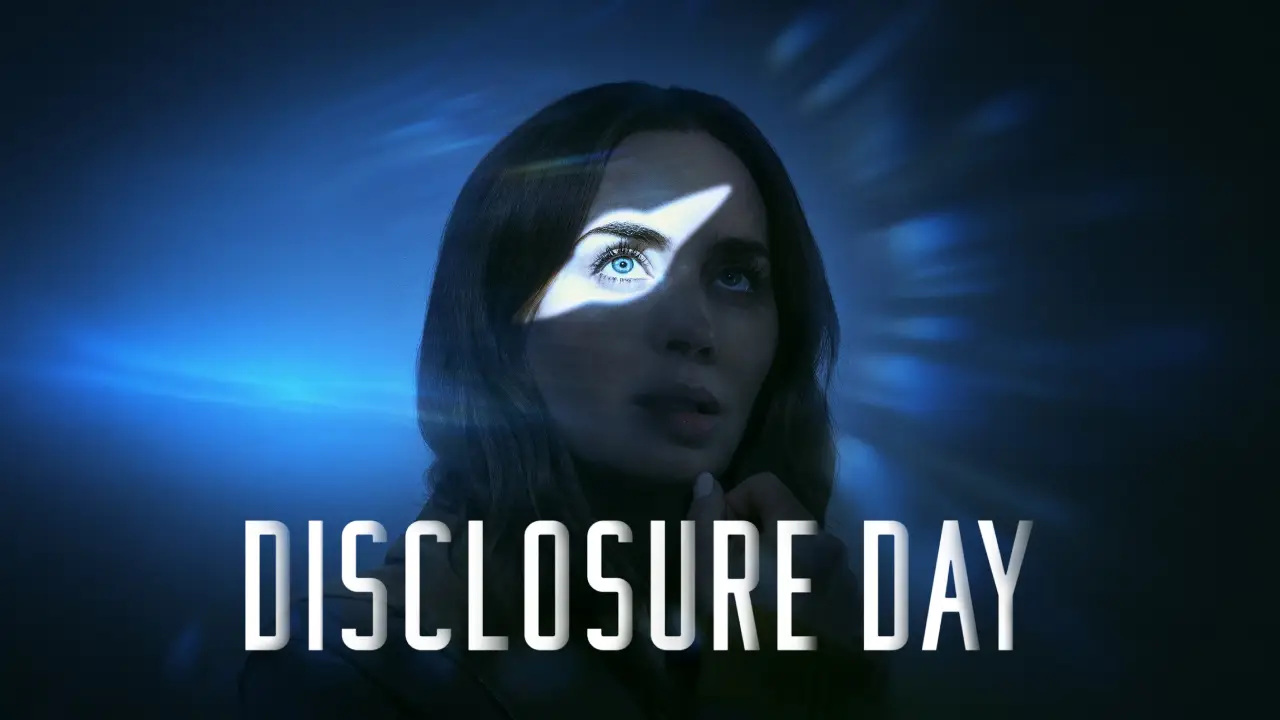
Spielberg's Best Kept Secret: Why Disclosure Day — Streaming Now — Is Space Sci-Fi's Most Underrated Film of 2026
What if the most significant space sci-fi film of 2026 arrived in cinemas and you almost missed it — and now, that it is out on streaming, you have a second chance to fix that mistake?
That is the precise situation with Disclosure Day, Steven Spielberg's alien conspiracy thriller, which landed on Peacock in the United States and on digital platforms globally from, 9 October. The film premiered in US cinemas on 12 June 2026, grossed $243.8 million worldwide against a $115 million production budget, and received a Certified Fresh rating of 79 per cent on Rotten Tomatoes. It was praised as a return to Spielberg's vintage sensibility — the same instinct for wonder and empathy that animated Close Encounters of the Third Kind and E.T. — and then, inexplicably, treated as an also-ran rather than an event. The box office gap between expectation and result left it stranded in an awkward middle ground: too large to ignore, too modest by blockbuster standards to generate the cultural dominance its makers expected.
The streaming debut changes all of that. Films that underperform at the box office and then spend months quietly accumulating devotees through digital platforms have a specific trajectory, and Disclosure Day — already reaching number one on US iTunes charts during its July PVOD window — is on it. This is the moment to catch up. Here is why it matters for space sci-fi.
The Margaret Fairchild Problem: How Emily Blunt Rebuilt the Alien-Contact Heroine
The film's single most surprising achievement is its lead performance. Emily Blunt plays Margaret Fairchild, a Kansas City television meteorologist who develops the ability to speak alien languages — and psychic sensitivity to non-human presences — after a mysterious encounter. On paper, this is the least likely Spielberg protagonist since the kids in E.T., and Blunt attacks it with complete seriousness. Reviewers at the Hollywood Reporter described her performance as potentially her best work to date.
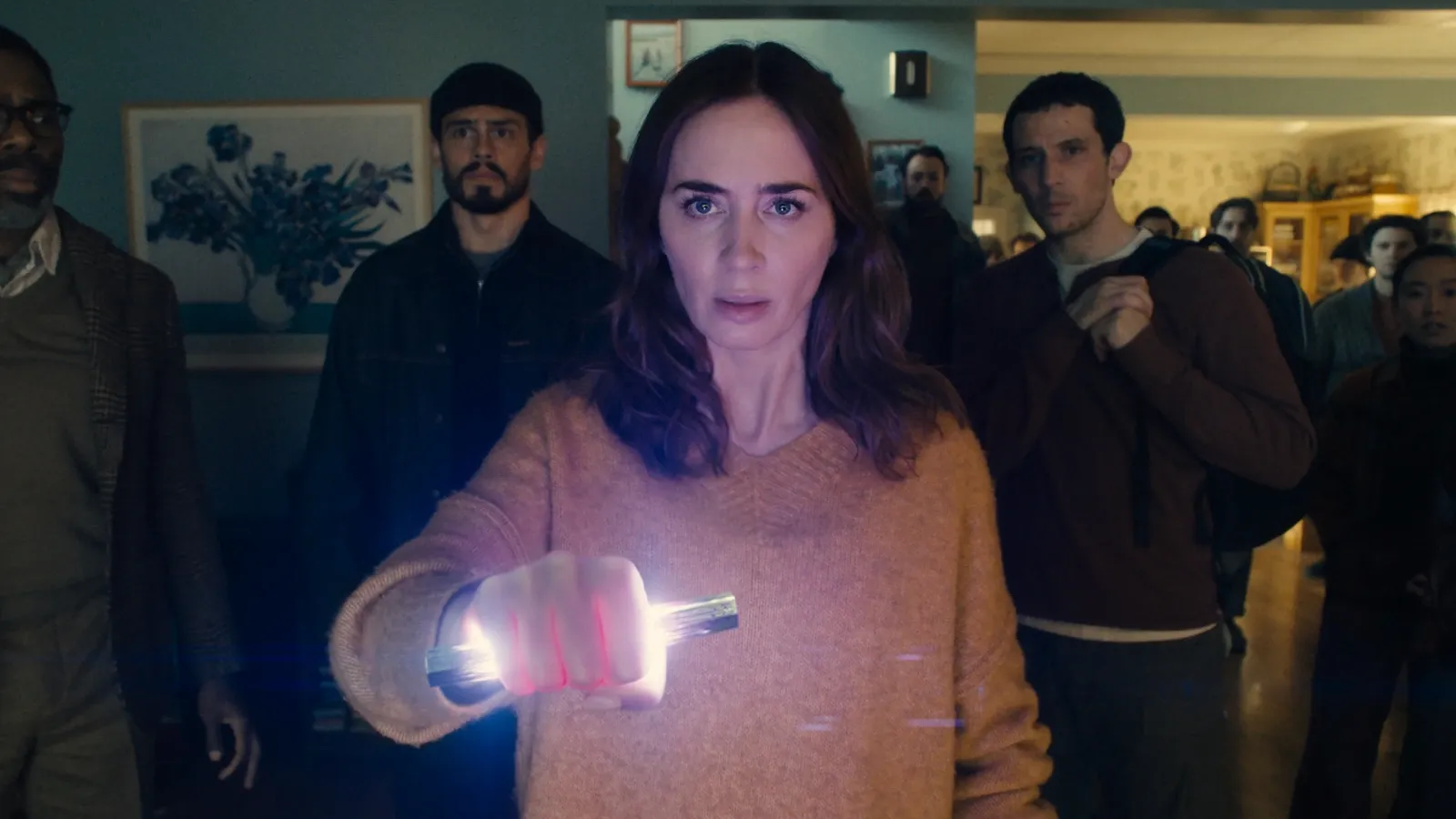
Blunt's performance grounds the film's biggest ideas, giving human weight to a narrative driven by secrets, conspiracy and cosmic possibility. Credit: TMDB
What Blunt understands — and what the film rewards if you let it — is that the alien-contact heroine is not an action figure. She is an instrument of translation. Spielberg and screenwriter David Koepp (long-time collaborators who last worked together on War of the Worlds) made a deliberate choice to avoid the word "alien" entirely, using instead the bureaucratic coldness of "non-human biologics" throughout. It is a small detail that carries enormous weight: the film insists on the strangeness of the encounter rather than the familiarity. Margaret's journey is not about defeating an enemy. It is about becoming a bridge.
Josh O'Connor, as cybersecurity analyst Dr Daniel Kellner, is the film's anchor to terrestrial paranoia — the man who discovers "The Archive," a vast collection of suppressed government evidence, and then cannot put it down. The dynamic between Blunt's wonder and O'Connor's dread gives the film its emotional engine.

O'Connor brings urgency and conviction to a whistleblower forced to choose between personal safety and world-changing truth. Credit: TMDB
The Colin Firth Calculation: Corporate Villainy in the Age of Wardex
Colin Firth's Noah Scanlon — CEO of the government contractor Wardex, the shadowy corporation suppressing the truth — is the film's most polarising element. Some critics found him underwritten; others appreciated that Firth plays the character not as a fanatic but as a pragmatist. Scanlon's argument, such as it is, is that the world is not ready for disclosure, and that protecting it from truth is a form of paternalism he regards as genuine care. It is the most Spielbergian of villain frameworks: the antagonist who believes he is the adult in the room.

Every appearance by Noah Scanlon raises the stakes, transforming a science-fiction mystery into a tense race against powerful interests. Credit: TMDB
That the film climaxes in a broadcast station infiltration — a live global "Disclosure Day" that simultaneously halts an impending nuclear conflict — is unashamedly optimistic in the way only Spielberg can be. Information liberates. Truth unifies. The alien does not invade; it simply arrives, and humanity has to decide what to do with the knowledge. It is a thesis that has aged considerably better than the conspiratorial anxieties of 1990s UFO films, where the government was always the monster. Here, the monster is the choice to keep a secret.
Kamiński, Williams, and the Spielberg Visual Grammar
Whatever the film's narrative imperfections — and they exist, mainly in a second act that loses momentum during an extended train chase — Disclosure Day is a masterclass in classical filmmaking. Cinematographer Janusz Kamiński, Spielberg's visual collaborator since Schindler's List, shoots the film in widescreen compositions that feel simultaneously intimate and cosmic. John Williams' score does what Williams always does: it tells you what the film means before you have consciously registered it.
The film was shot between February and May 2025 in New York and New Jersey, and Kamiński uses both the urban density of the city and the vast American sky above it to create the sense of a planet that is both very small and very vulnerable. These are not abstract ideas. They are the visual grammar of space sci-fi at its most humane.
Spielberg's Return and What It Signals for the Genre
The Guardian's review — headlined as "Close Encounters of a Deferred Kind" — captured both the film's achievement and its limitation in a single phrase. It is not Close Encounters. It does not have that film's spiritual magnitude. But it is a reminder that Spielberg remains the world's most technically precise filmmaker of human-scale wonder — the director who understands, better than anyone else working, how to make a stranger from another world feel like the answer to a question the audience has been carrying without knowing it.
For space sci-fi, the arrival of Disclosure Day on streaming is also a signal about where the genre's commercial centre of gravity now sits. It grossed $243.8 million — more than Dune: Part One's initial theatrical run in 2021 — and still fell short of break-even by studio accounting. The lesson is not that the film failed. It is that the theatrical break-even point for prestige space sci-fi has moved to a level that only event franchises can clear. Streaming is where films like this find their true audiences.

For science-fiction fans who overlooked it in cinemas, Spielberg's alien mystery may prove to be one of streaming's most rewarding discoveries of the year.Credit: TMDB
The Streaming Redemption: Why Disclosure Day Finally Earns Its Audience
Disclosure Day is available for digital rental on Amazon Video, Apple TV, and Google Play now, and streaming exclusively on Peacock in the United States. It is two hours and twenty-five minutes of the best-looking Spielberg film in over a decade, featuring a lead performance that deserves serious awards consideration in retrospect, and a thesis about first contact that is less about the aliens and more about what we do with the truth once it is too large to contain.
The theatrical window underserved it. The streaming window is its second chance — and ours.
Further reading:
Hollywood Reporter Review — Emily Blunt performance
Disclosure Day Wikipedia — full production and cast details
SciNexic.com may earn a commission through affiliate links, ensuring continued cosmic content.
What if the most significant space sci-fi film of 2026 arrived in cinemas and you almost missed it — and now, that it is out on streaming, you have a second chance to fix that mistake?
That is the precise situation with Disclosure Day, Steven Spielberg's alien conspiracy thriller, which landed on Peacock in the United States and on digital platforms globally from, 9 October. The film premiered in US cinemas on 12 June 2026, grossed $243.8 million worldwide against a $115 million production budget, and received a Certified Fresh rating of 79 per cent on Rotten Tomatoes. It was praised as a return to Spielberg's vintage sensibility — the same instinct for wonder and empathy that animated Close Encounters of the Third Kind and E.T. — and then, inexplicably, treated as an also-ran rather than an event. The box office gap between expectation and result left it stranded in an awkward middle ground: too large to ignore, too modest by blockbuster standards to generate the cultural dominance its makers expected.
The streaming debut changes all of that. Films that underperform at the box office and then spend months quietly accumulating devotees through digital platforms have a specific trajectory, and Disclosure Day — already reaching number one on US iTunes charts during its July PVOD window — is on it. This is the moment to catch up. Here is why it matters for space sci-fi.
The Margaret Fairchild Problem: How Emily Blunt Rebuilt the Alien-Contact Heroine
The film's single most surprising achievement is its lead performance. Emily Blunt plays Margaret Fairchild, a Kansas City television meteorologist who develops the ability to speak alien languages — and psychic sensitivity to non-human presences — after a mysterious encounter. On paper, this is the least likely Spielberg protagonist since the kids in E.T., and Blunt attacks it with complete seriousness. Reviewers at the Hollywood Reporter described her performance as potentially her best work to date.
Blunt's performance grounds the film's biggest ideas, giving human weight to a narrative driven by secrets, conspiracy and cosmic possibility. Credit: TMDB
What Blunt understands — and what the film rewards if you let it — is that the alien-contact heroine is not an action figure. She is an instrument of translation. Spielberg and screenwriter David Koepp (long-time collaborators who last worked together on War of the Worlds) made a deliberate choice to avoid the word "alien" entirely, using instead the bureaucratic coldness of "non-human biologics" throughout. It is a small detail that carries enormous weight: the film insists on the strangeness of the encounter rather than the familiarity. Margaret's journey is not about defeating an enemy. It is about becoming a bridge.
Josh O'Connor, as cybersecurity analyst Dr Daniel Kellner, is the film's anchor to terrestrial paranoia — the man who discovers "The Archive," a vast collection of suppressed government evidence, and then cannot put it down. The dynamic between Blunt's wonder and O'Connor's dread gives the film its emotional engine.
O'Connor brings urgency and conviction to a whistleblower forced to choose between personal safety and world-changing truth. Credit: TMDB
The Colin Firth Calculation: Corporate Villainy in the Age of Wardex
Colin Firth's Noah Scanlon — CEO of the government contractor Wardex, the shadowy corporation suppressing the truth — is the film's most polarising element. Some critics found him underwritten; others appreciated that Firth plays the character not as a fanatic but as a pragmatist. Scanlon's argument, such as it is, is that the world is not ready for disclosure, and that protecting it from truth is a form of paternalism he regards as genuine care. It is the most Spielbergian of villain frameworks: the antagonist who believes he is the adult in the room.
Every appearance by Noah Scanlon raises the stakes, transforming a science-fiction mystery into a tense race against powerful interests. Credit: TMDB
That the film climaxes in a broadcast station infiltration — a live global "Disclosure Day" that simultaneously halts an impending nuclear conflict — is unashamedly optimistic in the way only Spielberg can be. Information liberates. Truth unifies. The alien does not invade; it simply arrives, and humanity has to decide what to do with the knowledge. It is a thesis that has aged considerably better than the conspiratorial anxieties of 1990s UFO films, where the government was always the monster. Here, the monster is the choice to keep a secret.
Kamiński, Williams, and the Spielberg Visual Grammar
Whatever the film's narrative imperfections — and they exist, mainly in a second act that loses momentum during an extended train chase — Disclosure Day is a masterclass in classical filmmaking. Cinematographer Janusz Kamiński, Spielberg's visual collaborator since Schindler's List, shoots the film in widescreen compositions that feel simultaneously intimate and cosmic. John Williams' score does what Williams always does: it tells you what the film means before you have consciously registered it.
The film was shot between February and May 2025 in New York and New Jersey, and Kamiński uses both the urban density of the city and the vast American sky above it to create the sense of a planet that is both very small and very vulnerable. These are not abstract ideas. They are the visual grammar of space sci-fi at its most humane.
Spielberg's Return and What It Signals for the Genre
The Guardian's review — headlined as "Close Encounters of a Deferred Kind" — captured both the film's achievement and its limitation in a single phrase. It is not Close Encounters. It does not have that film's spiritual magnitude. But it is a reminder that Spielberg remains the world's most technically precise filmmaker of human-scale wonder — the director who understands, better than anyone else working, how to make a stranger from another world feel like the answer to a question the audience has been carrying without knowing it.
For space sci-fi, the arrival of Disclosure Day on streaming is also a signal about where the genre's commercial centre of gravity now sits. It grossed $243.8 million — more than Dune: Part One's initial theatrical run in 2021 — and still fell short of break-even by studio accounting. The lesson is not that the film failed. It is that the theatrical break-even point for prestige space sci-fi has moved to a level that only event franchises can clear. Streaming is where films like this find their true audiences.
For science-fiction fans who overlooked it in cinemas, Spielberg's alien mystery may prove to be one of streaming's most rewarding discoveries of the year.Credit: TMDB
The Streaming Redemption: Why Disclosure Day Finally Earns Its Audience
Disclosure Day is available for digital rental on Amazon Video, Apple TV, and Google Play now, and streaming exclusively on Peacock in the United States. It is two hours and twenty-five minutes of the best-looking Spielberg film in over a decade, featuring a lead performance that deserves serious awards consideration in retrospect, and a thesis about first contact that is less about the aliens and more about what we do with the truth once it is too large to contain.
The theatrical window underserved it. The streaming window is its second chance — and ours.
Further reading:
Hollywood Reporter Review — Emily Blunt performance
Disclosure Day Wikipedia — full production and cast details
SciNexic.com may earn a commission through affiliate links, ensuring continued cosmic content.
What if the most significant space sci-fi film of 2026 arrived in cinemas and you almost missed it — and now, that it is out on streaming, you have a second chance to fix that mistake?
That is the precise situation with Disclosure Day, Steven Spielberg's alien conspiracy thriller, which landed on Peacock in the United States and on digital platforms globally from, 9 October. The film premiered in US cinemas on 12 June 2026, grossed $243.8 million worldwide against a $115 million production budget, and received a Certified Fresh rating of 79 per cent on Rotten Tomatoes. It was praised as a return to Spielberg's vintage sensibility — the same instinct for wonder and empathy that animated Close Encounters of the Third Kind and E.T. — and then, inexplicably, treated as an also-ran rather than an event. The box office gap between expectation and result left it stranded in an awkward middle ground: too large to ignore, too modest by blockbuster standards to generate the cultural dominance its makers expected.
The streaming debut changes all of that. Films that underperform at the box office and then spend months quietly accumulating devotees through digital platforms have a specific trajectory, and Disclosure Day — already reaching number one on US iTunes charts during its July PVOD window — is on it. This is the moment to catch up. Here is why it matters for space sci-fi.
The Margaret Fairchild Problem: How Emily Blunt Rebuilt the Alien-Contact Heroine
The film's single most surprising achievement is its lead performance. Emily Blunt plays Margaret Fairchild, a Kansas City television meteorologist who develops the ability to speak alien languages — and psychic sensitivity to non-human presences — after a mysterious encounter. On paper, this is the least likely Spielberg protagonist since the kids in E.T., and Blunt attacks it with complete seriousness. Reviewers at the Hollywood Reporter described her performance as potentially her best work to date.
Blunt's performance grounds the film's biggest ideas, giving human weight to a narrative driven by secrets, conspiracy and cosmic possibility. Credit: TMDB
What Blunt understands — and what the film rewards if you let it — is that the alien-contact heroine is not an action figure. She is an instrument of translation. Spielberg and screenwriter David Koepp (long-time collaborators who last worked together on War of the Worlds) made a deliberate choice to avoid the word "alien" entirely, using instead the bureaucratic coldness of "non-human biologics" throughout. It is a small detail that carries enormous weight: the film insists on the strangeness of the encounter rather than the familiarity. Margaret's journey is not about defeating an enemy. It is about becoming a bridge.
Josh O'Connor, as cybersecurity analyst Dr Daniel Kellner, is the film's anchor to terrestrial paranoia — the man who discovers "The Archive," a vast collection of suppressed government evidence, and then cannot put it down. The dynamic between Blunt's wonder and O'Connor's dread gives the film its emotional engine.
O'Connor brings urgency and conviction to a whistleblower forced to choose between personal safety and world-changing truth. Credit: TMDB
The Colin Firth Calculation: Corporate Villainy in the Age of Wardex
Colin Firth's Noah Scanlon — CEO of the government contractor Wardex, the shadowy corporation suppressing the truth — is the film's most polarising element. Some critics found him underwritten; others appreciated that Firth plays the character not as a fanatic but as a pragmatist. Scanlon's argument, such as it is, is that the world is not ready for disclosure, and that protecting it from truth is a form of paternalism he regards as genuine care. It is the most Spielbergian of villain frameworks: the antagonist who believes he is the adult in the room.
Every appearance by Noah Scanlon raises the stakes, transforming a science-fiction mystery into a tense race against powerful interests. Credit: TMDB
That the film climaxes in a broadcast station infiltration — a live global "Disclosure Day" that simultaneously halts an impending nuclear conflict — is unashamedly optimistic in the way only Spielberg can be. Information liberates. Truth unifies. The alien does not invade; it simply arrives, and humanity has to decide what to do with the knowledge. It is a thesis that has aged considerably better than the conspiratorial anxieties of 1990s UFO films, where the government was always the monster. Here, the monster is the choice to keep a secret.
Kamiński, Williams, and the Spielberg Visual Grammar
Whatever the film's narrative imperfections — and they exist, mainly in a second act that loses momentum during an extended train chase — Disclosure Day is a masterclass in classical filmmaking. Cinematographer Janusz Kamiński, Spielberg's visual collaborator since Schindler's List, shoots the film in widescreen compositions that feel simultaneously intimate and cosmic. John Williams' score does what Williams always does: it tells you what the film means before you have consciously registered it.
The film was shot between February and May 2025 in New York and New Jersey, and Kamiński uses both the urban density of the city and the vast American sky above it to create the sense of a planet that is both very small and very vulnerable. These are not abstract ideas. They are the visual grammar of space sci-fi at its most humane.
Spielberg's Return and What It Signals for the Genre
The Guardian's review — headlined as "Close Encounters of a Deferred Kind" — captured both the film's achievement and its limitation in a single phrase. It is not Close Encounters. It does not have that film's spiritual magnitude. But it is a reminder that Spielberg remains the world's most technically precise filmmaker of human-scale wonder — the director who understands, better than anyone else working, how to make a stranger from another world feel like the answer to a question the audience has been carrying without knowing it.
For space sci-fi, the arrival of Disclosure Day on streaming is also a signal about where the genre's commercial centre of gravity now sits. It grossed $243.8 million — more than Dune: Part One's initial theatrical run in 2021 — and still fell short of break-even by studio accounting. The lesson is not that the film failed. It is that the theatrical break-even point for prestige space sci-fi has moved to a level that only event franchises can clear. Streaming is where films like this find their true audiences.
For science-fiction fans who overlooked it in cinemas, Spielberg's alien mystery may prove to be one of streaming's most rewarding discoveries of the year.Credit: TMDB
The Streaming Redemption: Why Disclosure Day Finally Earns Its Audience
Disclosure Day is available for digital rental on Amazon Video, Apple TV, and Google Play now, and streaming exclusively on Peacock in the United States. It is two hours and twenty-five minutes of the best-looking Spielberg film in over a decade, featuring a lead performance that deserves serious awards consideration in retrospect, and a thesis about first contact that is less about the aliens and more about what we do with the truth once it is too large to contain.
The theatrical window underserved it. The streaming window is its second chance — and ours.
Further reading:
Hollywood Reporter Review — Emily Blunt performance
Disclosure Day Wikipedia — full production and cast details
SciNexic.com may earn a commission through affiliate links, ensuring continued cosmic content.
Get the SciNexic Dispatch
Space sci-fi news, reviews, trailers, and release picks—straight to your inbox.
Get the dispatch
Image Gallery
Comments
Please be kind and considerate. Any abusive or offensive comments will be sent out the airlock! Thank You.
Please be kind and considerate. Any abusive or offensive comments will be sent out the airlock! Thank You.
Get the Dispatch
Related Posts
Share on Instagram
Banner Image - Disclosure Day promo image and logo - www.themoviedb.org - Copyright: Universal Pictures
Main Article - All images and media are the property of their respective owners.