


The SciNexic Files
Sci-Fi Guides

The Complete Blade Runner Universe Viewing Guide: Every Film, Short, and Series to Watch Before 2099 Premieres on 25 November
Sixteen days stand between you and the most anticipated space sci-fi premiere of the autumn season. On 25 November, Amazon Prime Video releases all eight episodes of Blade Runner 2099 simultaneously — the first live-action television expansion of a franchise that has shaped the visual grammar of science fiction for over four decades. Michelle Yeoh and Hunter Schafer lead a cast navigating a Los Angeles where replicants rule and humans scrape by as second-class citizens.
Whether you last visited this universe in a rain-soaked 1982 cinema or you are approaching it fresh, the franchise now spans seven distinct entries across 117 years of in-universe history. This guide places every film, short, and series in chronological order, flags which versions to watch, and highlights the narrative threads that 2099 is expected to pick up.
Reel One: Blade Runner (1982) — Set in 2019
Ridley Scott's original remains the foundation of everything that follows. Rick Deckard, a retired blade runner, is coerced into hunting four escaped Nexus-6 replicants led by Roy Batty.

More than forty years later, Deckard's pursuit of rogue replicants remains one of science fiction's most enduring journeys. Credit: Warner Bros
The film introduced the rain-drenched neon aesthetic, Vangelis's synthesiser score, and the question of whether Deckard himself might be a replicant — a thread the franchise has deliberately never resolved.
Which version? Watch The Final Cut (2007). It is Scott's definitive edition, restoring the unicorn dream sequence and removing the studio-mandated narration and happy ending. The theatrical cut, the international cut, and the director's cut are all inferior versions that compromise the ambiguity central to the story.
Reel Two: Blade Runner — Black Out 2022 (2017) — Set in 2022
Directed by Cowboy Bebop creator Shinichirō Watanabe, this 15-minute animated short depicts the electromagnetic pulse attack that destroyed the Tyrell Corporation's replicant registry. The "Great Blackout" is the inciting event for the entire post-2019 timeline: without records, replicants become invisible, the economy collapses, and the Wallace Corporation rises from the wreckage.

Animated in a striking style, Black Out 2022 bridges the gap between eras while revealing one of the franchise's most transformative moments. Credit: TMDB
Runtime: 15 minutes. Available free on YouTube.
Reel Three: Blade Runner — Black Lotus (2021–2022) — Set in 2032
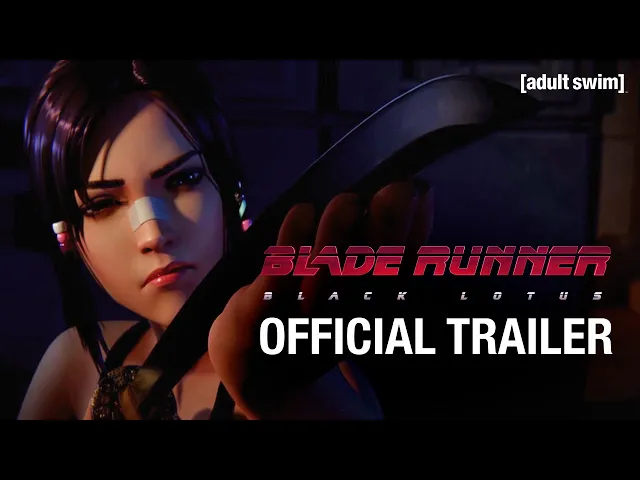
This 13-episode animated series follows Elle, a replicant who awakens with no memory and a set of lotus flower tattoos, each linked to a target. Co-produced by Crunchyroll and Adult Swim, Black Lotus divided fans with its CGI animation style but expanded the lore around the Wallace Corporation's early dominance and the underground replicant resistance movement. It is the only entry to explore the decade-long gap between the Blackout and the events of 2049.
BLADE RUNNER: BLACK LOTUS Trailer. By Adult Swim/Crunchyroll. From @adultswim
Essential or skippable? Optional but useful. 2099 reportedly draws on the replicant resistance networks that Black Lotus established.
Reel Four: 2036 — Nexus Dawn (2017) — Set in 2036
In this short film, Niander Wallace demonstrates a new obedient replicant model to sceptical lawmakers, persuading them to lift the prohibition on replicant manufacturing. The scene establishes Wallace as the franchise's most quietly terrifying industrialist — a man who views sentient beings as product iterations.

In just a few minutes, Nexus Dawn reshaped the franchise's future through the calculated ambition of Niander Wallace. Credit: TMDB
Runtime: 6 minutes. Available on YouTube.
Reel Five: 2048 — Nowhere to Run (2017) — Set in 2048

Bautista delivers a deeply affecting performance that makes Sapper one of the Blade Runner universe's most tragic figures. Credit: TMDB
Dave Bautista's Sapper Morton protects a mother and daughter from street thugs, revealing his replicant strength in the process. The short provides essential context for the opening scene of Blade Runner 2049 and demonstrates why Morton chose hiding over resistance.
Runtime: 5 minutes. Available on YouTube.
Reel Six: Blade Runner 2049 (2017) — Set in 2049
Denis Villeneuve's sequel follows LAPD Officer K, a Nexus-9 replicant blade runner, as he discovers evidence that a replicant has given birth — an event with revolutionary implications. The film expands the franchise's geography beyond Los Angeles to irradiated Las Vegas, introduces Ana Stelline's memory-crafting technology, and resolves a portion of the Deckard question while deepening others.

Blade Runner 2049 transformed a cult classic into a multigenerational saga about memory, identity and freedom. Credit: Warner Bros
At £150 million, 2049 was a commercial disappointment on initial release, earning £259 million globally against a break-even target of approximately £300 million. Critically, it is now regarded as one of the finest sequels in cinema history, with Roger Deakins's cinematography winning the Academy Award.
Runtime: 163 minutes. Watch the theatrical cut — no director's cut exists.
Reel Seven: Blade Runner 2099 (25 November 2026) — Set in 2099
Amazon's eight-episode limited series jumps fifty years forward into a transformed Los Angeles. Following a successful replicant uprising, the societal hierarchy has inverted: replicants serve as power brokers while humans have been reduced to an underclass. Michelle Yeoh plays Olwen, a veteran replicant blade runner in the final days of her lifespan. Hunter Schafer plays Cora, a human fugitive masquerading as a replicant.

Blade Runner 2099 represents the next major chapter in a universe that has spent decades exploring the boundaries between humanity and technology. Credit: TMDB
Creator Silka Luisa has described the series' visual identity as "sunshine noir" — a deliberate rejection of the rain-and-neon palette that defined the franchise for forty years. Ridley Scott executive-produces. The production invested approximately £69 million into the Czech Republic during filming at Prague's Barrandov Studio, with a total budget estimated above £86 million.
All eight episodes drop simultaneously — a significant strategic decision that signals Amazon's confidence in the series as event viewing rather than slow-burn weekly appointment television.
The SciNexic Viewing Order — Quick Reference
Order | Title | Year (In-Universe) | Format | Runtime | Essential? |
|---|---|---|---|---|---|
1 | Blade Runner: The Final Cut | 2019 | Film | 117 min | ✓ |
2 | Black Out 2022 | 2022 | Short | 15 min | ✓ |
3 | Black Lotus | 2032 | Series | 13 eps | Optional |
4 | 2036: Nexus Dawn | 2036 | Short | 6 min | ✓ |
5 | 2048: Nowhere to Run | 2048 | Short | 5 min | ✓ |
6 | Blade Runner 2049 | 2049 | Film | 163 min | ✓ |
7 | Blade Runner 2099 | 2099 | Series | 8 eps | 25 Nov |
One Franchise, Forty-Four Years of Questions
The Blade Runner franchise has never been about answers. It is about the discomfort of not knowing — whether Deckard is human, whether replicants deserve rights, whether memory makes identity. 2099 arrives with the advantage of a premise that inverts every assumption: the replicants won. The question now is whether winning was worth it, and whether the franchise itself can survive being set in a world where its central moral dilemma has been resolved by force rather than philosophy.
Start with The Final Cut. Watch the three shorts. Experience 2049. Then decide whether you are ready for a Los Angeles bathed in sunshine rather than rain.
Keep your scanners locked on Scinexic.com for more recommendations, and the latest in interstellar viewing.
Further reading:
Sixteen days stand between you and the most anticipated space sci-fi premiere of the autumn season. On 25 November, Amazon Prime Video releases all eight episodes of Blade Runner 2099 simultaneously — the first live-action television expansion of a franchise that has shaped the visual grammar of science fiction for over four decades. Michelle Yeoh and Hunter Schafer lead a cast navigating a Los Angeles where replicants rule and humans scrape by as second-class citizens.
Whether you last visited this universe in a rain-soaked 1982 cinema or you are approaching it fresh, the franchise now spans seven distinct entries across 117 years of in-universe history. This guide places every film, short, and series in chronological order, flags which versions to watch, and highlights the narrative threads that 2099 is expected to pick up.
Reel One: Blade Runner (1982) — Set in 2019
Ridley Scott's original remains the foundation of everything that follows. Rick Deckard, a retired blade runner, is coerced into hunting four escaped Nexus-6 replicants led by Roy Batty.
More than forty years later, Deckard's pursuit of rogue replicants remains one of science fiction's most enduring journeys. Credit: Warner Bros
The film introduced the rain-drenched neon aesthetic, Vangelis's synthesiser score, and the question of whether Deckard himself might be a replicant — a thread the franchise has deliberately never resolved.
Which version? Watch The Final Cut (2007). It is Scott's definitive edition, restoring the unicorn dream sequence and removing the studio-mandated narration and happy ending. The theatrical cut, the international cut, and the director's cut are all inferior versions that compromise the ambiguity central to the story.
Reel Two: Blade Runner — Black Out 2022 (2017) — Set in 2022
Directed by Cowboy Bebop creator Shinichirō Watanabe, this 15-minute animated short depicts the electromagnetic pulse attack that destroyed the Tyrell Corporation's replicant registry. The "Great Blackout" is the inciting event for the entire post-2019 timeline: without records, replicants become invisible, the economy collapses, and the Wallace Corporation rises from the wreckage.
Animated in a striking style, Black Out 2022 bridges the gap between eras while revealing one of the franchise's most transformative moments. Credit: TMDB
Runtime: 15 minutes. Available free on YouTube.
Reel Three: Blade Runner — Black Lotus (2021–2022) — Set in 2032
This 13-episode animated series follows Elle, a replicant who awakens with no memory and a set of lotus flower tattoos, each linked to a target. Co-produced by Crunchyroll and Adult Swim, Black Lotus divided fans with its CGI animation style but expanded the lore around the Wallace Corporation's early dominance and the underground replicant resistance movement. It is the only entry to explore the decade-long gap between the Blackout and the events of 2049.
BLADE RUNNER: BLACK LOTUS Trailer. By Adult Swim/Crunchyroll. From @adultswim
Essential or skippable? Optional but useful. 2099 reportedly draws on the replicant resistance networks that Black Lotus established.
Reel Four: 2036 — Nexus Dawn (2017) — Set in 2036
In this short film, Niander Wallace demonstrates a new obedient replicant model to sceptical lawmakers, persuading them to lift the prohibition on replicant manufacturing. The scene establishes Wallace as the franchise's most quietly terrifying industrialist — a man who views sentient beings as product iterations.
In just a few minutes, Nexus Dawn reshaped the franchise's future through the calculated ambition of Niander Wallace. Credit: TMDB
Runtime: 6 minutes. Available on YouTube.
Reel Five: 2048 — Nowhere to Run (2017) — Set in 2048
Bautista delivers a deeply affecting performance that makes Sapper one of the Blade Runner universe's most tragic figures. Credit: TMDB
Dave Bautista's Sapper Morton protects a mother and daughter from street thugs, revealing his replicant strength in the process. The short provides essential context for the opening scene of Blade Runner 2049 and demonstrates why Morton chose hiding over resistance.
Runtime: 5 minutes. Available on YouTube.
Reel Six: Blade Runner 2049 (2017) — Set in 2049
Denis Villeneuve's sequel follows LAPD Officer K, a Nexus-9 replicant blade runner, as he discovers evidence that a replicant has given birth — an event with revolutionary implications. The film expands the franchise's geography beyond Los Angeles to irradiated Las Vegas, introduces Ana Stelline's memory-crafting technology, and resolves a portion of the Deckard question while deepening others.
Blade Runner 2049 transformed a cult classic into a multigenerational saga about memory, identity and freedom. Credit: Warner Bros
At £150 million, 2049 was a commercial disappointment on initial release, earning £259 million globally against a break-even target of approximately £300 million. Critically, it is now regarded as one of the finest sequels in cinema history, with Roger Deakins's cinematography winning the Academy Award.
Runtime: 163 minutes. Watch the theatrical cut — no director's cut exists.
Reel Seven: Blade Runner 2099 (25 November 2026) — Set in 2099
Amazon's eight-episode limited series jumps fifty years forward into a transformed Los Angeles. Following a successful replicant uprising, the societal hierarchy has inverted: replicants serve as power brokers while humans have been reduced to an underclass. Michelle Yeoh plays Olwen, a veteran replicant blade runner in the final days of her lifespan. Hunter Schafer plays Cora, a human fugitive masquerading as a replicant.
Blade Runner 2099 represents the next major chapter in a universe that has spent decades exploring the boundaries between humanity and technology. Credit: TMDB
Creator Silka Luisa has described the series' visual identity as "sunshine noir" — a deliberate rejection of the rain-and-neon palette that defined the franchise for forty years. Ridley Scott executive-produces. The production invested approximately £69 million into the Czech Republic during filming at Prague's Barrandov Studio, with a total budget estimated above £86 million.
All eight episodes drop simultaneously — a significant strategic decision that signals Amazon's confidence in the series as event viewing rather than slow-burn weekly appointment television.
The SciNexic Viewing Order — Quick Reference
Order | Title | Year (In-Universe) | Format | Runtime | Essential? |
|---|---|---|---|---|---|
1 | Blade Runner: The Final Cut | 2019 | Film | 117 min | ✓ |
2 | Black Out 2022 | 2022 | Short | 15 min | ✓ |
3 | Black Lotus | 2032 | Series | 13 eps | Optional |
4 | 2036: Nexus Dawn | 2036 | Short | 6 min | ✓ |
5 | 2048: Nowhere to Run | 2048 | Short | 5 min | ✓ |
6 | Blade Runner 2049 | 2049 | Film | 163 min | ✓ |
7 | Blade Runner 2099 | 2099 | Series | 8 eps | 25 Nov |
One Franchise, Forty-Four Years of Questions
The Blade Runner franchise has never been about answers. It is about the discomfort of not knowing — whether Deckard is human, whether replicants deserve rights, whether memory makes identity. 2099 arrives with the advantage of a premise that inverts every assumption: the replicants won. The question now is whether winning was worth it, and whether the franchise itself can survive being set in a world where its central moral dilemma has been resolved by force rather than philosophy.
Start with The Final Cut. Watch the three shorts. Experience 2049. Then decide whether you are ready for a Los Angeles bathed in sunshine rather than rain.
Keep your scanners locked on Scinexic.com for more recommendations, and the latest in interstellar viewing.
Further reading:
Get the SciNexic Dispatch
Space sci-fi news, reviews, trailers, and release picks—straight to your inbox.
Get the dispatch
Image Gallery
Get the Dispatch
Related Posts
Related Posts


Share on Twitter
Share on Instagram
Banner Image - Blade Runner: Black Lotus screen shot & logos - www.themoviedb.org - Copyright: Adult Swim/Crunchyroll et al
Main Article - All images and media are the property of their respective owners.