



The SciNexic Files
Report
Andy Weir's Exoplanet Is Space Sci-Fi's Most Expensive Audio Bet — Why Audible Is Spending Like a Studio on Anthony Mackie's First Starship
On 5 November 2026, Audible will release a scripted audio drama with the credentials of a major screen production. Exoplanet, executive produced by Andy Weir, written by Benjamin Percy and starring Anthony Mackie, Ariana DeBose and John Leguizamo, represents an ambitious bet on space sci-fi without a screen. With sound design by Lucasfilm’s Skywalker Sound and an original score by Rob Cairns, the production is assembling the ingredients of a blockbuster for an audience wearing headphones.
Weir is not merely lending his name. He has described an active role in developing the story and giving feedback, comparing the collaborative process to his work on the film adaptation of Project Hail Mary. Exoplanet is also the first of multiple originals he says he will produce for Audible. The proposition is not to replace cinema, but to establish another home for ambitious science-fiction storytelling.
The Hail Mary Audio Strategy: Why Weir Chose Sound Over Screens
Project Hail Mary, published in May 2021, became a number-one New York Times bestseller before reaching US cinemas on 20 March 2026, directed by Phil Lord and Christopher Miller and starring Ryan Gosling. That journey took just under five years. Exoplanet takes a different route: Percy’s scripts were written specifically for audio, with Weir executive producing rather than supplying a novel for adaptation.
The attraction is not simply the prospect of avoiding a lengthy adaptation process. Audio changes the creative calculation. A planet spanning several eras need not be realised through sets, locations and visual effects; its scale can emerge from dialogue, performance and sound. The challenge shifts from rendering every detail to giving listeners enough information to build the world themselves.

Writer Benjamin Percy brings a reputation for intense, character-driven storytelling, helping transform Exoplanet from a science-fiction concept into a human drama. Credit: aiptcomics.com/Marvel
Percy has emphasised the production’s three-dimensional sound, describing how listeners can hear movement from one side of a room to another. That suggests a work conceived around the possibilities of listening, rather than a screenplay with its pictures removed.
A Cast of Blockbuster Proportions: Mackie, DeBose and the New Audio A-List
Anthony Mackie headlines as Jeff Shaw, chief engineer of the starship Wild Blue Yonder. When a quantum anomaly tears the ship apart, its surviving crew members crash-land in different eras on the same exoplanet. Ariana DeBose plays first officer Becca Bang, trapped in a hostile alien past. John Leguizamo portrays science officer Logan Bowers, displaced into a machine-ruled future. The supporting cast includes Cherry Jones, Sufe Bradshaw, Charlie Plummer and Aida Osman.

Known for bringing charisma and humanity to high-stakes stories, Mackie provides Exoplanet with a compelling anchor amid its cosmic mysteries. Credit: Wikimedia
This is not the voice cast of a conventional single-narrator audiobook. It is an ensemble with the profile of a prestige television series. The presence of Ray Porter—the narrator of Project Hail Mary—as Shaw’s virtual assistant also gives Weir’s existing audio audience a familiar voice in unfamiliar territory.
The commercial appeal is obvious: recognisable names might persuade listeners to try a format they would otherwise bypass. The creative requirement is harder. Without faces, gestures or reaction shots, the performances must make the characters immediately distinct while carrying the emotional weight of their separation.
Skywalker Sound Enters the Audio Wars: What Lucasfilm's Involvement Signals
One of the most telling details is not in the cast list but in the production credits. Skywalker Sound is providing sound design for Exoplanet, which Audible advertises in immersive Dolby Atmos. Sound is not merely accompanying the action here; it must establish where the action is happening, how the environment behaves and what threatens the people inside it.
Lucasfilm’s history with audio drama stretches back decades. Its sound team worked on the audio prelude to the adventure game Loom, creating a story that listeners encountered before entering the game itself. Exoplanet brings that tradition of sonic world-building to a new, star-led production.
The significance is creative rather than simply financial. A sophisticated soundscape could make the differences between past, present and future immediately perceptible without requiring characters to explain their surroundings. The strongest version of this production would make the listener understand a change of world before anyone names it.
Quantum Anomalies and Temporal Fractures: Does the Story Justify the Spend?
The premise—crew members separated across centuries on the same planet, attempting to communicate across time to survive—offers a natural meeting point between scientific problem-solving and a ticking-clock thriller. A hostile alien intelligence feeding on human technology adds another complication: the crew is not simply stranded in an indifferent environment, but threatened by something operating across its fractured timelines.
That combination creates an intriguing dramatic possibility. A decision made in one era could become a lifeline—or a catastrophe—in another. Communication can function simultaneously as a technical puzzle, a source of suspense and the emotional connection between isolated characters.
Whether that complexity works in audio remains the central question. Listeners need to understand enough of the temporal mechanics to appreciate the solutions without feeling as though they are attending a lecture. The production must make its worlds vivid, but vividness alone will not be enough. The stakes depend on the people trying to reach one another.
The Business of Listening: Can Audible Monetise Blockbuster Audio?
Exoplanet’s UK listing advertises Audible Premium Plus at £8.99 per month after the free trial, alongside a standalone pre-order price of £16.07. That places the production within both a subscription proposition and a direct-purchase market.
The business question is therefore broader than how many copies one title can sell. An exclusive production could attract new members, encourage existing subscribers to stay or persuade occasional audiobook buyers to try a full-cast drama. Its commercial value might lie as much in strengthening the service as in generating individual purchases.
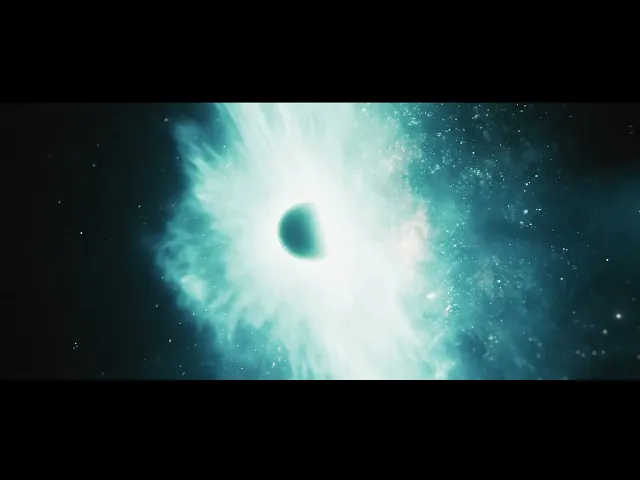
Exoplanet Trailer. By Audible/Amazon. From @audible
For genre fiction, there is already a foundation to build on. The Magnus Archives has developed its horror storytelling across multiple seasons and into a continuation, demonstrating the scope for sustained fictional worlds in audio. Exoplanet’s opportunity is to bring its particular combination of space adventure, recognisable performers and immersive production to that wider listening culture.
The challenge is to turn curiosity into commitment. A famous cast can secure an initial listen. Only the story can make the audience return.
The Verdict: Space Sci-Fi's Next Frontier May Not Have Pictures
If Exoplanet succeeds, it could strengthen the case for developing major science-fiction projects directly for audio rather than treating the format as a staging post on the way to a screen. The opportunity is not merely to produce a less expensive imitation of cinema, but to make something whose intimacy and scale depend on being heard.
For independent creators, the potential benefit is greater attention to what the medium can do. A high-profile success could encourage investment and experimentation, although a star-led production would offer no automatic blueprint for smaller teams. The most useful lesson might be creative rather than financial: build the story around the strengths of the format.
The risk is that Exoplanet’s production credentials prove more compelling than the finished drama. But its most interesting ambition is also its simplest. It asks whether a voice reaching across centuries can feel as urgent as anything projected onto a cinema screen. Space sci-fi’s next frontier may not require a bigger picture—just a reason to keep listening.
Stay tuned to Scinexic.com for all the latest space sci-fi news, and exclusive insights from the final frontier.
Further reading:
Get the SciNexic Dispatch
Space sci-fi news, reviews, trailers, and release picks—straight to your inbox.
Get the dispatch


Banner Image - Exoplanent Audible cover - www.amazon.com - Copyright: Audible/Amazon
Main Article - All images and media are the property of their respective owners.