


The SciNexic Files
Report
Worf's Next Mission Is Behind the Camera: Michael Dorn's Life 2.0 Reunites Four Star Trek Veterans for a Kubrickian Space Sci-Fi Thriller
This week, four actors whose combined screen time aboard Starfleet vessels spans more than three decades announced they have completed an entirely different kind of space sci-fi mission — and not a single phaser was involved.
From the Bridge to Behind the Lens

For generations of science-fiction fans, Michael Dorn embodied honour, discipline and resilience as Worf. Life 2.0 offers an opportunity to see his creative vision expressed in an entirely different way. Credit: Wikimedia
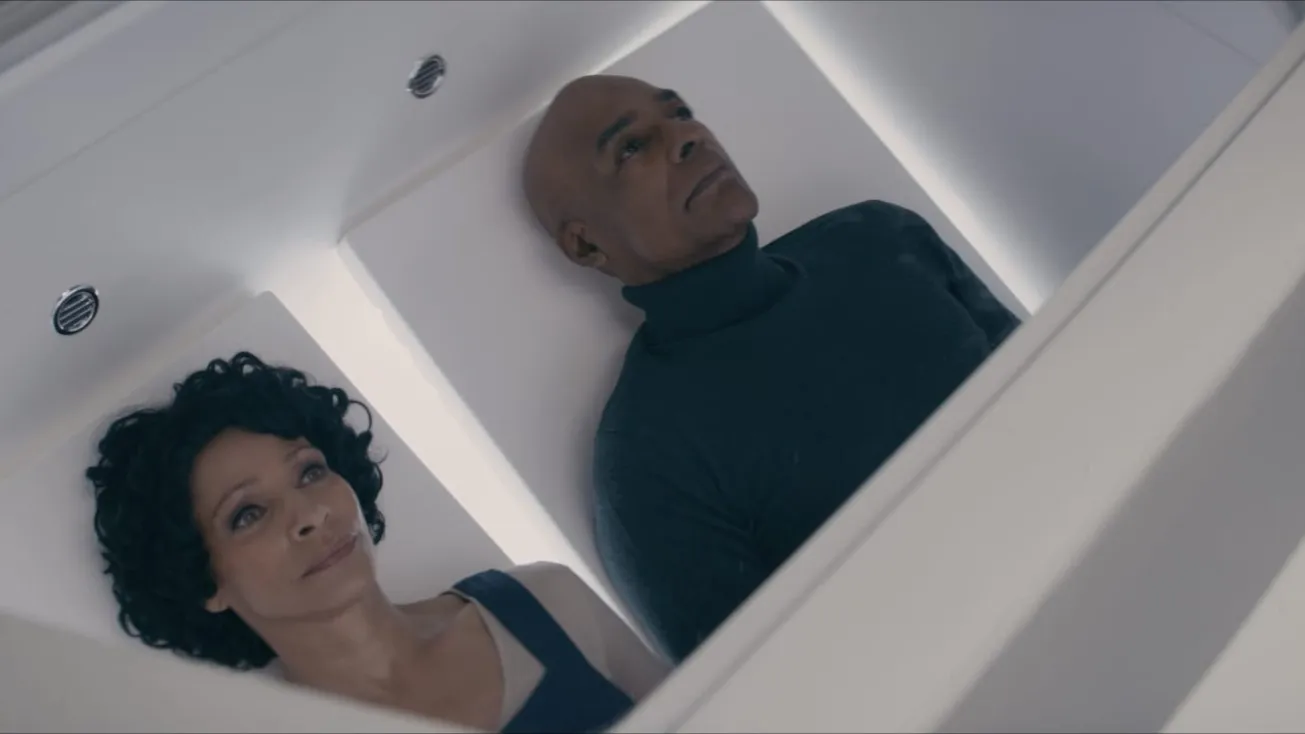
Michael Dorn, the man who spent fifteen years beneath Worf's prosthetic forehead across Star Trek: The Next Generation, Deep Space Nine, and Picard, has written, directed, and produced a feature film called Life 2.0. The project, which was shot entirely in the United Kingdom and runs 88 minutes, reunites Dorn with Next Generation co-star Marina Sirtis, Picard alumna Michelle Hurd, and Enterprise veteran Dominic Keating. OneTwoThree Media is launching worldwide sales ahead of the American Film Market (AFM) in November 2026, positioning it as a prestige acquisition rather than a franchise spin-off.
That distinction carries weight. This is not Star Trek by another name. Industry figures who have screened the film describe it as "Kubrickian" — a word nobody has ever attached to a Star Trek episode, and one that signals an ambition closer to 2001: A Space Odyssey than to Insurrection.
Isolation, AI, and Motives from Earth
The premise places Dorn's character as an operative living in deep-space isolation, accompanied only by an AI hologram. When an enigmatic companion arrives and an accident forces a fight for survival, the narrative pivots toward hidden truths about Earth-based motives — a claustrophobic thriller framework that trades the Enterprise's corridors for something closer to Moon or Ex Machina.
For Dorn and Sirtis, this marks their first shared screen appearance in a space sci-fi feature since Star Trek: Nemesis in 2002 — a gap of twenty-four years. The addition of Hurd, whose work on Picard earned critical respect for bringing genuine emotional weight to the franchise's final chapter, and Keating, whose tenure on Enterprise made him one of the era's most underrated Trek performers, suggests a cast assembled for dramatic credibility rather than nostalgia value.
The £600 Million Question: Why the UK, Why Now?
OneTwoThree Media's marketing materials highlight that the combined filmography of the four leads represents over £600 million in global box office and streaming value. That figure is not a budget indicator — no publicly disclosed production budget exists — but it is a clear signal to international buyers that Life 2.0 arrives with built-in audience recognition across multiple markets.

Life 2.0 benefits from a cast whose collective history in science fiction spans some of television's most influential space-faring adventures. Credit: OneTwoThree Media
The decision to film in the United Kingdom aligns with a broader trend in space sci-fi production. UK studio capacity has expanded dramatically since 2020, with facilities in Buckinghamshire, Hertfordshire, and South Wales housing productions from Alien: Earth to Blade Runner 2099. For an independent sci-fi film without studio backing, the UK's tax incentives — currently offering a 25.5% audio-visual expenditure credit — and experienced VFX talent pool make it an increasingly attractive proposition.
Emily Corcoran produces through Cork Films alongside Dorn's Sabrejet banner, a lean two-company structure that suggests tight budgetary discipline. Independent space sci-fi has historically struggled to find the sweet spot between narrative ambition and production value, but the UK filming model offers a route that Hollywood's escalating costs have made prohibitive.
What This Means for Star Trek's Legacy Beyond Paramount
The most significant aspect of Life 2.0 may not be the film itself but what it represents for the post-Paramount Star Trek generation. With Paramount Global's ongoing restructuring casting uncertainty over the franchise's small-screen future, Trek's most recognisable faces are beginning to build creative identities beyond the franchise that defined them.
Dorn's pivot to directing is not merely an actor seeking new work — it is a deliberate creative statement. By writing, directing, and starring in an original space sci-fi property, he is testing whether the audience that followed him from the Enterprise to Deep Space Nine to the Titan will follow him to an entirely original vessel. The "Kubrickian" descriptor, whether earned or aspirational, positions Life 2.0 as intellectual sci-fi for grown-ups — a market segment that Arrival, Annihilation, and Ad Astra have demonstrated can sustain premium pricing without blockbuster scale.
Starfleet's Most Accomplished Reunion Has No Franchise Attached
The AFM launch in November will reveal whether Life 2.0 secures distribution before its cast's combined brand equity fades from the current news cycle. What is already clear is that four actors who helped define space sci-fi television for a generation have chosen to reunite not for a nostalgia project, but for an original story that asks whether the genre's future lies in spectacle or in silence — in the corridors of a starship or in the vast, unforgiving quiet of deep-space isolation.
For a man who spent decades playing a warrior, the most courageous thing Dorn has done may be picking up a pen.
Stay tuned to Scinexic.com for all the latest space sci-fi news, and exclusive insights from the final frontier.
Further Reading:
Get the SciNexic Dispatch
Space sci-fi news, reviews, trailers, and release picks—straight to your inbox.
Get the dispatch
Banner Image - Life 2.0 screenshot - https://onetwothree.media/title/life-2-0/ - Copyright: 2026 OneTwoThree Media
Main Article - All images and media, curtesy of Meta4 Interactive, copyright belongs to respective owners..