


The SciNexic Files
The SciNexic Files
The SciNexic Files
Sci-Fi Guides

Space Sci‑Fi Toys & Collectibles Worth Owning
Build a Collection You Enjoy—not Just a Shelf You Fill
A starship on the bookcase. A familiar droid beside the monitor. A small, suspiciously well-armed robot that arrived as a box of plastic parts.
The pleasure of a sci-fi collectible is not necessarily its rarity, price or size. It is the connection it creates: to a character, an imagined future or the memory of discovering a fictional universe for the first time.
Our test for whether something belongs in a collection is simple:
Will you enjoy building, handling or looking at it once the excitement of buying it has passed?
That question shapes this researched shortlist. We have prioritised recognisable designs, things to do beyond opening the box, manageable ownership costs and clear reasons to choose one item over another.
These are research-based recommendations, not claims of hands-on testing. Prices below are listed UK prices checked during research, excluding delivery; promotions and availability can change.
The Shortlist: Choose the Experience First
What you want | Our pick | Listed UK price |
|---|---|---|
A low-cost introduction to model building | Bandai Entry Grade 1/144 RX-78-2 Gundam | £10, Hobbycraft. (hobbycraft.co.uk) |
A character figure without a major commitment | Star Wars: The Black Series Darth Vader — Duel’s End | £24.99, Hasbro Pulse. (hasbropulse.com) |
A prop-style collectible with interactive features | The Fifteenth Doctor’s Sonic Screwdriver — Two Tone Chromed Edition | £29.99 promotional price, Character Online. (character-online.com) |
A creature for a sci-fi horror display | NECA Alien: Romulus Ultimate Scorched Xenomorph | £55, Menkind listing. (menkind.co.uk) |
A buildable Star Wars display without a huge footprint | LEGO R2-D2, set 75379 | £89.99, LEGO. (lego.com) |
One substantial Star Trek centrepiece | LEGO U.S.S. Enterprise NCC-1701-D, set 10356 | £349.99, LEGO. (lego.com) |
There is no overall winner here. A model kit, articulated figure and electronic prop offer different kinds of enjoyment.
1. Bandai Entry Grade RX-78-2 Gundam: Start Small, Build Something
Best for: trying model building without an expensive first purchase.
For a first experiment in sci-fi modelling, our preference is to start with a modest kit rather than an intimidating centrepiece.
Bandai’s Entry Grade RX-78-2 Gundam is a 1/144-scale model of the familiar mobile suit. Bandai’s model-kit guidance describes glue-free assembly, while Hobbycraft lists this version at £10 and available for home delivery at the research check.
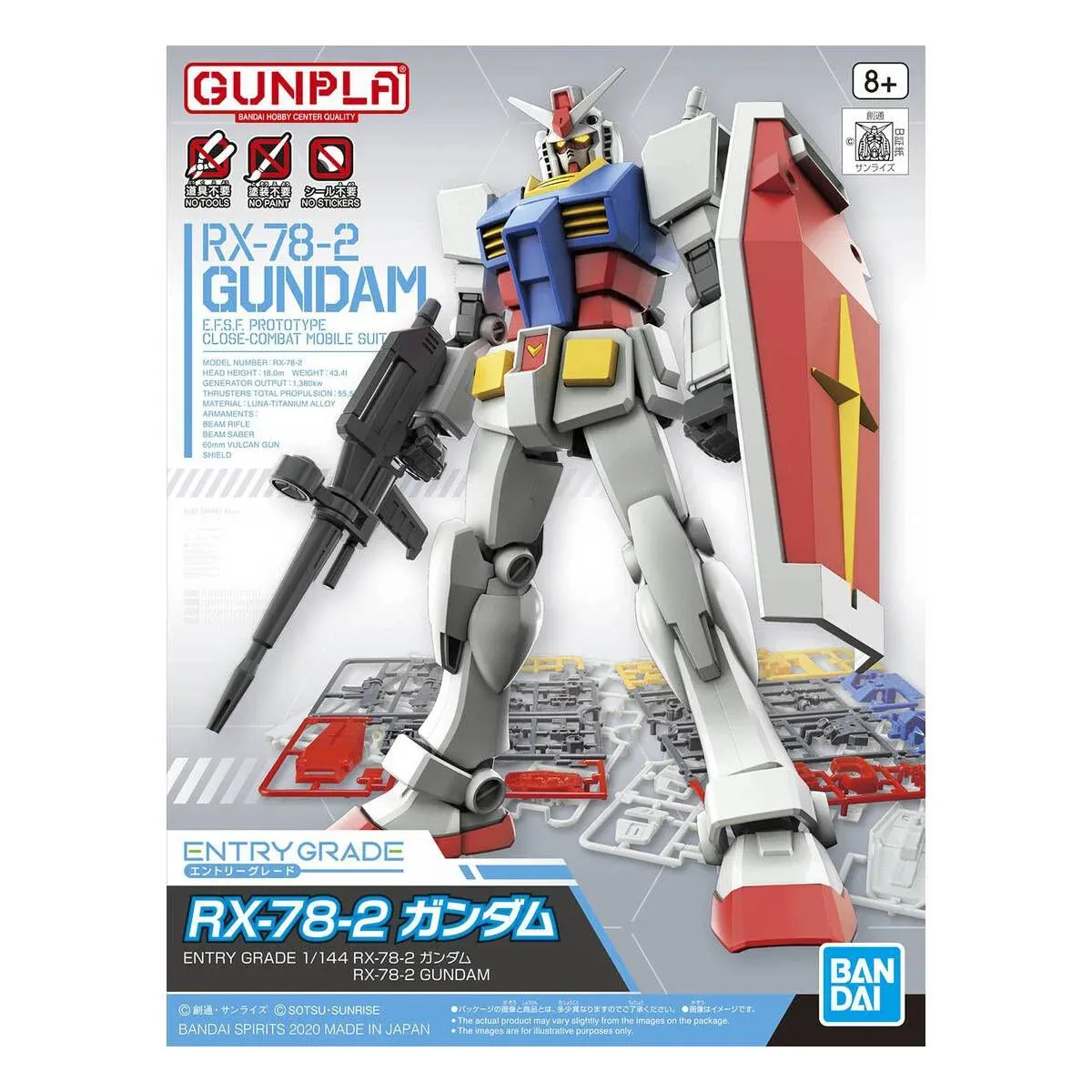
An essential piece for any Gundam collection, combining timeless design with approachable model building. Credit: Hobbycraft
The attraction is participation. Instead of choosing where a finished figure should stand, you first turn its components into something recognisable. For the right buyer, that process is as important as the object left on the shelf.
The catch: this is an assembly kit, not a ready-made action figure. Check the exact version before ordering: the standard model and the separately listed Full Weapon Set are different products.
Who should skip it: anyone who finds small-part assembly frustrating or wants something ready to display immediately.
SciNexic Verdict: our starting point for the curious builder. Finish one inexpensive kit before deciding whether you want a larger project, extra equipment or another box.
2. The Black Series Darth Vader — Duel’s End: One Character, not an Entire Wave
Best for: a compact Star Wars character display.
You do not need a complete cast to make a collection feel personal.
Hasbro’s Darth Vader — Duel’s End figure is based on Obi-Wan Kenobi, comes in the Black Series’ 15cm figure scale and includes an accessory. Hasbro identifies it as a Lucasfilm-licensed product; its UK listing showed £24.99 and in-stock status when checked.

Few villains carry as much history as Vader, and few figures capture it this convincingly. Credit: Hasbropulse.com
We would choose this approach over buying several figures simply because they share a release wave. Start with the character—and the particular version of that character—that you actually want to see every day.
The catch: this is a scene-specific Vader, not a neutral choice for every Star Wars display. Examine the product photographs carefully before deciding whether this interpretation matches your collection.
Who should skip it: collectors who want a different Vader appearance, a larger display piece or a model-building experience.
SciNexic Verdict: a sensible first character purchase if this version means something to you. Leave the rest of the shelf empty until another figure earns its place.
3. The Fifteenth Doctor’s Sonic Screwdriver: A Collectible you Can Activate
Best for: Doctor Who fans who want interaction as well as display appeal.
Some fictional objects invite you to pick them up.
Character Options’ Two Tone Chromed Edition of the Fifteenth Doctor’s sonic screwdriver offers open and closed modes, light-and-sound effects, a swivel-out power core, a retractable emitter and a slide-out analyser. Character Online listed it at a promotional £29.99, reduced from £39.99, when checked.
 | 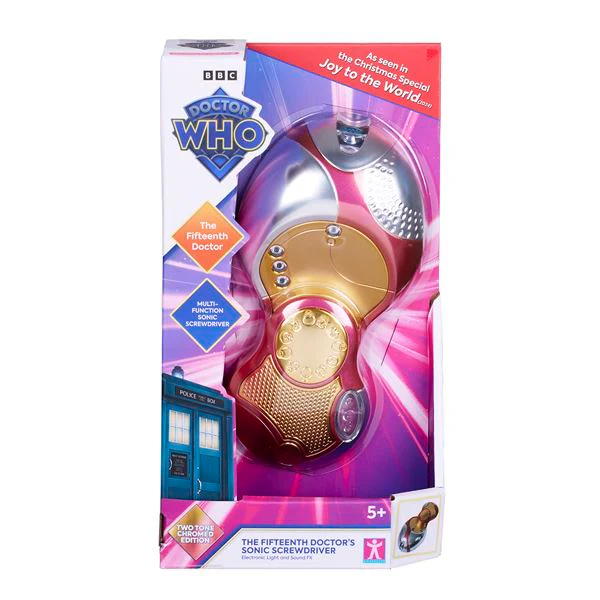 |
Part prop replica, part display piece, this Sonic Screwdriver captures the wonder at the heart of Doctor Who. Credit: Character
Those functions give it a different purpose from a static ornament. Our reason for including it is the opportunity to handle and operate a recognisable piece of fictional technology.
The catch: buy it for the advertised toy features, not an assumption of production-prop materials or construction. “Chromed Edition” is a product description, not evidence that you are purchasing a metal screen-used replica.
Who should skip it: anyone seeking a different Doctor’s design, an exclusively static display piece or a replica with documented filming provenance.
SciNexic Verdict: worth considering if activating the lights and sounds is part of the appeal. Check battery requirements and what is supplied before gifting it.
4. NECA Ultimate Scorched Xenomorph: Make Room for Something Unpleasant
Best for: a deliberately curated sci-fi horror display.
Not every collection needs to look welcoming.
NECA’s Alien: Romulus Scorched Xenomorph stands over nine inches tall and has 23 points of articulation. Its features include an opening jaw, extending inner mouth and wired tail; accessories include interchangeable parts, smaller creatures and a display stand.

Part movie prop, part nightmare fuel — a centrepiece worthy of any sci‑fi horror collection. Credit: NECA
That makes it an interesting choice for someone who enjoys arranging a creature rather than simply placing a fixed statue on a shelf. The stand is included, so a separate support is not automatically required.
The catch: “7-inch scale” does not mean the creature itself is seven inches tall. Allow room for its actual height, tail and intended pose. Availability also needs care: Menkind lists it at £55, while NECA’s own purchase control showed sold out despite other in-stock wording on the page.

All teeth, claws, and silent intent — a collector's piece that captures the pure terror of the Xenomorph. Credit: NECA
Who should skip it: buyers seeking an uncomplicated children’s gift or a compact ornament for a crowded desk.
SciNexic Verdict: a conditional recommendation for horror collectors. Confirm stock with the seller and resist inflated prices simply because one shop has sold out.
5. LEGO R2-D2 75379: A Droid with a Manageable Footprint
Best for: combining a building project with a recognisable display.
Our Star Wars building pick is not the largest ship or most expensive collector set. It is a droid that leaves room for the books.
LEGO’s R2-D2 75379 contains 1,050 pieces and measures over 24cm high, 16cm wide and 11cm deep. Features include a rotating head, attachable third leg, periscope and tools. The set also includes a standard-sized R2-D2 figure and a Darth Malak anniversary minifigure.
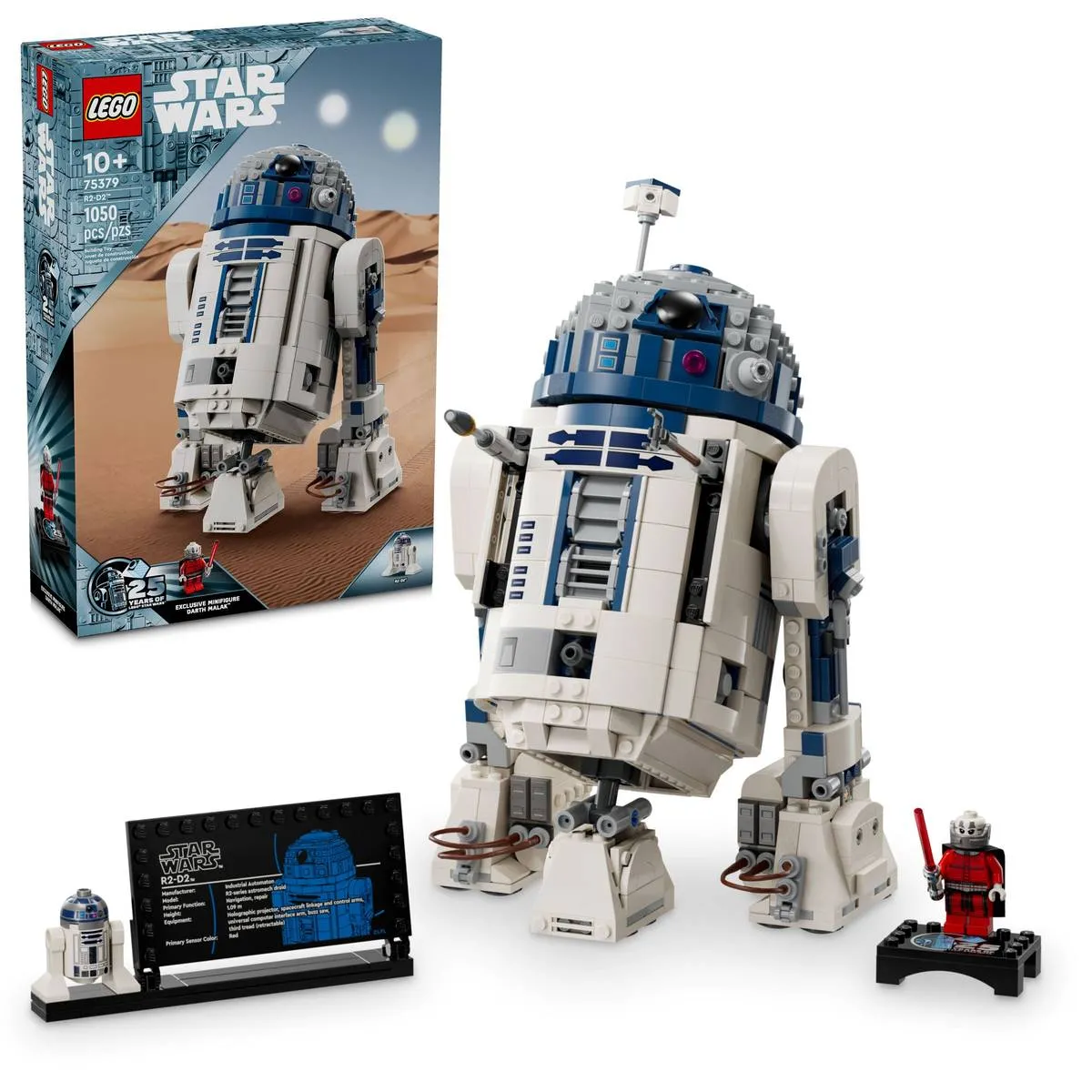
Small in stature but massive in recognisability, R2‑D2 brings instant Star Wars charm to any collection. Credit: Lego.com
Those dimensions are the strongest practical argument for it: you get a substantial construction project without needing the space required by a large starship.
The catch: this is a brick-built interpretation, not a smooth-shell replica. Choose it because you like LEGO’s visual language and the act of building—not merely because an additional minifigure is included.
LEGO rates the set for ages 10 and over, which is worth checking when buying for a younger fan.
Who should skip it: anyone wanting a finished object straight from the box or a screen-replica appearance.
SciNexic Verdict: our balanced build-and-display choice for a Star Wars fan with limited shelf space.
6. LEGO Enterprise-D 10356: The Centrepiece that Needs a Plan
Best for: a committed Next Generation fan who wants one major project.
The Enterprise-D belongs in this guide as a deliberate splurge—not a default recommendation.
LEGO’s 3,600-piece model includes a detachable command saucer, opening shuttlebay, two small shuttlepods, an angled stand and nine The Next Generation minifigures. Its listed UK price is £349.99.
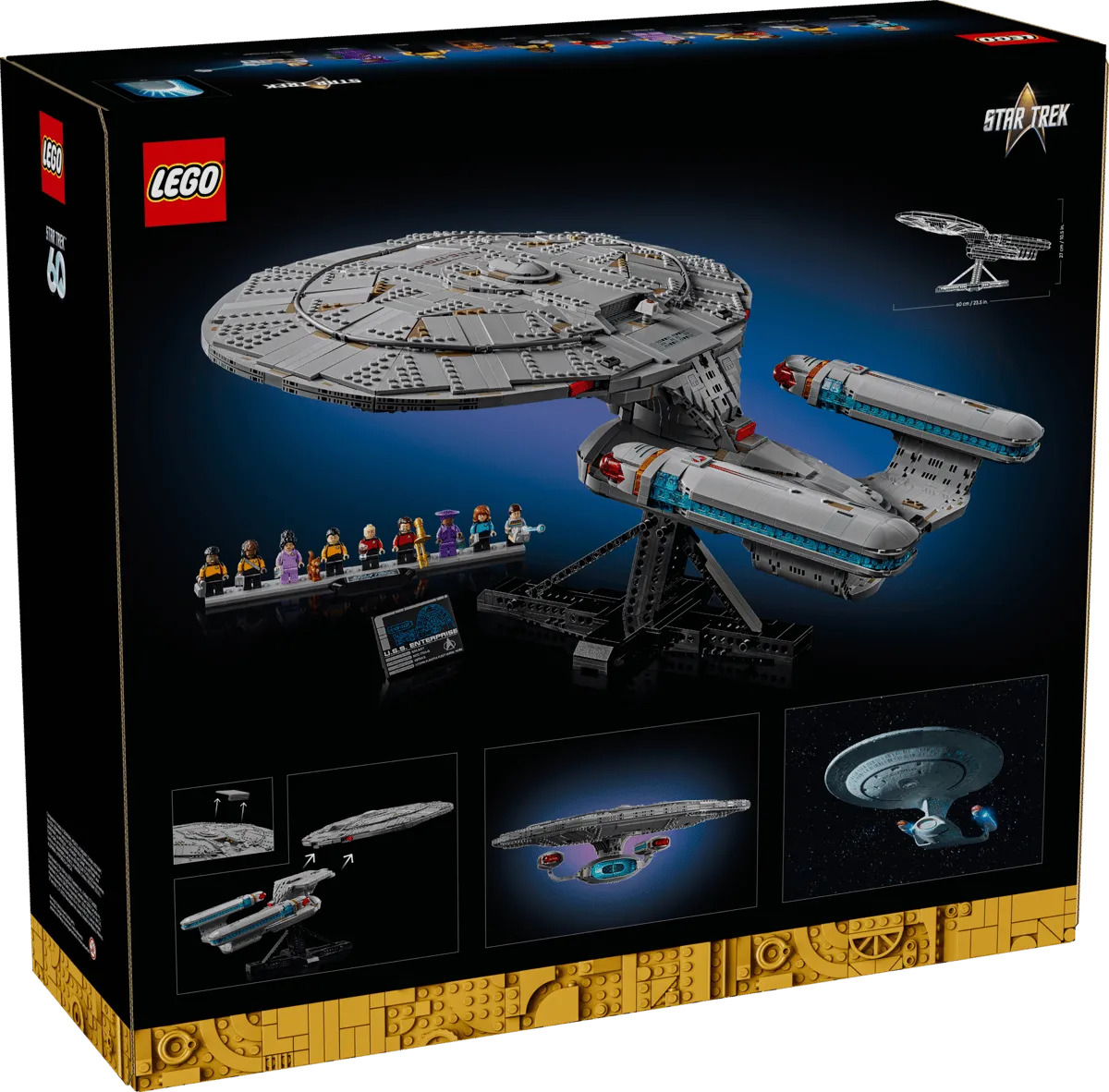
Few starships have inspired as much wonder as the Enterprise‑D, making this LEGO recreation an instant collectible. Credit: Lego.com
The appeal is clear: a substantial build followed by a display centred on a particular ship and crew. If those are the reasons you want it, there is a stronger case than simply wanting “the big Star Trek set”.
The catch: including its stand, the model measures over 27cm high, 60cm long and 48cm wide. Measure the intended display location before buying. The width matters just as much as the headline length.
Who should skip it: anyone without a permanent display position, anyone stretching their budget, or anyone hoping for a quick introductory build.
SciNexic Verdict: a worthwhile centrepiece for the right owner. Mark out its footprint with paper first. If it does not fit your home, enthusiasm will not make the shelf deeper.
Before Buying: Five Questions that Prevent Disappointing Purchases
1. Do you want to build, pose, operate or simply display it?
Choose the activity before choosing the franchise.
Build: start with a kit whose scale and instructions appeal to you.
Pose: inspect the articulation, accessories and support included.
Operate: check the controls, battery requirements and replacement-battery access.
Display: measure the finished object, not the packaging.
A gift can match someone’s favourite fictional universe and still ask them to do something they do not enjoy.
2. Is the exact version right?
Write down the product name, manufacturer and model number before comparing prices.
The shortlist illustrates why: “R2-D2” is less precise than LEGO 75379, while Bandai separately identifies standard and Full Weapon versions of its Entry Grade RX-78-2.
For second-hand purchases, request photographs of the actual item and confirm which accessories are present. Do not make assumptions from a stock image.
3. What does ownership cost beyond the box?
Set a total budget that includes anything you intend to add:
Delivery.
A display stand or case, if needed.
Batteries for electronic items.
Tools or finishing materials you choose to use.
Storage for spare parts and packaging.
Our recommendation is to begin with the basic purchase. Let experience tell you whether the extras are worth buying.
4. Is it meant for this recipient?
Check the manufacturer’s age guidance, small-parts warnings and instructions. LEGO’s R2-D2, for example, is a 10+ product; the Enterprise-D is positioned as an adult building set.
Do not treat “collectible” as a substitute for that information. For a gift, also ask whether the recipient wants assembly, sound effects or another object to accommodate.
5. Would you still want it without the exclusivity claim?
Try this test:
If this were readily available, came in an ordinary box and had no resale story attached, would I still want it?
If the answer is yes, you have identified a reason to own it.
This guide makes no investment case for any item. Our recommendations concern enjoyment, not future selling prices. Set your maximum spend before browsing, and let an unavailable product remain unavailable if the alternative is paying more than it is worth to you.
What About Premium Lightsabers?
They deserve a separate buying decision rather than a token entry here. SciNexic already has a dedicated Best Realistic Star Wars Lightsabers guide, which is the more relevant starting point for readers pursuing that category.
Before following any recommendation, define your purpose: display, costume use or another manufacturer-supported activity. Verify the individual product’s construction, instructions and intended use rather than assuming that every illuminated replica serves the same role.
SciNexic Tip: Collect The Things You Want to Live With
For a modest first purchase, we would start with the Entry Grade Gundam if building appeals, or Darth Vader if you want a finished character figure.
The sonic screwdriver is the interactive option. The Scorched Xenomorph suits a horror display, subject to confirmed availability. R2-D2 is our balanced construction-and-display choice, while the Enterprise-D is the planned centrepiece for someone with the budget and space.
None requires you to complete a range.
A good collection can be one ship, one creature or one robot you enjoyed assembling. It does not need to impress another collector, fill every shelf or remain permanently sealed.
Buy the piece you want to live with—not the purchase you feel pressured to make.
SciNexic.com may earn a commission through affiliate links, ensuring continued cosmic content.
Research checked: 12 October 2026
Build a Collection You Enjoy—not Just a Shelf You Fill
A starship on the bookcase. A familiar droid beside the monitor. A small, suspiciously well-armed robot that arrived as a box of plastic parts.
The pleasure of a sci-fi collectible is not necessarily its rarity, price or size. It is the connection it creates: to a character, an imagined future or the memory of discovering a fictional universe for the first time.
Our test for whether something belongs in a collection is simple:
Will you enjoy building, handling or looking at it once the excitement of buying it has passed?
That question shapes this researched shortlist. We have prioritised recognisable designs, things to do beyond opening the box, manageable ownership costs and clear reasons to choose one item over another.
These are research-based recommendations, not claims of hands-on testing. Prices below are listed UK prices checked during research, excluding delivery; promotions and availability can change.
The Shortlist: Choose the Experience First
What you want | Our pick | Listed UK price |
|---|---|---|
A low-cost introduction to model building | Bandai Entry Grade 1/144 RX-78-2 Gundam | £10, Hobbycraft. (hobbycraft.co.uk) |
A character figure without a major commitment | Star Wars: The Black Series Darth Vader — Duel’s End | £24.99, Hasbro Pulse. (hasbropulse.com) |
A prop-style collectible with interactive features | The Fifteenth Doctor’s Sonic Screwdriver — Two Tone Chromed Edition | £29.99 promotional price, Character Online. (character-online.com) |
A creature for a sci-fi horror display | NECA Alien: Romulus Ultimate Scorched Xenomorph | £55, Menkind listing. (menkind.co.uk) |
A buildable Star Wars display without a huge footprint | LEGO R2-D2, set 75379 | £89.99, LEGO. (lego.com) |
One substantial Star Trek centrepiece | LEGO U.S.S. Enterprise NCC-1701-D, set 10356 | £349.99, LEGO. (lego.com) |
There is no overall winner here. A model kit, articulated figure and electronic prop offer different kinds of enjoyment.
1. Bandai Entry Grade RX-78-2 Gundam: Start Small, Build Something
Best for: trying model building without an expensive first purchase.
For a first experiment in sci-fi modelling, our preference is to start with a modest kit rather than an intimidating centrepiece.
Bandai’s Entry Grade RX-78-2 Gundam is a 1/144-scale model of the familiar mobile suit. Bandai’s model-kit guidance describes glue-free assembly, while Hobbycraft lists this version at £10 and available for home delivery at the research check.
An essential piece for any Gundam collection, combining timeless design with approachable model building. Credit: Hobbycraft
The attraction is participation. Instead of choosing where a finished figure should stand, you first turn its components into something recognisable. For the right buyer, that process is as important as the object left on the shelf.
The catch: this is an assembly kit, not a ready-made action figure. Check the exact version before ordering: the standard model and the separately listed Full Weapon Set are different products.
Who should skip it: anyone who finds small-part assembly frustrating or wants something ready to display immediately.
SciNexic Verdict: our starting point for the curious builder. Finish one inexpensive kit before deciding whether you want a larger project, extra equipment or another box.
2. The Black Series Darth Vader — Duel’s End: One Character, not an Entire Wave
Best for: a compact Star Wars character display.
You do not need a complete cast to make a collection feel personal.
Hasbro’s Darth Vader — Duel’s End figure is based on Obi-Wan Kenobi, comes in the Black Series’ 15cm figure scale and includes an accessory. Hasbro identifies it as a Lucasfilm-licensed product; its UK listing showed £24.99 and in-stock status when checked.
Few villains carry as much history as Vader, and few figures capture it this convincingly. Credit: Hasbropulse.com
We would choose this approach over buying several figures simply because they share a release wave. Start with the character—and the particular version of that character—that you actually want to see every day.
The catch: this is a scene-specific Vader, not a neutral choice for every Star Wars display. Examine the product photographs carefully before deciding whether this interpretation matches your collection.
Who should skip it: collectors who want a different Vader appearance, a larger display piece or a model-building experience.
SciNexic Verdict: a sensible first character purchase if this version means something to you. Leave the rest of the shelf empty until another figure earns its place.
3. The Fifteenth Doctor’s Sonic Screwdriver: A Collectible you Can Activate
Best for: Doctor Who fans who want interaction as well as display appeal.
Some fictional objects invite you to pick them up.
Character Options’ Two Tone Chromed Edition of the Fifteenth Doctor’s sonic screwdriver offers open and closed modes, light-and-sound effects, a swivel-out power core, a retractable emitter and a slide-out analyser. Character Online listed it at a promotional £29.99, reduced from £39.99, when checked.
| |
Part prop replica, part display piece, this Sonic Screwdriver captures the wonder at the heart of Doctor Who. Credit: Character
Those functions give it a different purpose from a static ornament. Our reason for including it is the opportunity to handle and operate a recognisable piece of fictional technology.
The catch: buy it for the advertised toy features, not an assumption of production-prop materials or construction. “Chromed Edition” is a product description, not evidence that you are purchasing a metal screen-used replica.
Who should skip it: anyone seeking a different Doctor’s design, an exclusively static display piece or a replica with documented filming provenance.
SciNexic Verdict: worth considering if activating the lights and sounds is part of the appeal. Check battery requirements and what is supplied before gifting it.
4. NECA Ultimate Scorched Xenomorph: Make Room for Something Unpleasant
Best for: a deliberately curated sci-fi horror display.
Not every collection needs to look welcoming.
NECA’s Alien: Romulus Scorched Xenomorph stands over nine inches tall and has 23 points of articulation. Its features include an opening jaw, extending inner mouth and wired tail; accessories include interchangeable parts, smaller creatures and a display stand.
Part movie prop, part nightmare fuel — a centrepiece worthy of any sci‑fi horror collection. Credit: NECA
That makes it an interesting choice for someone who enjoys arranging a creature rather than simply placing a fixed statue on a shelf. The stand is included, so a separate support is not automatically required.
The catch: “7-inch scale” does not mean the creature itself is seven inches tall. Allow room for its actual height, tail and intended pose. Availability also needs care: Menkind lists it at £55, while NECA’s own purchase control showed sold out despite other in-stock wording on the page.
All teeth, claws, and silent intent — a collector's piece that captures the pure terror of the Xenomorph. Credit: NECA
Who should skip it: buyers seeking an uncomplicated children’s gift or a compact ornament for a crowded desk.
SciNexic Verdict: a conditional recommendation for horror collectors. Confirm stock with the seller and resist inflated prices simply because one shop has sold out.
5. LEGO R2-D2 75379: A Droid with a Manageable Footprint
Best for: combining a building project with a recognisable display.
Our Star Wars building pick is not the largest ship or most expensive collector set. It is a droid that leaves room for the books.
LEGO’s R2-D2 75379 contains 1,050 pieces and measures over 24cm high, 16cm wide and 11cm deep. Features include a rotating head, attachable third leg, periscope and tools. The set also includes a standard-sized R2-D2 figure and a Darth Malak anniversary minifigure.
Small in stature but massive in recognisability, R2‑D2 brings instant Star Wars charm to any collection. Credit: Lego.com
Those dimensions are the strongest practical argument for it: you get a substantial construction project without needing the space required by a large starship.
The catch: this is a brick-built interpretation, not a smooth-shell replica. Choose it because you like LEGO’s visual language and the act of building—not merely because an additional minifigure is included.
LEGO rates the set for ages 10 and over, which is worth checking when buying for a younger fan.
Who should skip it: anyone wanting a finished object straight from the box or a screen-replica appearance.
SciNexic Verdict: our balanced build-and-display choice for a Star Wars fan with limited shelf space.
6. LEGO Enterprise-D 10356: The Centrepiece that Needs a Plan
Best for: a committed Next Generation fan who wants one major project.
The Enterprise-D belongs in this guide as a deliberate splurge—not a default recommendation.
LEGO’s 3,600-piece model includes a detachable command saucer, opening shuttlebay, two small shuttlepods, an angled stand and nine The Next Generation minifigures. Its listed UK price is £349.99.
Few starships have inspired as much wonder as the Enterprise‑D, making this LEGO recreation an instant collectible. Credit: Lego.com
The appeal is clear: a substantial build followed by a display centred on a particular ship and crew. If those are the reasons you want it, there is a stronger case than simply wanting “the big Star Trek set”.
The catch: including its stand, the model measures over 27cm high, 60cm long and 48cm wide. Measure the intended display location before buying. The width matters just as much as the headline length.
Who should skip it: anyone without a permanent display position, anyone stretching their budget, or anyone hoping for a quick introductory build.
SciNexic Verdict: a worthwhile centrepiece for the right owner. Mark out its footprint with paper first. If it does not fit your home, enthusiasm will not make the shelf deeper.
Before Buying: Five Questions that Prevent Disappointing Purchases
1. Do you want to build, pose, operate or simply display it?
Choose the activity before choosing the franchise.
Build: start with a kit whose scale and instructions appeal to you.
Pose: inspect the articulation, accessories and support included.
Operate: check the controls, battery requirements and replacement-battery access.
Display: measure the finished object, not the packaging.
A gift can match someone’s favourite fictional universe and still ask them to do something they do not enjoy.
2. Is the exact version right?
Write down the product name, manufacturer and model number before comparing prices.
The shortlist illustrates why: “R2-D2” is less precise than LEGO 75379, while Bandai separately identifies standard and Full Weapon versions of its Entry Grade RX-78-2.
For second-hand purchases, request photographs of the actual item and confirm which accessories are present. Do not make assumptions from a stock image.
3. What does ownership cost beyond the box?
Set a total budget that includes anything you intend to add:
Delivery.
A display stand or case, if needed.
Batteries for electronic items.
Tools or finishing materials you choose to use.
Storage for spare parts and packaging.
Our recommendation is to begin with the basic purchase. Let experience tell you whether the extras are worth buying.
4. Is it meant for this recipient?
Check the manufacturer’s age guidance, small-parts warnings and instructions. LEGO’s R2-D2, for example, is a 10+ product; the Enterprise-D is positioned as an adult building set.
Do not treat “collectible” as a substitute for that information. For a gift, also ask whether the recipient wants assembly, sound effects or another object to accommodate.
5. Would you still want it without the exclusivity claim?
Try this test:
If this were readily available, came in an ordinary box and had no resale story attached, would I still want it?
If the answer is yes, you have identified a reason to own it.
This guide makes no investment case for any item. Our recommendations concern enjoyment, not future selling prices. Set your maximum spend before browsing, and let an unavailable product remain unavailable if the alternative is paying more than it is worth to you.
What About Premium Lightsabers?
They deserve a separate buying decision rather than a token entry here. SciNexic already has a dedicated Best Realistic Star Wars Lightsabers guide, which is the more relevant starting point for readers pursuing that category.
Before following any recommendation, define your purpose: display, costume use or another manufacturer-supported activity. Verify the individual product’s construction, instructions and intended use rather than assuming that every illuminated replica serves the same role.
SciNexic Tip: Collect The Things You Want to Live With
For a modest first purchase, we would start with the Entry Grade Gundam if building appeals, or Darth Vader if you want a finished character figure.
The sonic screwdriver is the interactive option. The Scorched Xenomorph suits a horror display, subject to confirmed availability. R2-D2 is our balanced construction-and-display choice, while the Enterprise-D is the planned centrepiece for someone with the budget and space.
None requires you to complete a range.
A good collection can be one ship, one creature or one robot you enjoyed assembling. It does not need to impress another collector, fill every shelf or remain permanently sealed.
Buy the piece you want to live with—not the purchase you feel pressured to make.
SciNexic.com may earn a commission through affiliate links, ensuring continued cosmic content.
Research checked: 12 October 2026
Build a Collection You Enjoy—not Just a Shelf You Fill
A starship on the bookcase. A familiar droid beside the monitor. A small, suspiciously well-armed robot that arrived as a box of plastic parts.
The pleasure of a sci-fi collectible is not necessarily its rarity, price or size. It is the connection it creates: to a character, an imagined future or the memory of discovering a fictional universe for the first time.
Our test for whether something belongs in a collection is simple:
Will you enjoy building, handling or looking at it once the excitement of buying it has passed?
That question shapes this researched shortlist. We have prioritised recognisable designs, things to do beyond opening the box, manageable ownership costs and clear reasons to choose one item over another.
These are research-based recommendations, not claims of hands-on testing. Prices below are listed UK prices checked during research, excluding delivery; promotions and availability can change.
The Shortlist: Choose the Experience First
What you want | Our pick | Listed UK price |
|---|---|---|
A low-cost introduction to model building | Bandai Entry Grade 1/144 RX-78-2 Gundam | £10, Hobbycraft. (hobbycraft.co.uk) |
A character figure without a major commitment | Star Wars: The Black Series Darth Vader — Duel’s End | £24.99, Hasbro Pulse. (hasbropulse.com) |
A prop-style collectible with interactive features | The Fifteenth Doctor’s Sonic Screwdriver — Two Tone Chromed Edition | £29.99 promotional price, Character Online. (character-online.com) |
A creature for a sci-fi horror display | NECA Alien: Romulus Ultimate Scorched Xenomorph | £55, Menkind listing. (menkind.co.uk) |
A buildable Star Wars display without a huge footprint | LEGO R2-D2, set 75379 | £89.99, LEGO. (lego.com) |
One substantial Star Trek centrepiece | LEGO U.S.S. Enterprise NCC-1701-D, set 10356 | £349.99, LEGO. (lego.com) |
There is no overall winner here. A model kit, articulated figure and electronic prop offer different kinds of enjoyment.
1. Bandai Entry Grade RX-78-2 Gundam: Start Small, Build Something
Best for: trying model building without an expensive first purchase.
For a first experiment in sci-fi modelling, our preference is to start with a modest kit rather than an intimidating centrepiece.
Bandai’s Entry Grade RX-78-2 Gundam is a 1/144-scale model of the familiar mobile suit. Bandai’s model-kit guidance describes glue-free assembly, while Hobbycraft lists this version at £10 and available for home delivery at the research check.
An essential piece for any Gundam collection, combining timeless design with approachable model building. Credit: Hobbycraft
The attraction is participation. Instead of choosing where a finished figure should stand, you first turn its components into something recognisable. For the right buyer, that process is as important as the object left on the shelf.
The catch: this is an assembly kit, not a ready-made action figure. Check the exact version before ordering: the standard model and the separately listed Full Weapon Set are different products.
Who should skip it: anyone who finds small-part assembly frustrating or wants something ready to display immediately.
SciNexic Verdict: our starting point for the curious builder. Finish one inexpensive kit before deciding whether you want a larger project, extra equipment or another box.
2. The Black Series Darth Vader — Duel’s End: One Character, not an Entire Wave
Best for: a compact Star Wars character display.
You do not need a complete cast to make a collection feel personal.
Hasbro’s Darth Vader — Duel’s End figure is based on Obi-Wan Kenobi, comes in the Black Series’ 15cm figure scale and includes an accessory. Hasbro identifies it as a Lucasfilm-licensed product; its UK listing showed £24.99 and in-stock status when checked.
Few villains carry as much history as Vader, and few figures capture it this convincingly. Credit: Hasbropulse.com
We would choose this approach over buying several figures simply because they share a release wave. Start with the character—and the particular version of that character—that you actually want to see every day.
The catch: this is a scene-specific Vader, not a neutral choice for every Star Wars display. Examine the product photographs carefully before deciding whether this interpretation matches your collection.
Who should skip it: collectors who want a different Vader appearance, a larger display piece or a model-building experience.
SciNexic Verdict: a sensible first character purchase if this version means something to you. Leave the rest of the shelf empty until another figure earns its place.
3. The Fifteenth Doctor’s Sonic Screwdriver: A Collectible you Can Activate
Best for: Doctor Who fans who want interaction as well as display appeal.
Some fictional objects invite you to pick them up.
Character Options’ Two Tone Chromed Edition of the Fifteenth Doctor’s sonic screwdriver offers open and closed modes, light-and-sound effects, a swivel-out power core, a retractable emitter and a slide-out analyser. Character Online listed it at a promotional £29.99, reduced from £39.99, when checked.
| |
Part prop replica, part display piece, this Sonic Screwdriver captures the wonder at the heart of Doctor Who. Credit: Character
Those functions give it a different purpose from a static ornament. Our reason for including it is the opportunity to handle and operate a recognisable piece of fictional technology.
The catch: buy it for the advertised toy features, not an assumption of production-prop materials or construction. “Chromed Edition” is a product description, not evidence that you are purchasing a metal screen-used replica.
Who should skip it: anyone seeking a different Doctor’s design, an exclusively static display piece or a replica with documented filming provenance.
SciNexic Verdict: worth considering if activating the lights and sounds is part of the appeal. Check battery requirements and what is supplied before gifting it.
4. NECA Ultimate Scorched Xenomorph: Make Room for Something Unpleasant
Best for: a deliberately curated sci-fi horror display.
Not every collection needs to look welcoming.
NECA’s Alien: Romulus Scorched Xenomorph stands over nine inches tall and has 23 points of articulation. Its features include an opening jaw, extending inner mouth and wired tail; accessories include interchangeable parts, smaller creatures and a display stand.
Part movie prop, part nightmare fuel — a centrepiece worthy of any sci‑fi horror collection. Credit: NECA
That makes it an interesting choice for someone who enjoys arranging a creature rather than simply placing a fixed statue on a shelf. The stand is included, so a separate support is not automatically required.
The catch: “7-inch scale” does not mean the creature itself is seven inches tall. Allow room for its actual height, tail and intended pose. Availability also needs care: Menkind lists it at £55, while NECA’s own purchase control showed sold out despite other in-stock wording on the page.
All teeth, claws, and silent intent — a collector's piece that captures the pure terror of the Xenomorph. Credit: NECA
Who should skip it: buyers seeking an uncomplicated children’s gift or a compact ornament for a crowded desk.
SciNexic Verdict: a conditional recommendation for horror collectors. Confirm stock with the seller and resist inflated prices simply because one shop has sold out.
5. LEGO R2-D2 75379: A Droid with a Manageable Footprint
Best for: combining a building project with a recognisable display.
Our Star Wars building pick is not the largest ship or most expensive collector set. It is a droid that leaves room for the books.
LEGO’s R2-D2 75379 contains 1,050 pieces and measures over 24cm high, 16cm wide and 11cm deep. Features include a rotating head, attachable third leg, periscope and tools. The set also includes a standard-sized R2-D2 figure and a Darth Malak anniversary minifigure.
Small in stature but massive in recognisability, R2‑D2 brings instant Star Wars charm to any collection. Credit: Lego.com
Those dimensions are the strongest practical argument for it: you get a substantial construction project without needing the space required by a large starship.
The catch: this is a brick-built interpretation, not a smooth-shell replica. Choose it because you like LEGO’s visual language and the act of building—not merely because an additional minifigure is included.
LEGO rates the set for ages 10 and over, which is worth checking when buying for a younger fan.
Who should skip it: anyone wanting a finished object straight from the box or a screen-replica appearance.
SciNexic Verdict: our balanced build-and-display choice for a Star Wars fan with limited shelf space.
6. LEGO Enterprise-D 10356: The Centrepiece that Needs a Plan
Best for: a committed Next Generation fan who wants one major project.
The Enterprise-D belongs in this guide as a deliberate splurge—not a default recommendation.
LEGO’s 3,600-piece model includes a detachable command saucer, opening shuttlebay, two small shuttlepods, an angled stand and nine The Next Generation minifigures. Its listed UK price is £349.99.
Few starships have inspired as much wonder as the Enterprise‑D, making this LEGO recreation an instant collectible. Credit: Lego.com
The appeal is clear: a substantial build followed by a display centred on a particular ship and crew. If those are the reasons you want it, there is a stronger case than simply wanting “the big Star Trek set”.
The catch: including its stand, the model measures over 27cm high, 60cm long and 48cm wide. Measure the intended display location before buying. The width matters just as much as the headline length.
Who should skip it: anyone without a permanent display position, anyone stretching their budget, or anyone hoping for a quick introductory build.
SciNexic Verdict: a worthwhile centrepiece for the right owner. Mark out its footprint with paper first. If it does not fit your home, enthusiasm will not make the shelf deeper.
Before Buying: Five Questions that Prevent Disappointing Purchases
1. Do you want to build, pose, operate or simply display it?
Choose the activity before choosing the franchise.
Build: start with a kit whose scale and instructions appeal to you.
Pose: inspect the articulation, accessories and support included.
Operate: check the controls, battery requirements and replacement-battery access.
Display: measure the finished object, not the packaging.
A gift can match someone’s favourite fictional universe and still ask them to do something they do not enjoy.
2. Is the exact version right?
Write down the product name, manufacturer and model number before comparing prices.
The shortlist illustrates why: “R2-D2” is less precise than LEGO 75379, while Bandai separately identifies standard and Full Weapon versions of its Entry Grade RX-78-2.
For second-hand purchases, request photographs of the actual item and confirm which accessories are present. Do not make assumptions from a stock image.
3. What does ownership cost beyond the box?
Set a total budget that includes anything you intend to add:
Delivery.
A display stand or case, if needed.
Batteries for electronic items.
Tools or finishing materials you choose to use.
Storage for spare parts and packaging.
Our recommendation is to begin with the basic purchase. Let experience tell you whether the extras are worth buying.
4. Is it meant for this recipient?
Check the manufacturer’s age guidance, small-parts warnings and instructions. LEGO’s R2-D2, for example, is a 10+ product; the Enterprise-D is positioned as an adult building set.
Do not treat “collectible” as a substitute for that information. For a gift, also ask whether the recipient wants assembly, sound effects or another object to accommodate.
5. Would you still want it without the exclusivity claim?
Try this test:
If this were readily available, came in an ordinary box and had no resale story attached, would I still want it?
If the answer is yes, you have identified a reason to own it.
This guide makes no investment case for any item. Our recommendations concern enjoyment, not future selling prices. Set your maximum spend before browsing, and let an unavailable product remain unavailable if the alternative is paying more than it is worth to you.
What About Premium Lightsabers?
They deserve a separate buying decision rather than a token entry here. SciNexic already has a dedicated Best Realistic Star Wars Lightsabers guide, which is the more relevant starting point for readers pursuing that category.
Before following any recommendation, define your purpose: display, costume use or another manufacturer-supported activity. Verify the individual product’s construction, instructions and intended use rather than assuming that every illuminated replica serves the same role.
SciNexic Tip: Collect The Things You Want to Live With
For a modest first purchase, we would start with the Entry Grade Gundam if building appeals, or Darth Vader if you want a finished character figure.
The sonic screwdriver is the interactive option. The Scorched Xenomorph suits a horror display, subject to confirmed availability. R2-D2 is our balanced construction-and-display choice, while the Enterprise-D is the planned centrepiece for someone with the budget and space.
None requires you to complete a range.
A good collection can be one ship, one creature or one robot you enjoyed assembling. It does not need to impress another collector, fill every shelf or remain permanently sealed.
Buy the piece you want to live with—not the purchase you feel pressured to make.
SciNexic.com may earn a commission through affiliate links, ensuring continued cosmic content.
Research checked: 12 October 2026
Get the SciNexic Dispatch
Space sci-fi news, reviews, trailers, and release picks—straight to your inbox.
Get the dispatch
Image Gallery
Comments
Please be kind and considerate. Any abusive or offensive comments will be sent out the airlock! Thank You.
Please be kind and considerate. Any abusive or offensive comments will be sent out the airlock! Thank You.
Get the Dispatch
Related Posts


Share on Instagram
Banner Image - LEGO U.S.S. Enterprise NCC-1701-D, set 10356 promo image - Lego.com - Copyright: The Lego Group
Main Article - All images and media are the property of their respective owners.