



The SciNexic Files
The SciNexic Files
The SciNexic Files
Feature
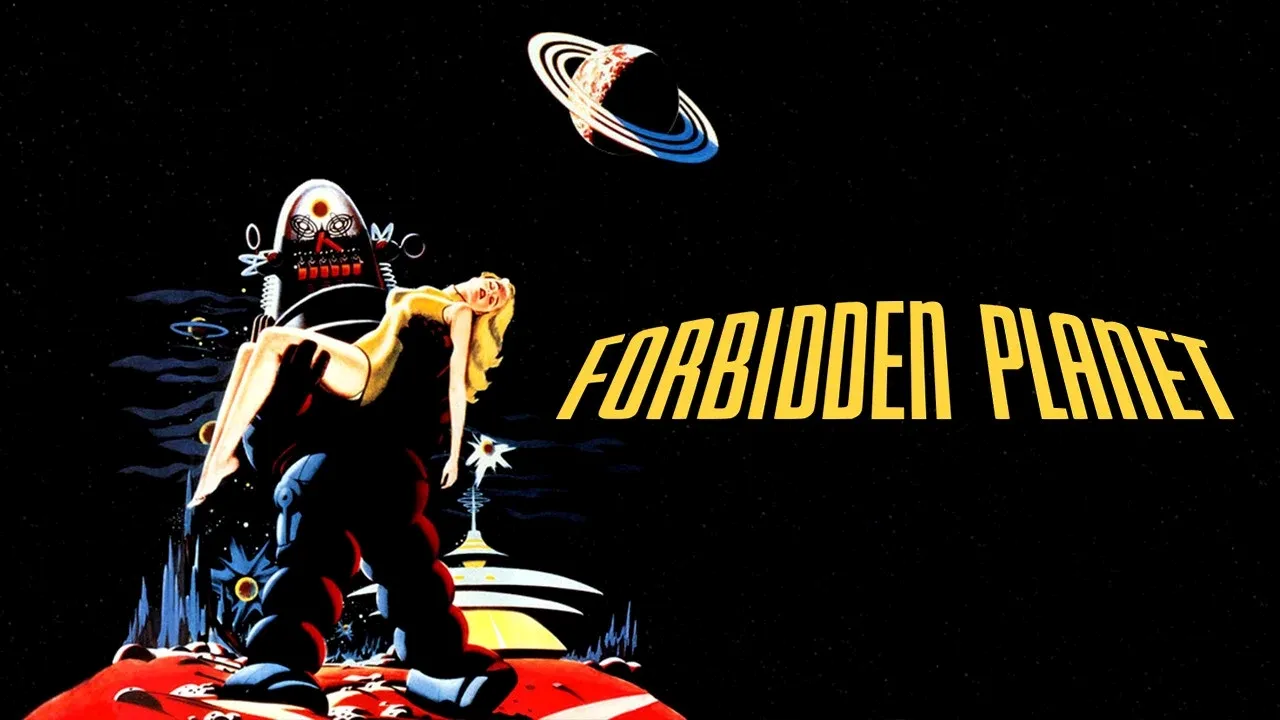
Forbidden Planet in 4K: Why Arrow Video's 70th Anniversary Restoration Is an Essential Space Sci-Fi Release of 2026
For seventy years, the most influential space sci-fi film ever made has never been available in its true form for home viewing. That ended on 28 September 2026. Arrow Video's Limited Edition 4K Ultra HD release of Forbidden Planet — Fred M. Wilcox's 1956 masterpiece that gave cinema both its first electronic film score and its most enduring robot — presents the film in its original 2.55:1 CinemaScope aspect ratio for the first time in home media history. Priced at £25.00 (down from a £29.99 RRP), the two-disc set is not merely a restoration. It is a correction of seven decades of compromised presentations, cropped broadcasts, and widescreen televisions that have never shown the full frame. For anyone who cares about where space sci-fi began, this is the release that finally lets you see it.
Robby's Return: Arrow Video's 4K Resurrection of a Space Classic
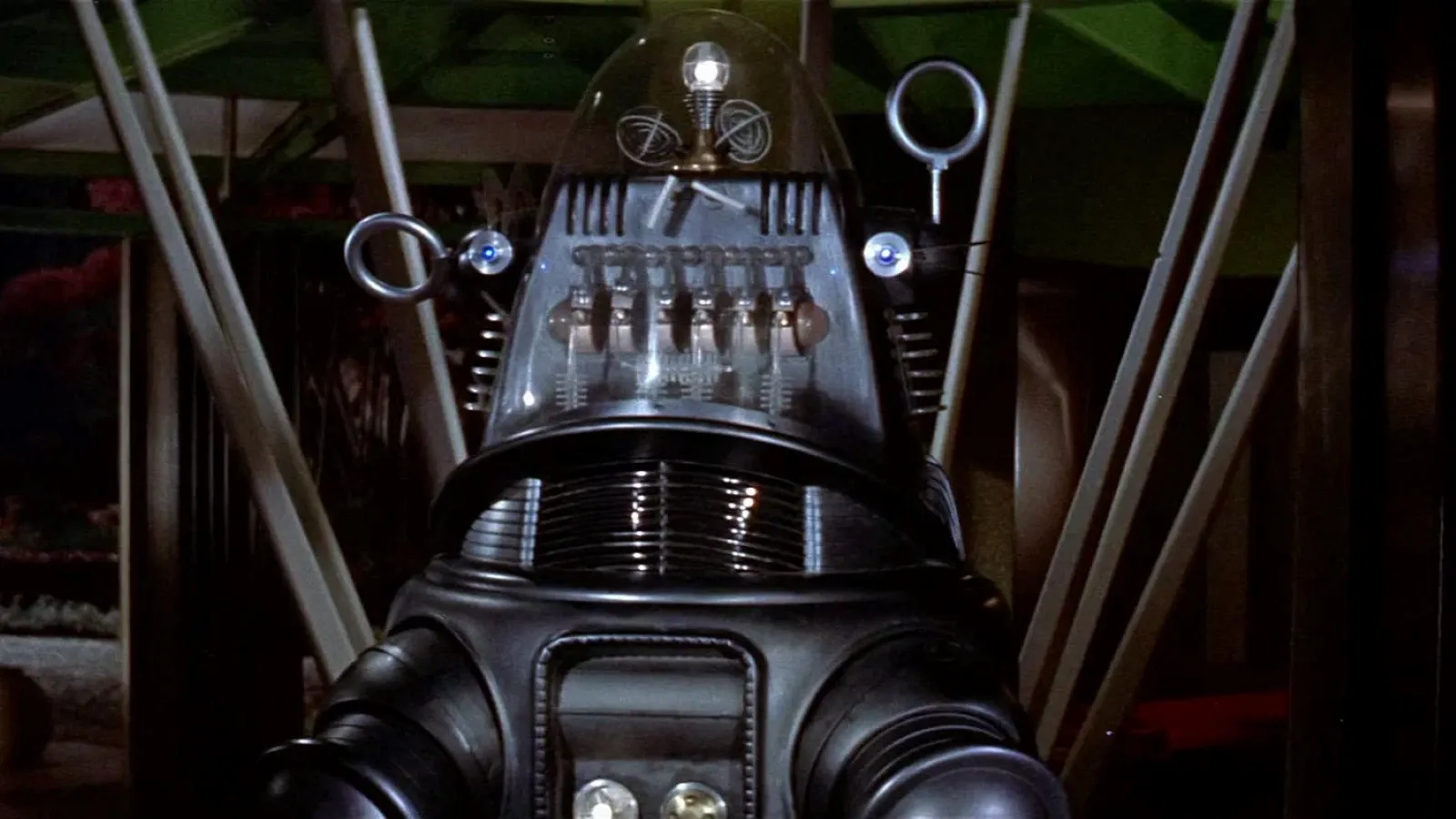
Robby the Robot strides back into the spotlight as Forbidden Planet ascends to 4K. Credit: TMDB
Arrow Video's partnership with Warner Bros. has produced some of the most celebrated physical media releases of the past decade, but The Movie Isle's review calls this set "the crown jewel of that collaboration." The 4K scan originates from the original 35mm negative, yielding a 2160p HEVC/H.265 encode that reviewers have described as revelatory. Ultra HD High Definition Digest's technical analysis notes "sharp details, clean film grain, and excellent colour reproduction" — particularly in the Eastmancolor grading, where the deep blacks of space and the alien hues of Altair-IV's landscape appear with a clarity that previous transfers simply could not achieve.
The significance extends beyond picture quality. Forbidden Planet has circulated on home video since the VHS era, but every previous release — including the 2010 Blu-ray — cropped or squeezed the image to fit 1.85:1 or 16:9 displays. Arrow's 2.55:1 presentation restores the full width of the CinemaScope frame, revealing compositions that directors of photography have been studying since the Eisenhower administration. The difference is not academic. In the opening landing sequence, the full frame shows the C-57D cruiser descending against an expanse of stars that the cropped versions simply deleted. The film's spatial logic — its insistence that space is vast and humans are small — only works when you can see the vastness.
CinemaScope at Last: Why 2.55:1 Changes Everything for Home Viewing
The technical achievement of restoring Forbidden Planet to 2.55:1 deserves its own paragraph, because aspect ratio is not a trivial preference. It is the geometry of storytelling. CinemaScope was developed by 20th Century Fox in 1953 precisely to compete with the rising popularity of television; the ultra-wide frame was designed to offer theatrical experiences that home sets could not replicate. For Forbidden Planet, shot in 1955 and released in 1956, the format was integral to the film's world-building. The C-57D's bridge, the Krell underground complex, and the alien landscape of Altair-IV were all designed for a frame that is more than twice as wide as it is tall.
Forbidden Planet | Official Trailer | 4K. By Warner Bros/ArrowFilms. From @Arrow_Video
For seventy years, audiences watching at home have seen a compromised version — sometimes missing as much as 30% of the image's width. AVForums' review describes the 2.55:1 presentation as "like watching a different film," noting that character blocking and environmental scale acquire a coherence that cropped transfers obscured. The Krell machine, one of cinema's most ambitious sets, finally appears at the scale its designers intended: a vast subterranean cavern that dwarfs the human explorers, emphasising the film's central anxiety about technological power beyond human comprehension.
Arrow has included both Dolby Vision and HDR10 compatibility, with AVForums' thread discussion confirming that the HDR grade reveals detail in the Krell machinery and the C-57D interior that even theatrical audiences in 1956 would not have seen. The restoration is not merely faithful. It is revelatory.
Unearthly Aura: The Barrons' Electronic Score Finally Gets Its Due
If Forbidden Planet gave cinema its first all-electronic film score — composed by Bebe and Louis Barron using circuits they built themselves — that score has never sounded as the composers intended it to in a home environment. Arrow's audio restoration is arguably the release's most technically ambitious achievement. The set includes three audio options: a restored original mono track, a DTS-HD MA 5.1 mix, and the restored 3-channel "Perspecta" stereo track — the latter being the original theatrical configuration that has not been available since the film's first run.
Ultra HD High Definition Digest describes the Perspecta track as having "superior imaging and impact," with the Barrons' oscillators and ring modulators creating a soundscape that feels genuinely alien rather than merely dated. The new documentary "Unearthly Aura," produced by Neil Brand for this release, traces the Barrons' pioneering work and its influence on subsequent electronic scores from Blade Runner to Interstellar. For space sci-fi enthusiasts, the documentary alone justifies the purchase price: it is the most comprehensive account yet produced of how two self-taught electronic musicians invented a genre of film music without synthesisers, samplers, or digital equipment.
Beyond the Stars: What £25 Buys Inside Arrow's Limited Edition
The physical package is a two-disc Limited Edition: the 4K UHD feature disc and a Blu-ray dedicated to bonus content. The special features represent both new productions and archival material, assembled with the comprehensiveness that has become Arrow's trademark.
New content includes the Kim Newman and Barry Forshaw audio commentary — two historians who have written extensively on 1950s science fiction — and the "Unearthly Aura" documentary on the Barrons' score. Archival content carries over the documentaries Watch the Skies! and Amazing!, the archival featurette on Robby the Robot, deleted scenes, lost test footage, and the bonus film The Invisible Boy (1957), which features Robby's second screen appearance.

Premium packaging meets premium restoration: Forbidden Planet finally receives the archival treatment its legacy deserves. Credit: Arrowfilms.com
Physical extras include a reversible sleeve with original artwork options, a double-sided fold-out poster, and a collector's booklet with essays by Frank Collins and Johnny Mains. Arrow Films' UK store lists the set at £25.00, representing a £4.99 saving from the £29.99 RRP. At that price, the release occupies a sweet spot between mass-market accessibility and boutique collector value — precisely the positioning that has made Arrow Video the leading specialty label for genre cinema restoration.
The Krell Legacy: Why Forbidden Planet Still Defines Space Sci-Fi's DNA
Forbidden Planet is not merely a historical curiosity. It is the foundational text of modern space sci-fi cinema. Its narrative template — a human expedition to an alien world, a long-dead advanced civilisation, a warning about technology's dangers — has been repeated in virtually every significant space film since, from 2001: A Space Odyssey (1968) to Prometheus (2012) to Dune (2021). The film's visual vocabulary — the sleek spacecraft, the robotic assistant, the ancient alien architecture — became the default language of cinematic space exploration.
But the film's most enduring contribution may be philosophical. Forbidden Planet is fundamentally a film about the unconscious mind rendered as technology: the Krell machine, which can materialise thought into matter, is a literalisation of Freudian psychoanalytic theory — specifically the id, the primitive impulse that the civilised ego cannot fully suppress. When Dr. Morbius's subconscious desires manifest as an invisible monster, the film delivers a thesis that space sci-fi has been exploring ever since: that the real danger in exploring the cosmos is not what we find out there. It is what we bring with us.
One for the Space Sci-Fi Hall of Fame
Arrow Video's Forbidden Planet 4K UHD Limited Edition is the most important physical media release of 2026 for space sci-fi enthusiasts. The 2.55:1 CinemaScope restoration corrects seventy years of compromised home viewing, the Perspecta stereo audio presents the Barrons' electronic score in its original configuration for the first time since 1956, and the supplementary package — particularly the "Unearthly Aura" documentary — adds genuine scholarly value. At £25, the release is priced to reach both committed collectors and curious newcomers. For anyone building a space sci-fi film library that aspires to completeness, this is not optional. It is essential.
Further Reading:
SciNexic.com may earn a commission through affiliate links, ensuring continued cosmic content.
For seventy years, the most influential space sci-fi film ever made has never been available in its true form for home viewing. That ended on 28 September 2026. Arrow Video's Limited Edition 4K Ultra HD release of Forbidden Planet — Fred M. Wilcox's 1956 masterpiece that gave cinema both its first electronic film score and its most enduring robot — presents the film in its original 2.55:1 CinemaScope aspect ratio for the first time in home media history. Priced at £25.00 (down from a £29.99 RRP), the two-disc set is not merely a restoration. It is a correction of seven decades of compromised presentations, cropped broadcasts, and widescreen televisions that have never shown the full frame. For anyone who cares about where space sci-fi began, this is the release that finally lets you see it.
Robby's Return: Arrow Video's 4K Resurrection of a Space Classic
Robby the Robot strides back into the spotlight as Forbidden Planet ascends to 4K. Credit: TMDB
Arrow Video's partnership with Warner Bros. has produced some of the most celebrated physical media releases of the past decade, but The Movie Isle's review calls this set "the crown jewel of that collaboration." The 4K scan originates from the original 35mm negative, yielding a 2160p HEVC/H.265 encode that reviewers have described as revelatory. Ultra HD High Definition Digest's technical analysis notes "sharp details, clean film grain, and excellent colour reproduction" — particularly in the Eastmancolor grading, where the deep blacks of space and the alien hues of Altair-IV's landscape appear with a clarity that previous transfers simply could not achieve.
The significance extends beyond picture quality. Forbidden Planet has circulated on home video since the VHS era, but every previous release — including the 2010 Blu-ray — cropped or squeezed the image to fit 1.85:1 or 16:9 displays. Arrow's 2.55:1 presentation restores the full width of the CinemaScope frame, revealing compositions that directors of photography have been studying since the Eisenhower administration. The difference is not academic. In the opening landing sequence, the full frame shows the C-57D cruiser descending against an expanse of stars that the cropped versions simply deleted. The film's spatial logic — its insistence that space is vast and humans are small — only works when you can see the vastness.
CinemaScope at Last: Why 2.55:1 Changes Everything for Home Viewing
The technical achievement of restoring Forbidden Planet to 2.55:1 deserves its own paragraph, because aspect ratio is not a trivial preference. It is the geometry of storytelling. CinemaScope was developed by 20th Century Fox in 1953 precisely to compete with the rising popularity of television; the ultra-wide frame was designed to offer theatrical experiences that home sets could not replicate. For Forbidden Planet, shot in 1955 and released in 1956, the format was integral to the film's world-building. The C-57D's bridge, the Krell underground complex, and the alien landscape of Altair-IV were all designed for a frame that is more than twice as wide as it is tall.
Forbidden Planet | Official Trailer | 4K. By Warner Bros/ArrowFilms. From @Arrow_Video
For seventy years, audiences watching at home have seen a compromised version — sometimes missing as much as 30% of the image's width. AVForums' review describes the 2.55:1 presentation as "like watching a different film," noting that character blocking and environmental scale acquire a coherence that cropped transfers obscured. The Krell machine, one of cinema's most ambitious sets, finally appears at the scale its designers intended: a vast subterranean cavern that dwarfs the human explorers, emphasising the film's central anxiety about technological power beyond human comprehension.
Arrow has included both Dolby Vision and HDR10 compatibility, with AVForums' thread discussion confirming that the HDR grade reveals detail in the Krell machinery and the C-57D interior that even theatrical audiences in 1956 would not have seen. The restoration is not merely faithful. It is revelatory.
Unearthly Aura: The Barrons' Electronic Score Finally Gets Its Due
If Forbidden Planet gave cinema its first all-electronic film score — composed by Bebe and Louis Barron using circuits they built themselves — that score has never sounded as the composers intended it to in a home environment. Arrow's audio restoration is arguably the release's most technically ambitious achievement. The set includes three audio options: a restored original mono track, a DTS-HD MA 5.1 mix, and the restored 3-channel "Perspecta" stereo track — the latter being the original theatrical configuration that has not been available since the film's first run.
Ultra HD High Definition Digest describes the Perspecta track as having "superior imaging and impact," with the Barrons' oscillators and ring modulators creating a soundscape that feels genuinely alien rather than merely dated. The new documentary "Unearthly Aura," produced by Neil Brand for this release, traces the Barrons' pioneering work and its influence on subsequent electronic scores from Blade Runner to Interstellar. For space sci-fi enthusiasts, the documentary alone justifies the purchase price: it is the most comprehensive account yet produced of how two self-taught electronic musicians invented a genre of film music without synthesisers, samplers, or digital equipment.
Beyond the Stars: What £25 Buys Inside Arrow's Limited Edition
The physical package is a two-disc Limited Edition: the 4K UHD feature disc and a Blu-ray dedicated to bonus content. The special features represent both new productions and archival material, assembled with the comprehensiveness that has become Arrow's trademark.
New content includes the Kim Newman and Barry Forshaw audio commentary — two historians who have written extensively on 1950s science fiction — and the "Unearthly Aura" documentary on the Barrons' score. Archival content carries over the documentaries Watch the Skies! and Amazing!, the archival featurette on Robby the Robot, deleted scenes, lost test footage, and the bonus film The Invisible Boy (1957), which features Robby's second screen appearance.
Premium packaging meets premium restoration: Forbidden Planet finally receives the archival treatment its legacy deserves. Credit: Arrowfilms.com
Physical extras include a reversible sleeve with original artwork options, a double-sided fold-out poster, and a collector's booklet with essays by Frank Collins and Johnny Mains. Arrow Films' UK store lists the set at £25.00, representing a £4.99 saving from the £29.99 RRP. At that price, the release occupies a sweet spot between mass-market accessibility and boutique collector value — precisely the positioning that has made Arrow Video the leading specialty label for genre cinema restoration.
The Krell Legacy: Why Forbidden Planet Still Defines Space Sci-Fi's DNA
Forbidden Planet is not merely a historical curiosity. It is the foundational text of modern space sci-fi cinema. Its narrative template — a human expedition to an alien world, a long-dead advanced civilisation, a warning about technology's dangers — has been repeated in virtually every significant space film since, from 2001: A Space Odyssey (1968) to Prometheus (2012) to Dune (2021). The film's visual vocabulary — the sleek spacecraft, the robotic assistant, the ancient alien architecture — became the default language of cinematic space exploration.
But the film's most enduring contribution may be philosophical. Forbidden Planet is fundamentally a film about the unconscious mind rendered as technology: the Krell machine, which can materialise thought into matter, is a literalisation of Freudian psychoanalytic theory — specifically the id, the primitive impulse that the civilised ego cannot fully suppress. When Dr. Morbius's subconscious desires manifest as an invisible monster, the film delivers a thesis that space sci-fi has been exploring ever since: that the real danger in exploring the cosmos is not what we find out there. It is what we bring with us.
One for the Space Sci-Fi Hall of Fame
Arrow Video's Forbidden Planet 4K UHD Limited Edition is the most important physical media release of 2026 for space sci-fi enthusiasts. The 2.55:1 CinemaScope restoration corrects seventy years of compromised home viewing, the Perspecta stereo audio presents the Barrons' electronic score in its original configuration for the first time since 1956, and the supplementary package — particularly the "Unearthly Aura" documentary — adds genuine scholarly value. At £25, the release is priced to reach both committed collectors and curious newcomers. For anyone building a space sci-fi film library that aspires to completeness, this is not optional. It is essential.
Further Reading:
SciNexic.com may earn a commission through affiliate links, ensuring continued cosmic content.
For seventy years, the most influential space sci-fi film ever made has never been available in its true form for home viewing. That ended on 28 September 2026. Arrow Video's Limited Edition 4K Ultra HD release of Forbidden Planet — Fred M. Wilcox's 1956 masterpiece that gave cinema both its first electronic film score and its most enduring robot — presents the film in its original 2.55:1 CinemaScope aspect ratio for the first time in home media history. Priced at £25.00 (down from a £29.99 RRP), the two-disc set is not merely a restoration. It is a correction of seven decades of compromised presentations, cropped broadcasts, and widescreen televisions that have never shown the full frame. For anyone who cares about where space sci-fi began, this is the release that finally lets you see it.
Robby's Return: Arrow Video's 4K Resurrection of a Space Classic
Robby the Robot strides back into the spotlight as Forbidden Planet ascends to 4K. Credit: TMDB
Arrow Video's partnership with Warner Bros. has produced some of the most celebrated physical media releases of the past decade, but The Movie Isle's review calls this set "the crown jewel of that collaboration." The 4K scan originates from the original 35mm negative, yielding a 2160p HEVC/H.265 encode that reviewers have described as revelatory. Ultra HD High Definition Digest's technical analysis notes "sharp details, clean film grain, and excellent colour reproduction" — particularly in the Eastmancolor grading, where the deep blacks of space and the alien hues of Altair-IV's landscape appear with a clarity that previous transfers simply could not achieve.
The significance extends beyond picture quality. Forbidden Planet has circulated on home video since the VHS era, but every previous release — including the 2010 Blu-ray — cropped or squeezed the image to fit 1.85:1 or 16:9 displays. Arrow's 2.55:1 presentation restores the full width of the CinemaScope frame, revealing compositions that directors of photography have been studying since the Eisenhower administration. The difference is not academic. In the opening landing sequence, the full frame shows the C-57D cruiser descending against an expanse of stars that the cropped versions simply deleted. The film's spatial logic — its insistence that space is vast and humans are small — only works when you can see the vastness.
CinemaScope at Last: Why 2.55:1 Changes Everything for Home Viewing
The technical achievement of restoring Forbidden Planet to 2.55:1 deserves its own paragraph, because aspect ratio is not a trivial preference. It is the geometry of storytelling. CinemaScope was developed by 20th Century Fox in 1953 precisely to compete with the rising popularity of television; the ultra-wide frame was designed to offer theatrical experiences that home sets could not replicate. For Forbidden Planet, shot in 1955 and released in 1956, the format was integral to the film's world-building. The C-57D's bridge, the Krell underground complex, and the alien landscape of Altair-IV were all designed for a frame that is more than twice as wide as it is tall.
Forbidden Planet | Official Trailer | 4K. By Warner Bros/ArrowFilms. From @Arrow_Video
For seventy years, audiences watching at home have seen a compromised version — sometimes missing as much as 30% of the image's width. AVForums' review describes the 2.55:1 presentation as "like watching a different film," noting that character blocking and environmental scale acquire a coherence that cropped transfers obscured. The Krell machine, one of cinema's most ambitious sets, finally appears at the scale its designers intended: a vast subterranean cavern that dwarfs the human explorers, emphasising the film's central anxiety about technological power beyond human comprehension.
Arrow has included both Dolby Vision and HDR10 compatibility, with AVForums' thread discussion confirming that the HDR grade reveals detail in the Krell machinery and the C-57D interior that even theatrical audiences in 1956 would not have seen. The restoration is not merely faithful. It is revelatory.
Unearthly Aura: The Barrons' Electronic Score Finally Gets Its Due
If Forbidden Planet gave cinema its first all-electronic film score — composed by Bebe and Louis Barron using circuits they built themselves — that score has never sounded as the composers intended it to in a home environment. Arrow's audio restoration is arguably the release's most technically ambitious achievement. The set includes three audio options: a restored original mono track, a DTS-HD MA 5.1 mix, and the restored 3-channel "Perspecta" stereo track — the latter being the original theatrical configuration that has not been available since the film's first run.
Ultra HD High Definition Digest describes the Perspecta track as having "superior imaging and impact," with the Barrons' oscillators and ring modulators creating a soundscape that feels genuinely alien rather than merely dated. The new documentary "Unearthly Aura," produced by Neil Brand for this release, traces the Barrons' pioneering work and its influence on subsequent electronic scores from Blade Runner to Interstellar. For space sci-fi enthusiasts, the documentary alone justifies the purchase price: it is the most comprehensive account yet produced of how two self-taught electronic musicians invented a genre of film music without synthesisers, samplers, or digital equipment.
Beyond the Stars: What £25 Buys Inside Arrow's Limited Edition
The physical package is a two-disc Limited Edition: the 4K UHD feature disc and a Blu-ray dedicated to bonus content. The special features represent both new productions and archival material, assembled with the comprehensiveness that has become Arrow's trademark.
New content includes the Kim Newman and Barry Forshaw audio commentary — two historians who have written extensively on 1950s science fiction — and the "Unearthly Aura" documentary on the Barrons' score. Archival content carries over the documentaries Watch the Skies! and Amazing!, the archival featurette on Robby the Robot, deleted scenes, lost test footage, and the bonus film The Invisible Boy (1957), which features Robby's second screen appearance.
Premium packaging meets premium restoration: Forbidden Planet finally receives the archival treatment its legacy deserves. Credit: Arrowfilms.com
Physical extras include a reversible sleeve with original artwork options, a double-sided fold-out poster, and a collector's booklet with essays by Frank Collins and Johnny Mains. Arrow Films' UK store lists the set at £25.00, representing a £4.99 saving from the £29.99 RRP. At that price, the release occupies a sweet spot between mass-market accessibility and boutique collector value — precisely the positioning that has made Arrow Video the leading specialty label for genre cinema restoration.
The Krell Legacy: Why Forbidden Planet Still Defines Space Sci-Fi's DNA
Forbidden Planet is not merely a historical curiosity. It is the foundational text of modern space sci-fi cinema. Its narrative template — a human expedition to an alien world, a long-dead advanced civilisation, a warning about technology's dangers — has been repeated in virtually every significant space film since, from 2001: A Space Odyssey (1968) to Prometheus (2012) to Dune (2021). The film's visual vocabulary — the sleek spacecraft, the robotic assistant, the ancient alien architecture — became the default language of cinematic space exploration.
But the film's most enduring contribution may be philosophical. Forbidden Planet is fundamentally a film about the unconscious mind rendered as technology: the Krell machine, which can materialise thought into matter, is a literalisation of Freudian psychoanalytic theory — specifically the id, the primitive impulse that the civilised ego cannot fully suppress. When Dr. Morbius's subconscious desires manifest as an invisible monster, the film delivers a thesis that space sci-fi has been exploring ever since: that the real danger in exploring the cosmos is not what we find out there. It is what we bring with us.
One for the Space Sci-Fi Hall of Fame
Arrow Video's Forbidden Planet 4K UHD Limited Edition is the most important physical media release of 2026 for space sci-fi enthusiasts. The 2.55:1 CinemaScope restoration corrects seventy years of compromised home viewing, the Perspecta stereo audio presents the Barrons' electronic score in its original configuration for the first time since 1956, and the supplementary package — particularly the "Unearthly Aura" documentary — adds genuine scholarly value. At £25, the release is priced to reach both committed collectors and curious newcomers. For anyone building a space sci-fi film library that aspires to completeness, this is not optional. It is essential.
Further Reading:
SciNexic.com may earn a commission through affiliate links, ensuring continued cosmic content.
Get the SciNexic Dispatch
Space sci-fi news, reviews, trailers, and release picks—straight to your inbox.
Get the dispatch
Image Gallery
Comments
Please be kind and considerate. Any abusive or offensive comments will be sent out the airlock! Thank You.
Please be kind and considerate. Any abusive or offensive comments will be sent out the airlock! Thank You.
Get the Dispatch
Related Posts


Share on Twitter
Share on Instagram
Banner Image - Forbidden Planet promo poster - TMDB.org - Copyright: Warner Bros./Arrow Video
Main Article - All images and media are the property of their respective owners.