

The SciNexic Files
The SciNexic Files
The SciNexic Files
Report
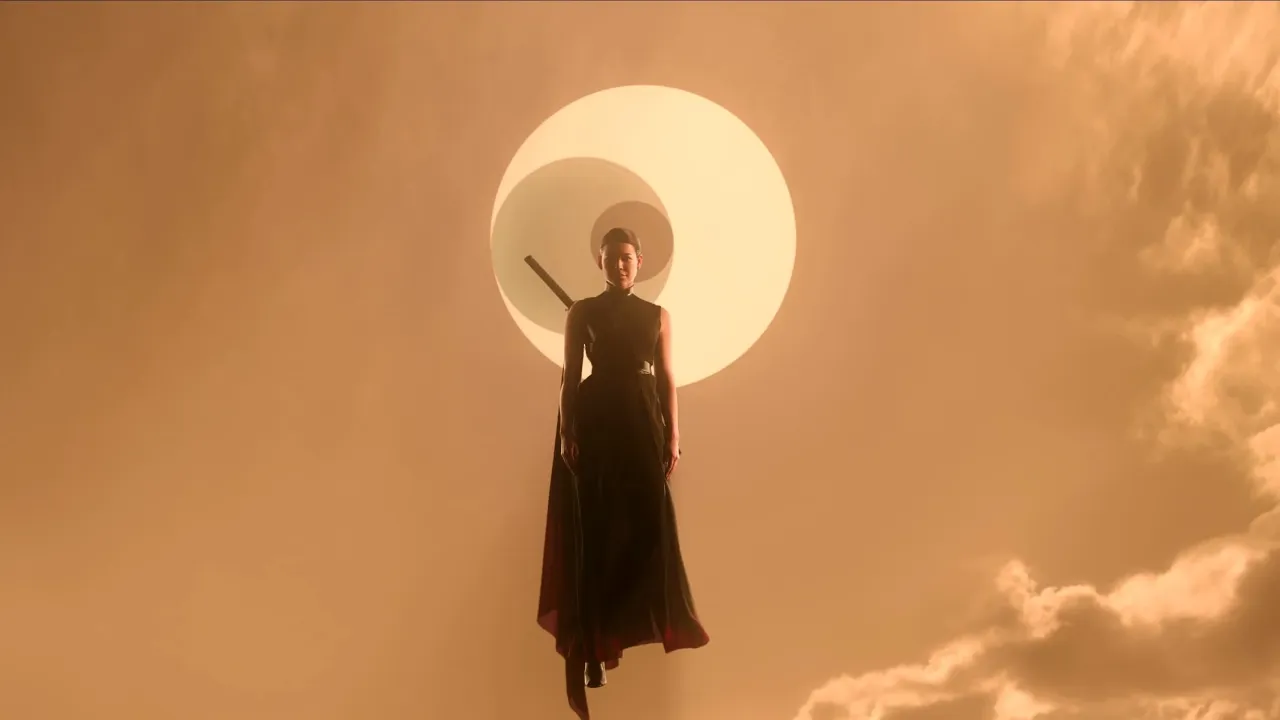
Space Sci-Fi's £1 Billion Bet: Why 2027 Is the Year Every Streaming Platform Goes All-In on the Genre
Space sci-fi has never cost this much. It has also never been this important to the people writing the cheques.
Between now and the end of 2027, every major streaming platform — Netflix, Apple TV, Max, Paramount+, Disney+, Amazon Prime Video — will stake a significant portion of its prestige identity on the genre. Not as a side bet, not as a genre experiment, but as the central plank of long-term subscriber strategy. The evidence is not circumstantial. It is financial, contractual, and already in production.
The numbers involved are staggering. Netflix alone has committed approximately $267 million (roughly £205 million) to the combined second and third seasons of 3 Body Problem, according to filings with the Hungarian National Film Office — that after spending an estimated $160 million (about £123 million) on the first season's eight episodes.
Apple TV's Neuromancer — the long-awaited adaptation of William Gibson's 1984 novel that effectively invented cyberpunk — premieres on January 22, 2027, following a production budget described by insiders as commensurate with Foundation's scale. The hugely popular Foundation, now heading into a fourth season under new creative leadership, continues production in Prague through a 120-day shoot with a 2027 premiere window.
And Max is expanding Dune: Prophecy from six episodes to eight for its second season, a 33 per cent increase that speaks volumes about HBO's confidence in the franchise's potential.
The Supernova Moment: When Every Platform Bets on the Stars
Something fundamental has shifted. In the early streaming wars (roughly 2018–2022), platforms competed on volume: the more original content, the stickier the service. That model has curdled. The race has become about prestige, genre ownership, and — critically — franchise longevity. Space sci-fi uniquely satisfies all three.
The genre's appeal to streaming economics is structural. Space sci-fi produces the highest visual spectacle per production pound, it sustains multi-season narrative arcs more credibly than almost any other genre (the physics of the universe are infinitely extensible), and it attracts the subscriber demographic that streaming platforms most covet: educated, affluent, globally distributed audiences willing to maintain long-term subscriptions to follow a single show.
Apple TV understood this first. With For All Mankind, Silo, Foundation, and now Neuromancer, Apple has built what amounts to a dedicated space sci-fi universe — not in the interconnected Marvel sense, but as a coherent brand identity. The message to subscribers is clear: if you want prestige space sci-fi, Apple is where you live. Every other platform is now trying to replicate that identity.
The 3 Body Problem Gambit: Netflix Goes Cosmic
Netflix's investment in 3 Body Problem is perhaps the boldest single statement in this new landscape. The adaptation of Cixin Liu's Remembrance of Earth's Past trilogy, produced by David Benioff, D.B. Weiss, and Alexander Woo, begins its "cosmic" phase with Season 2 — the adaptation of The Dark Forest, widely considered the trilogy's most intellectually demanding instalment.

With alien enigmas, existential stakes and a civilisation-spanning mystery, 3 Body Problem represents the kind of event television every streamer is chasing. Credit: TMDB
The decision to reduce Season 2 to six episodes (down from eight) while maintaining a $267 million combined budget for Seasons 2 and 3 is a deliberate concentration of resources. Every dollar is being directed toward the VFX-intensive set pieces that The Dark Forest demands: wallfacer protocols, the hibernation era, and the civilisational chess match between humanity and the Trisolarans. The production, now relocated from the UK to Budapest, Hungary, is expected to yield something that looks genuinely cinematic — an important counter to the criticism that Season 1 was front-loaded with exposition at the expense of spectacle.
Apple's Second Bet: Foundation Without Its Architect

Foundation remains Apple's boldest wager on intelligent, large-scale science fiction. Credit: Apple TV
Foundation's fourth season, meanwhile, represents a different kind of risk. Series creator and showrunner David S. Goyer, who shepherded Isaac Asimov's supposedly unfilmable novels through three seasons, has stepped back. Budget friction with Skydance Television and the personal toll of sustained international production led to his departure from the day-to-day creative role. New co-showrunners Ian Goldberg (Fear the Walking Dead) and David Kob (a Foundation writer since Season 2) began production in Prague on 5 January 2026.

Guided by showrunner David S. Goyer, Foundation transformed Isaac Asimov's sprawling vision into a flagship franchise. Credit: Davidsgoyer.com
The creative question is live and unresolved. Goyer reportedly provided his roadmap for future seasons; whether the new team is following it depends on which industry sources you trust. What is confirmed is that the fourth season will adapt material from Asimov's Second Foundation (1953), will likely avoid a large-scale time jump to preserve cast continuity, and will continue to feature Jared Harris, Lou Llobell, and Lee Pace. Apple has not labelled the season as the final one, which either signals genuine long-term confidence or careful strategic ambiguity. Either way, the decision to keep spending on Foundation at this scale speaks to the platform's belief in space sci-fi as a defining identity marker — not an experiment.
Max's Dune Double-Down and Paramount's Star Trek Crossroads
Max's Dune: Prophecy Season 2 is perhaps the most strategically calculated entry in the 2027 slate. The expansion to eight episodes signals confidence — HBO renewed the series, increased its scope, added Indira Varma, Tom Hollander, and Ashley Walters to an already distinguished cast, and made the deliberate decision to delay the premiere until 2027 rather than compete with Denis Villeneuve's Dune: Part Three theatrical release on 18 December 2026. This is franchise management at the highest level: the studio protecting two different products in the same IP rather than allowing them to cannibalise each other.
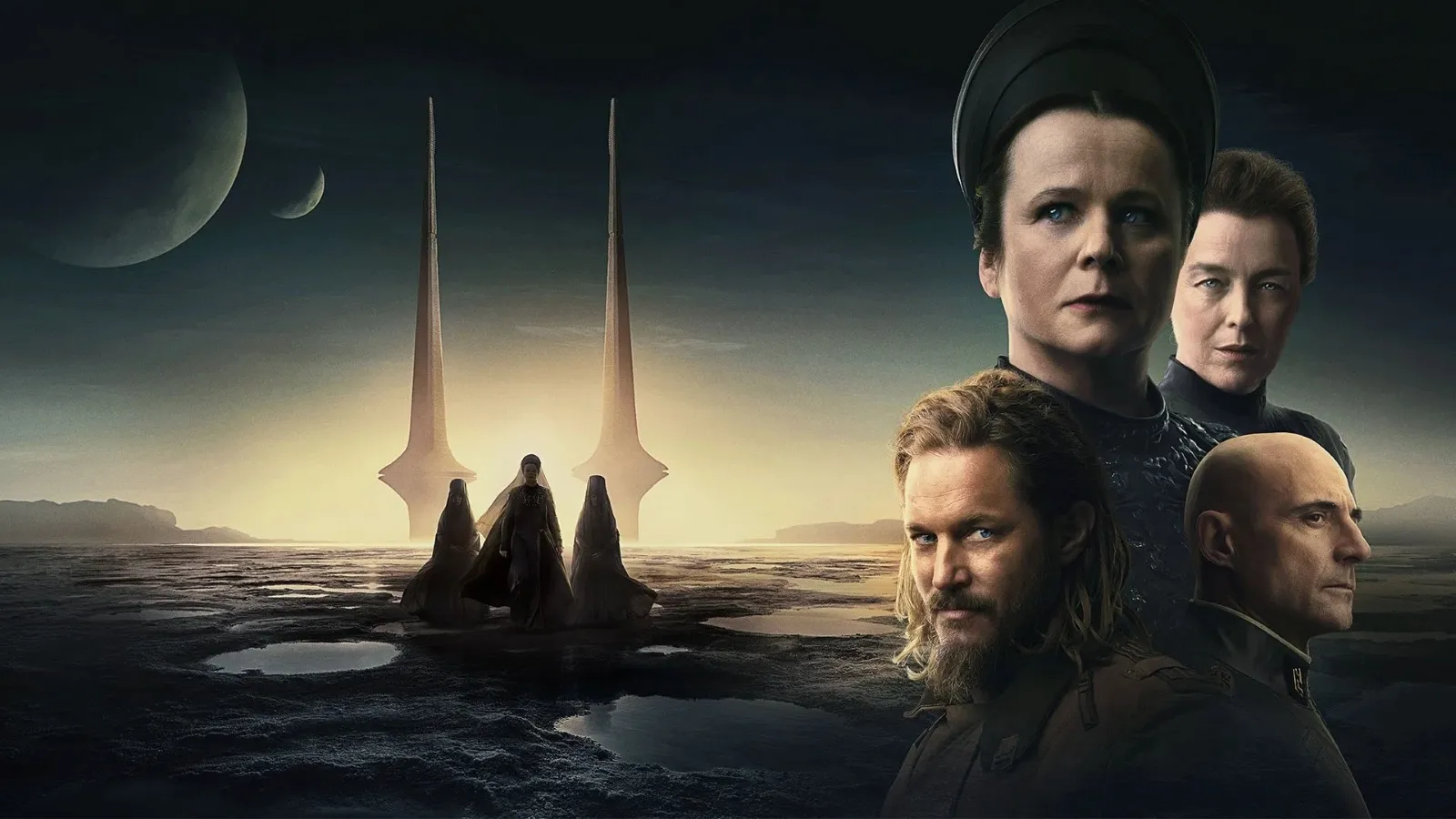
Set thousands of years before Paul Atreides, Dune: Prophecy is part of a broader effort to transform premium sci-fi into a long-term streaming asset. Credit: TMDB
Paramount+, meanwhile, is navigating its own space sci-fi moment. Star Trek: Starfleet Academy, which completed its controversial debut ten-episode season in March 2026 with Holly Hunter, Paul Giamatti, and a cameo-rich supporting cast, has already been confirmed for a second and final season in 2027. Combined with the anticipated fifth and final season of Strange New Worlds, Paramount is committing its most prominent franchise to the genre at scale — even if the business logic of a two-season format for Starfleet Academy has prompted questions about the studio's long-term appetite.

As Star Trek: Strange New Worlds approaches its fifth season, Paramount continues to demonstrate the enduring value of one of science fiction's most recognisable brands. Credit: TMDB
The Bet, the Genre, and Why the Audience Is the Counterparty
Across these platforms, the combined investment in space sci-fi content entering 2027 is, by any reasonable accounting, well in excess of £1 billion. That is not a genre bet. That is a civilisational bet — on the proposition that the audience for intelligent, expensive, visually ambitious science fiction is large enough and loyal enough to justify the spend at this scale, repeatedly, across multiple competing services.
The bet has never cost this much. Which means the genre has never mattered this much — not commercially, not culturally, not for the platforms whose identities now depend on getting it right.
Space sci-fi has been waiting for a moment like this since the first Star Wars rearranged the economics of spectacle in 1977. The question for 2027 is not whether the genre deserves the investment. It is whether the audience — all of us — will show up in numbers large enough to justify it. If the past decade of Foundation, The Expanse, Arrival, and Dune is any guide, the answer is already written in the stars.
Further Reading:
3 Body Problem Season 2 — Netflix/Hungarian Budget (Forbes, Sep 2025)
Star Trek: Strange New Worlds Page
Star Trek: Starfleet Academy — Season 1/2 confirmed (Wikipedia)
SciNexic.com may earn a commission through affiliate links, ensuring continued cosmic content.
Space sci-fi has never cost this much. It has also never been this important to the people writing the cheques.
Between now and the end of 2027, every major streaming platform — Netflix, Apple TV, Max, Paramount+, Disney+, Amazon Prime Video — will stake a significant portion of its prestige identity on the genre. Not as a side bet, not as a genre experiment, but as the central plank of long-term subscriber strategy. The evidence is not circumstantial. It is financial, contractual, and already in production.
The numbers involved are staggering. Netflix alone has committed approximately $267 million (roughly £205 million) to the combined second and third seasons of 3 Body Problem, according to filings with the Hungarian National Film Office — that after spending an estimated $160 million (about £123 million) on the first season's eight episodes.
Apple TV's Neuromancer — the long-awaited adaptation of William Gibson's 1984 novel that effectively invented cyberpunk — premieres on January 22, 2027, following a production budget described by insiders as commensurate with Foundation's scale. The hugely popular Foundation, now heading into a fourth season under new creative leadership, continues production in Prague through a 120-day shoot with a 2027 premiere window.
And Max is expanding Dune: Prophecy from six episodes to eight for its second season, a 33 per cent increase that speaks volumes about HBO's confidence in the franchise's potential.
The Supernova Moment: When Every Platform Bets on the Stars
Something fundamental has shifted. In the early streaming wars (roughly 2018–2022), platforms competed on volume: the more original content, the stickier the service. That model has curdled. The race has become about prestige, genre ownership, and — critically — franchise longevity. Space sci-fi uniquely satisfies all three.
The genre's appeal to streaming economics is structural. Space sci-fi produces the highest visual spectacle per production pound, it sustains multi-season narrative arcs more credibly than almost any other genre (the physics of the universe are infinitely extensible), and it attracts the subscriber demographic that streaming platforms most covet: educated, affluent, globally distributed audiences willing to maintain long-term subscriptions to follow a single show.
Apple TV understood this first. With For All Mankind, Silo, Foundation, and now Neuromancer, Apple has built what amounts to a dedicated space sci-fi universe — not in the interconnected Marvel sense, but as a coherent brand identity. The message to subscribers is clear: if you want prestige space sci-fi, Apple is where you live. Every other platform is now trying to replicate that identity.
The 3 Body Problem Gambit: Netflix Goes Cosmic
Netflix's investment in 3 Body Problem is perhaps the boldest single statement in this new landscape. The adaptation of Cixin Liu's Remembrance of Earth's Past trilogy, produced by David Benioff, D.B. Weiss, and Alexander Woo, begins its "cosmic" phase with Season 2 — the adaptation of The Dark Forest, widely considered the trilogy's most intellectually demanding instalment.
With alien enigmas, existential stakes and a civilisation-spanning mystery, 3 Body Problem represents the kind of event television every streamer is chasing. Credit: TMDB
The decision to reduce Season 2 to six episodes (down from eight) while maintaining a $267 million combined budget for Seasons 2 and 3 is a deliberate concentration of resources. Every dollar is being directed toward the VFX-intensive set pieces that The Dark Forest demands: wallfacer protocols, the hibernation era, and the civilisational chess match between humanity and the Trisolarans. The production, now relocated from the UK to Budapest, Hungary, is expected to yield something that looks genuinely cinematic — an important counter to the criticism that Season 1 was front-loaded with exposition at the expense of spectacle.
Apple's Second Bet: Foundation Without Its Architect
Foundation remains Apple's boldest wager on intelligent, large-scale science fiction. Credit: Apple TV
Foundation's fourth season, meanwhile, represents a different kind of risk. Series creator and showrunner David S. Goyer, who shepherded Isaac Asimov's supposedly unfilmable novels through three seasons, has stepped back. Budget friction with Skydance Television and the personal toll of sustained international production led to his departure from the day-to-day creative role. New co-showrunners Ian Goldberg (Fear the Walking Dead) and David Kob (a Foundation writer since Season 2) began production in Prague on 5 January 2026.
Guided by showrunner David S. Goyer, Foundation transformed Isaac Asimov's sprawling vision into a flagship franchise. Credit: Davidsgoyer.com
The creative question is live and unresolved. Goyer reportedly provided his roadmap for future seasons; whether the new team is following it depends on which industry sources you trust. What is confirmed is that the fourth season will adapt material from Asimov's Second Foundation (1953), will likely avoid a large-scale time jump to preserve cast continuity, and will continue to feature Jared Harris, Lou Llobell, and Lee Pace. Apple has not labelled the season as the final one, which either signals genuine long-term confidence or careful strategic ambiguity. Either way, the decision to keep spending on Foundation at this scale speaks to the platform's belief in space sci-fi as a defining identity marker — not an experiment.
Max's Dune Double-Down and Paramount's Star Trek Crossroads
Max's Dune: Prophecy Season 2 is perhaps the most strategically calculated entry in the 2027 slate. The expansion to eight episodes signals confidence — HBO renewed the series, increased its scope, added Indira Varma, Tom Hollander, and Ashley Walters to an already distinguished cast, and made the deliberate decision to delay the premiere until 2027 rather than compete with Denis Villeneuve's Dune: Part Three theatrical release on 18 December 2026. This is franchise management at the highest level: the studio protecting two different products in the same IP rather than allowing them to cannibalise each other.
Set thousands of years before Paul Atreides, Dune: Prophecy is part of a broader effort to transform premium sci-fi into a long-term streaming asset. Credit: TMDB
Paramount+, meanwhile, is navigating its own space sci-fi moment. Star Trek: Starfleet Academy, which completed its controversial debut ten-episode season in March 2026 with Holly Hunter, Paul Giamatti, and a cameo-rich supporting cast, has already been confirmed for a second and final season in 2027. Combined with the anticipated fifth and final season of Strange New Worlds, Paramount is committing its most prominent franchise to the genre at scale — even if the business logic of a two-season format for Starfleet Academy has prompted questions about the studio's long-term appetite.
As Star Trek: Strange New Worlds approaches its fifth season, Paramount continues to demonstrate the enduring value of one of science fiction's most recognisable brands. Credit: TMDB
The Bet, the Genre, and Why the Audience Is the Counterparty
Across these platforms, the combined investment in space sci-fi content entering 2027 is, by any reasonable accounting, well in excess of £1 billion. That is not a genre bet. That is a civilisational bet — on the proposition that the audience for intelligent, expensive, visually ambitious science fiction is large enough and loyal enough to justify the spend at this scale, repeatedly, across multiple competing services.
The bet has never cost this much. Which means the genre has never mattered this much — not commercially, not culturally, not for the platforms whose identities now depend on getting it right.
Space sci-fi has been waiting for a moment like this since the first Star Wars rearranged the economics of spectacle in 1977. The question for 2027 is not whether the genre deserves the investment. It is whether the audience — all of us — will show up in numbers large enough to justify it. If the past decade of Foundation, The Expanse, Arrival, and Dune is any guide, the answer is already written in the stars.
Further Reading:
3 Body Problem Season 2 — Netflix/Hungarian Budget (Forbes, Sep 2025)
Star Trek: Strange New Worlds Page
Star Trek: Starfleet Academy — Season 1/2 confirmed (Wikipedia)
SciNexic.com may earn a commission through affiliate links, ensuring continued cosmic content.
Space sci-fi has never cost this much. It has also never been this important to the people writing the cheques.
Between now and the end of 2027, every major streaming platform — Netflix, Apple TV, Max, Paramount+, Disney+, Amazon Prime Video — will stake a significant portion of its prestige identity on the genre. Not as a side bet, not as a genre experiment, but as the central plank of long-term subscriber strategy. The evidence is not circumstantial. It is financial, contractual, and already in production.
The numbers involved are staggering. Netflix alone has committed approximately $267 million (roughly £205 million) to the combined second and third seasons of 3 Body Problem, according to filings with the Hungarian National Film Office — that after spending an estimated $160 million (about £123 million) on the first season's eight episodes.
Apple TV's Neuromancer — the long-awaited adaptation of William Gibson's 1984 novel that effectively invented cyberpunk — premieres on January 22, 2027, following a production budget described by insiders as commensurate with Foundation's scale. The hugely popular Foundation, now heading into a fourth season under new creative leadership, continues production in Prague through a 120-day shoot with a 2027 premiere window.
And Max is expanding Dune: Prophecy from six episodes to eight for its second season, a 33 per cent increase that speaks volumes about HBO's confidence in the franchise's potential.
The Supernova Moment: When Every Platform Bets on the Stars
Something fundamental has shifted. In the early streaming wars (roughly 2018–2022), platforms competed on volume: the more original content, the stickier the service. That model has curdled. The race has become about prestige, genre ownership, and — critically — franchise longevity. Space sci-fi uniquely satisfies all three.
The genre's appeal to streaming economics is structural. Space sci-fi produces the highest visual spectacle per production pound, it sustains multi-season narrative arcs more credibly than almost any other genre (the physics of the universe are infinitely extensible), and it attracts the subscriber demographic that streaming platforms most covet: educated, affluent, globally distributed audiences willing to maintain long-term subscriptions to follow a single show.
Apple TV understood this first. With For All Mankind, Silo, Foundation, and now Neuromancer, Apple has built what amounts to a dedicated space sci-fi universe — not in the interconnected Marvel sense, but as a coherent brand identity. The message to subscribers is clear: if you want prestige space sci-fi, Apple is where you live. Every other platform is now trying to replicate that identity.
The 3 Body Problem Gambit: Netflix Goes Cosmic
Netflix's investment in 3 Body Problem is perhaps the boldest single statement in this new landscape. The adaptation of Cixin Liu's Remembrance of Earth's Past trilogy, produced by David Benioff, D.B. Weiss, and Alexander Woo, begins its "cosmic" phase with Season 2 — the adaptation of The Dark Forest, widely considered the trilogy's most intellectually demanding instalment.
With alien enigmas, existential stakes and a civilisation-spanning mystery, 3 Body Problem represents the kind of event television every streamer is chasing. Credit: TMDB
The decision to reduce Season 2 to six episodes (down from eight) while maintaining a $267 million combined budget for Seasons 2 and 3 is a deliberate concentration of resources. Every dollar is being directed toward the VFX-intensive set pieces that The Dark Forest demands: wallfacer protocols, the hibernation era, and the civilisational chess match between humanity and the Trisolarans. The production, now relocated from the UK to Budapest, Hungary, is expected to yield something that looks genuinely cinematic — an important counter to the criticism that Season 1 was front-loaded with exposition at the expense of spectacle.
Apple's Second Bet: Foundation Without Its Architect
Foundation remains Apple's boldest wager on intelligent, large-scale science fiction. Credit: Apple TV
Foundation's fourth season, meanwhile, represents a different kind of risk. Series creator and showrunner David S. Goyer, who shepherded Isaac Asimov's supposedly unfilmable novels through three seasons, has stepped back. Budget friction with Skydance Television and the personal toll of sustained international production led to his departure from the day-to-day creative role. New co-showrunners Ian Goldberg (Fear the Walking Dead) and David Kob (a Foundation writer since Season 2) began production in Prague on 5 January 2026.
Guided by showrunner David S. Goyer, Foundation transformed Isaac Asimov's sprawling vision into a flagship franchise. Credit: Davidsgoyer.com
The creative question is live and unresolved. Goyer reportedly provided his roadmap for future seasons; whether the new team is following it depends on which industry sources you trust. What is confirmed is that the fourth season will adapt material from Asimov's Second Foundation (1953), will likely avoid a large-scale time jump to preserve cast continuity, and will continue to feature Jared Harris, Lou Llobell, and Lee Pace. Apple has not labelled the season as the final one, which either signals genuine long-term confidence or careful strategic ambiguity. Either way, the decision to keep spending on Foundation at this scale speaks to the platform's belief in space sci-fi as a defining identity marker — not an experiment.
Max's Dune Double-Down and Paramount's Star Trek Crossroads
Max's Dune: Prophecy Season 2 is perhaps the most strategically calculated entry in the 2027 slate. The expansion to eight episodes signals confidence — HBO renewed the series, increased its scope, added Indira Varma, Tom Hollander, and Ashley Walters to an already distinguished cast, and made the deliberate decision to delay the premiere until 2027 rather than compete with Denis Villeneuve's Dune: Part Three theatrical release on 18 December 2026. This is franchise management at the highest level: the studio protecting two different products in the same IP rather than allowing them to cannibalise each other.
Set thousands of years before Paul Atreides, Dune: Prophecy is part of a broader effort to transform premium sci-fi into a long-term streaming asset. Credit: TMDB
Paramount+, meanwhile, is navigating its own space sci-fi moment. Star Trek: Starfleet Academy, which completed its controversial debut ten-episode season in March 2026 with Holly Hunter, Paul Giamatti, and a cameo-rich supporting cast, has already been confirmed for a second and final season in 2027. Combined with the anticipated fifth and final season of Strange New Worlds, Paramount is committing its most prominent franchise to the genre at scale — even if the business logic of a two-season format for Starfleet Academy has prompted questions about the studio's long-term appetite.
As Star Trek: Strange New Worlds approaches its fifth season, Paramount continues to demonstrate the enduring value of one of science fiction's most recognisable brands. Credit: TMDB
The Bet, the Genre, and Why the Audience Is the Counterparty
Across these platforms, the combined investment in space sci-fi content entering 2027 is, by any reasonable accounting, well in excess of £1 billion. That is not a genre bet. That is a civilisational bet — on the proposition that the audience for intelligent, expensive, visually ambitious science fiction is large enough and loyal enough to justify the spend at this scale, repeatedly, across multiple competing services.
The bet has never cost this much. Which means the genre has never mattered this much — not commercially, not culturally, not for the platforms whose identities now depend on getting it right.
Space sci-fi has been waiting for a moment like this since the first Star Wars rearranged the economics of spectacle in 1977. The question for 2027 is not whether the genre deserves the investment. It is whether the audience — all of us — will show up in numbers large enough to justify it. If the past decade of Foundation, The Expanse, Arrival, and Dune is any guide, the answer is already written in the stars.
Further Reading:
3 Body Problem Season 2 — Netflix/Hungarian Budget (Forbes, Sep 2025)
Star Trek: Strange New Worlds Page
Star Trek: Starfleet Academy — Season 1/2 confirmed (Wikipedia)
SciNexic.com may earn a commission through affiliate links, ensuring continued cosmic content.
Get the SciNexic Dispatch
Space sci-fi news, reviews, trailers, and release picks—straight to your inbox.
Get the dispatch
Image Gallery
Comments
Please be kind and considerate. Any abusive or offensive comments will be sent out the airlock! Thank You.
Please be kind and considerate. Any abusive or offensive comments will be sent out the airlock! Thank You.
Get the Dispatch
Related Posts
Share on Instagram
Banner Image - 3 Body Problem scene image - www.themoviedb.org - Copyright: Netflix
Main Article - All images and media are the property of their respective owners.