


The SciNexic Files
The SciNexic Files
The SciNexic Files
Review

Top Gadgets for Sci‑Fi Fans: Tomorrow’s Technology, Without the Novelty Tax
Science fiction has promised us wearable displays, responsive environments and controls that seem to anticipate what we want.
Unfortunately, it has also inspired plenty of gadgets whose main achievement is occupying a USB port.
The most interesting technology for sci-fi fans sits between those extremes: objects that deliver a little futuristic theatre while remaining useful after the first demonstration.
Our researched shortlist focuses on four such possibilities. None requires you to pretend your living room is actually a starship. Although we will not discourage a tasteful command-centre aesthetic.
XREAL One Pro: A Personal Screen That Travels
The XREAL One Pro turns the wearable-display idea into something relatively straightforward: glasses that connect to a compatible source and place a virtual screen in your field of view.
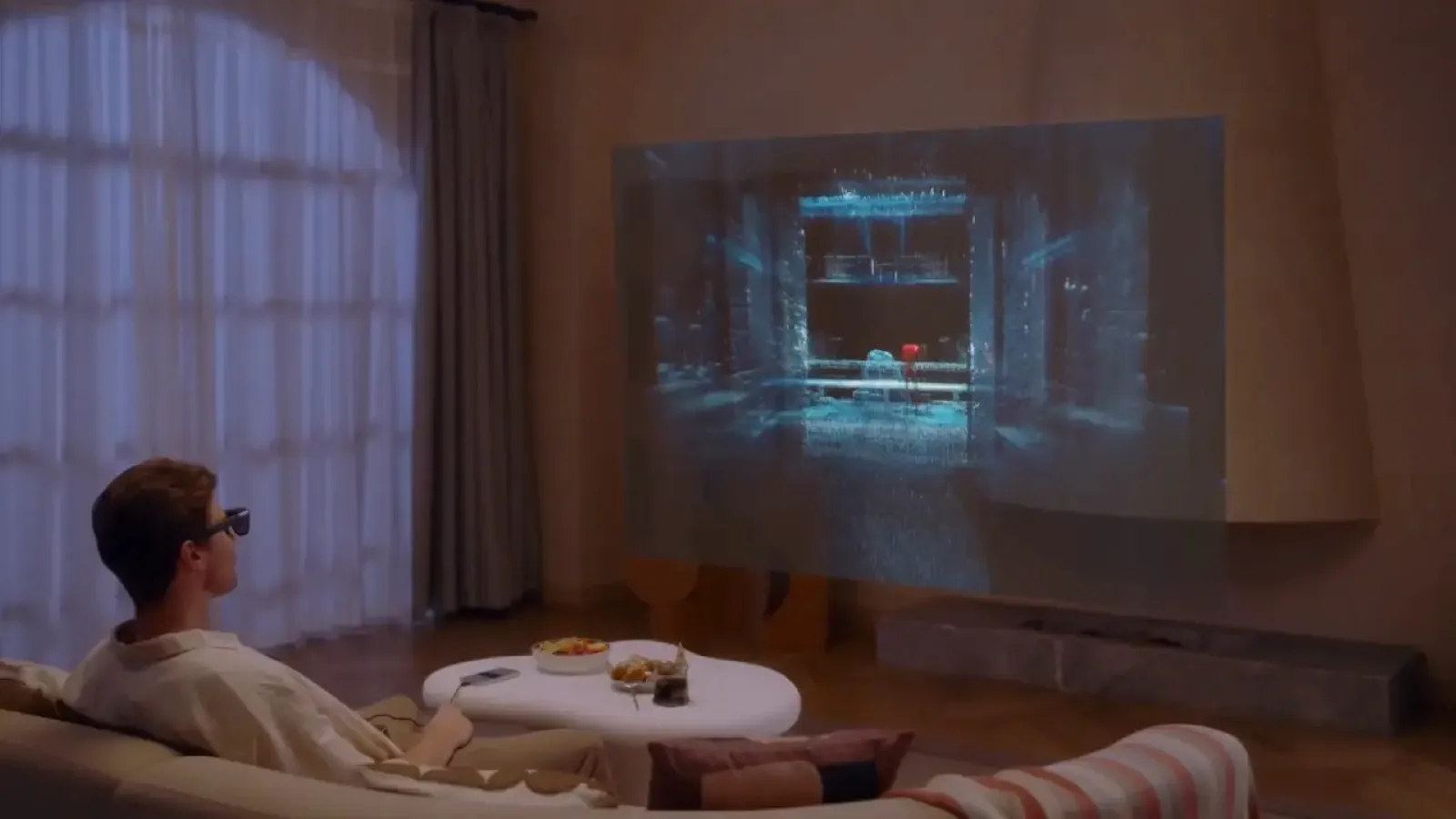
The Xreal One Pro is a visor for reality‑shifting — projecting screens like holograms only you can see. Credit: Xreal.com
XREAL specifies micro-OLED displays, a 57-degree field of view, support for up to 120 Hz and built-in three-degrees-of-freedom tracking. That tracking lets the display respond to head orientation rather than behaving only like a picture rigidly attached to your face.
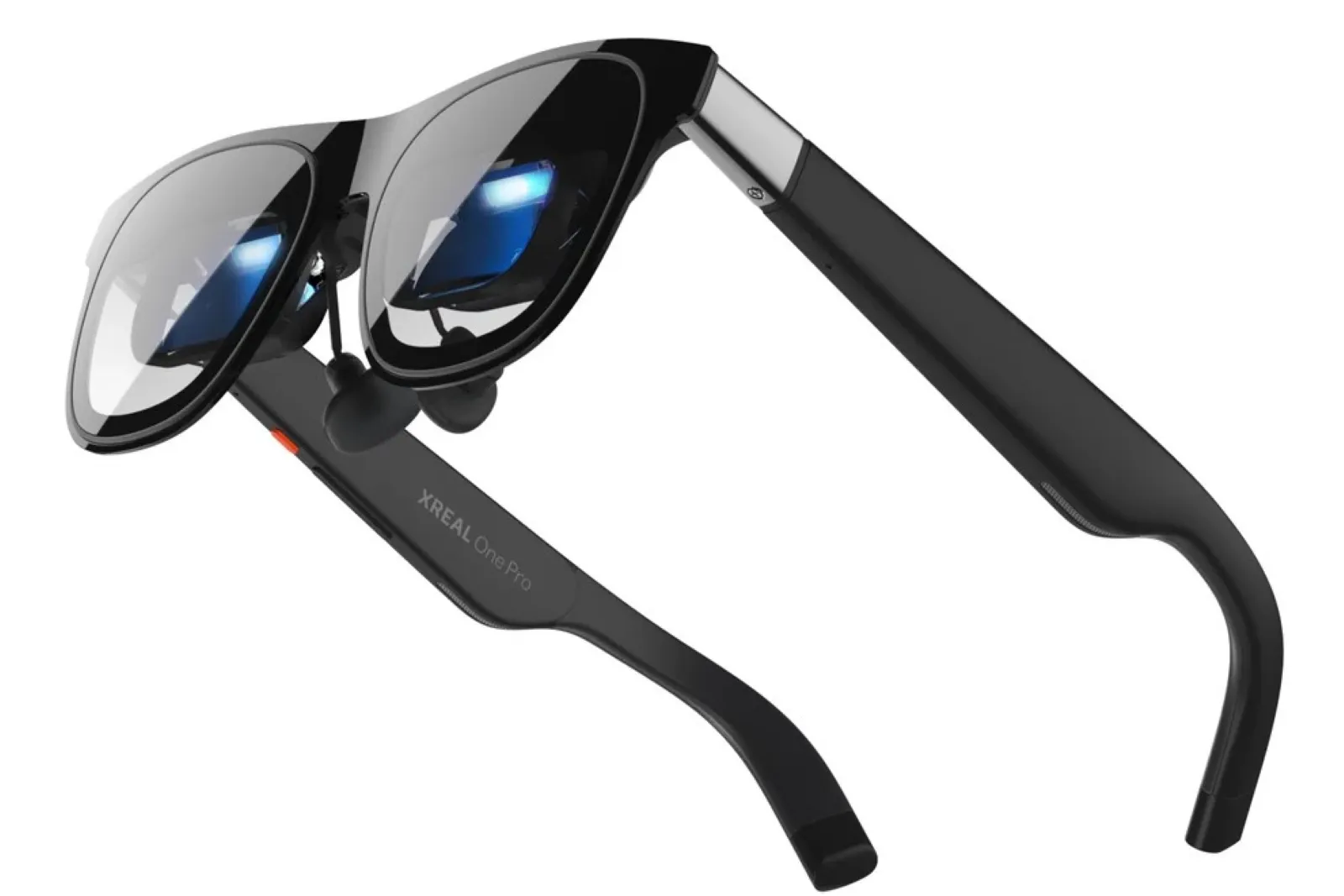
The One Pro offers full‑HD micro‑OLED displays, low‑latency casting, and crisp spatial viewing in a featherweight frame. Credit: Xreal.com
For sci-fi fans, the attraction is obvious. A private display for a handheld game or an episode on a journey feels much closer to imagined future technology than another illuminated desktop ornament.
The important catch: a USB-C socket alone does not guarantee compatibility. XREAL’s connection guidance requires DisplayPort video output and adequate power; some devices need additional hardware.
Treat these as wearable display glasses, not a standalone games console. Check fit, the appropriate interpupillary-distance option and prescription requirements before committing. XREAL offers two fit ranges rather than one universal size. (uk.shop.xreal.com)
Who should consider them: solo viewers and players with a confirmed compatible device.
Philips Hue Play HDMI Sync Box 8K: Make the Room Respond
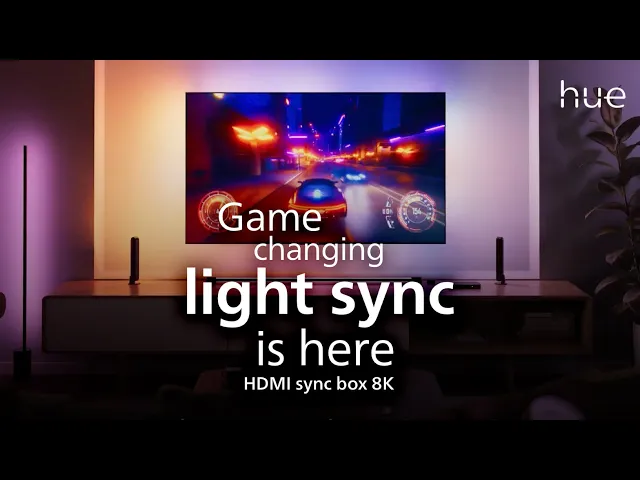
The Philips Hue Play HDMI Sync Box 8K analyses an HDMI video signal and coordinates compatible lighting around it. Philips specifies four HDMI inputs and support for formats including 4K at 120 Hz, 8K at 60 Hz, Dolby Vision and HDR10+.
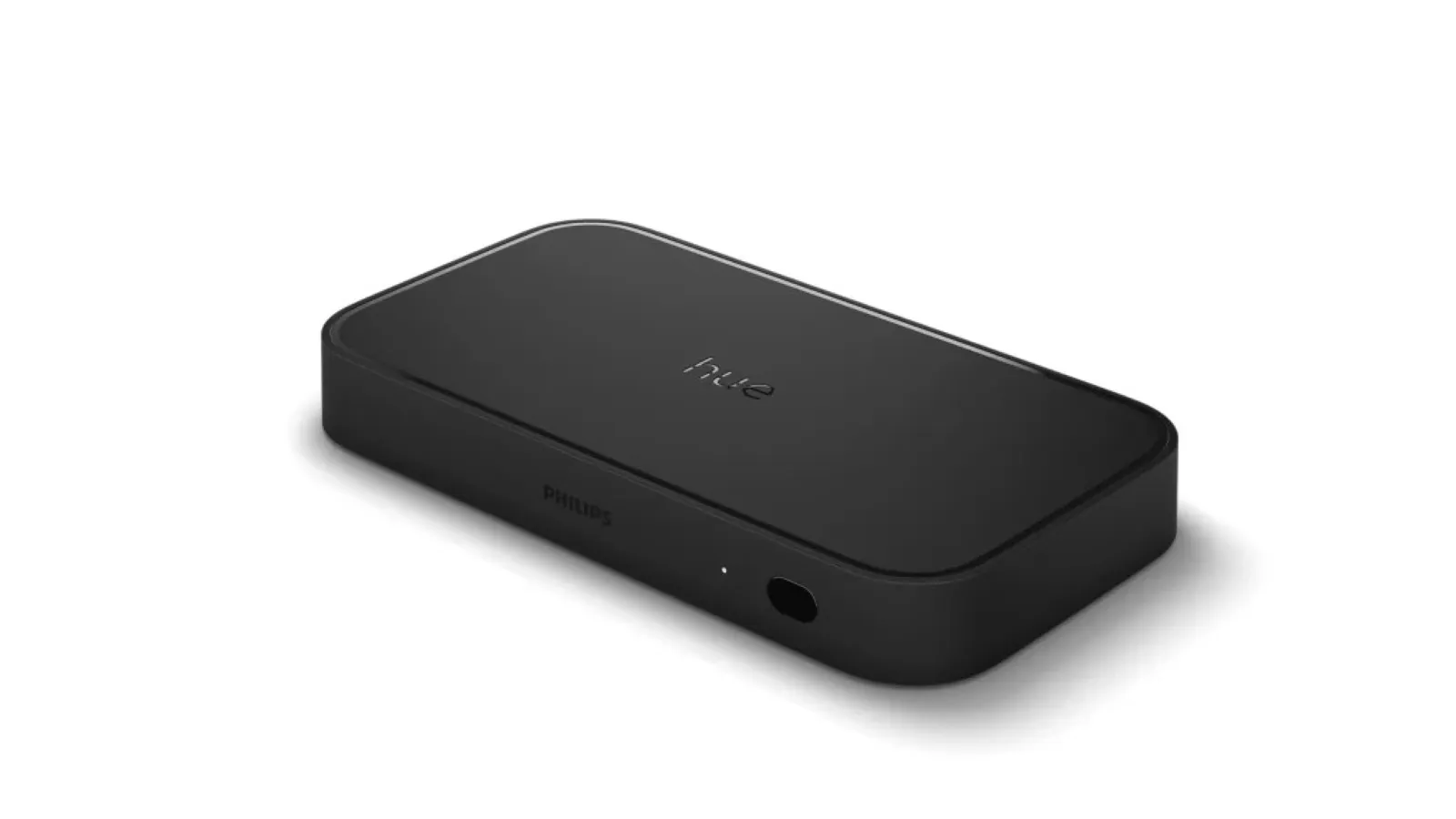
The Play HDMI Sync Box is a quiet box with a loud effect — ambient lighting that simply disappears into the room. Credit: Philips-hue.com
The sci-fi appeal is environmental. A red-alert sequence can extend beyond the television; a blue planetary horizon can influence the surrounding room.
Used sparingly, that can be entertaining. Used at maximum intensity throughout a film, it may become the most distracting performer on screen—or beside it.
Philips Hue Play HDMI Sync Box 8K. By Philips Hue. From @PhilipsHueofficial
The important catch: the box does not analyse programmes played through a television’s built-in apps, because those signals do not pass through its HDMI inputs. Philips offers other synchronisation routes for particular setups. (philips-hue.com)
Price the complete arrangement, including compatible lights and the control hardware specified for your chosen setup. The sync box is not the entire lighting system.
Who should consider it: existing Hue owners using external streaming players or consoles.
Nanoleaf Shapes: A Command Centre You Can Rearrange
If reactive cinema lighting is too much, Nanoleaf Shapes offers another approach: modular wall lighting that can establish an atmosphere without following every frame.
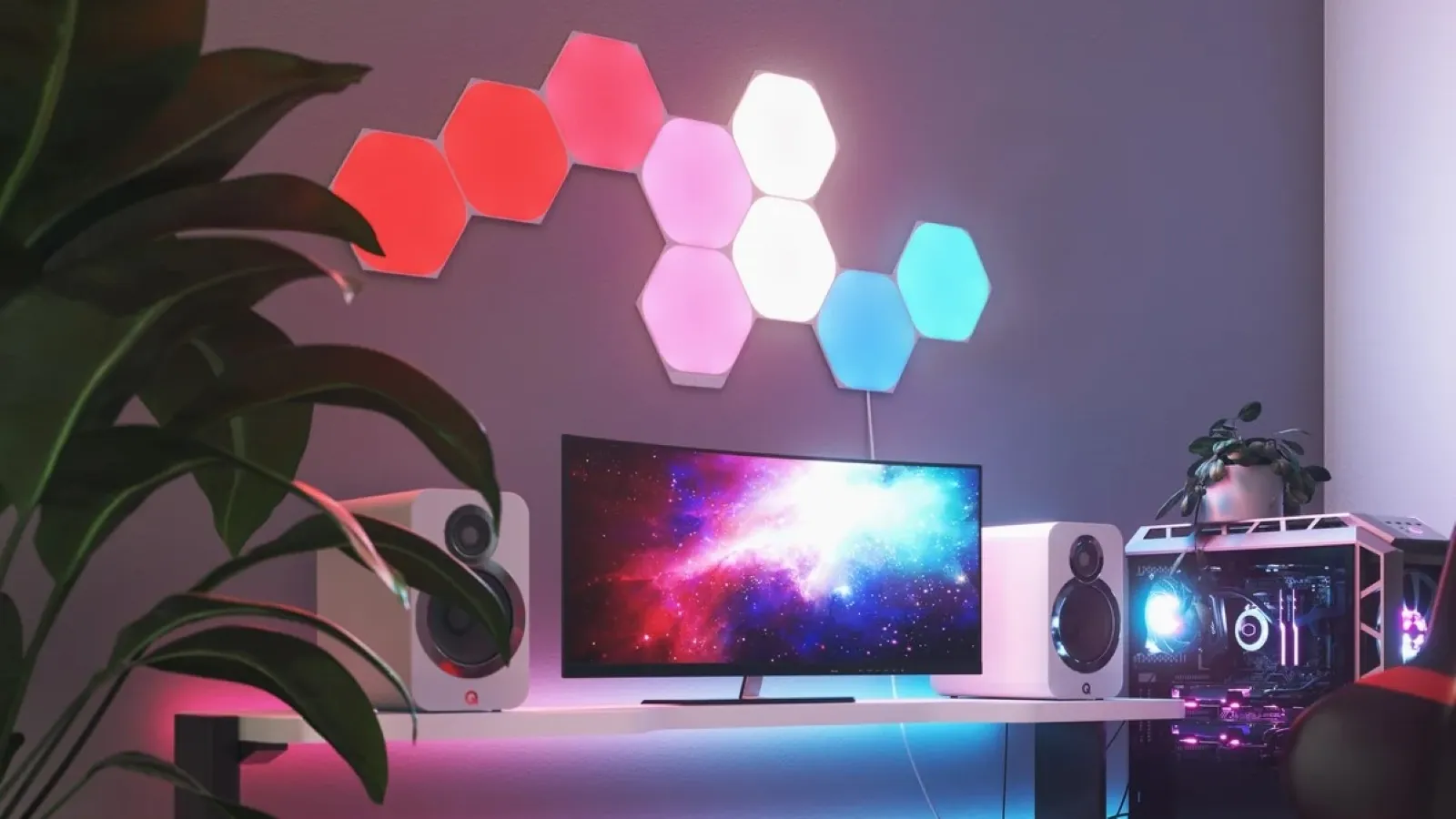
Reactive, reconfigurable wall lighting that makes your setup feel like a control deck. Credit: Nanoleaf.me
The system combines compatible hexagons, triangles and mini triangles, with touch controls, music synchronisation and configurable scenes. Starter kits include the controller, power supply and connection hardware; expansion packs serve a different purpose.
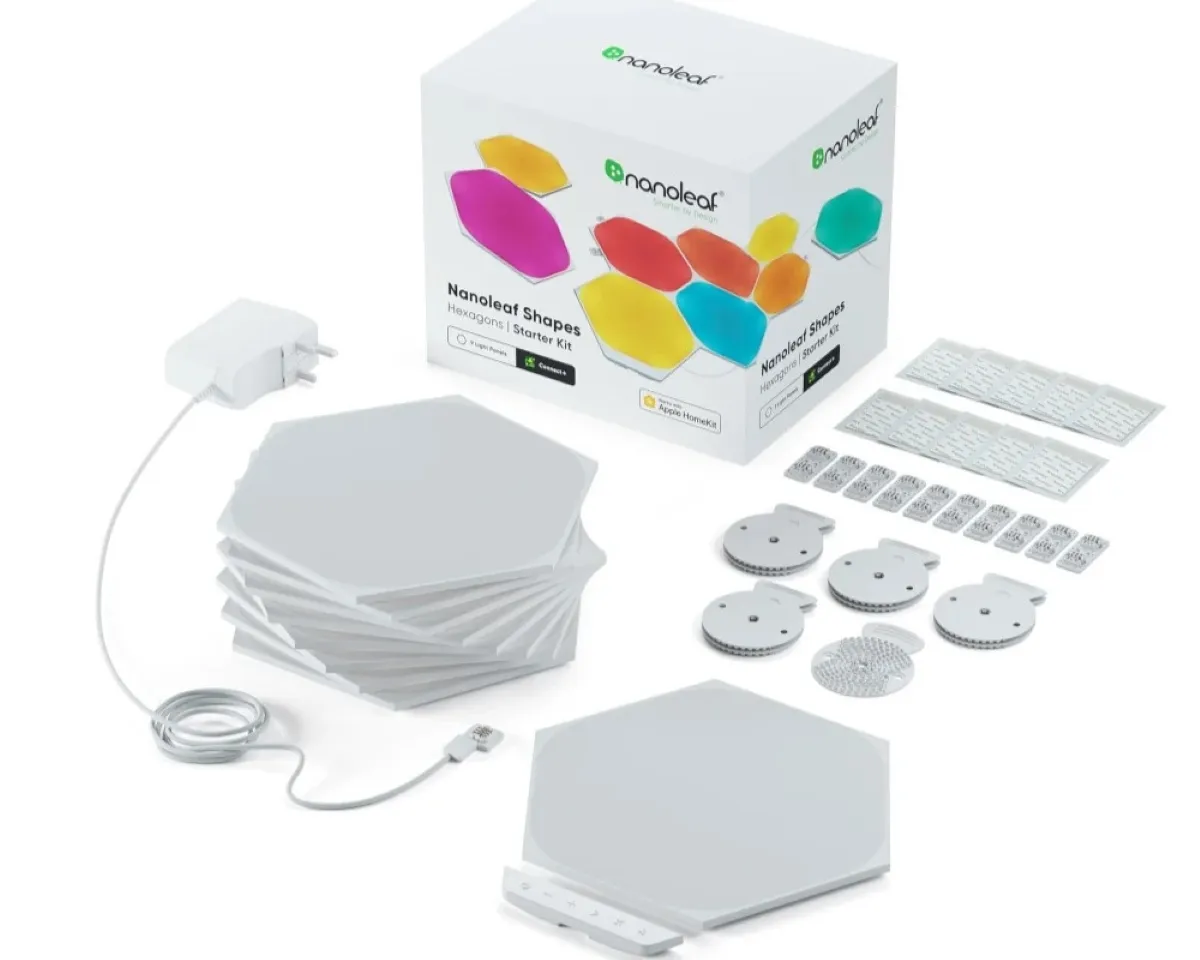
The Nanoleaf kit comes in modular hexagons and triangles with touch input, music sync, and fully programmable scenes. Credit: Nanoleaf.me
Its strongest sci-fi quality is architectural. A restrained arrangement can suggest a navigation display or laboratory wall without copying a particular franchise.
The temptation is to fill every available surface. Our advice is the opposite: design the layout around the room, then stop before the lighting overwhelms it.
The important catch: check mounting suitability, socket placement and Wi-Fi requirements. Nanoleaf specifies a 2.4 GHz Wi-Fi network for Shapes. (nanoleaf.me)
Who should consider it: readers who want a configurable gaming, reading or display space—not necessarily another screen.
8BitDo Ultimate 2 Wireless: Put the Useful Part First
A controller does not have to resemble a spaceship throttle to deserve a place here.
The 8BitDo Ultimate 2 Wireless packs hall‑effect sticks for drift‑proof precision, adaptive triggers with finely tuned resistance, and multi‑platform support that snaps seamlessly between PC, Switch, Steam Deck, and mobile. Its low‑latency wireless link, magnetic charging dock, and deep customisation through 8BitDo Ultimate Software make it feel less like a gamepad and more like a precision instrument built for creators and players who demand control that never wavers. (8bitdo.com)
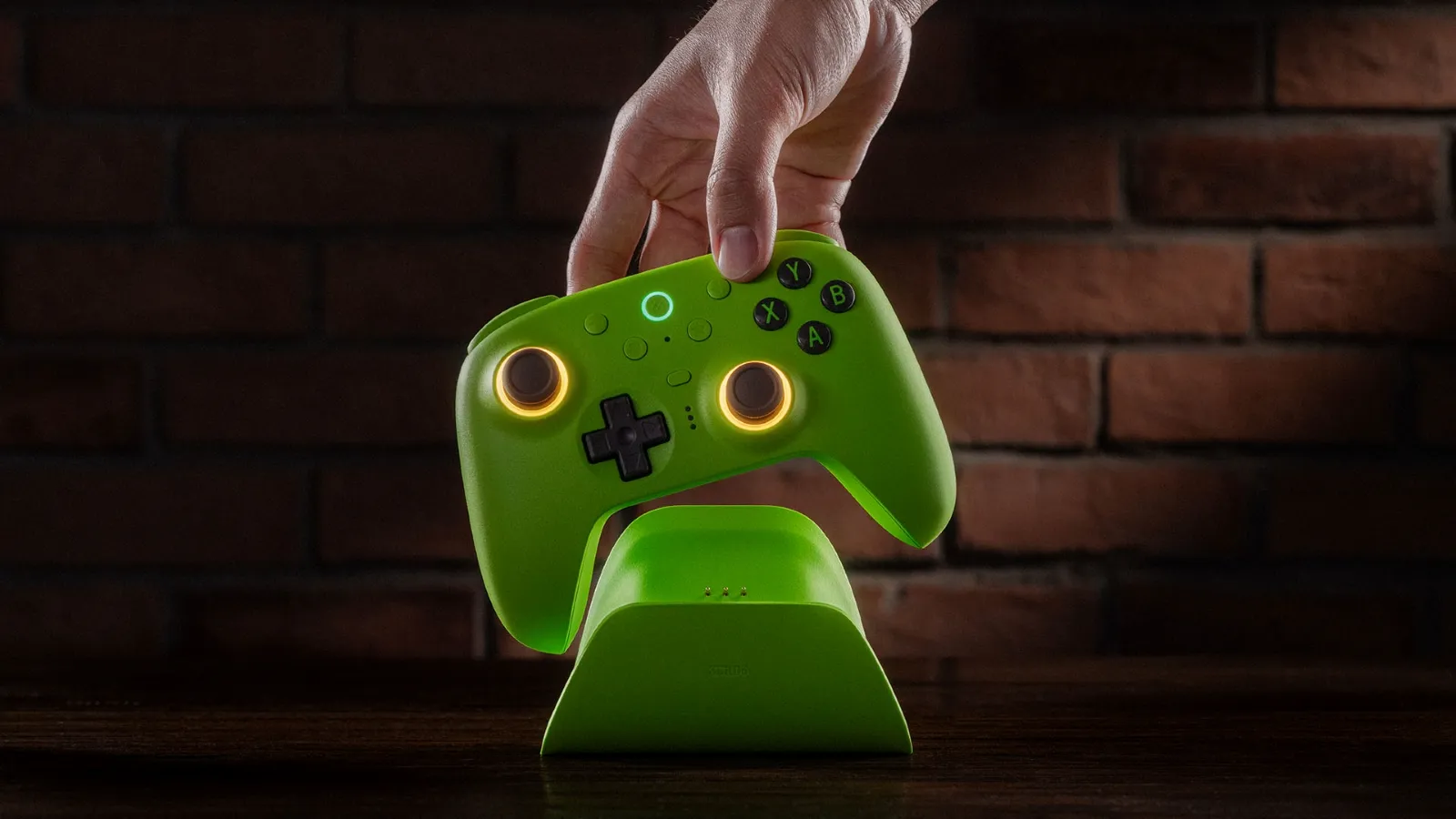
Precision‑tuned for the future, the Ultimate 2 feels less like a controller and more like a neural interface — clean lines, adaptive triggers, and latency so low it borders on telepathic. Credit: 8bitdo.com
The appeal is also customisation: shaping the controls around how you play rather than accepting one arrangement for everything.
Its illuminated thumbstick rings provide the futuristic flourish. They are not the main reason to buy it.
The important catch: check the exact model, platform and operating-system version. “Ultimate” covers several different controllers, and compatibility should never be inferred from the name alone. Configuration also has its own requirements: 8BitDo’s FAQ specifies desktop rather than mobile Ultimate Software V2 support for this model.
Who should consider it: compatible-device owners who will actually use remapping and the extra controls.
Before Buying a Futuristic Gadget
Ask three questions:
Does it work with equipment I already own?
What additional accessories complete the experience?
Will I still use it when the novelty wears off?
For gifts, compatibility matters more than surprise. A wearable display with the wrong connection—or an expansion lighting pack without its starter hardware—is not an upgrade.
SciNexic's Verdict
The best gadgets for sci-fi fans do not merely borrow the genre’s appearance. They deliver a small part of its promise: a more adaptable environment, a screen that travels or controls that respond to individual preferences.
Choose the experience first. Let the futuristic styling be the bonus.
Science fiction has promised us wearable displays, responsive environments and controls that seem to anticipate what we want.
Unfortunately, it has also inspired plenty of gadgets whose main achievement is occupying a USB port.
The most interesting technology for sci-fi fans sits between those extremes: objects that deliver a little futuristic theatre while remaining useful after the first demonstration.
Our researched shortlist focuses on four such possibilities. None requires you to pretend your living room is actually a starship. Although we will not discourage a tasteful command-centre aesthetic.
XREAL One Pro: A Personal Screen That Travels
The XREAL One Pro turns the wearable-display idea into something relatively straightforward: glasses that connect to a compatible source and place a virtual screen in your field of view.
The Xreal One Pro is a visor for reality‑shifting — projecting screens like holograms only you can see. Credit: Xreal.com
XREAL specifies micro-OLED displays, a 57-degree field of view, support for up to 120 Hz and built-in three-degrees-of-freedom tracking. That tracking lets the display respond to head orientation rather than behaving only like a picture rigidly attached to your face.
The One Pro offers full‑HD micro‑OLED displays, low‑latency casting, and crisp spatial viewing in a featherweight frame. Credit: Xreal.com
For sci-fi fans, the attraction is obvious. A private display for a handheld game or an episode on a journey feels much closer to imagined future technology than another illuminated desktop ornament.
The important catch: a USB-C socket alone does not guarantee compatibility. XREAL’s connection guidance requires DisplayPort video output and adequate power; some devices need additional hardware.
Treat these as wearable display glasses, not a standalone games console. Check fit, the appropriate interpupillary-distance option and prescription requirements before committing. XREAL offers two fit ranges rather than one universal size. (uk.shop.xreal.com)
Who should consider them: solo viewers and players with a confirmed compatible device.
Philips Hue Play HDMI Sync Box 8K: Make the Room Respond
The Philips Hue Play HDMI Sync Box 8K analyses an HDMI video signal and coordinates compatible lighting around it. Philips specifies four HDMI inputs and support for formats including 4K at 120 Hz, 8K at 60 Hz, Dolby Vision and HDR10+.
The Play HDMI Sync Box is a quiet box with a loud effect — ambient lighting that simply disappears into the room. Credit: Philips-hue.com
The sci-fi appeal is environmental. A red-alert sequence can extend beyond the television; a blue planetary horizon can influence the surrounding room.
Used sparingly, that can be entertaining. Used at maximum intensity throughout a film, it may become the most distracting performer on screen—or beside it.
Philips Hue Play HDMI Sync Box 8K. By Philips Hue. From @PhilipsHueofficial
The important catch: the box does not analyse programmes played through a television’s built-in apps, because those signals do not pass through its HDMI inputs. Philips offers other synchronisation routes for particular setups. (philips-hue.com)
Price the complete arrangement, including compatible lights and the control hardware specified for your chosen setup. The sync box is not the entire lighting system.
Who should consider it: existing Hue owners using external streaming players or consoles.
Nanoleaf Shapes: A Command Centre You Can Rearrange
If reactive cinema lighting is too much, Nanoleaf Shapes offers another approach: modular wall lighting that can establish an atmosphere without following every frame.
Reactive, reconfigurable wall lighting that makes your setup feel like a control deck. Credit: Nanoleaf.me
The system combines compatible hexagons, triangles and mini triangles, with touch controls, music synchronisation and configurable scenes. Starter kits include the controller, power supply and connection hardware; expansion packs serve a different purpose.
The Nanoleaf kit comes in modular hexagons and triangles with touch input, music sync, and fully programmable scenes. Credit: Nanoleaf.me
Its strongest sci-fi quality is architectural. A restrained arrangement can suggest a navigation display or laboratory wall without copying a particular franchise.
The temptation is to fill every available surface. Our advice is the opposite: design the layout around the room, then stop before the lighting overwhelms it.
The important catch: check mounting suitability, socket placement and Wi-Fi requirements. Nanoleaf specifies a 2.4 GHz Wi-Fi network for Shapes. (nanoleaf.me)
Who should consider it: readers who want a configurable gaming, reading or display space—not necessarily another screen.
8BitDo Ultimate 2 Wireless: Put the Useful Part First
A controller does not have to resemble a spaceship throttle to deserve a place here.
The 8BitDo Ultimate 2 Wireless packs hall‑effect sticks for drift‑proof precision, adaptive triggers with finely tuned resistance, and multi‑platform support that snaps seamlessly between PC, Switch, Steam Deck, and mobile. Its low‑latency wireless link, magnetic charging dock, and deep customisation through 8BitDo Ultimate Software make it feel less like a gamepad and more like a precision instrument built for creators and players who demand control that never wavers. (8bitdo.com)
Precision‑tuned for the future, the Ultimate 2 feels less like a controller and more like a neural interface — clean lines, adaptive triggers, and latency so low it borders on telepathic. Credit: 8bitdo.com
The appeal is also customisation: shaping the controls around how you play rather than accepting one arrangement for everything.
Its illuminated thumbstick rings provide the futuristic flourish. They are not the main reason to buy it.
The important catch: check the exact model, platform and operating-system version. “Ultimate” covers several different controllers, and compatibility should never be inferred from the name alone. Configuration also has its own requirements: 8BitDo’s FAQ specifies desktop rather than mobile Ultimate Software V2 support for this model.
Who should consider it: compatible-device owners who will actually use remapping and the extra controls.
Before Buying a Futuristic Gadget
Ask three questions:
Does it work with equipment I already own?
What additional accessories complete the experience?
Will I still use it when the novelty wears off?
For gifts, compatibility matters more than surprise. A wearable display with the wrong connection—or an expansion lighting pack without its starter hardware—is not an upgrade.
SciNexic's Verdict
The best gadgets for sci-fi fans do not merely borrow the genre’s appearance. They deliver a small part of its promise: a more adaptable environment, a screen that travels or controls that respond to individual preferences.
Choose the experience first. Let the futuristic styling be the bonus.
Science fiction has promised us wearable displays, responsive environments and controls that seem to anticipate what we want.
Unfortunately, it has also inspired plenty of gadgets whose main achievement is occupying a USB port.
The most interesting technology for sci-fi fans sits between those extremes: objects that deliver a little futuristic theatre while remaining useful after the first demonstration.
Our researched shortlist focuses on four such possibilities. None requires you to pretend your living room is actually a starship. Although we will not discourage a tasteful command-centre aesthetic.
XREAL One Pro: A Personal Screen That Travels
The XREAL One Pro turns the wearable-display idea into something relatively straightforward: glasses that connect to a compatible source and place a virtual screen in your field of view.
The Xreal One Pro is a visor for reality‑shifting — projecting screens like holograms only you can see. Credit: Xreal.com
XREAL specifies micro-OLED displays, a 57-degree field of view, support for up to 120 Hz and built-in three-degrees-of-freedom tracking. That tracking lets the display respond to head orientation rather than behaving only like a picture rigidly attached to your face.
The One Pro offers full‑HD micro‑OLED displays, low‑latency casting, and crisp spatial viewing in a featherweight frame. Credit: Xreal.com
For sci-fi fans, the attraction is obvious. A private display for a handheld game or an episode on a journey feels much closer to imagined future technology than another illuminated desktop ornament.
The important catch: a USB-C socket alone does not guarantee compatibility. XREAL’s connection guidance requires DisplayPort video output and adequate power; some devices need additional hardware.
Treat these as wearable display glasses, not a standalone games console. Check fit, the appropriate interpupillary-distance option and prescription requirements before committing. XREAL offers two fit ranges rather than one universal size. (uk.shop.xreal.com)
Who should consider them: solo viewers and players with a confirmed compatible device.
Philips Hue Play HDMI Sync Box 8K: Make the Room Respond
The Philips Hue Play HDMI Sync Box 8K analyses an HDMI video signal and coordinates compatible lighting around it. Philips specifies four HDMI inputs and support for formats including 4K at 120 Hz, 8K at 60 Hz, Dolby Vision and HDR10+.
The Play HDMI Sync Box is a quiet box with a loud effect — ambient lighting that simply disappears into the room. Credit: Philips-hue.com
The sci-fi appeal is environmental. A red-alert sequence can extend beyond the television; a blue planetary horizon can influence the surrounding room.
Used sparingly, that can be entertaining. Used at maximum intensity throughout a film, it may become the most distracting performer on screen—or beside it.
Philips Hue Play HDMI Sync Box 8K. By Philips Hue. From @PhilipsHueofficial
The important catch: the box does not analyse programmes played through a television’s built-in apps, because those signals do not pass through its HDMI inputs. Philips offers other synchronisation routes for particular setups. (philips-hue.com)
Price the complete arrangement, including compatible lights and the control hardware specified for your chosen setup. The sync box is not the entire lighting system.
Who should consider it: existing Hue owners using external streaming players or consoles.
Nanoleaf Shapes: A Command Centre You Can Rearrange
If reactive cinema lighting is too much, Nanoleaf Shapes offers another approach: modular wall lighting that can establish an atmosphere without following every frame.
Reactive, reconfigurable wall lighting that makes your setup feel like a control deck. Credit: Nanoleaf.me
The system combines compatible hexagons, triangles and mini triangles, with touch controls, music synchronisation and configurable scenes. Starter kits include the controller, power supply and connection hardware; expansion packs serve a different purpose.
The Nanoleaf kit comes in modular hexagons and triangles with touch input, music sync, and fully programmable scenes. Credit: Nanoleaf.me
Its strongest sci-fi quality is architectural. A restrained arrangement can suggest a navigation display or laboratory wall without copying a particular franchise.
The temptation is to fill every available surface. Our advice is the opposite: design the layout around the room, then stop before the lighting overwhelms it.
The important catch: check mounting suitability, socket placement and Wi-Fi requirements. Nanoleaf specifies a 2.4 GHz Wi-Fi network for Shapes. (nanoleaf.me)
Who should consider it: readers who want a configurable gaming, reading or display space—not necessarily another screen.
8BitDo Ultimate 2 Wireless: Put the Useful Part First
A controller does not have to resemble a spaceship throttle to deserve a place here.
The 8BitDo Ultimate 2 Wireless packs hall‑effect sticks for drift‑proof precision, adaptive triggers with finely tuned resistance, and multi‑platform support that snaps seamlessly between PC, Switch, Steam Deck, and mobile. Its low‑latency wireless link, magnetic charging dock, and deep customisation through 8BitDo Ultimate Software make it feel less like a gamepad and more like a precision instrument built for creators and players who demand control that never wavers. (8bitdo.com)
Precision‑tuned for the future, the Ultimate 2 feels less like a controller and more like a neural interface — clean lines, adaptive triggers, and latency so low it borders on telepathic. Credit: 8bitdo.com
The appeal is also customisation: shaping the controls around how you play rather than accepting one arrangement for everything.
Its illuminated thumbstick rings provide the futuristic flourish. They are not the main reason to buy it.
The important catch: check the exact model, platform and operating-system version. “Ultimate” covers several different controllers, and compatibility should never be inferred from the name alone. Configuration also has its own requirements: 8BitDo’s FAQ specifies desktop rather than mobile Ultimate Software V2 support for this model.
Who should consider it: compatible-device owners who will actually use remapping and the extra controls.
Before Buying a Futuristic Gadget
Ask three questions:
Does it work with equipment I already own?
What additional accessories complete the experience?
Will I still use it when the novelty wears off?
For gifts, compatibility matters more than surprise. A wearable display with the wrong connection—or an expansion lighting pack without its starter hardware—is not an upgrade.
SciNexic's Verdict
The best gadgets for sci-fi fans do not merely borrow the genre’s appearance. They deliver a small part of its promise: a more adaptable environment, a screen that travels or controls that respond to individual preferences.
Choose the experience first. Let the futuristic styling be the bonus.
Image Gallery
Comments
Please be kind and considerate. Any abusive or offensive comments will be sent out the airlock! Thank You.
Please be kind and considerate. Any abusive or offensive comments will be sent out the airlock! Thank You.


Join the SciNexic Crew
Related Posts
Share on Twitter
Share on Instagram
Share on Twitter
Share on Instagram
Banner Image - Nanoleaf Shapes promo image - https://nanoleaf.me/en-gb/products/nanoleaf-shapes-starter-kits?variant=46040753537258 - Copyright: Nanoleaf
Main Article - All images and media are the property of their respective owners.