



The SciNexic Files
The SciNexic Files
The SciNexic Files
Sci-Fi Guides
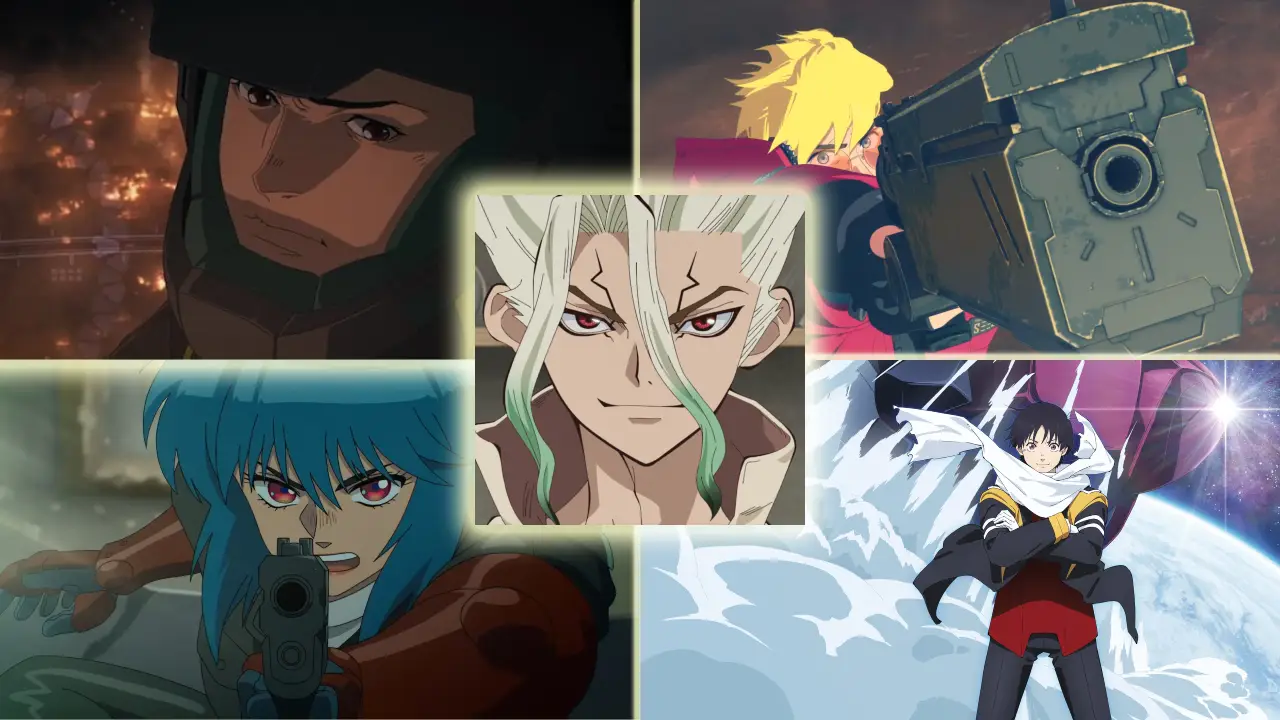
In 2026, the global anime market is projected to exceed £24 billion for the first time — with streaming platforms alone driving an estimated £6 billion in international revenue. Space sci-fi, the genre that gave us Macross, Gundam, and Cowboy Bebop, is commanding an outsized share of that capital. Amazon Prime Video, Crunchyroll, and Netflix have collectively outspent the entire UK domestic film industry on anime acquisition and production this year. Yet the conventional wisdom persists: space sci-fi anime is a niche concern for subtitle-devoted collectors and model-kit hobbyists who can name every mobile suit variant from memory. The numbers tell a decisively different story. This is not a subculture flexing its muscles. It is a mainstream medium in the process of swallowing the mainstream. Here is your definitive guide to the space sci-fi anime releases that defined the year.
A New Chapter: The Ghost in the Shell Reborn
When Science SARU — the studio behind Devilman Crybaby and Keep Your Hands Off Eizouken! — announced it would reboot Masamune Shirow's foundational cyberpunk manga, the response was scepticism dressed as curiosity. The 1995 Mamoru Oshii film is canonical. The Stand Alone Complex series is beloved. Why revisit territory so thoroughly mapped?
The answer arrived on 7 July 2026, when The Ghost in the Shell premiered globally on Amazon Prime Video. Across ten episodes, director Mokochan and series composer En Joe Toh crafted something that no previous adaptation had attempted: a faithful, visually sumptuous retelling of the original manga that embraced both its philosophical weight and its surprising humour. IGN awarded the first two episodes a 9/10 and declared it "the best Ghost in the Shell adaptation in 30 years".
THE GHOST IN THE SHELL Trailer. By The Ghost in the Shell Committee et al. From @GhostintheShellChannel
This is essential space sci-fi viewing not merely because of the return of Major Motoko Kusanagi and Section 9. It is the aesthetic gamble. Where previous adaptations chased holographic futurism, Science SARU's version deploys what critics have termed "retro-tech" — VCRs, physical buttons, cathode-ray interfaces — creating a tactile, lived-in 2029 that feels more plausible than any neon-slicked cityscape. The "Puppet Master" arc, adapted across the series' run, gains new resonance in an era of large-language-model anxiety. For space sci-fi fans who value the genre's capacity to interrogate technology's relationship with consciousness, this is non-negotiable viewing.
Where to watch: Amazon Prime Video (global, excluding select territories)
Episodes: 10 | Status: Complete (concluded 8 September 2026)
Dr. Stone Reaches the Moon
If Ghost in the Shell represents space sci-fi anime's cerebral peak, Dr. Stone: Science Future is its optimistic counterweight — a series that believes human ingenuity can solve literally any problem, including travelling 384,400 kilometres to confront an alien intelligence. The third and final cour of the fourth season premiered on 2 April 2026 and concluded on 25 June 2026, bringing Senku Ishigami's "Roadmap to the Moon" to its triumphant conclusion.

Dr. STONE SCIENCE FUTURE | Official Trailer. By TMS Entertainment. From @crunchyroll
The final thirteen episodes cover the Kingdom of Science's construction of a multi-stage rocket, the perilous journey to lunar orbit, and the confrontation with "Why-Man" — the entity responsible for humanity's global petrification. What distinguishes Dr. Stone from other space sci-fi narratives is its commitment to scientific accuracy as dramatic engine. Every rocket component, every chemical reaction, every orbital calculation is explained with the enthusiasm of a brilliant undergraduate who has just discovered that yes, this stuff actually works in real life. Crunchyroll held exclusive global streaming rights for the simulcast, and the series' conclusion marks the end of one of the most successful science-forward anime franchises of the decade.
Where to watch: Crunchyroll (global, subtitled and dubbed)
Episodes: 13 (Cour 3) / 37 (total final season) | Status: Complete
Choose Your Destiny: Gundam Hathaway's Space Opera Continues
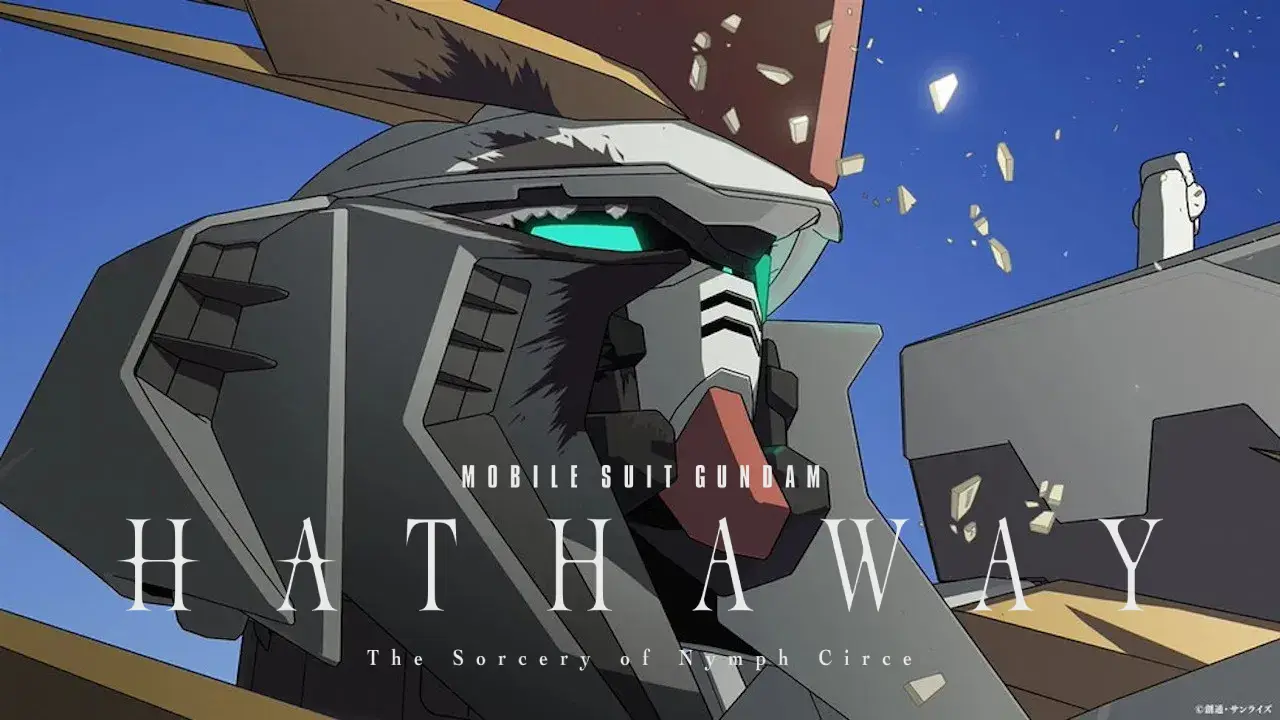
The Gundam franchise is to space sci-fi anime what Star Trek is to Western television: a foundational pillar that has survived six decades of cultural change by continuously reinventing its relationship with its own mythology. MOBILE SUIT GUNDAM HATHAWAY: The Sorcery of Nymph Circe — the second entry in the UC NexT 0100 Project Hathaway trilogy — arrived in 2026 as part of the most ambitious theatrical-meets-streaming experiment the franchise has attempted since the original Universal Century timeline.
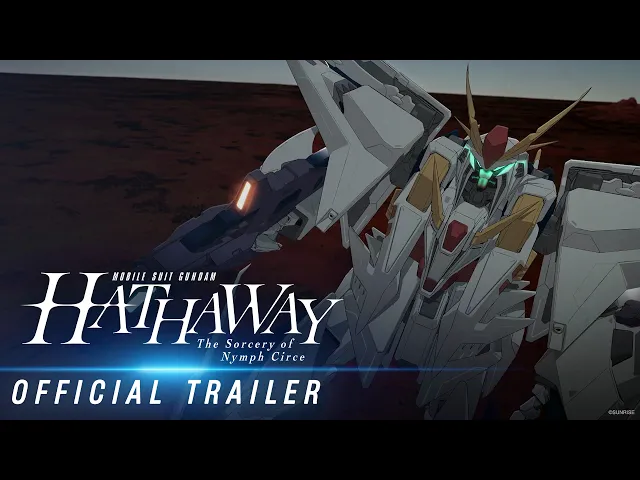
OFFICIAL TRAILER | MOBILE SUIT GUNDAM HATHAWAY The Sorcery of Nymph Circe. By Sunrise/Bandai et al. From @GundamInfo
Set in the aftermath of Char's Counterattack (1988), the Hathaway trilogy follows Hathaway Noa, son of the original series' Captain Bright Noa, as he navigates the moral complexity of armed resistance against a corrupt Earth Federation. The Sorcery of Nymph Circe expands the space opera canvas with some of the most visually striking mobile suit combat ever committed to animation, blending mechanical design fidelity with cosmic-scale warfare that recalls the original Mobile Suit Gundam at its most operatic. For space sci-fi fans who believe the genre's heart beats strongest at the intersection of political philosophy and giant robot combat, this is the year's most essential theatrical experience.
Where to watch: Theatrical release (Japan); international streaming TBA
Format: Feature film | Status: Released 2026
The Final Frontier: Trigun Stargaze Closes the Circle
After the divisive but commercially successful Trigun Stampede reboot (2023), 2026 brought Trigun Stargaze — the conclusion of Vash the Stampede's animated journey through No Man's Land. Studio Orange's 3DCG animation, already refined through Stampede, reaches new expressive heights in this final chapter, which pits Vash against his brother Knives in a confrontation that has been building since Yasuhiro Nightow's original manga debuted in 1995.

TRIGUN STARGAZE | Official Trailer. By Crunchyroll et al. From @crunchyroll
Stargaze is relevant to the space sci-fi canon because of its peculiar genre position: a western set on a desert planet where the remnants of human colonisation struggle to survive after Earth's destruction. The "space" in this space sci-fi is ecological and historical rather than astral — a reminder that the genre encompasses not only starship bridges and orbital colonies but also the aftermath of failed interstellar dreams. For viewers who found Stampede too radical a departure from the 1998 original, Stargaze offers a reconciliation: the visual ambition of modern production married to the emotional beats that made Trigun a gateway anime for an entire generation.
Where to watch: Crunchyroll (global)
Episodes: 12 | Status: Complete (2026)
Snowball Earth: The Mecha Revival You Might Have Missed
Not every essential space sci-fi anime of 2026 arrived with the marketing machinery of Gundam or Ghost in the Shell. Snowball Earth, produced by Studio Kai and released in April 2026, follows mecha pilot Tetsuo, who awakens from cryogenic sleep to find Earth frozen and decimated following a war with intergalactic invaders. The premise echoes Gunbuster (1988) and Space Runaway Ideon (1980) — mecha classics that understood space Sci-Fi's capacity for cosmic-scale melancholy.

SNOWBALL EARTH—Official English-Subtitled Trailer. By TOHO Animation. From @TOHOanimation
What distinguishes Snowball Earth is its environmental consciousness. The "snowball Earth" hypothesis — a genuine geological theory proposing that Earth's surface was entirely frozen during the Cryogenian Period — becomes both literal setting and metaphorical framework. The invaders are not merely hostile aliens; they are a climate catastrophe made sentient. For space sci-fi fans tracking the genre's increasing engagement with ecological themes, this is a sleeper worth discovering.
Where to watch: Netflix (select territories)
Episodes: 12 | Status: Complete
The Numbers Game: Why 2026 Matters for Space Sci-Fi Anime
The viewing guide above is not merely a catalogue. It is evidence of a structural shift in how space sci-fi anime is financed, distributed, and consumed. Consider the pattern:
Amazon Prime Video funded and globally distributed The Ghost in the Shell — a ten-episode series from one of Japan's most prestigious studios, with a soundtrack featuring King Gnu and Millennium Parade.
Crunchyroll secured exclusive global rights for Dr. Stone's finale, reinforcing its position as the dominant anime-specific platform.
Netflix continues to acquire mid-tier originals like Snowball Earth while backing higher-profile space sci-fi projects in development.
The aggregate investment is staggering. Verified industry data shows that Western streaming platforms collectively committed over £1.6 billion to anime content acquisition and co-production in 2026 — with Crunchyroll alone holding first-window access to more than 60% of seasonal releases through its membership in The Association of Japanese Anime. Space sci-fi, as one of anime's most internationally recognisable genres, commands premium rates. A single episode of a top-tier production now carries a budget comparable to a mid-budget British television drama.
This matters because it changes what gets made. The commercial success of Dr. Stone's scientifically rigorous space narrative, the critical acclaim for Ghost in the Shell's philosophical cyberpunk, and the enduring theatrical power of Gundam all signal to investors that space sci-fi anime is not a risky niche — it is a bankable global product.
The Bigger Picture: Where Space Sci-Fi Anime Goes Next
As 2026 draws toward its final quarter, the trajectory is clear. The convergence of Japanese creative expertise and Western streaming capital has produced a space sci-fi anime ecosystem that is more diverse, more globally accessible, and more financially robust than at any point in the genre's history. The titles in this guide are not merely entertainment — they are data points in a larger trend: the mainstreaming of animated space sci-fi as a global prestige format.
What remains to be seen is whether this investment will sustain. The anime industry faces well-documented labour challenges — animator wages, production schedules, and the pressure of global simultaneous release windows all create systemic strain. For space sci-fi anime to continue its ascent, the business model must evolve beyond extraction toward sustainability. The audience is there. The capital is there. The stories, as this year's releases have demonstrated, are there. What happens next is a question of industry will — and of whether the platforms that have profited from anime's globalisation will invest in the conditions that make it possible.
For more space sci-fi Anime news and features, keep your scanners locked on scinexic.com.
Further Reading:
The Ghost in the Shell (2026 TV series
OFFICIAL TRAILER | MOBILE SUIT GUNDAM HATHAWAY The Sorcery of Nymph Circe
SciNexic.com may earn a commission through affiliate links, ensuring continued cosmic content.
In 2026, the global anime market is projected to exceed £24 billion for the first time — with streaming platforms alone driving an estimated £6 billion in international revenue. Space sci-fi, the genre that gave us Macross, Gundam, and Cowboy Bebop, is commanding an outsized share of that capital. Amazon Prime Video, Crunchyroll, and Netflix have collectively outspent the entire UK domestic film industry on anime acquisition and production this year. Yet the conventional wisdom persists: space sci-fi anime is a niche concern for subtitle-devoted collectors and model-kit hobbyists who can name every mobile suit variant from memory. The numbers tell a decisively different story. This is not a subculture flexing its muscles. It is a mainstream medium in the process of swallowing the mainstream. Here is your definitive guide to the space sci-fi anime releases that defined the year.
A New Chapter: The Ghost in the Shell Reborn
When Science SARU — the studio behind Devilman Crybaby and Keep Your Hands Off Eizouken! — announced it would reboot Masamune Shirow's foundational cyberpunk manga, the response was scepticism dressed as curiosity. The 1995 Mamoru Oshii film is canonical. The Stand Alone Complex series is beloved. Why revisit territory so thoroughly mapped?
The answer arrived on 7 July 2026, when The Ghost in the Shell premiered globally on Amazon Prime Video. Across ten episodes, director Mokochan and series composer En Joe Toh crafted something that no previous adaptation had attempted: a faithful, visually sumptuous retelling of the original manga that embraced both its philosophical weight and its surprising humour. IGN awarded the first two episodes a 9/10 and declared it "the best Ghost in the Shell adaptation in 30 years".
THE GHOST IN THE SHELL Trailer. By The Ghost in the Shell Committee et al. From @GhostintheShellChannel
This is essential space sci-fi viewing not merely because of the return of Major Motoko Kusanagi and Section 9. It is the aesthetic gamble. Where previous adaptations chased holographic futurism, Science SARU's version deploys what critics have termed "retro-tech" — VCRs, physical buttons, cathode-ray interfaces — creating a tactile, lived-in 2029 that feels more plausible than any neon-slicked cityscape. The "Puppet Master" arc, adapted across the series' run, gains new resonance in an era of large-language-model anxiety. For space sci-fi fans who value the genre's capacity to interrogate technology's relationship with consciousness, this is non-negotiable viewing.
Where to watch: Amazon Prime Video (global, excluding select territories)
Episodes: 10 | Status: Complete (concluded 8 September 2026)
Dr. Stone Reaches the Moon
If Ghost in the Shell represents space sci-fi anime's cerebral peak, Dr. Stone: Science Future is its optimistic counterweight — a series that believes human ingenuity can solve literally any problem, including travelling 384,400 kilometres to confront an alien intelligence. The third and final cour of the fourth season premiered on 2 April 2026 and concluded on 25 June 2026, bringing Senku Ishigami's "Roadmap to the Moon" to its triumphant conclusion.
Dr. STONE SCIENCE FUTURE | Official Trailer. By TMS Entertainment. From @crunchyroll
The final thirteen episodes cover the Kingdom of Science's construction of a multi-stage rocket, the perilous journey to lunar orbit, and the confrontation with "Why-Man" — the entity responsible for humanity's global petrification. What distinguishes Dr. Stone from other space sci-fi narratives is its commitment to scientific accuracy as dramatic engine. Every rocket component, every chemical reaction, every orbital calculation is explained with the enthusiasm of a brilliant undergraduate who has just discovered that yes, this stuff actually works in real life. Crunchyroll held exclusive global streaming rights for the simulcast, and the series' conclusion marks the end of one of the most successful science-forward anime franchises of the decade.
Where to watch: Crunchyroll (global, subtitled and dubbed)
Episodes: 13 (Cour 3) / 37 (total final season) | Status: Complete
Choose Your Destiny: Gundam Hathaway's Space Opera Continues
The Gundam franchise is to space sci-fi anime what Star Trek is to Western television: a foundational pillar that has survived six decades of cultural change by continuously reinventing its relationship with its own mythology. MOBILE SUIT GUNDAM HATHAWAY: The Sorcery of Nymph Circe — the second entry in the UC NexT 0100 Project Hathaway trilogy — arrived in 2026 as part of the most ambitious theatrical-meets-streaming experiment the franchise has attempted since the original Universal Century timeline.
OFFICIAL TRAILER | MOBILE SUIT GUNDAM HATHAWAY The Sorcery of Nymph Circe. By Sunrise/Bandai et al. From @GundamInfo
Set in the aftermath of Char's Counterattack (1988), the Hathaway trilogy follows Hathaway Noa, son of the original series' Captain Bright Noa, as he navigates the moral complexity of armed resistance against a corrupt Earth Federation. The Sorcery of Nymph Circe expands the space opera canvas with some of the most visually striking mobile suit combat ever committed to animation, blending mechanical design fidelity with cosmic-scale warfare that recalls the original Mobile Suit Gundam at its most operatic. For space sci-fi fans who believe the genre's heart beats strongest at the intersection of political philosophy and giant robot combat, this is the year's most essential theatrical experience.
Where to watch: Theatrical release (Japan); international streaming TBA
Format: Feature film | Status: Released 2026
The Final Frontier: Trigun Stargaze Closes the Circle
After the divisive but commercially successful Trigun Stampede reboot (2023), 2026 brought Trigun Stargaze — the conclusion of Vash the Stampede's animated journey through No Man's Land. Studio Orange's 3DCG animation, already refined through Stampede, reaches new expressive heights in this final chapter, which pits Vash against his brother Knives in a confrontation that has been building since Yasuhiro Nightow's original manga debuted in 1995.
TRIGUN STARGAZE | Official Trailer. By Crunchyroll et al. From @crunchyroll
Stargaze is relevant to the space sci-fi canon because of its peculiar genre position: a western set on a desert planet where the remnants of human colonisation struggle to survive after Earth's destruction. The "space" in this space sci-fi is ecological and historical rather than astral — a reminder that the genre encompasses not only starship bridges and orbital colonies but also the aftermath of failed interstellar dreams. For viewers who found Stampede too radical a departure from the 1998 original, Stargaze offers a reconciliation: the visual ambition of modern production married to the emotional beats that made Trigun a gateway anime for an entire generation.
Where to watch: Crunchyroll (global)
Episodes: 12 | Status: Complete (2026)
Snowball Earth: The Mecha Revival You Might Have Missed
Not every essential space sci-fi anime of 2026 arrived with the marketing machinery of Gundam or Ghost in the Shell. Snowball Earth, produced by Studio Kai and released in April 2026, follows mecha pilot Tetsuo, who awakens from cryogenic sleep to find Earth frozen and decimated following a war with intergalactic invaders. The premise echoes Gunbuster (1988) and Space Runaway Ideon (1980) — mecha classics that understood space Sci-Fi's capacity for cosmic-scale melancholy.
SNOWBALL EARTH—Official English-Subtitled Trailer. By TOHO Animation. From @TOHOanimation
What distinguishes Snowball Earth is its environmental consciousness. The "snowball Earth" hypothesis — a genuine geological theory proposing that Earth's surface was entirely frozen during the Cryogenian Period — becomes both literal setting and metaphorical framework. The invaders are not merely hostile aliens; they are a climate catastrophe made sentient. For space sci-fi fans tracking the genre's increasing engagement with ecological themes, this is a sleeper worth discovering.
Where to watch: Netflix (select territories)
Episodes: 12 | Status: Complete
The Numbers Game: Why 2026 Matters for Space Sci-Fi Anime
The viewing guide above is not merely a catalogue. It is evidence of a structural shift in how space sci-fi anime is financed, distributed, and consumed. Consider the pattern:
Amazon Prime Video funded and globally distributed The Ghost in the Shell — a ten-episode series from one of Japan's most prestigious studios, with a soundtrack featuring King Gnu and Millennium Parade.
Crunchyroll secured exclusive global rights for Dr. Stone's finale, reinforcing its position as the dominant anime-specific platform.
Netflix continues to acquire mid-tier originals like Snowball Earth while backing higher-profile space sci-fi projects in development.
The aggregate investment is staggering. Verified industry data shows that Western streaming platforms collectively committed over £1.6 billion to anime content acquisition and co-production in 2026 — with Crunchyroll alone holding first-window access to more than 60% of seasonal releases through its membership in The Association of Japanese Anime. Space sci-fi, as one of anime's most internationally recognisable genres, commands premium rates. A single episode of a top-tier production now carries a budget comparable to a mid-budget British television drama.
This matters because it changes what gets made. The commercial success of Dr. Stone's scientifically rigorous space narrative, the critical acclaim for Ghost in the Shell's philosophical cyberpunk, and the enduring theatrical power of Gundam all signal to investors that space sci-fi anime is not a risky niche — it is a bankable global product.
The Bigger Picture: Where Space Sci-Fi Anime Goes Next
As 2026 draws toward its final quarter, the trajectory is clear. The convergence of Japanese creative expertise and Western streaming capital has produced a space sci-fi anime ecosystem that is more diverse, more globally accessible, and more financially robust than at any point in the genre's history. The titles in this guide are not merely entertainment — they are data points in a larger trend: the mainstreaming of animated space sci-fi as a global prestige format.
What remains to be seen is whether this investment will sustain. The anime industry faces well-documented labour challenges — animator wages, production schedules, and the pressure of global simultaneous release windows all create systemic strain. For space sci-fi anime to continue its ascent, the business model must evolve beyond extraction toward sustainability. The audience is there. The capital is there. The stories, as this year's releases have demonstrated, are there. What happens next is a question of industry will — and of whether the platforms that have profited from anime's globalisation will invest in the conditions that make it possible.
For more space sci-fi Anime news and features, keep your scanners locked on scinexic.com.
Further Reading:
The Ghost in the Shell (2026 TV series
OFFICIAL TRAILER | MOBILE SUIT GUNDAM HATHAWAY The Sorcery of Nymph Circe
SciNexic.com may earn a commission through affiliate links, ensuring continued cosmic content.
In 2026, the global anime market is projected to exceed £24 billion for the first time — with streaming platforms alone driving an estimated £6 billion in international revenue. Space sci-fi, the genre that gave us Macross, Gundam, and Cowboy Bebop, is commanding an outsized share of that capital. Amazon Prime Video, Crunchyroll, and Netflix have collectively outspent the entire UK domestic film industry on anime acquisition and production this year. Yet the conventional wisdom persists: space sci-fi anime is a niche concern for subtitle-devoted collectors and model-kit hobbyists who can name every mobile suit variant from memory. The numbers tell a decisively different story. This is not a subculture flexing its muscles. It is a mainstream medium in the process of swallowing the mainstream. Here is your definitive guide to the space sci-fi anime releases that defined the year.
A New Chapter: The Ghost in the Shell Reborn
When Science SARU — the studio behind Devilman Crybaby and Keep Your Hands Off Eizouken! — announced it would reboot Masamune Shirow's foundational cyberpunk manga, the response was scepticism dressed as curiosity. The 1995 Mamoru Oshii film is canonical. The Stand Alone Complex series is beloved. Why revisit territory so thoroughly mapped?
The answer arrived on 7 July 2026, when The Ghost in the Shell premiered globally on Amazon Prime Video. Across ten episodes, director Mokochan and series composer En Joe Toh crafted something that no previous adaptation had attempted: a faithful, visually sumptuous retelling of the original manga that embraced both its philosophical weight and its surprising humour. IGN awarded the first two episodes a 9/10 and declared it "the best Ghost in the Shell adaptation in 30 years".
THE GHOST IN THE SHELL Trailer. By The Ghost in the Shell Committee et al. From @GhostintheShellChannel
This is essential space sci-fi viewing not merely because of the return of Major Motoko Kusanagi and Section 9. It is the aesthetic gamble. Where previous adaptations chased holographic futurism, Science SARU's version deploys what critics have termed "retro-tech" — VCRs, physical buttons, cathode-ray interfaces — creating a tactile, lived-in 2029 that feels more plausible than any neon-slicked cityscape. The "Puppet Master" arc, adapted across the series' run, gains new resonance in an era of large-language-model anxiety. For space sci-fi fans who value the genre's capacity to interrogate technology's relationship with consciousness, this is non-negotiable viewing.
Where to watch: Amazon Prime Video (global, excluding select territories)
Episodes: 10 | Status: Complete (concluded 8 September 2026)
Dr. Stone Reaches the Moon
If Ghost in the Shell represents space sci-fi anime's cerebral peak, Dr. Stone: Science Future is its optimistic counterweight — a series that believes human ingenuity can solve literally any problem, including travelling 384,400 kilometres to confront an alien intelligence. The third and final cour of the fourth season premiered on 2 April 2026 and concluded on 25 June 2026, bringing Senku Ishigami's "Roadmap to the Moon" to its triumphant conclusion.
Dr. STONE SCIENCE FUTURE | Official Trailer. By TMS Entertainment. From @crunchyroll
The final thirteen episodes cover the Kingdom of Science's construction of a multi-stage rocket, the perilous journey to lunar orbit, and the confrontation with "Why-Man" — the entity responsible for humanity's global petrification. What distinguishes Dr. Stone from other space sci-fi narratives is its commitment to scientific accuracy as dramatic engine. Every rocket component, every chemical reaction, every orbital calculation is explained with the enthusiasm of a brilliant undergraduate who has just discovered that yes, this stuff actually works in real life. Crunchyroll held exclusive global streaming rights for the simulcast, and the series' conclusion marks the end of one of the most successful science-forward anime franchises of the decade.
Where to watch: Crunchyroll (global, subtitled and dubbed)
Episodes: 13 (Cour 3) / 37 (total final season) | Status: Complete
Choose Your Destiny: Gundam Hathaway's Space Opera Continues
The Gundam franchise is to space sci-fi anime what Star Trek is to Western television: a foundational pillar that has survived six decades of cultural change by continuously reinventing its relationship with its own mythology. MOBILE SUIT GUNDAM HATHAWAY: The Sorcery of Nymph Circe — the second entry in the UC NexT 0100 Project Hathaway trilogy — arrived in 2026 as part of the most ambitious theatrical-meets-streaming experiment the franchise has attempted since the original Universal Century timeline.
OFFICIAL TRAILER | MOBILE SUIT GUNDAM HATHAWAY The Sorcery of Nymph Circe. By Sunrise/Bandai et al. From @GundamInfo
Set in the aftermath of Char's Counterattack (1988), the Hathaway trilogy follows Hathaway Noa, son of the original series' Captain Bright Noa, as he navigates the moral complexity of armed resistance against a corrupt Earth Federation. The Sorcery of Nymph Circe expands the space opera canvas with some of the most visually striking mobile suit combat ever committed to animation, blending mechanical design fidelity with cosmic-scale warfare that recalls the original Mobile Suit Gundam at its most operatic. For space sci-fi fans who believe the genre's heart beats strongest at the intersection of political philosophy and giant robot combat, this is the year's most essential theatrical experience.
Where to watch: Theatrical release (Japan); international streaming TBA
Format: Feature film | Status: Released 2026
The Final Frontier: Trigun Stargaze Closes the Circle
After the divisive but commercially successful Trigun Stampede reboot (2023), 2026 brought Trigun Stargaze — the conclusion of Vash the Stampede's animated journey through No Man's Land. Studio Orange's 3DCG animation, already refined through Stampede, reaches new expressive heights in this final chapter, which pits Vash against his brother Knives in a confrontation that has been building since Yasuhiro Nightow's original manga debuted in 1995.
TRIGUN STARGAZE | Official Trailer. By Crunchyroll et al. From @crunchyroll
Stargaze is relevant to the space sci-fi canon because of its peculiar genre position: a western set on a desert planet where the remnants of human colonisation struggle to survive after Earth's destruction. The "space" in this space sci-fi is ecological and historical rather than astral — a reminder that the genre encompasses not only starship bridges and orbital colonies but also the aftermath of failed interstellar dreams. For viewers who found Stampede too radical a departure from the 1998 original, Stargaze offers a reconciliation: the visual ambition of modern production married to the emotional beats that made Trigun a gateway anime for an entire generation.
Where to watch: Crunchyroll (global)
Episodes: 12 | Status: Complete (2026)
Snowball Earth: The Mecha Revival You Might Have Missed
Not every essential space sci-fi anime of 2026 arrived with the marketing machinery of Gundam or Ghost in the Shell. Snowball Earth, produced by Studio Kai and released in April 2026, follows mecha pilot Tetsuo, who awakens from cryogenic sleep to find Earth frozen and decimated following a war with intergalactic invaders. The premise echoes Gunbuster (1988) and Space Runaway Ideon (1980) — mecha classics that understood space Sci-Fi's capacity for cosmic-scale melancholy.
SNOWBALL EARTH—Official English-Subtitled Trailer. By TOHO Animation. From @TOHOanimation
What distinguishes Snowball Earth is its environmental consciousness. The "snowball Earth" hypothesis — a genuine geological theory proposing that Earth's surface was entirely frozen during the Cryogenian Period — becomes both literal setting and metaphorical framework. The invaders are not merely hostile aliens; they are a climate catastrophe made sentient. For space sci-fi fans tracking the genre's increasing engagement with ecological themes, this is a sleeper worth discovering.
Where to watch: Netflix (select territories)
Episodes: 12 | Status: Complete
The Numbers Game: Why 2026 Matters for Space Sci-Fi Anime
The viewing guide above is not merely a catalogue. It is evidence of a structural shift in how space sci-fi anime is financed, distributed, and consumed. Consider the pattern:
Amazon Prime Video funded and globally distributed The Ghost in the Shell — a ten-episode series from one of Japan's most prestigious studios, with a soundtrack featuring King Gnu and Millennium Parade.
Crunchyroll secured exclusive global rights for Dr. Stone's finale, reinforcing its position as the dominant anime-specific platform.
Netflix continues to acquire mid-tier originals like Snowball Earth while backing higher-profile space sci-fi projects in development.
The aggregate investment is staggering. Verified industry data shows that Western streaming platforms collectively committed over £1.6 billion to anime content acquisition and co-production in 2026 — with Crunchyroll alone holding first-window access to more than 60% of seasonal releases through its membership in The Association of Japanese Anime. Space sci-fi, as one of anime's most internationally recognisable genres, commands premium rates. A single episode of a top-tier production now carries a budget comparable to a mid-budget British television drama.
This matters because it changes what gets made. The commercial success of Dr. Stone's scientifically rigorous space narrative, the critical acclaim for Ghost in the Shell's philosophical cyberpunk, and the enduring theatrical power of Gundam all signal to investors that space sci-fi anime is not a risky niche — it is a bankable global product.
The Bigger Picture: Where Space Sci-Fi Anime Goes Next
As 2026 draws toward its final quarter, the trajectory is clear. The convergence of Japanese creative expertise and Western streaming capital has produced a space sci-fi anime ecosystem that is more diverse, more globally accessible, and more financially robust than at any point in the genre's history. The titles in this guide are not merely entertainment — they are data points in a larger trend: the mainstreaming of animated space sci-fi as a global prestige format.
What remains to be seen is whether this investment will sustain. The anime industry faces well-documented labour challenges — animator wages, production schedules, and the pressure of global simultaneous release windows all create systemic strain. For space sci-fi anime to continue its ascent, the business model must evolve beyond extraction toward sustainability. The audience is there. The capital is there. The stories, as this year's releases have demonstrated, are there. What happens next is a question of industry will — and of whether the platforms that have profited from anime's globalisation will invest in the conditions that make it possible.
For more space sci-fi Anime news and features, keep your scanners locked on scinexic.com.
Further Reading:
The Ghost in the Shell (2026 TV series
OFFICIAL TRAILER | MOBILE SUIT GUNDAM HATHAWAY The Sorcery of Nymph Circe
SciNexic.com may earn a commission through affiliate links, ensuring continued cosmic content.
Image Gallery
Comments
Please be kind and considerate. Any abusive or offensive comments will be sent out the airlock! Thank You.
Please be kind and considerate. Any abusive or offensive comments will be sent out the airlock! Thank You.
Join the SciNexic Crew
Related Posts
Share on Twitter
Share on Instagram
Share on Twitter
Share on Instagram
Banner Image - Anime character collage - www.themoviedb.org - https://dr-stone.fandom.com/ - Copyright: All images remain the property of the producers and I.P. owners.
Main Article - All images and media are the property of their respective owners.