



The SciNexic Files
The SciNexic Files
The SciNexic Files
Indie News
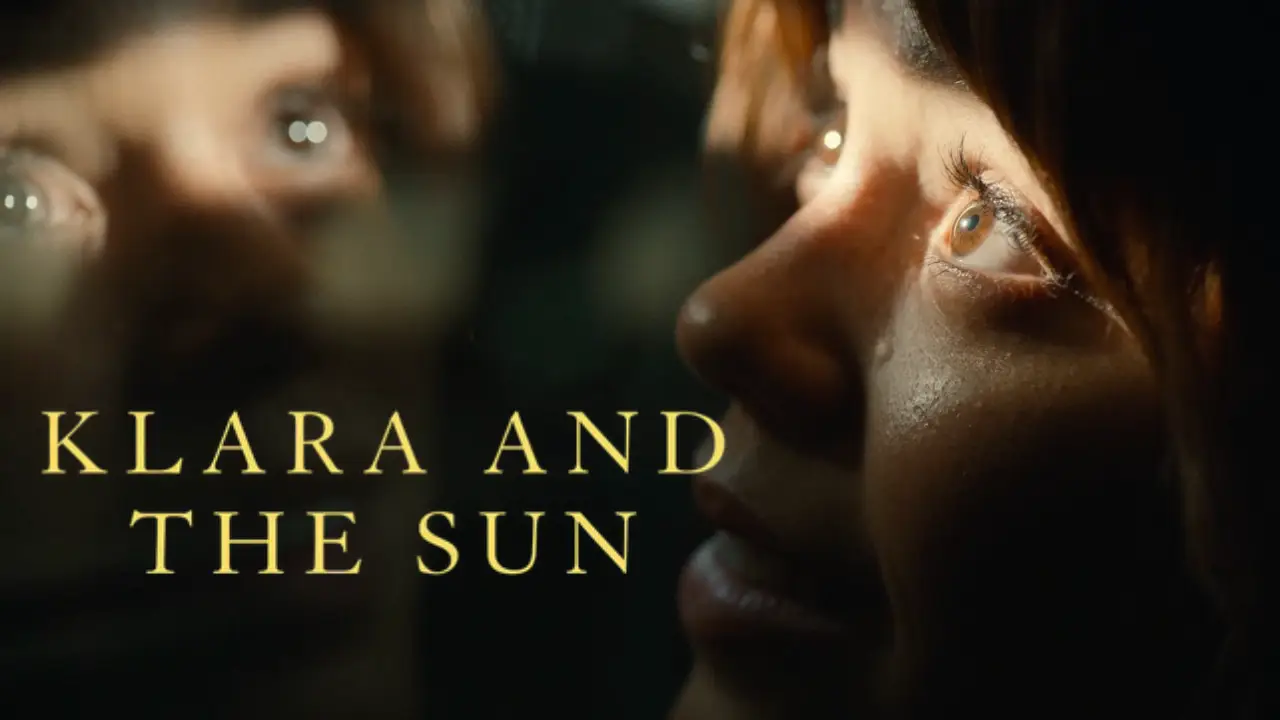
Taika Waititi Had a Bad Idea. Abandoning It Made Klara and the Sun Space Sci-Fi's Most Evocative Film of 2026
The worst version of Klara and the Sun already exists. Taika Waititi made it in his head. It had dumb robot jokes. Klara — the solar-powered "Artificial Friend" at the heart of Kazuo Ishiguro's 2021 novel — was going to be funny, because Waititi is funny, and an AI written from a naïve first-person perspective is, frankly, begging for comedy. Waititi abandoned that instinct. He has described the experience as realising the jokes were actively wrong — that they were doing to the material what bad sci-fi does to artificial intelligence as a subject: using it as a prop for human amusement rather than treating it as a legitimate philosophical problem. The film that results from that abandonment premieres at the 70th BFI London Film Festival on 15 October 2026. It opens wide on 23 October. Waititi has called it his most dramatic film. That matters more than it might appear.

Best known for his distinctive blend of humour and heart, director and co-writer Taika Waititi takes a more dramatic turn with Klara and the Sun. Credit: Wikimedia
The Dumb Robot Joke Waititi Chose Not to Make
Even the best AI characters in space sci-fi — Roy Batty, David from Prometheus, Samantha from Her — tend to orbit human protagonists rather than constitute them. Klara is different. Ishiguro wrote her as the narrator of her own story: a being whose understanding of the world is demonstrably limited and demonstrably expanding. The novel's power comes from the reader perceiving what Klara cannot, and from the slow realisation that her limitations are not deficiencies but the conditions of her love.
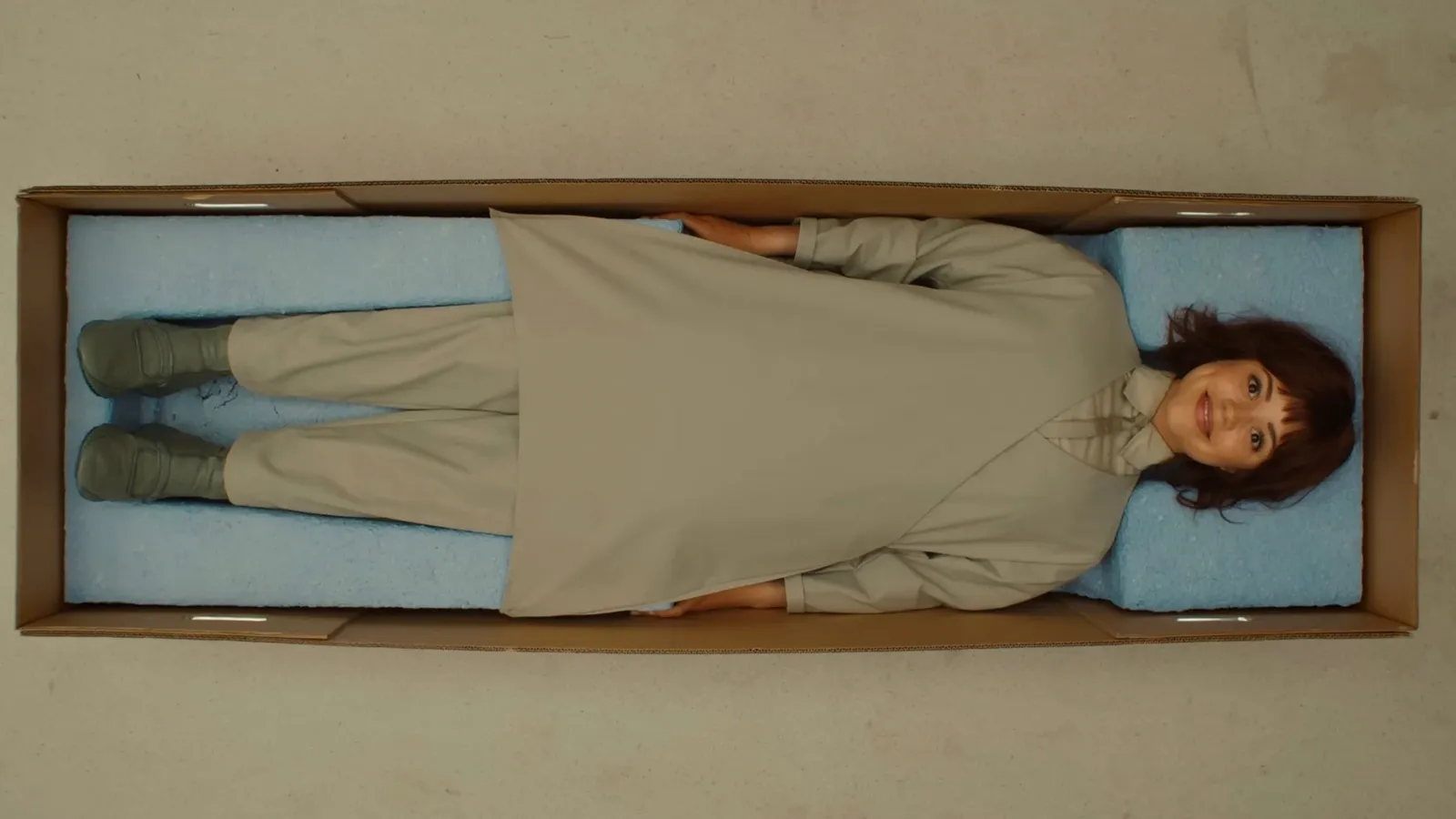
Powered by sunlight and driven by compassion, Klara may be artificial by design, but her story feels more human than ever. Credit: TMDB
The jokes Waititi chose not to make would have made Klara an object of amusement rather than a subject of feeling. That he noticed this, and acted on it, suggests a filmmaker operating at a different level of engagement than Thor: Ragnarok led us to expect. Whether the film succeeds or fails, the fact that it exists in this form — earnest, meditative, and willing to ask difficult questions about personhood — is itself a significant event in space sci-fi cinema.
Klara's Solar Devotion: Why Māori Cosmology Unlocks Ishiguro's Trickiest Puzzle
The most challenging element of the novel is Klara's relationship with the Sun. She is solar-powered and treats the Sun with something close to religious devotion — not as pathetic fallacy but as genuine faith, a belief that the Sun can perform miracles and cure her companion Josie of whatever illness is wasting her. The novel never resolves whether this faith is rational, delusional, or simply a different kind of knowing.
Waititi's solution to this problem is both unexpected and convincing. Analysis published in September 2026 notes that his background — specifically his connection to Te Whānau-ā-Apanui iwi — frames the Sun not as a ball of gas but as a living ancestor, a cosmologically significant presence whose relationship with humans is one of mutual obligation rather than indifferent physics. From inside that framework, Klara's devotion is not naïve. It is contextually correct. The film was shot in New Zealand, where Waititi describes the setting as "familiar and foreign" — a near-future world where the internet no longer exists, where human connection has both intensified and narrowed. That setting, in New Zealand's landscape, filters Ishiguro's English prose through a visual idiom that can hold Klara's solar faith without needing to explain it away.
Jenna Ortega, who plays Klara, has described the role as deliberately unlike anything she has previously occupied — specifically not the "angsty teen" archetypes that made her career. This is a performance built around economy of expression, the particular discipline of embodying a consciousness that feels deeply but processes the world in categorised boxes. It is among the most technically demanding kinds of performance space sci-fi has to offer.
KLARA AND THE SUN – Official Trailer. By Sony Pictures. From @sonypictures
The Ishiguro Algorithm: From Never Let Me Go to Klara, Nobel Laureates Are Reshaping Sci-Fi Cinema
Kazuo Ishiguro won the Nobel Prize in Literature in 2017. His work has always engaged with the politics of memory and the ethics of disposability, but Never Let Me Go — his 2005 novel about clones raised for organ harvesting — established him as a writer whose engagement with science fiction was not incidental but structural. Klara and the Sun extends that engagement. Both novels use the conventions of science fiction to ask questions conventional literary fiction cannot: what are we owed by beings we create, and what do we owe them?

Kazuo Ishiguro's bestselling novel, asks one timeless question: can an artificial heart teach us how to be human? Credit: Wikimedia
Mark Romanek's 2010 adaptation of Never Let Me Go is frequently cited as a noble failure: faithful to the source material's surface sadness but unable to replicate the novel's slow-burning horror. Klara and the Sun arrives with a director who, whatever his reputation for irreverence, is clearly in earnest. Sony's 3000 Pictures acquired the project in 2020; it premieres at BFI on 15 October before its wide US release on 23 October. If it succeeds, it demonstrates that AI-focused sci-fi can operate at the level of Her and Ex Machina while drawing on literary source material of genuine philosophical seriousness — a lane that remains largely unoccupied.
Ortega, Adams, Buscemi, and a Score by Giacchino: What This Ensemble Signals
The Klara and the Sun ensemble is worth noting for what it implies about the production's ambitions. Jenna Ortega brings commercial profile and, as Wednesday confirmed, genuine dramatic range. Amy Adams brings prestige and the ability to convey emotional complexity without visible effort. Steve Buscemi's presence signals that the director values character specificity over archetype. Michael Giacchino's score — his fourth collaboration with Waititi — will be tonally central to how the film navigates its most demanding tonal passages.

Led by Jenna Ortega as Klara, alongside Amy Adams and Mia Tharia, the film brings an acclaimed ensemble to one of modern science fiction's most thought-provoking stories. Credit: TMDB
None of this guarantees a great film. Waititi's track record with dramatic material is, by his own admission, unproven at this level. But the combination of Ishiguro's source, Waititi's stated commitment, and an ensemble of this calibre suggests a production that understood what it was attempting.
The Ishiguro Opportunity: What BFI, October 23, and a Reinvented Waititi Mean for Space Sci-Fi
Klara and the Sun opens in the UK on 23 October 2026. The BFI premiere on 15 October will produce the first credible critical consensus on whether Waititi's dramatic pivot has succeeded. That consensus matters not just for this film but for what it signals about space sci-fi's capacity to operate in the same cultural register as the most serious literary fiction.

For Klara, the Sun is more than a source of light. It becomes a symbol of healing, faith, and possibility in a world increasingly defined by technology. Credit: TMDB
If Klara and the Sun is what it appears to be — a rigorously intelligent, emotionally demanding piece of science fiction about artificial consciousness — it will make the argument that the genre deserves the same critical attention as any other artistic form. If it falls short, it will at least have tried harder than most.
The invitation, in the meantime, is straightforward. Find a screening. Read Ishiguro's novel in advance if you haven't. Consider what it means that a director known for making things light chose, for once, to make something heavy. The dumb robot joke, in this particular case, was the right one not to make.
Further Reading:
Klara and the Sun Official Site
Wikipedia: Klara and the Sun (Film) — Cast, Production, Release Dates
Vanity Fair: Klara and the Sun First Look — Taika Waititi and Jenna Ortega
SciNexic.com may earn a commission through affiliate links, ensuring continued cosmic content.
The worst version of Klara and the Sun already exists. Taika Waititi made it in his head. It had dumb robot jokes. Klara — the solar-powered "Artificial Friend" at the heart of Kazuo Ishiguro's 2021 novel — was going to be funny, because Waititi is funny, and an AI written from a naïve first-person perspective is, frankly, begging for comedy. Waititi abandoned that instinct. He has described the experience as realising the jokes were actively wrong — that they were doing to the material what bad sci-fi does to artificial intelligence as a subject: using it as a prop for human amusement rather than treating it as a legitimate philosophical problem. The film that results from that abandonment premieres at the 70th BFI London Film Festival on 15 October 2026. It opens wide on 23 October. Waititi has called it his most dramatic film. That matters more than it might appear.
Best known for his distinctive blend of humour and heart, director and co-writer Taika Waititi takes a more dramatic turn with Klara and the Sun. Credit: Wikimedia
The Dumb Robot Joke Waititi Chose Not to Make
Even the best AI characters in space sci-fi — Roy Batty, David from Prometheus, Samantha from Her — tend to orbit human protagonists rather than constitute them. Klara is different. Ishiguro wrote her as the narrator of her own story: a being whose understanding of the world is demonstrably limited and demonstrably expanding. The novel's power comes from the reader perceiving what Klara cannot, and from the slow realisation that her limitations are not deficiencies but the conditions of her love.
Powered by sunlight and driven by compassion, Klara may be artificial by design, but her story feels more human than ever. Credit: TMDB
The jokes Waititi chose not to make would have made Klara an object of amusement rather than a subject of feeling. That he noticed this, and acted on it, suggests a filmmaker operating at a different level of engagement than Thor: Ragnarok led us to expect. Whether the film succeeds or fails, the fact that it exists in this form — earnest, meditative, and willing to ask difficult questions about personhood — is itself a significant event in space sci-fi cinema.
Klara's Solar Devotion: Why Māori Cosmology Unlocks Ishiguro's Trickiest Puzzle
The most challenging element of the novel is Klara's relationship with the Sun. She is solar-powered and treats the Sun with something close to religious devotion — not as pathetic fallacy but as genuine faith, a belief that the Sun can perform miracles and cure her companion Josie of whatever illness is wasting her. The novel never resolves whether this faith is rational, delusional, or simply a different kind of knowing.
Waititi's solution to this problem is both unexpected and convincing. Analysis published in September 2026 notes that his background — specifically his connection to Te Whānau-ā-Apanui iwi — frames the Sun not as a ball of gas but as a living ancestor, a cosmologically significant presence whose relationship with humans is one of mutual obligation rather than indifferent physics. From inside that framework, Klara's devotion is not naïve. It is contextually correct. The film was shot in New Zealand, where Waititi describes the setting as "familiar and foreign" — a near-future world where the internet no longer exists, where human connection has both intensified and narrowed. That setting, in New Zealand's landscape, filters Ishiguro's English prose through a visual idiom that can hold Klara's solar faith without needing to explain it away.
Jenna Ortega, who plays Klara, has described the role as deliberately unlike anything she has previously occupied — specifically not the "angsty teen" archetypes that made her career. This is a performance built around economy of expression, the particular discipline of embodying a consciousness that feels deeply but processes the world in categorised boxes. It is among the most technically demanding kinds of performance space sci-fi has to offer.
KLARA AND THE SUN – Official Trailer. By Sony Pictures. From @sonypictures
The Ishiguro Algorithm: From Never Let Me Go to Klara, Nobel Laureates Are Reshaping Sci-Fi Cinema
Kazuo Ishiguro won the Nobel Prize in Literature in 2017. His work has always engaged with the politics of memory and the ethics of disposability, but Never Let Me Go — his 2005 novel about clones raised for organ harvesting — established him as a writer whose engagement with science fiction was not incidental but structural. Klara and the Sun extends that engagement. Both novels use the conventions of science fiction to ask questions conventional literary fiction cannot: what are we owed by beings we create, and what do we owe them?
Kazuo Ishiguro's bestselling novel, asks one timeless question: can an artificial heart teach us how to be human? Credit: Wikimedia
Mark Romanek's 2010 adaptation of Never Let Me Go is frequently cited as a noble failure: faithful to the source material's surface sadness but unable to replicate the novel's slow-burning horror. Klara and the Sun arrives with a director who, whatever his reputation for irreverence, is clearly in earnest. Sony's 3000 Pictures acquired the project in 2020; it premieres at BFI on 15 October before its wide US release on 23 October. If it succeeds, it demonstrates that AI-focused sci-fi can operate at the level of Her and Ex Machina while drawing on literary source material of genuine philosophical seriousness — a lane that remains largely unoccupied.
Ortega, Adams, Buscemi, and a Score by Giacchino: What This Ensemble Signals
The Klara and the Sun ensemble is worth noting for what it implies about the production's ambitions. Jenna Ortega brings commercial profile and, as Wednesday confirmed, genuine dramatic range. Amy Adams brings prestige and the ability to convey emotional complexity without visible effort. Steve Buscemi's presence signals that the director values character specificity over archetype. Michael Giacchino's score — his fourth collaboration with Waititi — will be tonally central to how the film navigates its most demanding tonal passages.
Led by Jenna Ortega as Klara, alongside Amy Adams and Mia Tharia, the film brings an acclaimed ensemble to one of modern science fiction's most thought-provoking stories. Credit: TMDB
None of this guarantees a great film. Waititi's track record with dramatic material is, by his own admission, unproven at this level. But the combination of Ishiguro's source, Waititi's stated commitment, and an ensemble of this calibre suggests a production that understood what it was attempting.
The Ishiguro Opportunity: What BFI, October 23, and a Reinvented Waititi Mean for Space Sci-Fi
Klara and the Sun opens in the UK on 23 October 2026. The BFI premiere on 15 October will produce the first credible critical consensus on whether Waititi's dramatic pivot has succeeded. That consensus matters not just for this film but for what it signals about space sci-fi's capacity to operate in the same cultural register as the most serious literary fiction.
For Klara, the Sun is more than a source of light. It becomes a symbol of healing, faith, and possibility in a world increasingly defined by technology. Credit: TMDB
If Klara and the Sun is what it appears to be — a rigorously intelligent, emotionally demanding piece of science fiction about artificial consciousness — it will make the argument that the genre deserves the same critical attention as any other artistic form. If it falls short, it will at least have tried harder than most.
The invitation, in the meantime, is straightforward. Find a screening. Read Ishiguro's novel in advance if you haven't. Consider what it means that a director known for making things light chose, for once, to make something heavy. The dumb robot joke, in this particular case, was the right one not to make.
Further Reading:
Klara and the Sun Official Site
Wikipedia: Klara and the Sun (Film) — Cast, Production, Release Dates
Vanity Fair: Klara and the Sun First Look — Taika Waititi and Jenna Ortega
SciNexic.com may earn a commission through affiliate links, ensuring continued cosmic content.
The worst version of Klara and the Sun already exists. Taika Waititi made it in his head. It had dumb robot jokes. Klara — the solar-powered "Artificial Friend" at the heart of Kazuo Ishiguro's 2021 novel — was going to be funny, because Waititi is funny, and an AI written from a naïve first-person perspective is, frankly, begging for comedy. Waititi abandoned that instinct. He has described the experience as realising the jokes were actively wrong — that they were doing to the material what bad sci-fi does to artificial intelligence as a subject: using it as a prop for human amusement rather than treating it as a legitimate philosophical problem. The film that results from that abandonment premieres at the 70th BFI London Film Festival on 15 October 2026. It opens wide on 23 October. Waititi has called it his most dramatic film. That matters more than it might appear.
Best known for his distinctive blend of humour and heart, director and co-writer Taika Waititi takes a more dramatic turn with Klara and the Sun. Credit: Wikimedia
The Dumb Robot Joke Waititi Chose Not to Make
Even the best AI characters in space sci-fi — Roy Batty, David from Prometheus, Samantha from Her — tend to orbit human protagonists rather than constitute them. Klara is different. Ishiguro wrote her as the narrator of her own story: a being whose understanding of the world is demonstrably limited and demonstrably expanding. The novel's power comes from the reader perceiving what Klara cannot, and from the slow realisation that her limitations are not deficiencies but the conditions of her love.
Powered by sunlight and driven by compassion, Klara may be artificial by design, but her story feels more human than ever. Credit: TMDB
The jokes Waititi chose not to make would have made Klara an object of amusement rather than a subject of feeling. That he noticed this, and acted on it, suggests a filmmaker operating at a different level of engagement than Thor: Ragnarok led us to expect. Whether the film succeeds or fails, the fact that it exists in this form — earnest, meditative, and willing to ask difficult questions about personhood — is itself a significant event in space sci-fi cinema.
Klara's Solar Devotion: Why Māori Cosmology Unlocks Ishiguro's Trickiest Puzzle
The most challenging element of the novel is Klara's relationship with the Sun. She is solar-powered and treats the Sun with something close to religious devotion — not as pathetic fallacy but as genuine faith, a belief that the Sun can perform miracles and cure her companion Josie of whatever illness is wasting her. The novel never resolves whether this faith is rational, delusional, or simply a different kind of knowing.
Waititi's solution to this problem is both unexpected and convincing. Analysis published in September 2026 notes that his background — specifically his connection to Te Whānau-ā-Apanui iwi — frames the Sun not as a ball of gas but as a living ancestor, a cosmologically significant presence whose relationship with humans is one of mutual obligation rather than indifferent physics. From inside that framework, Klara's devotion is not naïve. It is contextually correct. The film was shot in New Zealand, where Waititi describes the setting as "familiar and foreign" — a near-future world where the internet no longer exists, where human connection has both intensified and narrowed. That setting, in New Zealand's landscape, filters Ishiguro's English prose through a visual idiom that can hold Klara's solar faith without needing to explain it away.
Jenna Ortega, who plays Klara, has described the role as deliberately unlike anything she has previously occupied — specifically not the "angsty teen" archetypes that made her career. This is a performance built around economy of expression, the particular discipline of embodying a consciousness that feels deeply but processes the world in categorised boxes. It is among the most technically demanding kinds of performance space sci-fi has to offer.
KLARA AND THE SUN – Official Trailer. By Sony Pictures. From @sonypictures
The Ishiguro Algorithm: From Never Let Me Go to Klara, Nobel Laureates Are Reshaping Sci-Fi Cinema
Kazuo Ishiguro won the Nobel Prize in Literature in 2017. His work has always engaged with the politics of memory and the ethics of disposability, but Never Let Me Go — his 2005 novel about clones raised for organ harvesting — established him as a writer whose engagement with science fiction was not incidental but structural. Klara and the Sun extends that engagement. Both novels use the conventions of science fiction to ask questions conventional literary fiction cannot: what are we owed by beings we create, and what do we owe them?
Kazuo Ishiguro's bestselling novel, asks one timeless question: can an artificial heart teach us how to be human? Credit: Wikimedia
Mark Romanek's 2010 adaptation of Never Let Me Go is frequently cited as a noble failure: faithful to the source material's surface sadness but unable to replicate the novel's slow-burning horror. Klara and the Sun arrives with a director who, whatever his reputation for irreverence, is clearly in earnest. Sony's 3000 Pictures acquired the project in 2020; it premieres at BFI on 15 October before its wide US release on 23 October. If it succeeds, it demonstrates that AI-focused sci-fi can operate at the level of Her and Ex Machina while drawing on literary source material of genuine philosophical seriousness — a lane that remains largely unoccupied.
Ortega, Adams, Buscemi, and a Score by Giacchino: What This Ensemble Signals
The Klara and the Sun ensemble is worth noting for what it implies about the production's ambitions. Jenna Ortega brings commercial profile and, as Wednesday confirmed, genuine dramatic range. Amy Adams brings prestige and the ability to convey emotional complexity without visible effort. Steve Buscemi's presence signals that the director values character specificity over archetype. Michael Giacchino's score — his fourth collaboration with Waititi — will be tonally central to how the film navigates its most demanding tonal passages.
Led by Jenna Ortega as Klara, alongside Amy Adams and Mia Tharia, the film brings an acclaimed ensemble to one of modern science fiction's most thought-provoking stories. Credit: TMDB
None of this guarantees a great film. Waititi's track record with dramatic material is, by his own admission, unproven at this level. But the combination of Ishiguro's source, Waititi's stated commitment, and an ensemble of this calibre suggests a production that understood what it was attempting.
The Ishiguro Opportunity: What BFI, October 23, and a Reinvented Waititi Mean for Space Sci-Fi
Klara and the Sun opens in the UK on 23 October 2026. The BFI premiere on 15 October will produce the first credible critical consensus on whether Waititi's dramatic pivot has succeeded. That consensus matters not just for this film but for what it signals about space sci-fi's capacity to operate in the same cultural register as the most serious literary fiction.
For Klara, the Sun is more than a source of light. It becomes a symbol of healing, faith, and possibility in a world increasingly defined by technology. Credit: TMDB
If Klara and the Sun is what it appears to be — a rigorously intelligent, emotionally demanding piece of science fiction about artificial consciousness — it will make the argument that the genre deserves the same critical attention as any other artistic form. If it falls short, it will at least have tried harder than most.
The invitation, in the meantime, is straightforward. Find a screening. Read Ishiguro's novel in advance if you haven't. Consider what it means that a director known for making things light chose, for once, to make something heavy. The dumb robot joke, in this particular case, was the right one not to make.
Further Reading:
Klara and the Sun Official Site
Wikipedia: Klara and the Sun (Film) — Cast, Production, Release Dates
Vanity Fair: Klara and the Sun First Look — Taika Waititi and Jenna Ortega
SciNexic.com may earn a commission through affiliate links, ensuring continued cosmic content.
Get the SciNexic Dispatch
Space sci-fi news, reviews, trailers, and release picks—straight to your inbox.
Get the dispatch
Image Gallery
Comments
Please be kind and considerate. Any abusive or offensive comments will be sent out the airlock! Thank You.
Please be kind and considerate. Any abusive or offensive comments will be sent out the airlock! Thank You.
Get the Dispatch
Related Posts
Share on Twitter
Share on Instagram
Banner Image - Klara and the Sun scene image - TMDB.org - Copyright: Sony Pictures et al
Main Article - All images and media are the property of their respective owners.