



The SciNexic Files
Feature
Forty Years, Two Icons, One Legacy: Sir Patrick Stewart Gave Space Sci-Fi Its Conscience — and Changed What the Genre Could Mean
Three Olivier Awards, a knighthood from Queen Elizabeth II, and two of the most
recognisable characters in the history of space sci-fi — all belonging to a man who almost turned down the role that changed everything because he thought a "bald Brit" had no business commanding a starship. Sir Patrick Stewart, who died on 29 October 2026 at the age of 86 following a brief battle with Alzheimer's disease and Lewy body dementia, did not merely star in space sci-fi. He dignified it.
The Mirfield Principle: From Yorkshire Mill Town to the Royal Shakespeare Company

Stewart's theatrical roots allowed him to treat futuristic worlds not as spectacle, but as places where timeless human conflicts could unfold. Credit: Wikimedia
Stewart's story begins not in Hollywood but in Mirfield, West Yorkshire — a working-class town where his father, a regimental sergeant major, cast a long and sometimes violent shadow. That childhood, marked by domestic abuse, would later fuel decades of activism with the charity Refuge and an unflinching willingness to speak publicly about trauma that most leading men of his generation would have buried. He joined the Royal Shakespeare Company at 26, spending years perfecting Claudius, Henry II, and Prospero before American television came calling. The Royal Shakespeare Company's tribute — calling him "a colossus of stage and screen" — was not hyperbole. It was a statement of fact.
'Make It So': How One Audition Rewrote the Rules of Space Sci-Fi
When producer Robert Justman first saw Stewart perform Shakespeare in the mid-1980s, he fought Gene Roddenberry's resistance to casting a classically trained British actor in the captain's chair. Roddenberry wanted a rugged American. What he got instead was a diplomat, a philosopher, a man who sipped Earl Grey and quoted Hamlet on the bridge of the Enterprise-D. The result was Star Trek: The Next Generation (1987–1994), and with it a wholesale reinvention of what a space sci-fi hero could be.

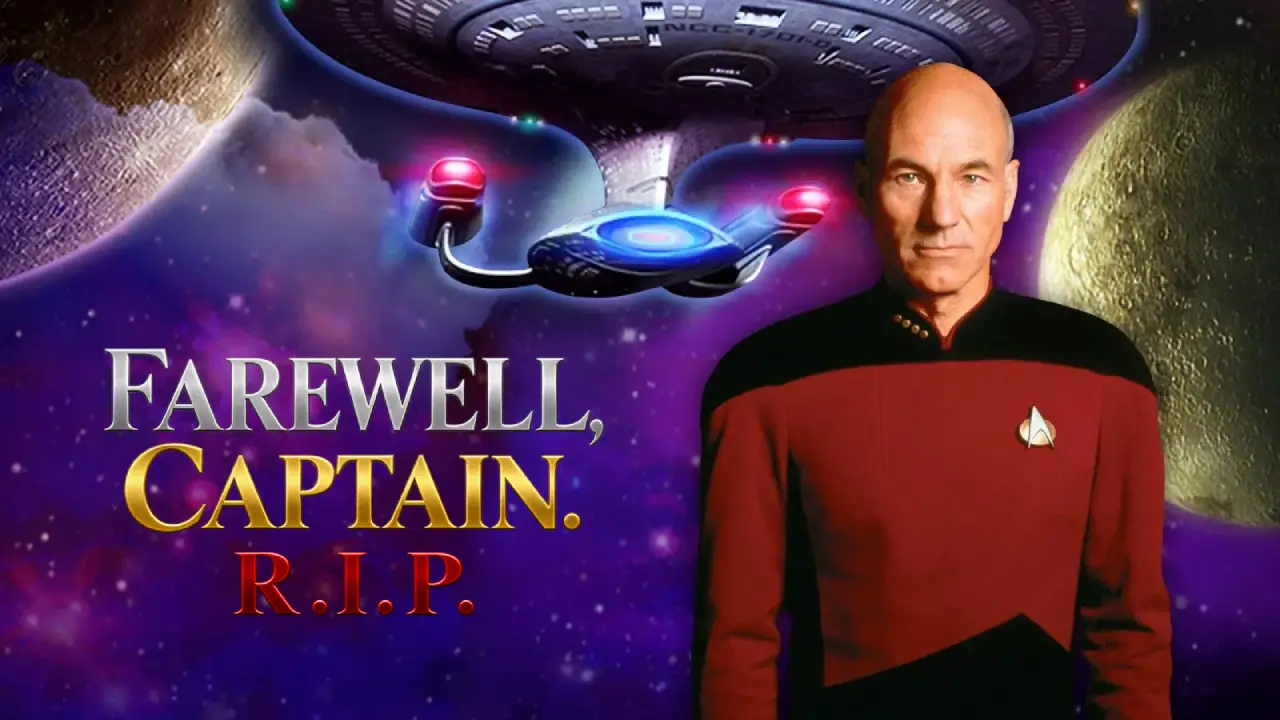
Captain Jean-Luc Picard remains one of television's most influential leaders, defined not by physical power but by intellect, diplomacy and principle. Credit: TMDB
Before Picard, the genre's leading men punched their way through problems. Stewart's captain talked. He negotiated. He agonised. In "The Inner Light," he lived an entire lifetime in 25 minutes of screen time and made audiences weep for a civilisation they had never seen. In "The Best of Both Worlds," he was assimilated by the Borg and turned the franchise's greatest villain into a metaphor for identity, consent, and institutional violation. No actor working in science fiction had attempted anything like it — and, according to Variety, none has quite matched it since.
Xavier's Gambit: The £5 Billion Franchise He Made Possible
In 2000, Stewart took a second enormous creative bet — Professor Charles Xavier in Bryan Singer's X-Men. The film earned £296 million worldwide and, more importantly, proved that comic-book adaptations could carry dramatic weight.
X-Men: We are the future, Charles. By Marvel. From @TheMasterofDespair
Without Stewart's gravitas in that wheelchair, the modern superhero-cinema economy — worth more than £5 billion annually by 2025 — might have taken a very different shape. His final screen appearance will be posthumous: Marvel's Avengers: Doomsday, scheduled for December 2026, where Stewart reprises Xavier one last time in what the Hollywood Reporter describes as "the most emotionally loaded cameo the MCU has ever attempted."
The Picard Paradox: Streaming's Most Expensive Homecoming
When CBS (later Paramount+) launched Star Trek: Picard in 2020, the series served a dual purpose: it was both a narrative epilogue and a business strategy. Paramount+ needed a flagship. Stewart, at 79, delivered one. The show ran for three seasons until 2023 and, despite mixed critical reception, achieved its commercial objective — anchoring a streaming platform's sci-fi brand at a time when the streaming wars demanded exactly that kind of prestige content. It also proved that audiences would follow a space sci-fi character across decades, a lesson that Disney, Amazon, and Netflix are now applying to their own franchise revivals.
'I Immensely Admired Them': Why Stewart's Characters Outlive Their Franchises
Stewart once said of Picard and Xavier: "I immensely admired them for their morality, for their kindness, for their sensitivity, for their compassion." That sentence is the key to understanding why his loss resonates beyond fan tributes. He chose roles that modelled ethical leadership in fantastical settings — and then refused to play them as fantasy. Picard's diplomacy was not a plot device; it was a political philosophy. Xavier's belief in coexistence was not naïve optimism; it was a strategic argument.

More than an actor, Sir Patrick Stewart became the conscience of some of science fiction's most important stories. Credit: TMDB
Sir Ian McKellen, his co-star and close friend, wrote that Stewart was
"a man to rely on, to admire and in my case, love."
William Shatner, whose Kirk and Stewart's Picard represent the genre's great philosophical divide — action versus contemplation — described him simply as someone who
"stood for the best of us."
Hugh Jackman, Seth MacFarlane, and the Academy of Motion Picture Arts and Sciences all issued tributes that circled the same observation: Stewart brought tenderness to strength, and in doing so changed what audiences expected from space sci-fi.
The Complete Picard Star Trek Era
Star Trek: The Next Generation (1987–1994) - 7 seasons as Captain Jean-Luc Picard.
Star Trek: Deep Space Nine (1993) - Guest appearance in the series premiere.
Star Trek Generations (1994) - Picard's first big-screen adventure.
Star Trek: First Contact (1996) - Widely regarded as the strongest of the Next Generation films.
Star Trek: Insurrection (1998) - The Enterprise crew faces a moral crisis at the edge of Federation space.
Star Trek: Nemesis (2002) - Picard confronts his most personal adversary.
Star Trek: Picard (2020–2023) - Stewart returned to the role after an 18-year absence, exploring the captain's later years across three seasons.
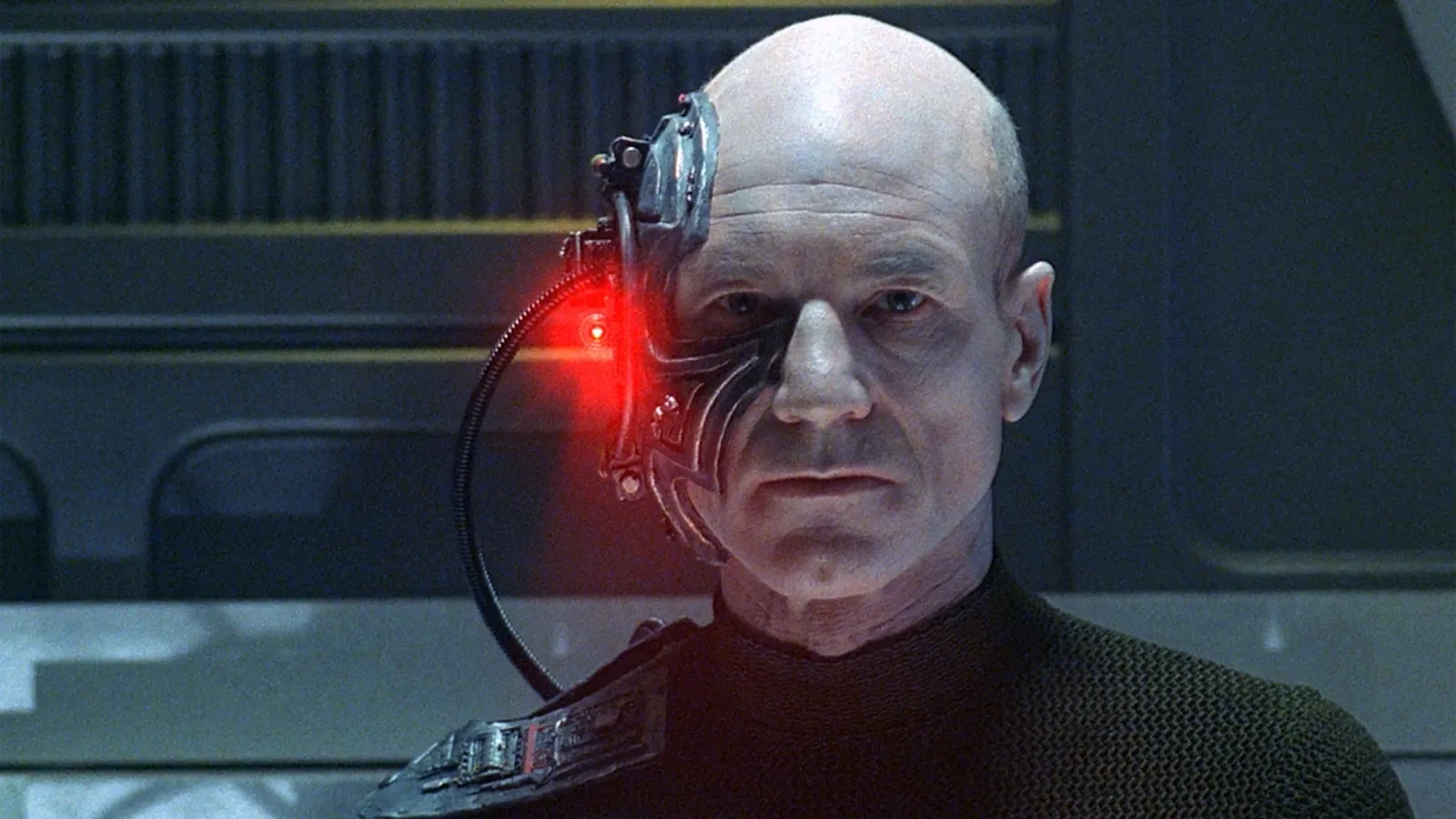
The transformation of Picard into Locutus remains one of science fiction television's most shocking and enduring storylines. Credit: TMDB
The Unfinished Mission: What Space Sci-Fi Owes Patrick Stewart
Sir Patrick Stewart's legacy is not merely a filmography. It is an argument — that space sci-fi deserves the same intellectual seriousness as the classical stage, that audiences will reward complexity over spectacle, and that a genre born in pulp magazines can carry the weight of Shakespeare. He proved it with every cup of Earl Grey, every measured command, every quiet scene that outperformed the explosions around it.
The genre now faces a question he would have appreciated: who inherits the Picard chair? Who brings that combination of classical training, moral seriousness, and commercial instinct to a landscape increasingly dominated by franchise mathematics? The answer, for now, is no one. And that silence is the most eloquent tribute of all.
Further Reading:
Variety — Patrick Stewart obituary
Hollywood Reporter — Patrick Stewart career retrospective
BBC News — Tributes to Sir Patrick Stewart
Get the SciNexic Dispatch
Space sci-fi news, reviews, trailers, and release picks—straight to your inbox.
Get the dispatch

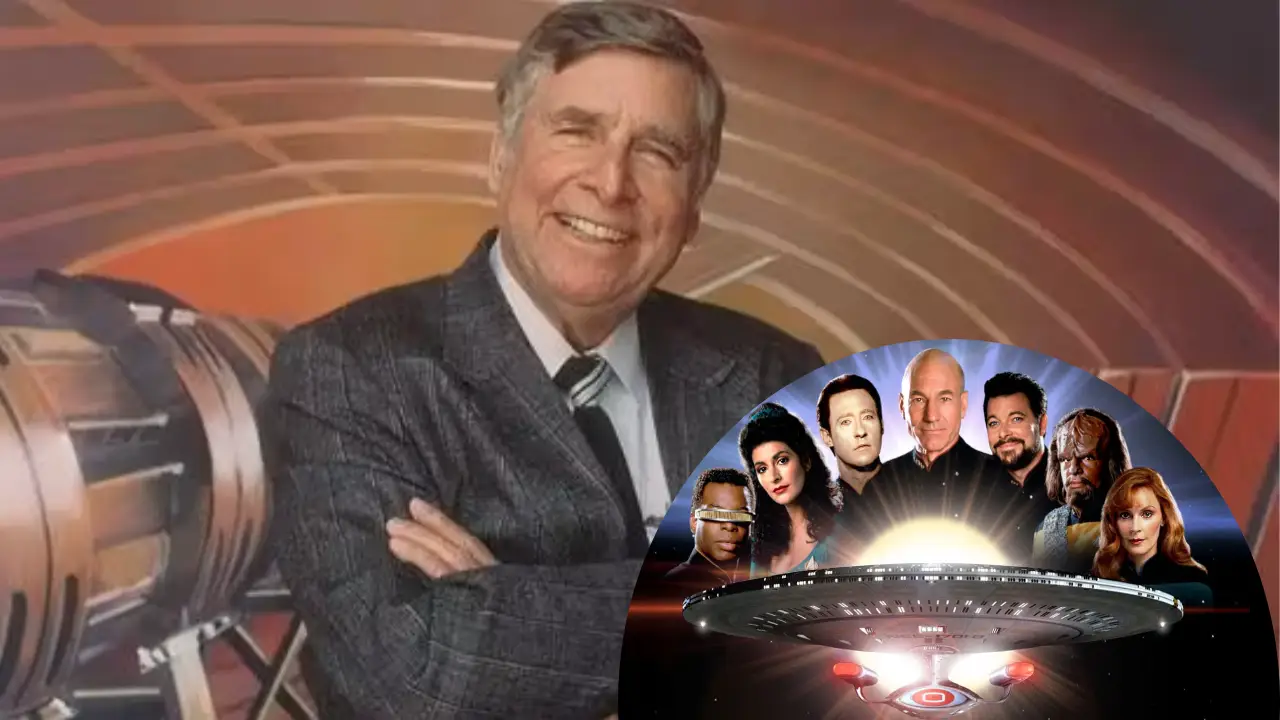
Banner Image - Star Trek: The Next Generation Captain Picard poster - www.themoviedb.org - Copyright: CBS Studios
Main Article - All images and media are the property of their respective owners.