



Strange New Worlds S4 Nears Launch as Captain Pike Charts His Boldest Course Yet

Apple TV Star City Explained: The Dark Side of Space Exploration

Is Star Trek: Starfleet Academy Great Space Sci-Fi? Yes. Is It Great Star Trek? Not Quite.

Star Wars: Maul – Shadow Lord: The Dark Evolution of Space Sci-Fi’s Greatest Saga

Starfield Launch on PS5: The Terran Armada & Free Lanes Update Elevate Space Sci-Fi Gaming

The Lore Behind Marathon Is Full of Juicy Space Sci-Fi Goodness

Why Subnautica Is One of the Greatest Space Sci-Fi Games Ever Made

Charting the Delta Quadrant: Why Star Trek: Voyager – Across the Unknown Is the Space Sci-Fi Strategy Game Fans Have Waited For

Glen A. Larson: The Space Sci-Fi Showman Who Gave Us Battlestar Galactica

The Most Adapted Space Science Fiction Authors in Entertainment History

The Vanguard of Visual Spectacle: Renowned VFX Producers and Studios in Modern AAA Space Sci-Fi

Proclaiming the Stellar Dimensions of "This Is Cool": A Haven for Sci-Fi Enthusiasts

The Artemis Paradox: Why China’s Chang’e 7 Mission Is Writing Tomorrow’s Space Opera Today

Moonshot Hospitality: How GRU Space’s Lunar Hotel could turn Space Sci-Fi Into Reality

Zeroth Bot: The Open-Source Humanoid Robot Bringing Space Sci-Fi to Your Desktop

Space Stations: Haven-1 and the Next Chapter After the ISS

ASUS ProArt GoPro Edition PX13: The Creator Laptop That Redefines Portability and Power

The Best Realistic Star Wars Lightsabers of 2026: The Ultimate Space Sci-Fi Buyer’s Guide

Sentinel XR Glasses: The Space Sci-Fi Future of Gaming Is Here

Best Space‑Sci‑Fi LEGO Sets on Amazon — Star Wars, The Mandalorian, NASA & More
Article


Get ready to blast off into a world where architecture meets the stars. We're about to dive headfirst into the mind-bending realm of space science fiction and its mind-blowing influence on futuristic architecture. Hold tight, because this article is gonna take you on a wild ride through the cosmos of creativity and design.
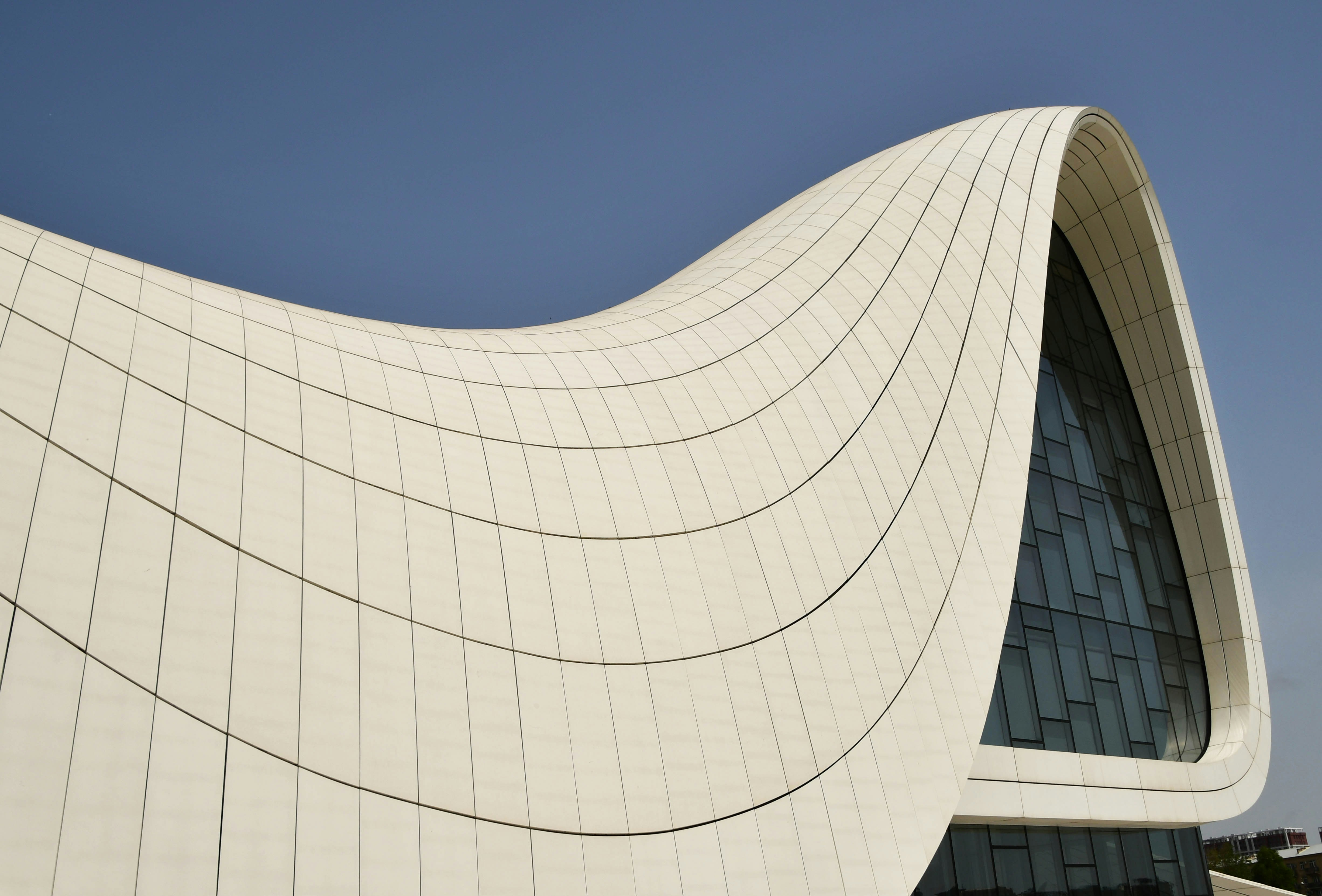
Picture this: architects unleashed in a world without gravity, where the rules of conventional design go out the window. Inspired by space sci-fi, these visionaries are free to imagine buildings that defy gravity, with curvaceous shapes that resemble sleek spaceships. Take the Heydar Aliyev Centre in Baku, Azerbaijan, designed by Zaha Hadid Architects. Its fluid and dynamic forms transport you to a futuristic landscape right out of a sci-fi flick. Similarly, the Torre Glòries in Barcelona, Spain, formerly known as the Torre Agbar, with its illuminated façade and extra-terrestrial-like appearance, stands as a testament to the influence of space sci-fi on architectural imagination.
Now, imagine stepping into a place that feels straight out of an alien world. That's the magic architects create when they blur the boundaries between reality and fantasy. The Gardens by the Bay in Singapore is a prime example. Its Supertrees, towering vertical gardens, look like they belong to an extra-terrestrial species. It's like walking through a sci-fi wonderland where nature and technology collide. Another fascinating example is the Biomuseo in Panama City, Panama. Designed by Frank Gehry, it features vibrant colours and organic shapes that seem to have landed from another planet.
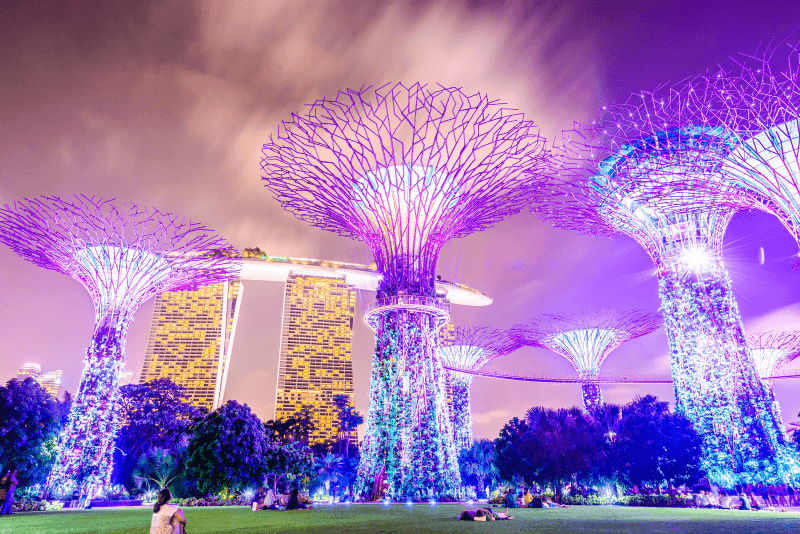
Super Trees Garden - Singapore
In the realm of space science fiction, we're often treated to jaw-dropping environments and futuristic cities that make our jaws drop. Architects draw inspiration from these cosmic wonders to create mind-bending experiences within their designs. Take the Marina Bay Sands in Singapore, for instance. Its three towers, connected by a sky park, give you the sensation of strolling through a city of the future. It's like walking on clouds, my friends! Another architectural marvel that transports you to a sci-fi realm is the Beijing Daxing International Airport in Beijing, China. With its sleek and futuristic design, it feels like you've stepped into a spaceship terminal.
But wait, there's more! Space sci-fi not only fires up architects' imaginations but also challenges them to think about sustainability and innovation. They look to the self-sustaining habitats depicted in sci-fi and bring those ideas to life. Just check out The Edge in Amsterdam, Netherlands. This bad boy is one of the greenest office buildings on the planet. With solar panels, rainwater collection, and smart climate control, it's like a futuristic sanctuary that Mother Nature would approve of. Similarly, the Bullitt Centre in Seattle, USA, showcases sustainable architecture with its energy-efficient design and commitment to zero net energy and water usage.
Here's the coolest part: it's not just a one-sided affair. Architects and space sci-fi creators collaborate and feed off each other's ideas. Take the Mars Science City project in Dubai, for example. They're building a simulated Martian environment in the desert, complete with futuristic habitats and infrastructure.

Mars Science City project in Dubai, by Arabian Business.
It's like architects and scientists are teaming up to make our sci-fi dreams of colonizing other planets a reality. Talk about a match made in the cosmos! Another exciting collaboration is the partnership between architects and video game designers in creating immersive architectural experiences. Games like "No Man's Sky" and "Deus Ex" offer virtual worlds that blend futuristic architecture with space sci-fi aesthetics.
So there you have it, my fellow space aficionados. The fusion of space science fiction and architecture takes us on a wild journey beyond the confines of Earth. From the Heydar Aliyev Centre to the Gardens by the Bay, architects bring our wildest sci-fi fantasies to life. The Marina Bay Sands and The Edge show us that futuristic architecture can be sustainable and innovative. And through collaboration and cross-pollination, projects like the Mars Science City challenge us to think bigger and bolder. Lets look forward to a future where our buildings are straight out of the cosmos. With architects and designers constantly pushing the boundaries, the sky's not even the limit anymore—our imagination is.
Get ready to blast off into a world where architecture meets the stars. We're about to dive headfirst into the mind-bending realm of space science fiction and its mind-blowing influence on futuristic architecture. Hold tight, because this article is gonna take you on a wild ride through the cosmos of creativity and design.
Picture this: architects unleashed in a world without gravity, where the rules of conventional design go out the window. Inspired by space sci-fi, these visionaries are free to imagine buildings that defy gravity, with curvaceous shapes that resemble sleek spaceships. Take the Heydar Aliyev Centre in Baku, Azerbaijan, designed by Zaha Hadid Architects. Its fluid and dynamic forms transport you to a futuristic landscape right out of a sci-fi flick. Similarly, the Torre Glòries in Barcelona, Spain, formerly known as the Torre Agbar, with its illuminated façade and extra-terrestrial-like appearance, stands as a testament to the influence of space sci-fi on architectural imagination.
Now, imagine stepping into a place that feels straight out of an alien world. That's the magic architects create when they blur the boundaries between reality and fantasy. The Gardens by the Bay in Singapore is a prime example. Its Supertrees, towering vertical gardens, look like they belong to an extra-terrestrial species. It's like walking through a sci-fi wonderland where nature and technology collide. Another fascinating example is the Biomuseo in Panama City, Panama. Designed by Frank Gehry, it features vibrant colours and organic shapes that seem to have landed from another planet.

Super Trees Garden - Singapore
In the realm of space science fiction, we're often treated to jaw-dropping environments and futuristic cities that make our jaws drop. Architects draw inspiration from these cosmic wonders to create mind-bending experiences within their designs. Take the Marina Bay Sands in Singapore, for instance. Its three towers, connected by a sky park, give you the sensation of strolling through a city of the future. It's like walking on clouds, my friends! Another architectural marvel that transports you to a sci-fi realm is the Beijing Daxing International Airport in Beijing, China. With its sleek and futuristic design, it feels like you've stepped into a spaceship terminal.
But wait, there's more! Space sci-fi not only fires up architects' imaginations but also challenges them to think about sustainability and innovation. They look to the self-sustaining habitats depicted in sci-fi and bring those ideas to life. Just check out The Edge in Amsterdam, Netherlands. This bad boy is one of the greenest office buildings on the planet. With solar panels, rainwater collection, and smart climate control, it's like a futuristic sanctuary that Mother Nature would approve of. Similarly, the Bullitt Centre in Seattle, USA, showcases sustainable architecture with its energy-efficient design and commitment to zero net energy and water usage.
Here's the coolest part: it's not just a one-sided affair. Architects and space sci-fi creators collaborate and feed off each other's ideas. Take the Mars Science City project in Dubai, for example. They're building a simulated Martian environment in the desert, complete with futuristic habitats and infrastructure.

Mars Science City project in Dubai, by Arabian Business.
It's like architects and scientists are teaming up to make our sci-fi dreams of colonizing other planets a reality. Talk about a match made in the cosmos! Another exciting collaboration is the partnership between architects and video game designers in creating immersive architectural experiences. Games like "No Man's Sky" and "Deus Ex" offer virtual worlds that blend futuristic architecture with space sci-fi aesthetics.
So there you have it, my fellow space aficionados. The fusion of space science fiction and architecture takes us on a wild journey beyond the confines of Earth. From the Heydar Aliyev Centre to the Gardens by the Bay, architects bring our wildest sci-fi fantasies to life. The Marina Bay Sands and The Edge show us that futuristic architecture can be sustainable and innovative. And through collaboration and cross-pollination, projects like the Mars Science City challenge us to think bigger and bolder. Lets look forward to a future where our buildings are straight out of the cosmos. With architects and designers constantly pushing the boundaries, the sky's not even the limit anymore—our imagination is.
Image Gallery
Join the SciNexic Crew
Related Posts
If you make a purchase through links on this site, we may earn a small commission. This helps keep the blog running and allows us to continue creating cosmic content. Thank you for your support.
Comments
Please be kind and considerate. Any abusive or offensive comments will be sent out the airlock! Thank You.
Share on Instagram
Share on Instagram
<a href="https://www.vecteezy.com/free-photos/azerbaijan">Azerbaijan Stock photos by Vecteezy</a>
<a href="https://www.vecteezy.com/free-photos/architecture">Architecture Stock photos by Vecteezy</a>


