

scinexic logo icon
Scinexic banner logo
Scinexic.com tag line

The SciNexic Files

The SciNexic Files

The SciNexic Files

Review

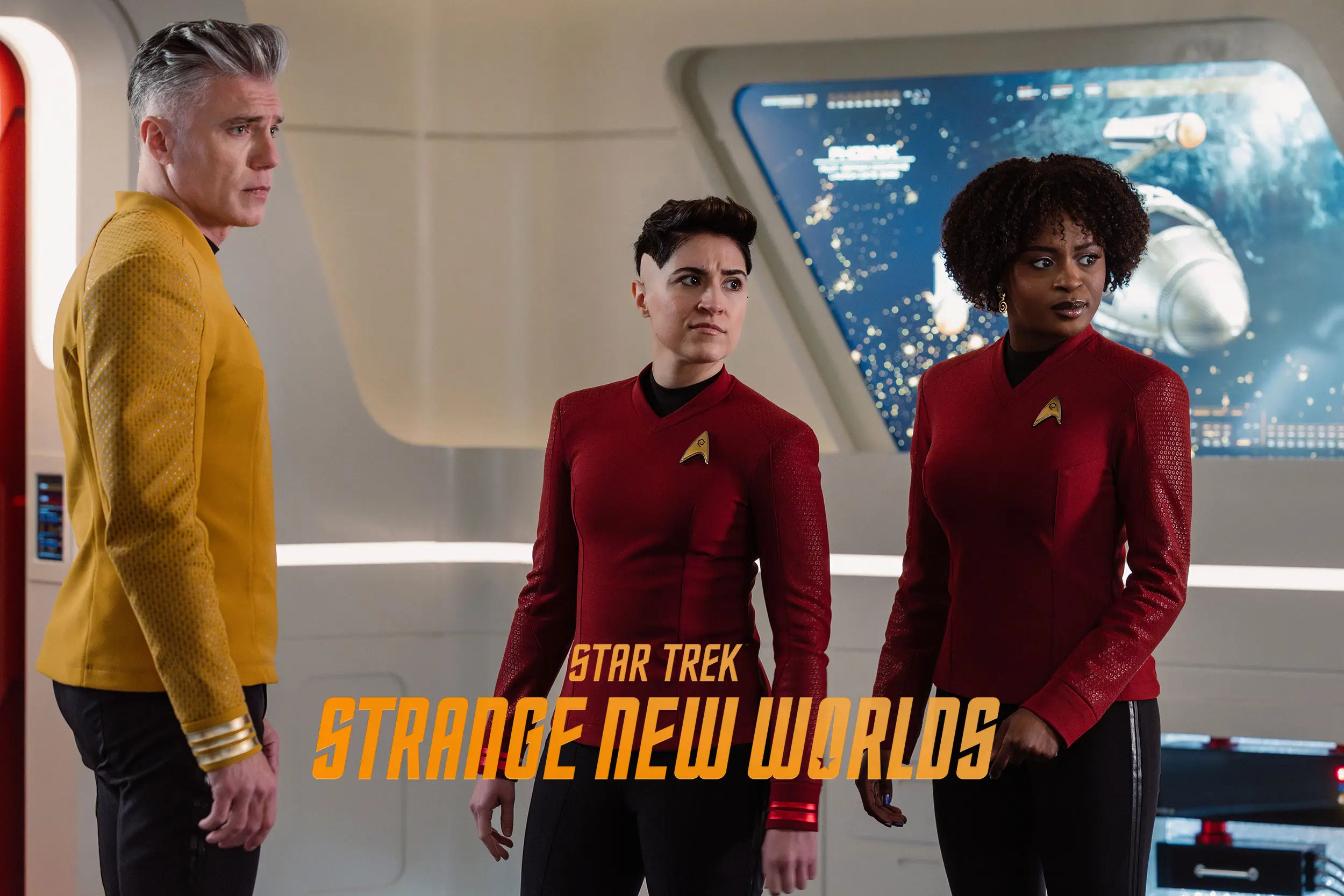
A group of three Starfleet officers in colourful uniforms stand in a futuristic spaceship bridge, with high-tech displays and controls visible in the background, from the series "Star Trek: Strange New Worlds."

Star Trek: Strange New Worlds Season 4 Is Uneven — But Its Originality Still Matters

Star Trek: Strange New Worlds Season 4 Is Uneven — But Its Originality Still Matters

A group of three Starfleet officers in colourful uniforms stand in a futuristic spaceship bridge, with high-tech displays and controls visible in the background, from the series "Star Trek: Strange New Worlds."

“To boldly go” still means taking a chance — even when the result does not always land.

There is a peculiar frustration at the heart of Star Trek: Strange New Worlds Season 4. This is a show with more imagination than discipline: willing to bend its format, remix its mythology and take the Enterprise somewhere tonally unexpected, but too often content to let a thin premise idle before the credits finally arrive. At its best, the season is a reminder that television science fiction can still be curious. At its worst, it feels like a charming crew waiting for a story to start.
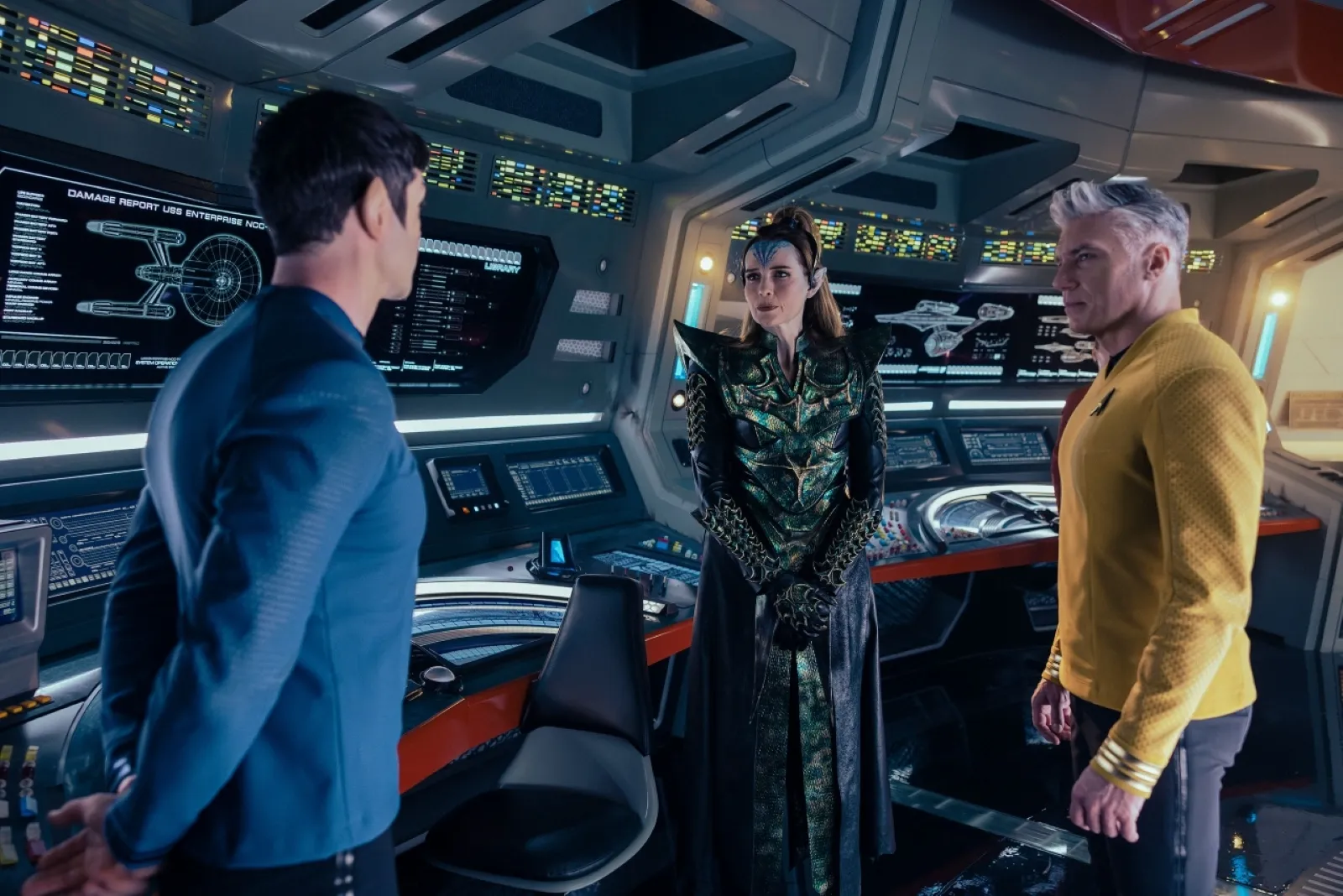
Three individuals in futuristic uniforms are standing in a high-tech spaceship control room, featuring multiple display screens and advanced control panels.

Pike and Spock during a formal encounter with a Martian general on the Enterprise bridge: this Season 4 premiere storyline has all the ingredients long-time fans expect — high-stakes diplomacy that makes familiar Starfleet procedure feel unexpectedly strange. Image: TrekCore.com


That split is especially noticeable after the promise of the Season 4 launch. The ingredients are all present: Captain Pike’s emotionally perceptive command, Spock’s evolving relationships, a crew that can sell both camaraderie and danger, and a production that knows how to make the final frontier look inviting. Yet too many episodes mistake gentle character business for momentum.
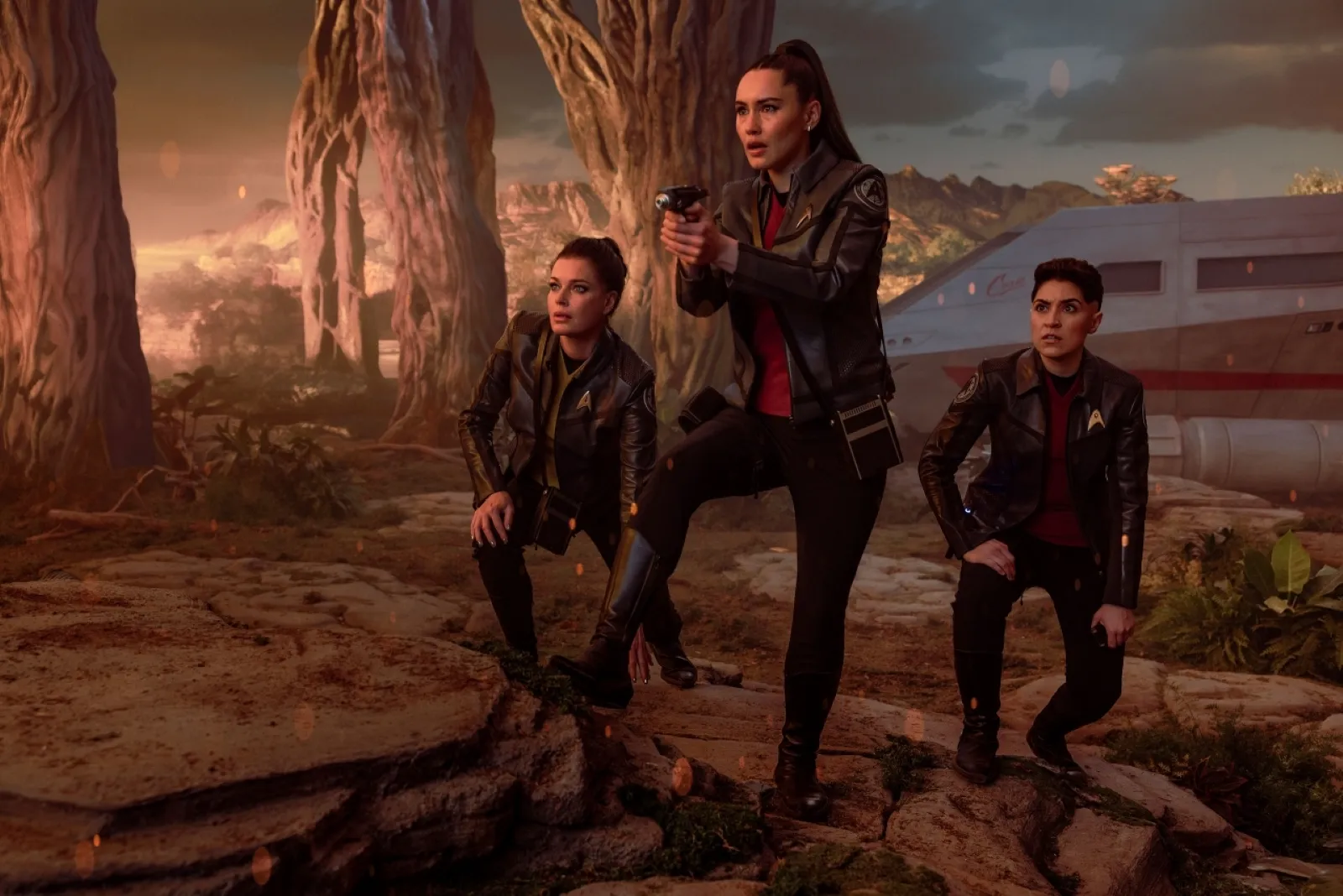
Three Star Trek SNW characters in dark leather attire, resembling a futuristic setting, crouch on rocky terrain under a dramatic sky, with a large, modern vehicle and towering trees in the background.

Una (Rebecca Romijn) and the away team faced prehistoric danger on an “alien” world in episode 1 — the kind of focused, high-stakes storyline many long-time Trek fans still want more of. Image: Trekcore.com


The Half That Drifts

About half of Season 4 so far plays as though it has mistaken comfort for confidence. Familiar emotional beats are revisited without enough pressure behind them; mysteries are introduced with an air of importance, then stretched past their natural dramatic life; and scenes that should sharpen a character’s point of view sometimes merely restate it. The episodic model is not the problem. Classic Trek thrived on self-contained adventures. The problem is that an episode needs a decisive idea, not just an agreeable atmosphere.

The result is not disastrous television. It is more exasperating than that: polished, personable, intermittently funny television that asks viewers to admire the effort while their attention wanders. A slower episode can be transporting when it reveals something new about a world or its people. Here, the slower stretches too often feel like the Enterprise is holding position.

Why the Experiments Deserve Credit

And yet: the show’s oddest impulses are precisely why it remains worth defending. Strange New Worlds refuses to behave as if every hour of modern franchise television must be a sombre chapter in one enormous puzzle. It can pivot between adventure, comedy, romance, horror and playful high concept. That willingness to make a distinctly different kind of episode — even when the swing is messy — is not a side dish. It is the series’ clearest contribution to contemporary Trek.

The most memorable material in Season 4 tends to come when the series commits to an angle rather than apologising for it. Those chapters may not all work, but they have texture.

A man in a blue shirt gently supports a woman wrapped in a shiny, silver blanket inside a futuristic, bright white room, while another person stands frozen in the background.

A sickbay emergency in another strong episode (06: “Off-Hour”) gives the ensemble a clear practical problem to solve as the ship’s doctor is critically injured, proving that character drama is strongest when the stakes are tangible. Image: Trekcore.com


They give actors new rhythms to play, invite the audience into unfamiliar genre spaces and preserve the sense that a starship can still encounter something nobody has neatly categorised. In an era of franchises built on recognisable shapes, that is a genuine achievement.

When the Enterprise Needs a Mission

There is also a reasonable objection from seasoned Trek viewers: sometimes they simply want to see the Enterprise doing serious Starfleet business. A difficult diplomatic assignment, an ethical emergency, a dangerous scientific problem or a command decision with consequences can be more than enough. Offbeat encounters are part of the franchise’s long tradition, and a change of register can keep an episodic season alive. But when the experiment starts to feel like a full puppet or Muppet-style diversion, the question is not whether it is playful — it is whether the playfulness still serves the mission, the crew and the ideas that make Star Trek endure.
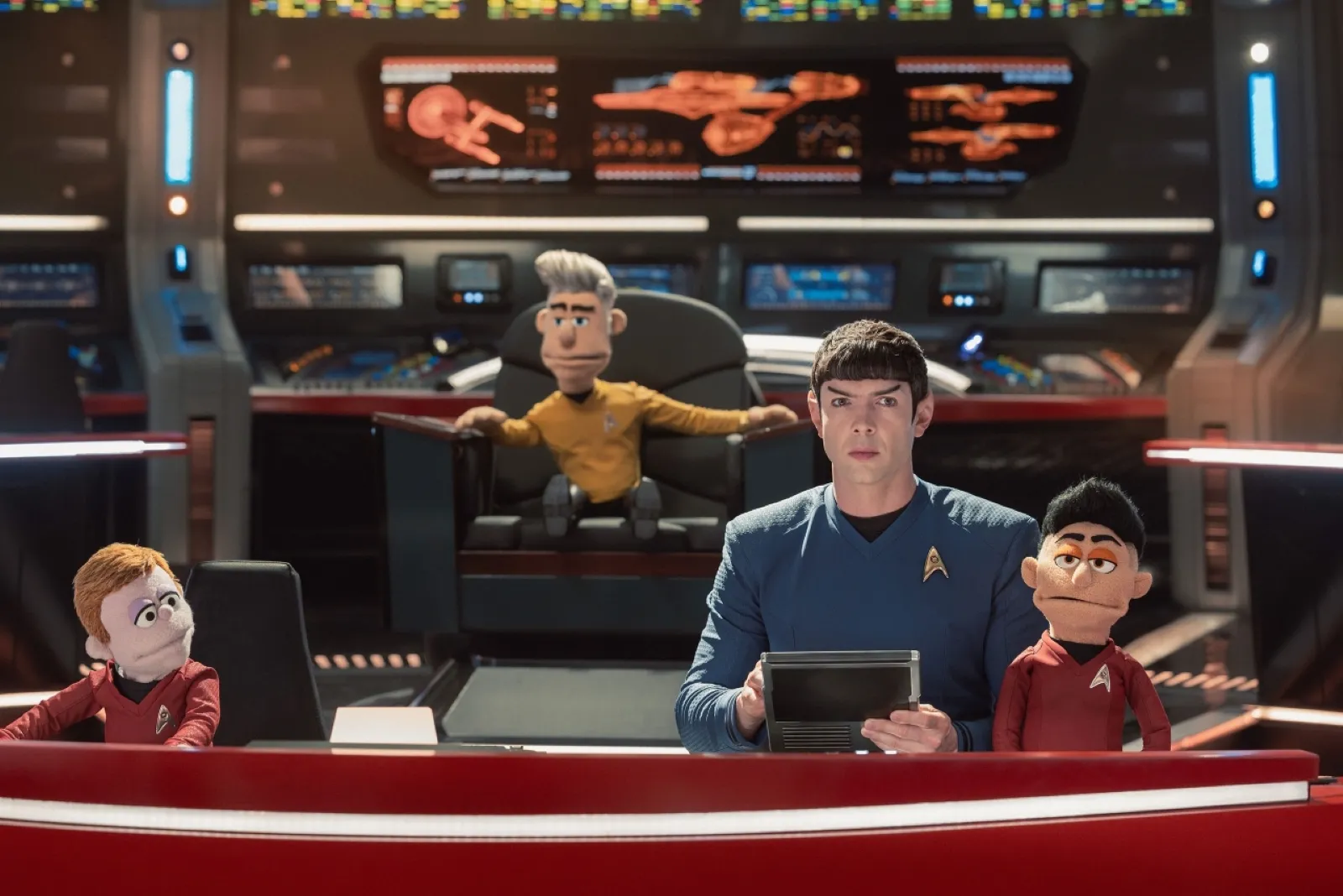
Puppet characters dressed in classic Star Trek space uniforms sit and stand on a futuristic spaceship command bridge, surrounded by high-tech screens and control panels, creating a vibrant scene reminiscent of classic sci-fi adventures.

The Enterprise bridge takes a full puppet turn — an undeniably bold experiment that tests how far the show can stretch its tone. Fun, but not everyone was amused. Image: TrekCore.com


A Good Crew Cannot Carry Every Episode

The ensemble remains the season’s most reliable engine. Pike brings reassurance without becoming bland; Spock’s restraint continues to provide an effective counterpoint to the more openly emotional members of the crew; and the supporting characters are often compelling enough to make even a middling instalment feel hospitable. But good casting creates goodwill, not propulsion. Season 4 needs to trust its crew with sharper conflicts and clearer choices rather than placing them in beautifully designed holding patterns.

What the Recent Reviews Are Saying

The early critical conversation broadly supports the sense of an uneven but unusually adventurous season. IGN gave Episode 6, “Off-Hour”, an 8/10, calling it an exciting and at-times emotional recovery after recent missteps. Den of Geek also praised its ticking-clock momentum, high stakes and genuine tension. Elsewhere, Episode 4 earned warm notices for its noir experiment: TrekMovie called it the season’s most recognisably Star Trek moral dilemma, while Inverse highlighted Rebecca Romijn’s performance. The consensus is not that every risk succeeds; it is that the risks give the season an identity.

The Weak Spot: Episode 4, “A Case of Chiaroscuro”
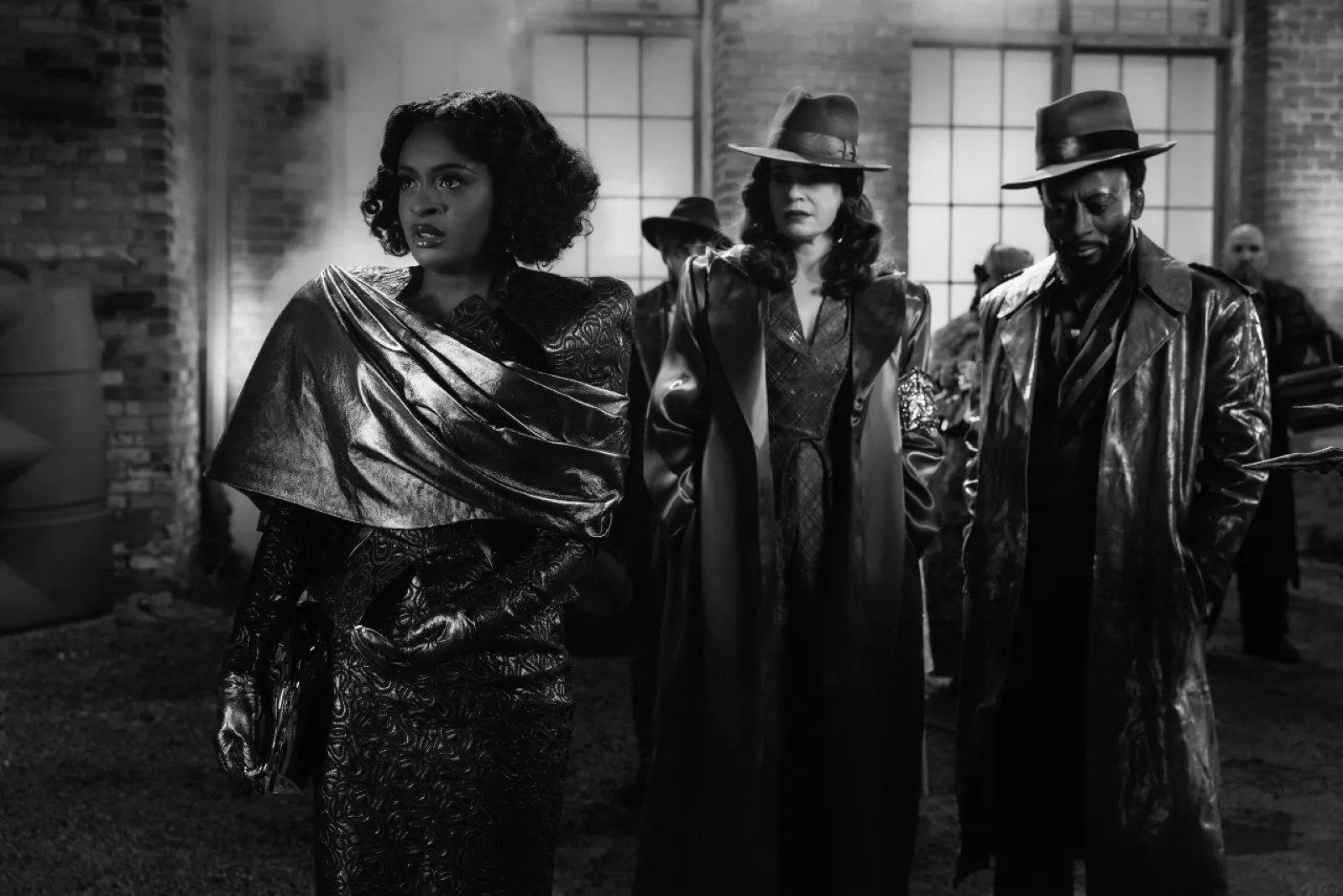
Three people wearing vintage attire, including coats and hats, stand with a serious demeanour in a noir-style black-and-white setting, evoking a classic film noir atmosphere.

Episode 4’s monochrome noir world is beautifully realised, even when the homage threatens to eclipse the mission at its centre. A case of overreach, perhaps — but was it worth it? Image: TrekCore.com


For this review, Episode 4 is the season’s clearest example of both its virtues and its limits. Its black-and-white, Casablanca-inflected noir setting is meticulously realised, and putting Una at the centre gives Romijn an excellent opportunity to lead from the front. The Klingon-occupied setting also provides a serious moral frame beneath the stylised surface. Those are real merits, and they explain why several reviewers responded positively.

But the homage can become so insistent that it overwhelms the story it is meant to serve. Trekking with Dennis made a useful counterpoint, arguing that the noir influence sometimes plays more like an extended “bit” than an organic episode of Star Trek. That is the flaw: admirable craft and a committed performance cannot fully compensate when the central pastiche feels more memorable than the dramatic stakes. Episode 4 is not a failure; it is a handsome, inventive detour that demonstrates why Season 4 can be simultaneously noteworthy and, at times, a little too pleased with its own detours.

The SciNexic Verdict

For some serious Star Trek fans season 4 is slightly dull as a result — and that is not a throwaway complaint. It is the difference between a great modern Star Trek season and a merely likeable one. Still, the other half matters. The show’s attempts to be original, adventurous and sometimes gloriously peculiar make it more valuable than a smoother but safer production. The Enterprise does not need to be flawless; it needs to keep searching for new life in its own storytelling. When Strange New Worlds remembers that, it remains one of the most distinctive series in the current TV & Series landscape.

Further Reading & Official Links:

Stay tuned to Scinexic.com for more space sci-fi news, reviews and discussion from the final frontier.

“To boldly go” still means taking a chance — even when the result does not always land.

There is a peculiar frustration at the heart of Star Trek: Strange New Worlds Season 4. This is a show with more imagination than discipline: willing to bend its format, remix its mythology and take the Enterprise somewhere tonally unexpected, but too often content to let a thin premise idle before the credits finally arrive. At its best, the season is a reminder that television science fiction can still be curious. At its worst, it feels like a charming crew waiting for a story to start.

Three individuals in futuristic uniforms are standing in a high-tech spaceship control room, featuring multiple display screens and advanced control panels.

Pike and Spock during a formal encounter with a Martian general on the Enterprise bridge: this Season 4 premiere storyline has all the ingredients long-time fans expect — high-stakes diplomacy that makes familiar Starfleet procedure feel unexpectedly strange. Image: TrekCore.com


That split is especially noticeable after the promise of the Season 4 launch. The ingredients are all present: Captain Pike’s emotionally perceptive command, Spock’s evolving relationships, a crew that can sell both camaraderie and danger, and a production that knows how to make the final frontier look inviting. Yet too many episodes mistake gentle character business for momentum.

Three Star Trek SNW characters in dark leather attire, resembling a futuristic setting, crouch on rocky terrain under a dramatic sky, with a large, modern vehicle and towering trees in the background.

Una (Rebecca Romijn) and the away team faced prehistoric danger on an “alien” world in episode 1 — the kind of focused, high-stakes storyline many long-time Trek fans still want more of. Image: Trekcore.com


The Half That Drifts

About half of Season 4 so far plays as though it has mistaken comfort for confidence. Familiar emotional beats are revisited without enough pressure behind them; mysteries are introduced with an air of importance, then stretched past their natural dramatic life; and scenes that should sharpen a character’s point of view sometimes merely restate it. The episodic model is not the problem. Classic Trek thrived on self-contained adventures. The problem is that an episode needs a decisive idea, not just an agreeable atmosphere.

The result is not disastrous television. It is more exasperating than that: polished, personable, intermittently funny television that asks viewers to admire the effort while their attention wanders. A slower episode can be transporting when it reveals something new about a world or its people. Here, the slower stretches too often feel like the Enterprise is holding position.

Why the Experiments Deserve Credit

And yet: the show’s oddest impulses are precisely why it remains worth defending. Strange New Worlds refuses to behave as if every hour of modern franchise television must be a sombre chapter in one enormous puzzle. It can pivot between adventure, comedy, romance, horror and playful high concept. That willingness to make a distinctly different kind of episode — even when the swing is messy — is not a side dish. It is the series’ clearest contribution to contemporary Trek.

The most memorable material in Season 4 tends to come when the series commits to an angle rather than apologising for it. Those chapters may not all work, but they have texture.

A man in a blue shirt gently supports a woman wrapped in a shiny, silver blanket inside a futuristic, bright white room, while another person stands frozen in the background.

A sickbay emergency in another strong episode (06: “Off-Hour”) gives the ensemble a clear practical problem to solve as the ship’s doctor is critically injured, proving that character drama is strongest when the stakes are tangible. Image: Trekcore.com


They give actors new rhythms to play, invite the audience into unfamiliar genre spaces and preserve the sense that a starship can still encounter something nobody has neatly categorised. In an era of franchises built on recognisable shapes, that is a genuine achievement.

When the Enterprise Needs a Mission

There is also a reasonable objection from seasoned Trek viewers: sometimes they simply want to see the Enterprise doing serious Starfleet business. A difficult diplomatic assignment, an ethical emergency, a dangerous scientific problem or a command decision with consequences can be more than enough. Offbeat encounters are part of the franchise’s long tradition, and a change of register can keep an episodic season alive. But when the experiment starts to feel like a full puppet or Muppet-style diversion, the question is not whether it is playful — it is whether the playfulness still serves the mission, the crew and the ideas that make Star Trek endure.

Puppet characters dressed in classic Star Trek space uniforms sit and stand on a futuristic spaceship command bridge, surrounded by high-tech screens and control panels, creating a vibrant scene reminiscent of classic sci-fi adventures.

The Enterprise bridge takes a full puppet turn — an undeniably bold experiment that tests how far the show can stretch its tone. Fun, but not everyone was amused. Image: TrekCore.com


A Good Crew Cannot Carry Every Episode

The ensemble remains the season’s most reliable engine. Pike brings reassurance without becoming bland; Spock’s restraint continues to provide an effective counterpoint to the more openly emotional members of the crew; and the supporting characters are often compelling enough to make even a middling instalment feel hospitable. But good casting creates goodwill, not propulsion. Season 4 needs to trust its crew with sharper conflicts and clearer choices rather than placing them in beautifully designed holding patterns.

What the Recent Reviews Are Saying

The early critical conversation broadly supports the sense of an uneven but unusually adventurous season. IGN gave Episode 6, “Off-Hour”, an 8/10, calling it an exciting and at-times emotional recovery after recent missteps. Den of Geek also praised its ticking-clock momentum, high stakes and genuine tension. Elsewhere, Episode 4 earned warm notices for its noir experiment: TrekMovie called it the season’s most recognisably Star Trek moral dilemma, while Inverse highlighted Rebecca Romijn’s performance. The consensus is not that every risk succeeds; it is that the risks give the season an identity.

The Weak Spot: Episode 4, “A Case of Chiaroscuro”
Three people wearing vintage attire, including coats and hats, stand with a serious demeanour in a noir-style black-and-white setting, evoking a classic film noir atmosphere.

Episode 4’s monochrome noir world is beautifully realised, even when the homage threatens to eclipse the mission at its centre. A case of overreach, perhaps — but was it worth it? Image: TrekCore.com


For this review, Episode 4 is the season’s clearest example of both its virtues and its limits. Its black-and-white, Casablanca-inflected noir setting is meticulously realised, and putting Una at the centre gives Romijn an excellent opportunity to lead from the front. The Klingon-occupied setting also provides a serious moral frame beneath the stylised surface. Those are real merits, and they explain why several reviewers responded positively.

But the homage can become so insistent that it overwhelms the story it is meant to serve. Trekking with Dennis made a useful counterpoint, arguing that the noir influence sometimes plays more like an extended “bit” than an organic episode of Star Trek. That is the flaw: admirable craft and a committed performance cannot fully compensate when the central pastiche feels more memorable than the dramatic stakes. Episode 4 is not a failure; it is a handsome, inventive detour that demonstrates why Season 4 can be simultaneously noteworthy and, at times, a little too pleased with its own detours.

The SciNexic Verdict

For some serious Star Trek fans season 4 is slightly dull as a result — and that is not a throwaway complaint. It is the difference between a great modern Star Trek season and a merely likeable one. Still, the other half matters. The show’s attempts to be original, adventurous and sometimes gloriously peculiar make it more valuable than a smoother but safer production. The Enterprise does not need to be flawless; it needs to keep searching for new life in its own storytelling. When Strange New Worlds remembers that, it remains one of the most distinctive series in the current TV & Series landscape.

Further Reading & Official Links:

Stay tuned to Scinexic.com for more space sci-fi news, reviews and discussion from the final frontier.

“To boldly go” still means taking a chance — even when the result does not always land.

There is a peculiar frustration at the heart of Star Trek: Strange New Worlds Season 4. This is a show with more imagination than discipline: willing to bend its format, remix its mythology and take the Enterprise somewhere tonally unexpected, but too often content to let a thin premise idle before the credits finally arrive. At its best, the season is a reminder that television science fiction can still be curious. At its worst, it feels like a charming crew waiting for a story to start.

Three individuals in futuristic uniforms are standing in a high-tech spaceship control room, featuring multiple display screens and advanced control panels.

Pike and Spock during a formal encounter with a Martian general on the Enterprise bridge: this Season 4 premiere storyline has all the ingredients long-time fans expect — high-stakes diplomacy that makes familiar Starfleet procedure feel unexpectedly strange. Image: TrekCore.com


That split is especially noticeable after the promise of the Season 4 launch. The ingredients are all present: Captain Pike’s emotionally perceptive command, Spock’s evolving relationships, a crew that can sell both camaraderie and danger, and a production that knows how to make the final frontier look inviting. Yet too many episodes mistake gentle character business for momentum.

Three Star Trek SNW characters in dark leather attire, resembling a futuristic setting, crouch on rocky terrain under a dramatic sky, with a large, modern vehicle and towering trees in the background.

Una (Rebecca Romijn) and the away team faced prehistoric danger on an “alien” world in episode 1 — the kind of focused, high-stakes storyline many long-time Trek fans still want more of. Image: Trekcore.com


The Half That Drifts

About half of Season 4 so far plays as though it has mistaken comfort for confidence. Familiar emotional beats are revisited without enough pressure behind them; mysteries are introduced with an air of importance, then stretched past their natural dramatic life; and scenes that should sharpen a character’s point of view sometimes merely restate it. The episodic model is not the problem. Classic Trek thrived on self-contained adventures. The problem is that an episode needs a decisive idea, not just an agreeable atmosphere.

The result is not disastrous television. It is more exasperating than that: polished, personable, intermittently funny television that asks viewers to admire the effort while their attention wanders. A slower episode can be transporting when it reveals something new about a world or its people. Here, the slower stretches too often feel like the Enterprise is holding position.

Why the Experiments Deserve Credit

And yet: the show’s oddest impulses are precisely why it remains worth defending. Strange New Worlds refuses to behave as if every hour of modern franchise television must be a sombre chapter in one enormous puzzle. It can pivot between adventure, comedy, romance, horror and playful high concept. That willingness to make a distinctly different kind of episode — even when the swing is messy — is not a side dish. It is the series’ clearest contribution to contemporary Trek.

The most memorable material in Season 4 tends to come when the series commits to an angle rather than apologising for it. Those chapters may not all work, but they have texture.

A man in a blue shirt gently supports a woman wrapped in a shiny, silver blanket inside a futuristic, bright white room, while another person stands frozen in the background.

A sickbay emergency in another strong episode (06: “Off-Hour”) gives the ensemble a clear practical problem to solve as the ship’s doctor is critically injured, proving that character drama is strongest when the stakes are tangible. Image: Trekcore.com


They give actors new rhythms to play, invite the audience into unfamiliar genre spaces and preserve the sense that a starship can still encounter something nobody has neatly categorised. In an era of franchises built on recognisable shapes, that is a genuine achievement.

When the Enterprise Needs a Mission

There is also a reasonable objection from seasoned Trek viewers: sometimes they simply want to see the Enterprise doing serious Starfleet business. A difficult diplomatic assignment, an ethical emergency, a dangerous scientific problem or a command decision with consequences can be more than enough. Offbeat encounters are part of the franchise’s long tradition, and a change of register can keep an episodic season alive. But when the experiment starts to feel like a full puppet or Muppet-style diversion, the question is not whether it is playful — it is whether the playfulness still serves the mission, the crew and the ideas that make Star Trek endure.

Puppet characters dressed in classic Star Trek space uniforms sit and stand on a futuristic spaceship command bridge, surrounded by high-tech screens and control panels, creating a vibrant scene reminiscent of classic sci-fi adventures.

The Enterprise bridge takes a full puppet turn — an undeniably bold experiment that tests how far the show can stretch its tone. Fun, but not everyone was amused. Image: TrekCore.com


A Good Crew Cannot Carry Every Episode

The ensemble remains the season’s most reliable engine. Pike brings reassurance without becoming bland; Spock’s restraint continues to provide an effective counterpoint to the more openly emotional members of the crew; and the supporting characters are often compelling enough to make even a middling instalment feel hospitable. But good casting creates goodwill, not propulsion. Season 4 needs to trust its crew with sharper conflicts and clearer choices rather than placing them in beautifully designed holding patterns.

What the Recent Reviews Are Saying

The early critical conversation broadly supports the sense of an uneven but unusually adventurous season. IGN gave Episode 6, “Off-Hour”, an 8/10, calling it an exciting and at-times emotional recovery after recent missteps. Den of Geek also praised its ticking-clock momentum, high stakes and genuine tension. Elsewhere, Episode 4 earned warm notices for its noir experiment: TrekMovie called it the season’s most recognisably Star Trek moral dilemma, while Inverse highlighted Rebecca Romijn’s performance. The consensus is not that every risk succeeds; it is that the risks give the season an identity.

The Weak Spot: Episode 4, “A Case of Chiaroscuro”
Three people wearing vintage attire, including coats and hats, stand with a serious demeanour in a noir-style black-and-white setting, evoking a classic film noir atmosphere.

Episode 4’s monochrome noir world is beautifully realised, even when the homage threatens to eclipse the mission at its centre. A case of overreach, perhaps — but was it worth it? Image: TrekCore.com


For this review, Episode 4 is the season’s clearest example of both its virtues and its limits. Its black-and-white, Casablanca-inflected noir setting is meticulously realised, and putting Una at the centre gives Romijn an excellent opportunity to lead from the front. The Klingon-occupied setting also provides a serious moral frame beneath the stylised surface. Those are real merits, and they explain why several reviewers responded positively.

But the homage can become so insistent that it overwhelms the story it is meant to serve. Trekking with Dennis made a useful counterpoint, arguing that the noir influence sometimes plays more like an extended “bit” than an organic episode of Star Trek. That is the flaw: admirable craft and a committed performance cannot fully compensate when the central pastiche feels more memorable than the dramatic stakes. Episode 4 is not a failure; it is a handsome, inventive detour that demonstrates why Season 4 can be simultaneously noteworthy and, at times, a little too pleased with its own detours.

The SciNexic Verdict

For some serious Star Trek fans season 4 is slightly dull as a result — and that is not a throwaway complaint. It is the difference between a great modern Star Trek season and a merely likeable one. Still, the other half matters. The show’s attempts to be original, adventurous and sometimes gloriously peculiar make it more valuable than a smoother but safer production. The Enterprise does not need to be flawless; it needs to keep searching for new life in its own storytelling. When Strange New Worlds remembers that, it remains one of the most distinctive series in the current TV & Series landscape.

Further Reading & Official Links:

Stay tuned to Scinexic.com for more space sci-fi news, reviews and discussion from the final frontier.

Image Gallery

Comments

Please be kind and considerate. Any abusive or offensive comments will be sent out the airlock! Thank You.

Please be kind and considerate. Any abusive or offensive comments will be sent out the airlock! Thank You.

Join the SciNexic Crew

Share on Twitter

Share on Instagram

Share on Twitter

Share on Instagram

Banner Image - Star Trek SNW S4-06 still and logo - www.trekcore.com - TMDB - Copyright: CBS, Paramount

Main Article - All images and media are the property of their respective owners.

img + p:has(em) { text-align:center !important; } img + p > em { color: #CCC; font-size: 12px; }